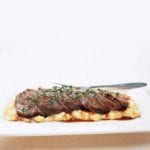

Beef Braised in Barolo
This beef braised in Barolo is braised chuck roasted in an aromatic mix of Barolo wine, garlic, tomato paste, thyme, and rosemary. Perfect for entertaining.
Ingredients
- One (3 1/2- to 4-pound) boneless beef chuck eye roast, pulled apart into 2 pieces, trimmed, and tied with kitchen string
- Salt and freshly ground black pepper
- 1 tablespoon vegetable oil
- 4 ounces pancetta*, cut into 1/4-inch (6-mm) chunks
- 2 medium onions, chopped
- 2 medium carrots, peeled and chopped
- 2 celery stalks, chopped
- 2 medium garlic cloves, minced (about 1 tablespoon)
- 2 teaspoons minced fresh thyme leaves, plus more for garnish, if desired
- 1 teaspoon minced fresh rosemary
- 1 tablespoon unbleached all-purpose flour
- 1 tablespoon store-bought or homemade tomato paste
- 1/2 teaspoon granulated sugar
- One bottle Barolo wine*
- One can diced tomatoes, drained
- Cooked polenta, (optional)
Instructions
- Preheat the oven to 300°F (150°C) and adjust an oven rack to the lower third position.
- Pat the beef dry with paper towels and season with salt and pepper. Heat the oil in a large Dutch oven over medium-high heat until hot but not smoking. Brown the beef on all sides, 7 to 10 minutes, reducing the heat if the beef begins to scorch. Transfer the beef to a large plate.
- Pour off almost all the fat in the pot, add the pancetta, and cook over medium heat, stirring often, until browned and crisp, about 8 minutes. Add the onions, carrots, celery, and 1/4 teaspoon salt and cook, stirring often, until softened, 8 to 10 minutes.
- Stir in the garlic, 1 teaspoon of the thyme, and the rosemary and cook until fragrant, about 30 seconds. Stir in the flour, tomato paste, and sugar and cook, stirring constantly, for 1 minute. Slowly whisk in the wine, scraping up any browned bits, until smooth. Stir in the tomatoes and bring to a simmer.
- Add the beef, along with any juices that accumulated on the plate, to the pot and bring to a simmer. Cover, place the pot in the oven, and cook until the meat is very tender and a fork inserted into it meets very little resistance, 3 to 3 1/2 hours, turning the beef every hour.
- Transfer the beef to a cutting board and tent loosely with foil.
- Meanwhile, strain the braising liquid into a fat separator or bowl, discarding the solids. Defat the braising liquid by pouring off the fat, skimming the fat with a ladle, or refrigerating the whole shebang overnight so that the solidified fat can be lifted from the surface.
- Add the remaining 1 teaspoon thyme to the defatted braising liquid, bring to a simmer over medium-high heat, and cook until thickened, saucy, and reduced to about 1 1/2 cups, 15 to 20 minutes. Season the sauce with salt and pepper to taste.
- Remove the kitchen string, slice the beef against the grain into 1/4-inch-thick slices, and transfer to a serving platter with polenta, if desired. Spoon the sauce over the beef, garnish with thyme, if desired, and serve.
Notes
*What You Need To Know About Ingredient Substitutions
Barolo is obviously the wine of choice for this stew; however, an inexpensive bottle of it may require some searching. You may substitute a Cabernet Sauvignon or Zinfandel. Pancetta can commonly be found thinly sliced and prepackaged…but don’t use that here. Instead, look for pancetta at the deli counter or in an Italian market where it can be sliced 1/4 inch thick to order. If pancetta isn’t available, substitute an equal amount of salt pork (find the meatiest piece possible), cut it into 1/4-inch cubes, and boil it in 3 cups water for 2 minutes to remove excess salt.Nutrition
Serving: 1serving | Calories: 794kcal | Carbohydrates: 14g | Protein: 62g | Fat: 45g | Saturated Fat: 18g | Monounsaturated Fat: 21g | Trans Fat: 2g | Cholesterol: 221mg | Sodium: 426mg | Fiber: 2g | Sugar: 6g