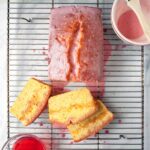

Blood Orange Swirl Pound Cake
This blood orange pound cake is a fantastic seasonal dessert. The buttery, rich cake is ribboned with a marmalade layer, steeped in a blood orange syrup, and topped with a light blood orange glaze. Irresistible.
Equipment
- A 9-by-5-by-3 inch loaf pan (23-by-13-by-8 cm or 8 cups)
Ingredients
For the blood orange pound cake
- Baking spray, such as Baker's Joy
- 1 3/4 cup all-purpose flour
- 1 teaspoon baking powder
- 1/2 teaspoon kosher salt
- 4 to 5 blood oranges (preferably the more colorful Moro), zested and juiced (juice reserved for the syrup and icing)
- 1 cup granulated sugar
- 2 sticks unsalted butter, at room temperature
- 3 large eggs, at room temperature
- 1/2 cup full-fat sour cream, at room temperature
- 1 teaspoon vanilla extract
- 1/3 cup blood orange marmalade
For the blood orange soaking syrup
- 1/2 cup reserved blood orange juice
- 1/2 cup granulated sugar
For the blood orange icing
- 2 tablespoons reserved blood orange juice, more if needed
- 1 cup confectioners' sugar
Instructions
Make the blood orange pound cake
- Crank the oven to 350°F (175°C) and adjust the rack to the middle position. Cut a piece of parchment paper that's approximately 9-by-16-inches (23-by-40-cm). Coat a 9-by-5-inch (23-by-13-cm) loaf pan lightly with the baking spray and fit the parchment into the pan so that it lines the bottom and sides with ample overhang.
- In a medium bowl, whisk together the flour, baking powder, and salt.
- In a small bowl, mix 3 tablespoons (18 g) zest into the sugar using your fingertips to release the oils in the zest.
- In the bowl of a stand mixer fitted with the paddle attachment or in a large bowl with a hand mixer on medium-high, beat the butter and zest-infused sugar, scraping down the bowl a few times, until it's fluffy and pale yellow, 5 to 6 minutes.
- Add the eggs, 1 at a time, beating after each addition until fully incorporated. Add the sour cream and vanilla and continue to beat until everything's combined. The mixture may look curdled. That's okay.
- Switch to a spatula and gently fold the flour mixture into the butter mixture until no flour streaks remain.
- Scoop about 1/2 cup of the batter into a small bowl, add the blood orange marmalade, and stir until smooth.
- Spoon about 2/3 of the plain batter into the prepared pan and smooth the top with the spatula. Gently spoon the marmalade batter on top, spreading it to within 1/2 inch of the pan's edge. Scrape the rest of the plain batter over the marmalade batter and smooth the top. Stick a table knife into the batter and, using the flat side, crisscross it back and forth to mix the layers together a bit.
- Bake until the cake is domed and golden and a toothpick comes out clean, 60 to 70 minutes. If the cake begins browning too much, loosely cover the pan with foil, tented in the center so it doesn't touch the surface of the cake.
- Remove the cake from the oven and let it cool on a rack for 10 minutes.
Make the blood orange soaking syrup
- While the cake is cooling, pour the 1/2 cup blood orange juice and the sugar into a small saucepan and bring to a simmer, cooking until the sugar has completely dissolved, 5 to 8 minutes. Slide the pan off the heat.
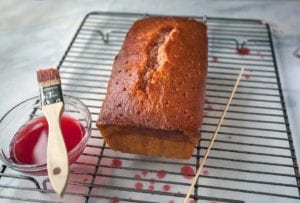
- Grasp the overhanging edges of parchment and carefully--lift the cake from the pan. Remove the paper and place the cake on the wire rack. Place a rimmed baking sheet beneath the wire rack.
- Use a skewer to poke holes all over the top of the cake with a skewer. Brush the cake liberally with the soaking syrup, letting it seep in after each coating before adding more. This takes some time. Don't even consider skimping and not using all the syrup. Let the cake cool completely.
Make the blood orange icing
- When the cake has cooled, stir the 2 tablespoons blood orange juice into the confectioners' sugar until smooth. Add another tablespoon of juice is the icing is too thick.
Ice the blood orange pound cake
- Pour the icing over the cake, letting it drip down the sides. Let the icing on the cake set for 30 minutes before slicing and digging in.
Nutrition
Serving: 1slice | Calories: 384kcal | Carbohydrates: 52g | Protein: 4g | Fat: 19g | Saturated Fat: 11g | Monounsaturated Fat: 5g | Trans Fat: 1g | Cholesterol: 92mg | Sodium: 126mg | Fiber: 1g | Sugar: 37g