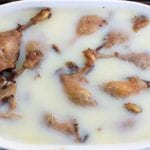

Duck Confit
Ever wonder what all the fuss is about duck confit? The wait is over.
Ingredients
- 1 cup kosher salt
- 1 tablespoon fresh ground black pepper
- Leaves from 4 fresh thyme sprigs
- 2 bay leaves, crumbled
- 1 teaspoon ground allspice
- 10 duck legs
- 2 to 3 quarts rendered duck fat*
Instructions
- Combine the salt, pepper, thyme leaves, bay leaves, and allspice in a bowl. Rub the seasoning mixture all over the duck legs. Place the seasoned duck legs in a large container, cover, and refrigerate for 24 hours. [Editor’s Note: Because of the salt brine, duck confit can tend to be a touch salty. If you prefer, you can decrease the time the duck is brined to 12 to 18 hours to lessen the saltiness in the finished duck confit.]
- Preheat the oven to 250°F (120°C).
- Remove the legs from the salt mixture, rinse well under cold water, and pat completely dry with paper towels.
- Heat the duck fat in a large pot over low heat until it melts, about 5 minutes.
- Arrange the duck legs in 2 snug layers in a large ovenproof casserole dish or Dutch oven. Pour enough of the melted fat over the legs to completely cover them by 1 inch. Heat the casserole over moderately low heat until the fat comes to a very gentle simmer.
- Turn off the heat beneath the casserole and cover it. Place a rimmed baking sheet lined with foil on the oven rack and place the casserole on the baking sheet. Bake the duck until it’s very tender and almost falling off the bone, 2 1/2 to 3 hours.
- Using tongs, gently remove the legs from the fat, being mindful that the meat is literally almost tender enough to fall off the bone. To devour the duck confit immediately, serve the confit as-is or, if you prefer the contrast of shatteringly crisp duck skin against knee-wobblingly tender duck meat, warm a skillet over medium heat and sear the duck confit, skin side down, until the skin is golden brown and crisp. To save the duck confit for later, place the entire duck legs in a resealable container and carefully pour the rendered duck fat through a fine-mesh sieve set over the duck. You want the duck confit to be completely covered. It’s imperative that the fat completely covers the meat. Let cool completely and then cover tightly and store in the refrigerator for up to 2 weeks. (Alternately, you can pull the skin off the confit, gently tug the meat from the bones in large chunks, place the duck confit meat in a resealable container, and then cover the meat with the rendered duck fat and refrigerate until your craving strikes. Ready to use at an instant’s notice.)
Notes
*Where To Buy Rendered Duck Fat
Buying a large quantity of rendered duck fat can become pricey pretty quickly if you rely on those wee glass jars found at specialty markets. We’re talking half a paycheck! Instead, consider asking your butcher if it’s possible to special order a couple quarts rendered duck fat for you. Or if you happen to have a local duck farm, ask if they’d be willing to sell you some rendered duck fat (aka liquid gold) along with some duck legs. You can also buy tubs of rendered duck fat online from numerous purveyors, including Farm Fresh Duck, Hudson Valley Foie Gras, and D’Artagnan.Nutrition
Serving: 1leg | Calories: 2016kcal | Carbohydrates: 1g | Protein: 43g | Fat: 207g | Saturated Fat: 68g | Monounsaturated Fat: 102g | Cholesterol: 370mg | Sodium: 11492mg | Fiber: 0.2g | Sugar: 0.004g