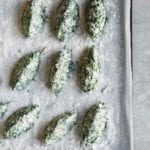

Spinach and Ricotta Gnudi
Spinach and ricotta gnudi are similar to gnocchi, but are made with cheese, giving them an ethereally airy texture, and outstanding flavor.
Ingredients
For the gnudi
- 2 tablespoons extra-virgin olive oil
- 1 garlic clove, peeled and halved
- 1 1/2 pounds baby spinach or spinach leaves (if using mature spinach, remove the stalks, rinse, and pat it dry
- 12 ounces ricotta (sheep or cow), well drained
- 1/2 cup freshly grated Parmigiano Reggiano
- 1 medium egg
- 1 3/4 ounces 00 flour or all-purpose flour* (see NOTE below for gluten-free version), plus more for dusting
- Sea salt and freshly ground black pepper
- Freshly grated nutmeg, to taste
For the sage butter
- 1 bunch sage, leaves stripped from the stalks except for 2 to 3 sprigs
- 1/4 cup grapeseed oil or other mild oil, for frying
- 11 tablespoons salted butter
- 1/4 cup freshly grated Parmigiano Reggiano
Instructions
Make the gnudi
- In a large skillet over medium heat, warm 1 tablespoon olive oil. Spear 1/2 the garlic clove with the tines of a fork. Place a strainer or colander over a large bowl. When the oil is warm, add half the spinach, cover the skillet with a lid or baking sheet, and cook, stirring every 30 seconds with the forked garlic, until completely wilted, 2 to 3 minutes. Tip the cooked spinach into the strainer or colander to drain.
- Repeat with the rest of the spinach, using the remaining oil and the other 1/2 garlic clove and then adding it to the already cooked spinach. Let cool. Remove the excess water by either squeezing the spinach in your hands, wringing it in a clean kitchen towel, or pressing down on it with the back of a spatula or a spoon. If you’re not using baby spinach, roughly chop the spinach.
- In a medium bowl, stir together the ricotta and spinach until well combined. Add the Parmigiano Reggiano, egg, and flour and stir until combined and then season with salt, pepper, and nutmeg to taste.
- Line a rimmed baking sheet with parchment paper and generously dust with flour. Using 2 large spoons (soup spoons work well), take a heaping spoonful of the mixture (about 1 ounce | 30 g) and shape it into miniature egg-shaped dumplings or quenelles by passing it repeatedly between the spoons, turning and smoothing the sides as you do so. (Alternatively, you can use a spoon to scoop up some of the mixture and use floured fingers to gently form it into an oval.) Carefully place it on the floured parchment. You should end up with 20 to 30 gnudi. Dust the gnudi with a little flour, loosely cover with plastic wrap, and set aside in a cool place until ready to cook. (You can refrigerate the gnudi for up to 24 hours before cooking.)
- When ready to cook the gnudi, bring a large saucepan of salted water to a boil. Add the gnudi to the water, reduce the heat, and gently simmer until they rise to the surface, which indicates that they’re cooked through, which should happen after 3 to 5 minutes. Using a slotted spoon, carefully lift out the gnudi, let them drain for a moment, and then gently place them back on the baking sheet.
Make the sage butter
- In a skillet over medium heat, warm the grapeseed oil and fry the sage leaves in batches (6 to 8 at a time) for about 5 seconds. Use tongs or a fork to transfer the sage leaves to paper towels. Rest assured, the sage will crisp as it cools.
- In a large skillet over medium heat, melt the butter along with the reserved sage sprigs. As soon as the butter begins to foam and take on a nutty brown color, add some of the gnudi to the skillet, making sure they’re not too crowded. Cook until the gnudi just start to crisp and brown, 1 to 2 minutes. Carefully turn them over and cook on the other side until just browned, 1 to 2 minutes more.
Serve the gnudi
- Divide the gnudi among plates. Arrange the fried sage leaves around the gnudi and, if desired, drizzle with some of the sage butter remaining in the skillet. Sprinkle with Parmigiano Reggiano and serve immediately.
Notes
*Note How To Make Gluten-Free Spinach And Ricotta Gnudi
We made this gnudi using a gluten-free flour blend to magnificent effect, swapping an equal measure of gluten-free for 00 or all-purpose flour.Nutrition
Serving: 1serving | Calories: 786kcal | Carbohydrates: 20g | Protein: 24g | Fat: 70g | Saturated Fat: 33g | Monounsaturated Fat: 20g | Trans Fat: 1g | Cholesterol: 180mg | Sodium: 770mg | Fiber: 4g | Sugar: 1g