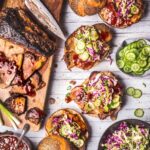

Korean-Inspired Brisket Sandwiches with Sesame Coleslaw
Brisket, a staple of Jewish cuisine, is often braised with onions and tomatoes. We like to switch things up and use gochujang (spicy Korean chili paste), along with gochugaru (the chili powder used to make kimchi). They both have a rich, spicy flavor, transforming the braising liquid into a really excellent barbeque sauce. We like to serve it in toasted potato buns topped with a heap of crunchy homemade coleslaw.
Ingredients
For the brisket
- 4 to 5 pounds brisket (look for second cut, also called deckle), lightly trimmed of excess fat
- 1 1/2 tablespoons kosher salt, plus more if needed
- 1 tablespoon garlic powder
- 1 tablespoon onion powder
- 2 tablespoons gochugaru (Korean red chile powder)
For the sauce
- 2 tablespoons mild vegetable oil, plus more as needed
- 1 large (11oz) Spanish onion, finely chopped
- 7 large cloves garlic, minced or grated
- 2 tablespoons grated fresh ginger
- 1 cup dry red wine
- 3 cups store-bought or homemade chicken stock, plus more if needed
- 1/4 cup store-bought or homemade gochujang (spicy Korean chili paste)
- 1/2 cup ketchup
- 2 tablespoons soy sauce
- 3 tablespoons brown sugar
- 1 tablespoon Worcestershire sauce
- 1 tablespoon fish sauce
- 1 tablespoon cornstarch (optional)
For the coleslaw
- 3 cups finely shredded napa cabbage
- 2 cups finely shredded red cabbage
- 1 teaspoon kosher salt
- 1 tablespoon toasted sesame oil
- 2 tablespoons unseasoned rice vinegar
- 1/4 cup mayonnaise (preferably Japanese-style)
- 3 scallions, finely sliced
- 2 tablespoons toasted sesame seeds, (preferably a mix of black and white)
For serving
- Potato buns or sandwich rolls
- 3 small Persian cucumbers, thinly sliced (optional)
Instructions
Make the brisket
- If needed, cut the brisket into two or more pieces that will fit into your Dutch oven.
- In a small bowl, mix together the salt, garlic powder, onion powder, and gochugaru. Place the brisket on a large plate and sprinkle the rub generously all over the meat, and press it in. You may not need all of it depending on the size of the brisket.
- Leave the brisket at room temperature for 1 hour or cover it with plastic wrap and refrigerate for up to 24 hours.
- Preheat the oven to 275°F (135°C) and place a rack in the lower middle slot.
Make the sauce
- Heat the oil in a large Dutch oven over medium-high heat. Add the onion, garlic, and ginger and cook, stirring occasionally, until the onion turns soft and golden, 5 to 7 minutes.
- Stir in the wine, stock, gochujang, ketchup, soy sauce, brown sugar, Worcestershire sauce, and fish sauce. Add the brisket to the Dutch oven. The liquid should be somewhere between one-half to three-quarters of the way up the meat. Add more stock or water, if needed. Bring the liquid to a boil.
- Cover the Dutch oven and slide it into the oven. Cook, checking every hour and spooning braising liquid over the top, until the brisket is very tender, about 3 1/2 hours. Remove the lid for the last hour of cooking.
- Transfer the beef to a plate or a rimmed cutting board and tent it with foil to keep it warm.
- Place the Dutch oven over medium-low heat and simmer the sauce until it is reduced to about 3 cups (it will thicken more as it cools), about 20 minutes. If you like a thicker sauce, stir in a cornstarch slurry. In a small bowl, stir together the cornstarch with 2 tablespoons (30 ml) of cold water. While the sauce is simmering, stir in half of the slurry. If the sauce still needs thickening, add the other half of the slurry.
- We like to make the brisket a full day (or up to 3 days) ahead. Place the unsliced brisket back in the Dutch oven and refrigerate overnight. Once it’s cold, it’s very easy to pull the solid fat off the top of the sauce. If you like thin, neat slices of brisket, take it out of the sauce and slice it, against the grain, while it’s cold. To reheat it, place the slices back in the pot with sauce, bring it to a simmer over low and heat until it’s warmed through. You can also reheat the sliced brisket in the Dutch oven in a 275°F (135°C) oven until hot, about 15 minutes.
- If you’re serving it the same day, let the brisket rest for at least 20 minutes before slicing. Make sure to use a sharp knife and cut against the grain. (If you look at the brisket, you’ll see the muscle fibers running in one direction. Cutting across these fibers shortens them, which makes for a tender piece of meat. If you slice with the grain, the brisket will be stringy and difficult to chew, no matter how you’ve cooked it.) Use a fat separator or a spoon to skim the fat off the sauce.
Make the coleslaw
- In a large bowl, combine the cabbages and toss them with salt.
- In a small bowl, mix together the sesame oil, rice vinegar, and mayonnaise. Add the dressing to the cabbage along with the scallions and sesame seeds and toss to combine.
- To serve, pile some brisket onto a bun, drizzle over some of the sauce and top it with coleslaw and some cucumbers, if desired. Have plenty of napkins handy.
Nutrition
Serving: 1serving | Calories: 703kcal | Carbohydrates: 45g | Protein: 59g | Fat: 30g | Saturated Fat: 8g | Monounsaturated Fat: 11g | Trans Fat: 1g | Cholesterol: 144mg | Sodium: 2528mg | Fiber: 3g | Sugar: 16g