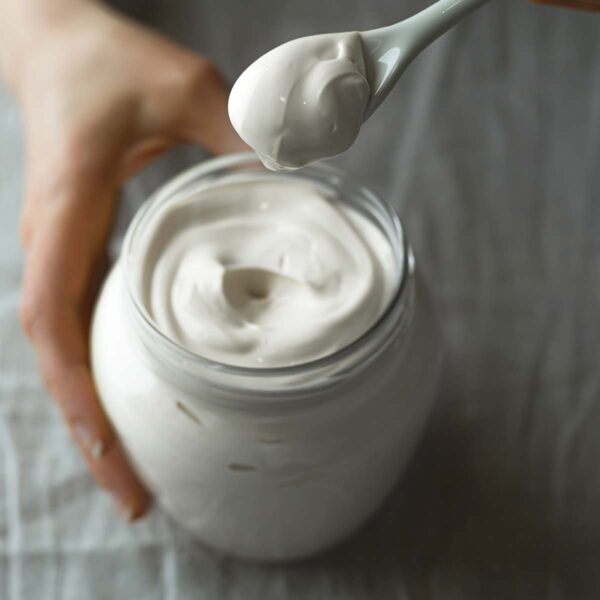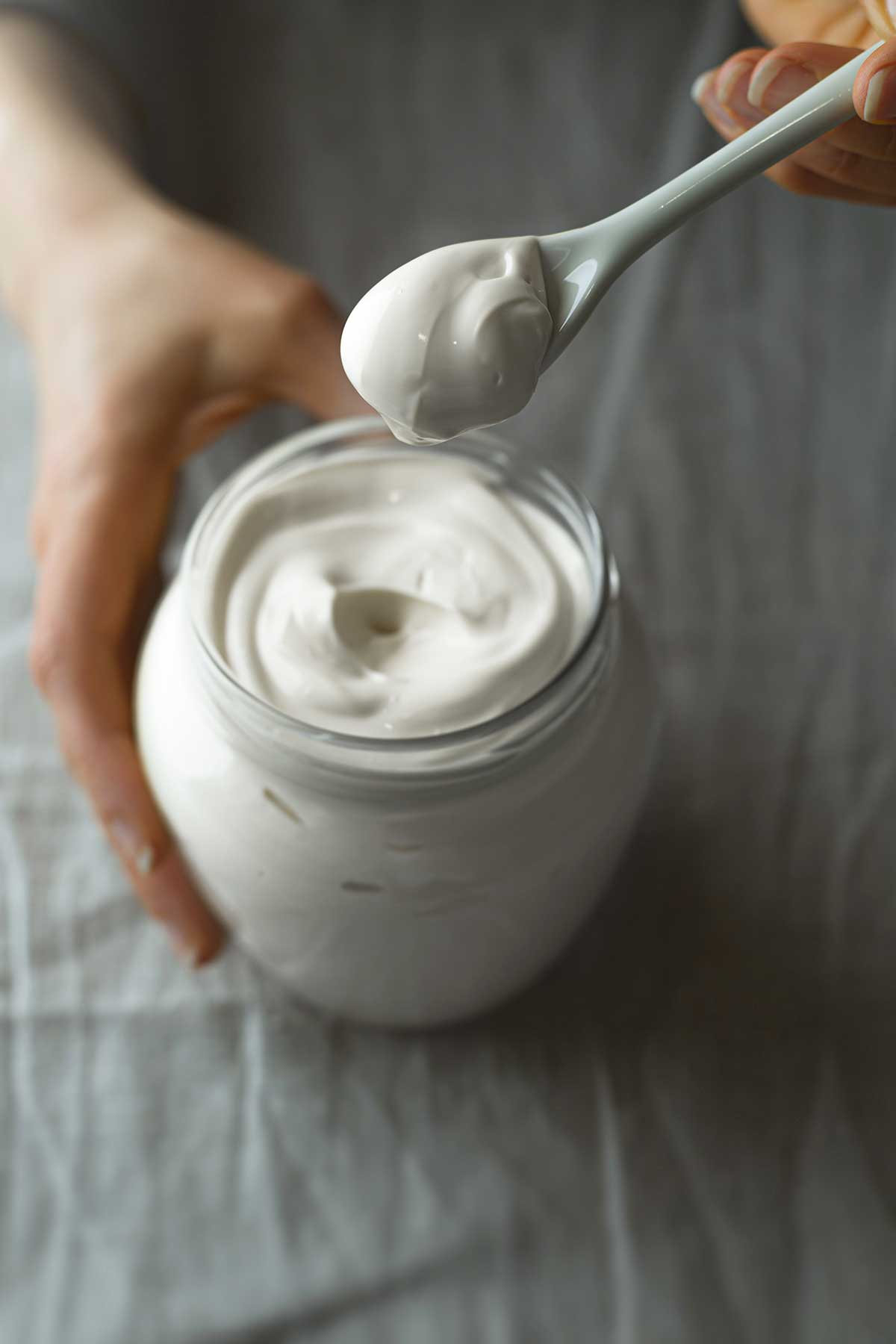
It’s the unlikeliest of couples. One thin and popular, the other fat and shunned. Each repelled by the other. But when senselessly beaten into a frenzied submission, oh, how they cave! These two frenemies suddenly give in and embrace one other, creating a more perfect union.
Sound like a bad episode of The Marriage Ref? Not surprising. When these culinary opposites—milk and oil—are thrown together, they act a lot like warring spouses, which makes their participation in the creation of Portuguese maionese de leite (may-o-NEZ duh late), or milk mayonnaise, all the more amazing.
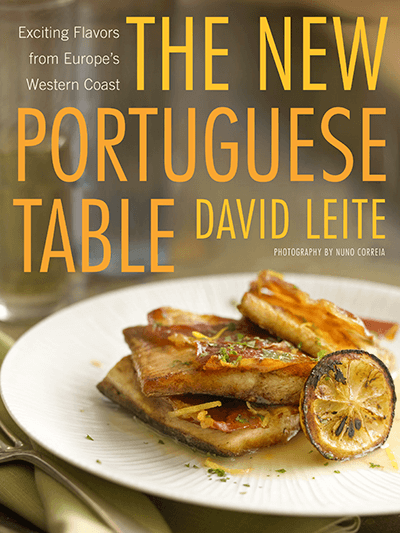
I encountered this ghostly white condiment a few years ago in Portugal while trolling the country for recipes for my cookbook. But on our first date I didn’t see it in its shocking bare-naked form. Instead it played the role of a fiendishly good green olive dip at Restaurante A Bolota, in the Alentejo. It was so good, in fact, The One didn’t stand a chance. I singlehandedly mopped up the entire bowl with hunks of bread while he nattered away with the restaurant owner, Antonieta Cocheirnha Tarouca, and the chef, Ilda Vinagre. When he looked at the bowl then at me, I just shrugged.
After dinner I followed Ilda into the kitchen to watch her whip up silky clouds and clouds of white buttercream-y goodness in her processador (food processor) using nothing but milk, oil, garlic, and a few drops of lemon juice. What? No eggs? How could it be called a “mayonnaise” without eggs? By definition mayo is a sacred emulsification of egg yolks and oil, which makes it, at least to me, the mother of all mother sauces. But Ilda shook her head: “Não ovos.” As she scribbled the recipe on the back of an envelope, she explained she wheedled it out of a chef while visiting Brazil. Then she kissed me goodbye and wished me luck.
And luck was certainly what I needed. My every attempt to make a scaled-down version of her restaurant-size mayo recipe ended in a flood of milk with an oil slick on top. Nothing, and I mean nothing, could keep these two together. Ilda, who found the Internet impertinent and cell phones intrusive, was of no immediate help. Eventually I got through to Antonieta who relayed my frantic pleas to the kitchen. The answer that came back changed everything: Don’t make it in a food processor. It’s far too big for such a small batch. Bingo! Once I switched over to a mini-chop, I had thick, luscious milk mayonnaise and green olive dip oozing from GladWare containers on almost every shelf of my fridge.
Fast forward two years.
After the book came out, I was positive milk mayonnaise would be one of its most interesting, most blogged about recipes. Milk and oil whipped into an emulsion? It defies all logic. Plus it’s eggless. How many people out there have egg allergies? They’ll beat a path to my door and throw their jewels and Google stock certificates at my feet as thanks for releasing them from their mayo-less prison, I told myself. But nothing. That is until months later, when Kathleen Purvis and Amanda Hesser wrote about the recipe within a day of each other. Kathleen hit it out of the park on the first try. It took Amanda four late-night attempts to get it right. (She had strayed from the recipe by using a hand mixer instead of an immersion blender or small blender.) The next day I had my 15 minutes of social-media fame—but not because of anything I did. (Note to self: In order to boost your Twitter clout, allow yourself to be pimped by Amanda, even when she’s exhausted and misreads your recipes.) Questions poured in. Is it really an emulsion or is it just oil-flavored whipped milk (ack! gross)? Can I use cream instead of milk? Is it stable? Can it be flavored?
So I did as I always do when faced with the perplexing conundrums of food science. I called Shirley Corriher, the doyenne of kitchen wizardry and the award-winning author of CookWise and BakeWise.
“Your mayonnaise is a 100-percent, true emulsion,” she assured me over the phone. “It’s not any kind of a flavored aerated milk.” She went on to explain that for any emulsion—mine included—to take hold, one liquid, in this case the milk, has to break down into finer and finer droplets until it gets “juicy,” or looser, allowing the oil to get all up in there between the droplets to thicken it.
“You also have two other things going for you,” she added. “Milk has natural emulsifiers, making it easier to blend. And the garlic helps to make a sturdier base before adding the oil.” What’s the role of the lemon juice? “It helps coagulate the milk, but there’s not enough to make it curdle,” she said.
Shirley also mentioned that adding a touch of cream would make a better emulsion. Figuring if a little cream is better then a lot must be fantastic, I substituted it for all of the milk and ended up with butter before I even poured in the oil. And for stability? I’ve had my mayos last up to a week with no ill effect (longer, actually, but my publisher’s lawyers would have killed me if I said that in the book).
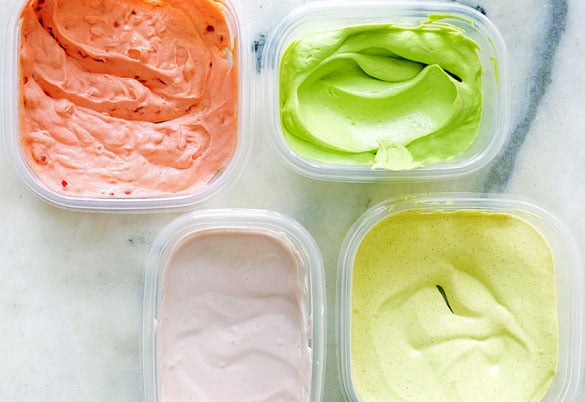
Last, there’s that pesky question of whether the mayonnaise can be flavored. Clearly, not enough of you are buying the book because in it I offer four variations: cilantro and ginger, anchovy, curry, and sun-dried tomato—which, in my magnanimousness, I’m including below.
The case of the milk mayonnaise that may or may not really be a mayonnaise is closed.

Mayo variations, please? Clockwise from top right: cilantro-ginger, curry, anchovy, sun-dried tomato.
Active time: 5 minutes | Total time: 5 minutes.
Milk Mayonnaise Recipe
Maionese de Leite
Makes 1 cup
Since I was given the recipe, I haven’t stopped finding ways to cook with it. The master recipe is only a canvas for additions. Besides the uses in this book, I’ve smeared the variations on grilled meats and fish, used them as dips and in dressings, spread them on sandwiches, and stirred them into potato salads, much as I do with actual mayonnaise.
Atenção: Like all emulsions, this recipe can be a bit finicky. But adding the oil in a thin stream and stopping when the right consistency is reached is the key. For almost foolproof results, a handheld blender is best, but a small canister blender with a narrow base will do.
Ingredients
- 1/3 cup very cold whole milk
- 3/4 teaspoon fresh lemon juice
- 1 small garlic clove, peeled
- 1/8 teaspoon freshly ground white pepper,
- About 3/4 cup vegetable oil, or 1/2 cup vegetable oil plus 1/4 cup olive oil
- Kosher salt,
Directions
Variations
Cilantro and Ginger Mayonnaise
Maionese de Leite com Coentros e Gengibre
Add 1 loosely packed cup of well-dried fresh cilantro leaves and tendril-soft stems and a 1 1/2-inch peeled and grated thumb of fresh ginger to the cup along with the milk, 1 3/4 teaspoons of lemon juice, and the pepper. Omit the garlic. Whir in the oil as directed above. Stir in 1 scallion cut into thin slices on the diagonal.
Anchovy Mayonnaise
Maionese de Leite com Anchovas
Add 6 anchovy fillets (generous 1 tablespoon) packed in oil to the cup along with the milk, lemon juice, garlic, and pepper. Whir in the oil as directed above. Omit the salt.
Curry Mayonnaise
Maionese de Leite com Caril
Add 2 teaspoons of your favorite curry powder to the cup along with the milk, lemon juice, garlic, and pepper. Whir in the oil as directed above. Before using, let this sit for an hour or so in the fridge to bloom.
Tomato Mayonnaise
Maionese de Leite com Tomate
Add 1 1/2 tablespoons of double-concentrate tomato paste to the cup along with the milk, garlic, and pepper. Omit the lemon juice. Whir in the oil as directed above. Stir in 1 tablespoon minced oil-packed sun-dried tomatoes.


The curry and tomato versions are lovely for veggie dipping (especially hot steamed artichokes), but it’s the green olive dip I keep coming back to. I could eat that dip with a spoon! It’s definitely stable in my fridge for at least two weeks—no separating or weeping and we’ve all survived. I find it tends to get eaten before there’s a chance of it spoiling.
We’ve been using a soy-based mayonnaise called Vegennaise for years because of my son’s egg allergies. They sell it in two out of three of our nearby supermarkets. Because of the lecithin in soymilk, you can make soy mayo with soy milk, lemon juice and vegetable oil in a blender too.
I’d see this cow’s milk mayo as a sort of gourmet aoli alternative to the workaday soy mayo. It might also be a budget alternative seeing as it can be made in small batches with low-cost ingredients.
One recommendation I saw in recipes for soymilk mayo was to use safflower oil, because it had a neutral flavor and left you with a more traditional mayo taste. Never tested that, but now I’m tempted to do some milk mayos with different oils to see how the flavors compare.
Greg, personally I prefer the taste of the vegetable oil versus the vegetable-and-olive-oil combo. It’s actually the original recipe that Ilda gave me. It’s lighter.
I was actually contemplating a vegetable/peanut oil mix, maybe with some anchovy paste and parmesan as a veggie dip, and one with some sesame oil, fivespice, and ginger as an aïoli for a roasted pork sandwich.
Both sound great. Take a look at the green olive dip, as it uses anchovies, too.
Dear David,
Your recipe for milk mayonnaise is one of THE most interesting recipes ever. The first time I made it, I didn’t get it right either—my fault: I didn’t pay attention to your note, and I used the food processor (needless to say, it didn’t work). On my second trial, I used the blender and the mayonnaise emulsified like a beauty. It’s so smooth, so silky, and so aerated. So far I have only tried the green olives, but playing with other flavors is on my plan. Cheers to milk mayonnaise!
Leticia
Leticia, let us know which version you like best.
Hi, Interesting post but in all fairness, much “surprise” is given to the finding. Furthermore, it is not accurately named. The oil volume fraction in mayonnaise is about 0.8, much like butter (another emulsion, but a water in oil one). In this recipe, the oil volume fraction is about 0.65, which might NOT render the known solid-like properties for mayo. Furthermore, the addition of lemon juice curdles the milk protein in the milk which is key in the texture of the final ‘mayo’ (which is not the functionality lemon juice plays in real mayo). A plethora of culinary creations have been and will be enabled by smart manipulation of aspects such as: oil to protein ratio, solid fat content, protein type, pH, surfactants etc…
All in all, great to have this sort of contribution BUT you need to keep them within the confines of accuracy.
happy to talk more!
A food-loving scientist
Cesar, couldn’t agree more. But if you read the post carefully, I make it clear that this is not a mayonnaise. And in the book, the word mayonnaise is in quotes, to set it apart from a true mayo. I used the term only because that is what it is called in Portuguese: maionese de leite. Also, the lemon juice doesn’t curdle the milk, at least in any significant or visible way.
David, not sure on your lemon juice math in response to Cesar. When I make ricotta at home, I use 1 ounce lemon juice for each quart of milk (plus 4 ounces cream per quart of milk), providing a lemon juice to dairy ratio of 1:36.
Three-fourths of a teaspoon of lemon juice to 1/3 of a cup of milk…3.75 ml of lemon juice to roughly 79 ml of milk is basically a 1:21 lemon juice to dairy ratio.
Now, in my cheese recipe, the milk is at 190+ degrees when the lemon juice is introduced, and I’m pretty sure the heat makes a difference. But on straight lemon juice to dairy ratios, you’ve got more curdling power in your method for making “mayo” than I have in my method for making cheese.
Like I said, Greg, not a food scientist! Let me be more specific, though—the lemon juice goes into very cold milk (so that may affect it) and the milk is immediately buzzed in the blender or with an immersion blender, so I’ve never seen any visible signs of curdling, as you see with cheese, which is heated and sits. It may coagulate, as Shirley said, but the oil is added so quickly afterwards, it’s hard to notice.
I’m totally intrigued by this recipe! I will definitely give it a try!
Let us know what you think.
I’m so excited to try this very for my next potato salad. Is this very lemony? If I added more lemon, would it mess with this coming together properly, maybe extract instead?
nakedbeet, adding more lemon juice will change the consistency. My suggestion is make it as directed and toss it with your potatoes, along with any other ingredients. Then add some lemon zest. You’ll get the lemon-y punch without changing the texture.
Great, I’ll follow your suggestion.
Hi David,
Made your recipe and it’s fab! Thank you so much. I didn’t want to add raw garlic, as I’ve read that anything made with raw garlic (i.e. chimichurri sauce), should be consumed within 1 day of made. So, i used garlic granules. I also used a touch of mustard. I got myself one of those oil cruets, which I’d never used before, so measured the oil and put it there, and that created a lovely “thread.” In fact, I think it was too thin, because my hand blender head was getting hot, so I made the thread thicker, and then presto! Suddenly, near the end of the oil, it started thickening and it tasted like real mayo with a hint of aioli. Fantastic! Thank you very much again.
So glad you got like the recipe, Sue!
I wonder if it can be made with yoghurt instead. Have you tried?
Nathalie, I haven’t tried, but I’d be curious.
This worked great! I halved the recipe, used only olive oil, and added a bit of cream, like you suggested. I like how this doesn’t contain raw eggs.
I found your blog, saw this, and had to make it. Immediately. It turned out wonderful, lighter than mayonnaise I find. I used 2/3 grapeseed oil and 1/3 olive oil, didn’t measure exactly but just added until the consistency was right. Didn’t have olives in the fridge, but preserved lemon and capers, which turned out really nice. Will use green olives and anchovies tomorrow. Thanks so much!
Silke, I love your adaptation. It sounds wonderful. Please let me know how the olive and anchovy version turns out.
David, I just made the olive and anchovy version, and it’s great. Still wondering whether I should really take it along to the neighbors’ dinner tonight, or just be greedy and eat it all by myself – though my waistline will thank me if I get it out of the house quickly! Thanks again for a great recipe!
David, I thoroughly enjoy your blog. In the south of Spain earlier this year I had this for the first time. I couldn’t stop eating it and the restaurant showed me how they made it. He called it alioli. Immediately my husband and I went to our rented kitchen and whipped up a batch. It works with low fat milk too. We used it as a salad dressing.
I thought I had stumbled on a something like you that would revolutionize the world. I research all my Spanish and Mediterranean books no sign of the sauce. And was waiting for the right time to write about it and alas your fabulous new book tells all.
How have so many visited these places, so many times and not noticed this wonderful sauce?
Wow..I’ve gone through a few blogs in just about an hour..I’m compelled to keep reading! YOU are a crack up! And you are so good about responding to your public lol. Good stuff…Thank you! Nicole
Nicole, thanks for stopping by and for the kind words. I hope you pull up a chair, sip on a lemonade and read some more!
i admit i was skeptical, so i just made a small batch with soy milk and it is amazing nice and fresh tasting. i plan on trying the other flavours and try some of my own. thankyou for this great idea
Dear David:
I just found your comment in my spam filter! Darn filter is overzealous. Thanks for your kind words about the adaptation of your recipe into rice milk mayonnaise. I’m happy I got the accreditation right. I am excited to try some of your other variations listed above. Please keep in touch.
All best,
Cybele Pascal
Cybele, I know the feeling. Let me know when you make your versions of the above variations. I think some of our readers might like them.
Hi David,
A real great recipe for people allergic to eggs… tried it a lot of times up to now in different variations with different oils–great. Yesterday, after obviously nonchalantly adding too much oil, the emulsion broke, and the whole thing went fluid again. If this happens, you can save the mayonnaise by mixing cold milk in a second glass and adding the “spoiled” fluid very slowly to the fresh milk–all emulsifies a second time and is as delicous as usual.
Thanks!!!
Steffen
Steffen,
It is a great recipe for people with egg allergies. And thank you for your fix regarding the broken emulsion. Everyone, Steffen gets the Reader of the Day Award for his wonderful contribution to this post!!
Love this milk mayo! Much better, way creamier, and far easier than the egg yolk-based mayo I made last Sunday. Thanks for the recipe!
John, you’re welcome!
Thank you so much. I made a Garlic, Balsamic, and Dijon version. Tastes amazing. The color could use a bit of improvement (the balsamic) But none the less very tasty.
Hi, Sue. Sounds interesting. I don’t know if you even need the balsamic, as Dijon mustard has vinegar in it. Would help the color.
Marre1943, thanks for writing. If you look closely, the recipe states use a handheld or wand blender. (If you use a blender, it has to be a mini one.) This really can’t be made well in a regular-size blender, as there isn’t enough volume to the ingredients, and most blenders are just too big. Try it in a measuring cup using a handheld blender (or even in a mini chop food processor), and I think you’ll have success. Also, make sure to puor the oil in very, very slowly.
Hi there, David. Stumbled upon this recipe while experimentally wondering if there was such a thing as mayo that used milk. The fact that it actually existed shocked me, and despite having just made a fresh batch of Japanese mayo a few days before, I got the unquenchable urge to make it anyway, just out of curiosity.
I substituted with powdered milk (still very cold, though) and added an extra clove of garlic. But I made sure to follow the part about the stick blender in a measuring cup. It came out great, if just a liiiiiittle bit runny. Is it because I used powdered milk, or too much garlic?
Your feedback would be greatly appreciated.
Regards,
Amanda
Hi Amanda, thanks for the kind words. According to your comment, the only difference is the evaporated milk, so I’d say it was that. Did you use lowfat or nonfat evaporated milk? The “mayo,” and I put it in quotes as it’s not a true mayo due to the lack of eggs, requires the milk fat and oil to emulsify. Also, try whizzing the mayo a little bit longer.
Curious: Why not use regular whole milk?
Hi, David. Thanks for the input. I’ll try the real stuff this time. : )
The label reads “full-cream” powder. I was curious on how it was going to work out if I used a more readily available substitute, probably because of this other recipe on how to make yogurt with powder as well, which I successfully used it for. Admittedly, I’m a bit of a cheap person with a sizable family, and whole milk doesn’t last long at all, so we have to make do with powder.
I guess it was because I was just used to powder. I’ll give whole milk a shot.
Regards,
Amanda
Amanda, you can find whole milk in 8-ounce cartons in some delis and small stores.
Darlene, my pleasure. Please let me know if there is any way I can help.
That’s wonderful news, Amanda. Glad to hear it worked and you were able to salvage the previous batch.
David, we have been struggling through an elimination diet trying to identify food sensitivities. It is like we can’t eat anything normal folks eat. Life without a “mayonnaise” product has been, well. difficult. We cannot have milk products so I tried your recipe using Almond Milk from the health food section of the grocery store. It worked great. We also cannot eat citrus so I substituted tamarind paste for the lemon. (Tamarind is a common souring agent in Southeast Asian cooking.) I also added a 1/2 tsp ground mustard seed for some more flavor. The “mayo” is great. Thanks for the inspiration.
Jon, my heart and palate go out to you. I, too, have suffered through elimination diets. I have also suffered through reincorporating ingredients back into my life, one at a time, waiting to see if there would be a reaction. I laud your tenacity and sense of adventure and look forward to hearing about more of your triumphs…and do check back with us. We often run recipes that just happen to fit in with various dietary constraints without shouting it from the rooftops…
I like having the benefits of probiotics in my raw sauces and was wondering if using a greek yogurt would be ok or will that affect the flavor?
Hi, Tonya. It definitely would affect the flavor and possibly the texture. You can try it, but it won’t be a milk mayonnaise–but that’s not a bad thing. If you do make it, I’d love to hear your thoughts.
Hi David!
How wonderful that you shared this recipe. I haven’t attempted to make it yet, as I have a question! I have a serious gallbladder problem, so I am stuck on a very strict low fat/low cholesterol diet. Lord knows I’d break laws for something “mayo” like to spread on a sandwich,or to add to my tuna. Don’t get me wrong, I love my mustards, balsamics, and oil & vinegars, but I could just scream for something creamy every now & then. I have adapted several kinds of spreads/dips with greek yogurt but they tend to be a bit tangy! Would I be able to use skim milk instead of whole milk in these recipes for the milk mayos? Or is there a lower fat substitute that would work? Love, Love, Love this website! Thank you again!
Pamela, well, first, thank you for the kind words about the website. We love it too, and we love bring to all of you.
About the milk mayo: According to reader Julie Logue-Riordan, it does indeed work with low-fat milk. Not sure about skim milk, though. Some people have had success with rice milk and almond milk, but I’ve never tried them. Please tell us how things turn out.
I’ll do my best to make your milk-mayo and you world famous in Denmark, to me this seems to be the best recipe of the year…or in May!
Mange tak, Lisbet! Hope you enjoy it!
David,
Your Portuguese Table came out just as I was catering a Spanish/Portuguese dinner party. Lucky for me as my food knowledge of the Iberian peninsula was limited to two years in southern Spain as a very young Navy wife. I read your book cover to cover and the milk mayo was a smash hit at the dinner party in its green olive iteration with bread slices. Fabulous! It should be called the disappearing dip as that is what happens when I make it…it disappears! We also like it with a simple Spanish salad: diced tomato, cucumber and red onion with tuna and a red wine vinaigrette. The mayo goes on a garnish of quartered boiled eggs, and then it all gets a sprinkle of poppy seeds. A great summer supper. (indoors, no skeeters. lol)
To be said like one of the ladies in “Steel Magnolias.”: Pam, you’ve warmed the cockles of my heart.
A behind-the-scenes peek: That recipe took us forever, fovEVER to recreate here in the States. On was on the phone with Patton Conner, one of our testers, counting down to zero then hitting the button on blenders, mini-chops, hand blenders. Then we would time it to see when it would whip it just right. I don’t know about Patton, but I have oil marks on the ceiling when the cap flew off the blender.
I have tried this four times now and tweaked it for my purposes. Yogurt worked well in compliment with herbed flavors which I loved for salad applications. I added melted butter, a splash of white vinegar, and a touch of onion powder instead of garlic (I found the garlic overpowering) to make a plain sandwich mayo but the yogurt in this application was too yogurty. This is my go to mayo recipe now. I even use it in my cafe and people are amazed that it is egg free.
Tonya, we love to see people getting creative with the additions. Which one is your favorite? The herb flavored one sounds fantastic.
Well, I’ve been married for 16 years and my husband has anaphylaxis allergies to eggs so he has never had a potato salad with mayo. His grandmother was German so she would make the German style but I love a good mayo based potato salad with Carolina style BBQ. So I made a potato salad with this recipe using rosemary, sea salt, and vinegar. That was pretty awesome. And he has never had a chicken salad sandwich. So I made a tarragon, mustard one that was pretty darn good, too. And then I made a sriracha one for our banh mi that he loved too. But I only make those in single dish quantities. The plain sandwich one I quadruple to keep on hand for every other purpose. I used to buy the veganaise and this is so much less expensive and I honestly think it tastes better.
My dearest Tonya, I’m going to your house. You’ve dreamed up combos I’ve never thought of. I love the sriracha idea. Excellent. Thanks for adding to the canon of variations.