

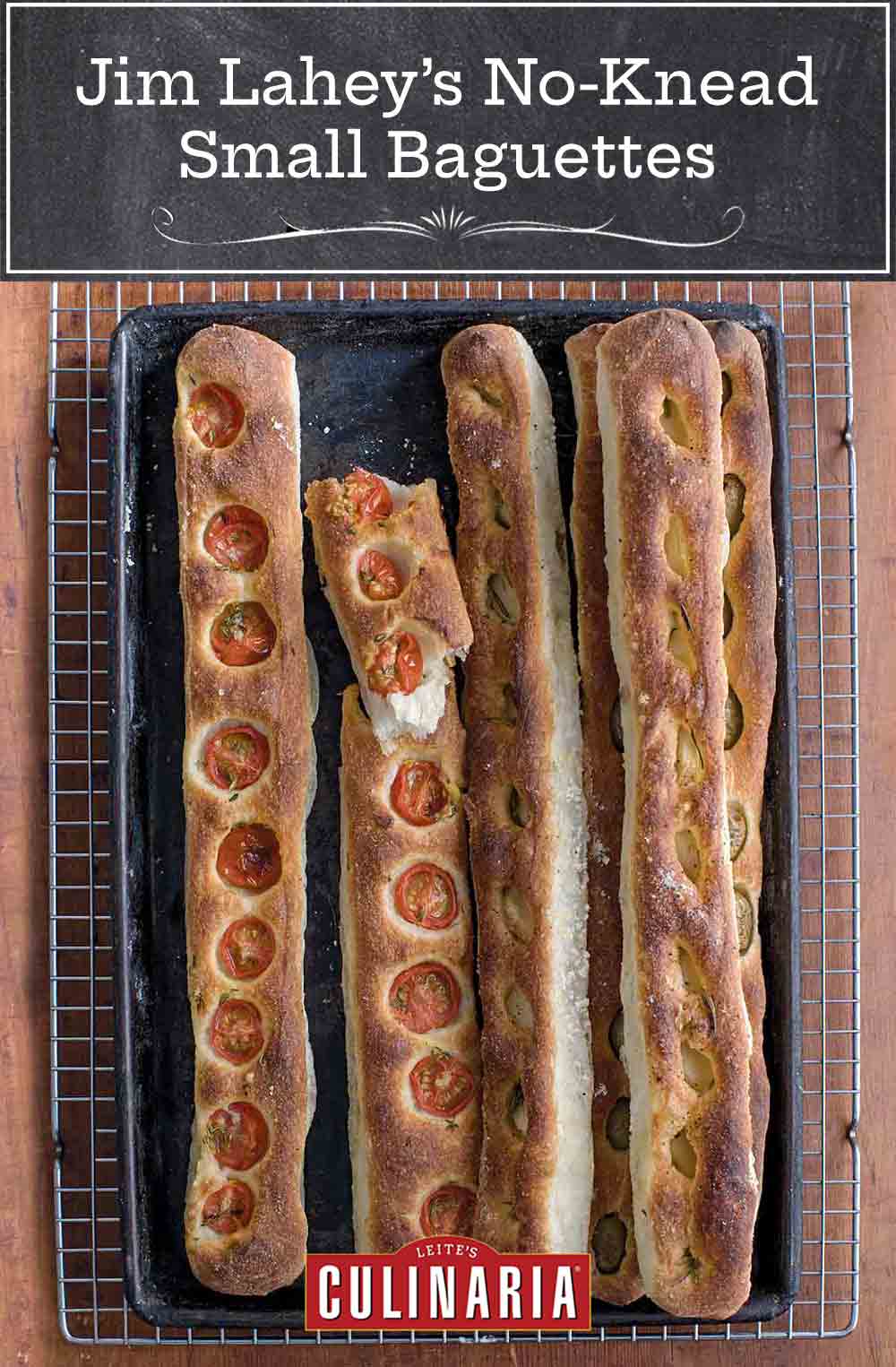


Jim Lahey’s No-Knead Small Baguette With Tomatoes, Olives, Garlic
Ingredients
- 3 cups bread flour, plus more for the work surface
- 1/2 teaspoon salt
- 3/4 teaspoon sugar
- 1/4 teaspoon instant or other active dry yeast
- 1 1/2 cups cool (55 to 65°F | 13 to 18°C) water
- 1/4 cup extra-virgin olive oil
- 3/4 teaspoon coarse sea salt
- 10 halved cherry tomatoes, pitted black olives, or lightly crushed garlic cloves
- 1 clove garlic, very thinly sliced (optional)
- Fresh thyme leaves (optional)
- Freshly ground black pepper (optional)
Instructions
- In a medium bowl, stir together the flour, table salt, sugar, and yeast. Add the water and, using a wooden spoon or your hand, mix until you have a wet, sticky dough, about 30 seconds. Cover the bowl and let sit at room temperature until the surface is dotted with bubbles and the dough is more than doubled in size, 12 to 18 hours.
- When the first rise is complete, generously dust a work surface with flour. Use a bowl scraper or rubber spatula to scrape the dough out of the bowl in one piece. Fold the dough over itself two or three times and gently shape it into a somewhat flattened ball. Brush the surface of the dough with some of the olive oil and sprinkle with 1/4 teaspoon of the coarse salt (which will gradually dissolve on the surface).
- Place a tea towel on your work surface and generously dust it with wheat bran, cornmeal, or flour. Gently place the dough on the towel, seam side down. If the dough is tacky, dust the top lightly with wheat bran, cornmeal, or flour. Fold the ends of the tea towel loosely over the dough to cover it and place in a warm, draft-free spot to rise for 1 to 2 hours. The dough is ready when it is almost doubled. If you gently poke it with your finger, it should hold the impression. If it springs back, let it rise for another 15 minutes.
- Half an hour before the end of the second rise, preheat the oven to 500°F (260°C), with a rack in the center. Oil a 13-by-18-by-1-inch baking sheet.
- Cut the dough into quarters. Gently stretch each piece evenly into a stick shape approximately the length of the pan. Place on the pan, leaving at least 1 inch between the loaves. Space the tomato halves, olive, or crushed garlic cloves evenly along the length of the dough and gently press into place. Brush each baguette with a thin layer of olive oil.
- If making the tomato version, top each tomato half with a slice of garlic, a few thyme leaves, and sprinkle with salt.
If making the garlic version, season each baguette with the salt and freshly ground black pepper.
If making the olive version, proceed to the baking step without adding salt. - Bake the baguettes for 15 to 25 minutes, until the crust is golden brown. Cool on the pan for 5 minutes, then use a spatula to transfer the stecca to a rack to cool thoroughly.
Notes
Keep Your Crust Crispy Note
The baguettes may become a bit soggy in just a few hours because of the salt on the surface. If that happens, reheat the loaves in a hot oven until crisp.
Nutrition
Nutrition information is automatically calculated, so should only be used as an approximation.
Recipe Testers’ Reviews
Did you know only 68% of the recipes we test make it onto the site? This recipe survived our rigorous blind testing process by multiple home cooks. It earned the Leite’s Culinaria stamp of approval—and the testers’ reviews below prove it.

I could not stop eating these baguettes! They combine the flavor of a focaccia with the texture of a baguette and are dangerously easy to make. We ate most of the batch just plain, no toppings or fillings, this bread can really stand alone. The tomato variation is really cute looking, but if you are not too concerned about presentation, just olive oil and rock salt is the best tasting. Note: Keep an eye on them during the last few minutes of baking because the tips can get burnt very quickly.
Wow! What a baguette. We had it plain, and brushed with olive oil and coarse salt. The recipe is very easy to follow, and even beginners can try it to feel the joy having a real, fresh baguette at home. I only had two issues with the recipe: First, you need an excellent memory, since you have to begin about 20 hours before serving time. Second, I suggest doubling the recipe if you’re serving 6 or more. Most of it was eaten in the kitchen before dinner. Even our guest, who seems to be on an eternal low-carb diet, couldn’t resist it.










I want to make the olive bread, but 1/4 tsp of yeast doesn’t sound like enough?
Sharon, it is! Because it’s a slow ferment (13 to 20 hours in the fridge), the yeast is plenty for this bread. Chow!