
TL;DR (Quick-Answer Box)
- Salt cod is a cherished ingredient; choose high-quality pieces from specialty markets and soak them properly.
- Soak salt cod for 12 to 48 hours, changing the water regularly to remove excess salt before cooking.
- Cook the soaked cod by simmering it in water or milk until it flakes easily, removing skin and bones afterward.
- Different cuts of salt cod, like loins and center cuts, work best for various recipes, each offering unique textures.
- Salt cod’s iconic flavor and texture come from its drying and salting process.

How did salted cod become so popular?
Because salt cod is one of Portugal’s iconic foods, many think the Portuguese were instrumental in its discovery, which, alas, they weren’t. Nearly five hundred years before the Portuguese began fishing for cod in the Grand Banks off the coast of Newfoundland, the Vikings had stumbled upon one of the world’s largest caches of cod and figured out how to air-dry the fish.
Not long after, the wily Basques cornered the cod market because not only did they have an uncanny ability to keep mum about where they were getting such top-shelf stock, they also figured out that salting the fish before drying it made it last even longer.
Of course, they had a global (and unwitting) partner: the Catholic church, whose laws demanding a staggering number of meatless days practically lined Basque pockets with gold. Nonetheless, once the Portuguese, excellent seamen themselves, discovered the secrets, they wasted no time in catching up.
But salt cod today isn’t like the cod of centuries ago—or even several decades ago. I remember when I was six years old, walking into the local grocery, the floor strewn with sawdust, and watching my grandfather flip through big boxes of bacalhau, turning over massive hard planks of the stuff, trying to find the right cut, the right thickness. He’d thwack his hands together every once in a while to clean them, so thickly encrusted with salt were the pieces.
Nowadays, the cod is mildly salted and in some cases, such as pieces that are sold in plastic bags, isn’t even entirely dry. While it took two, sometimes three, days to desalt and rehydrate a loin of cod when I was a kid, it can now be done in as little as a day, depending on the piece and supplier.
The reason why salt cod is so prized in the Portuguese community, besides being a cheap and shelf-stable staple, is that the drying and salting give a superior taste and texture to an otherwise characterless fish. When a meaty slab of bacalhau is properly desalted and cooked, it will flake perfectly and have just the slightest toothsomeness.
How to buy salt cod
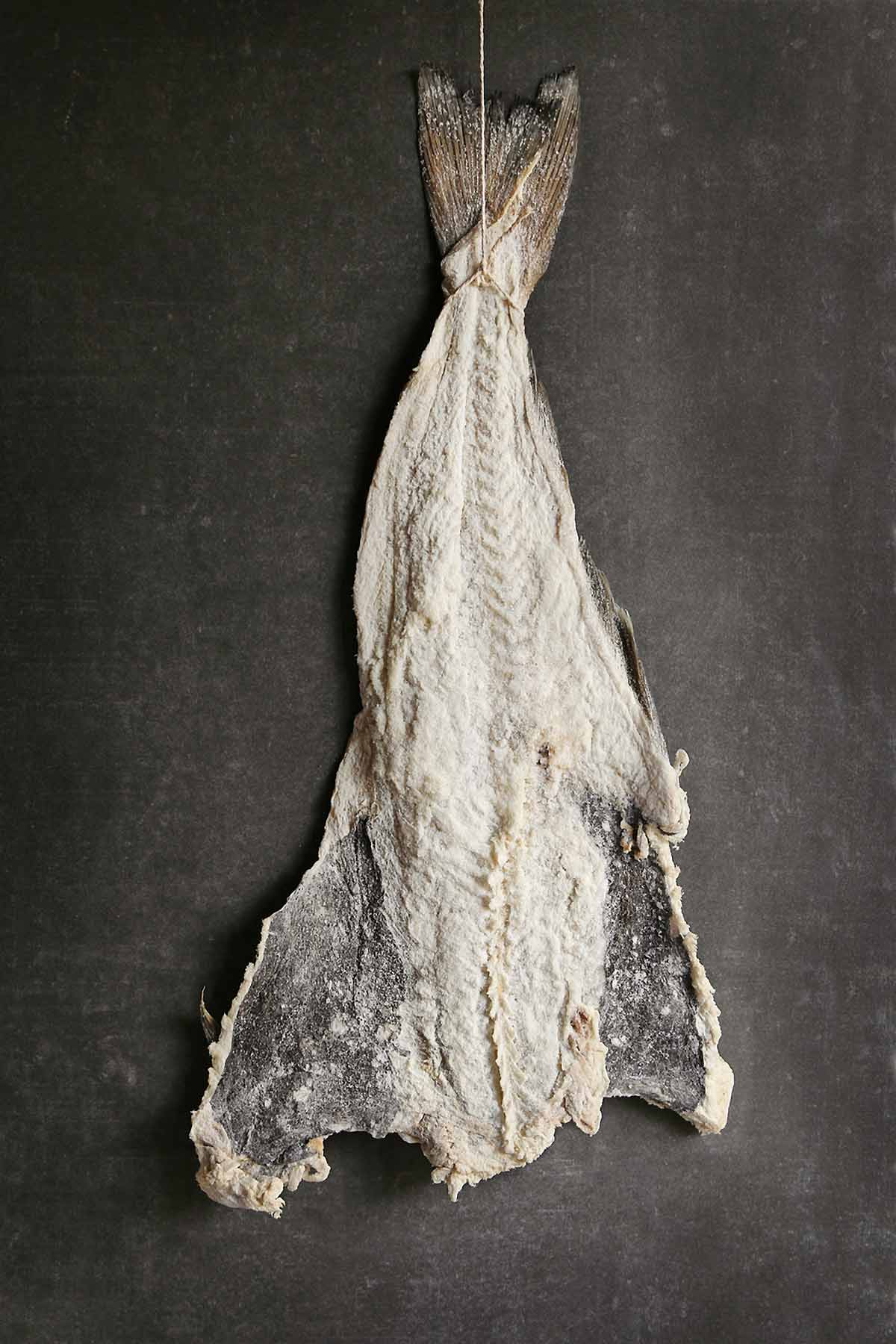
When you happen upon a recipe that calls for salt cod, or bacalhau, first of all, thank your lucky stars. Then look for quality salt cod, like the one pictured above, that hails from Norway. You should have no trouble finding in Portuguese, Italian, Greek, Spanish, and Latin markets.
Select the thickest, firmest pieces possible (it’s a win to get your hands on a thick, stunning specimen). And it’ll make for the most gasp-inducing accolades from anyone at your table.
Some markets, like Portugalia Marketplace, offer different types and cuts of salt cod, each used for different recipes.
Different cuts of bacalhau
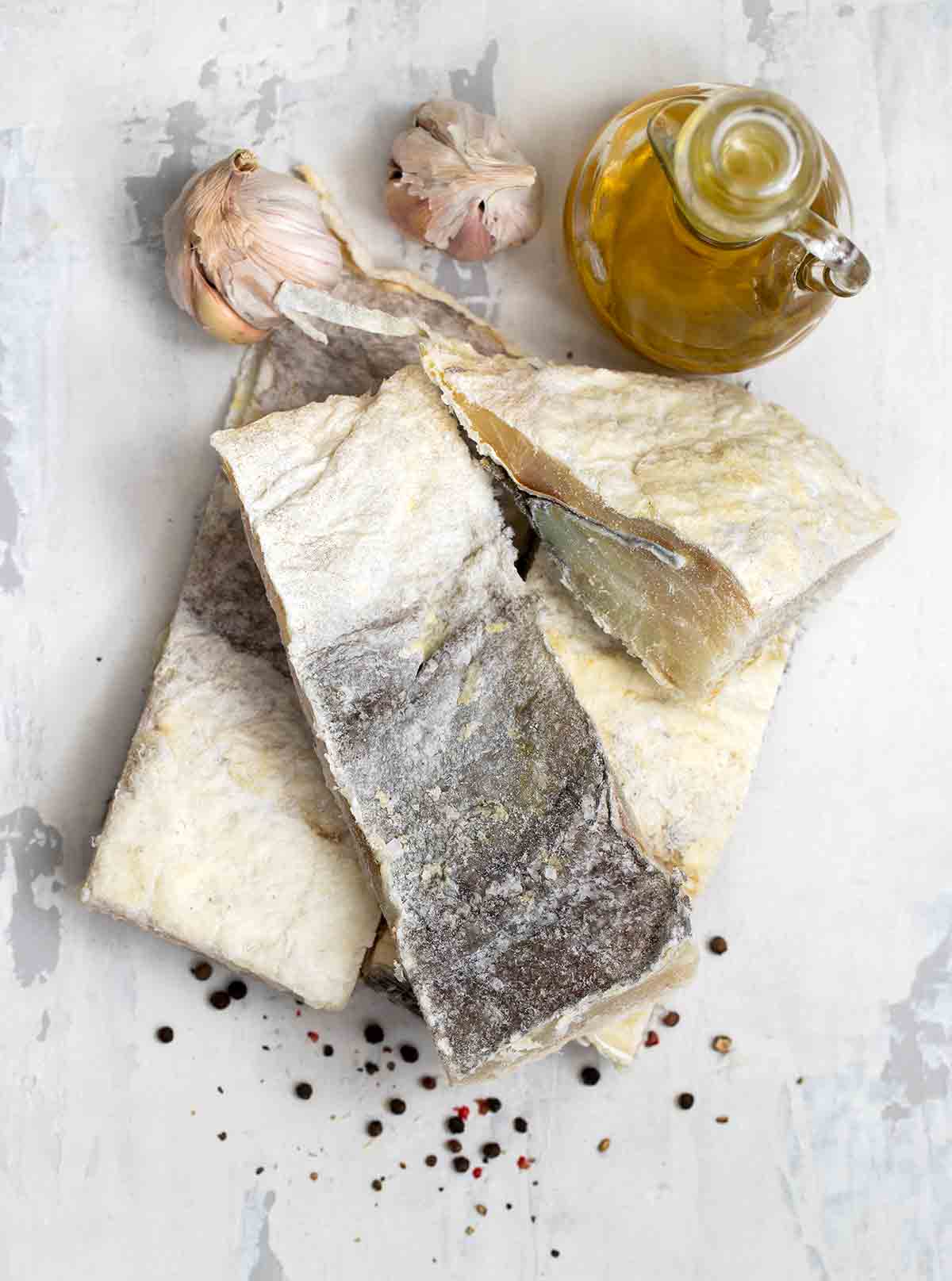
- Loins (lombos/lomos): These babies are the thickest, highest-quality, most desirable part, often from the center of the fish. They’re best for cooking whole, grilling, or baking due to their meaty texture.
- Center cuts (postas): Mid-section pieces that are ideal for stews, casseroles, or flaking into dishes.
- Tail pieces: Thinner, less meaty sections often used for quick frying, fritters, or, if heavily dried, for soups.
- Migas (crumbs/pieces): Smaller, broken pieces of salt cod sold in packs, often cheaper, and ideal for croquettes, fritters, or salads.
- Whole split fish: The entire, gutted, and salted fish opened like a book, often sold in bulk. This needs more preparation to clean and soak. This tends to be sold to restaurants.
Other considerations
- Bone-in vs. boneless: Bone-in cuts are more traditional and budget-friendly, while boneless fillets are way easier to prepare. No pulling out tweezers to remove small bones called espinhas.
- Skin-on vs. skinless: As with all fish, skin-on cod holds its shape better during cooking. Skinless, on the other hand, is more convenient but costs more.
- Quality: Look for thick, white pieces that are somewhat flexible; yellowed fish may be rancid or too dry.
How—and how long—to soak salt cod
The size, thickness, and degree of salting of the salt cod will determine how long to soak it. Here are a few tips that help:
- Rinse the salt cod well under running water to remove any surface salt.
- Place the piece or pieces of cod in a large bowl or other, more oblong container and add enough cold water to cover by at least a couple inches.
- Stretch some plastic wrap over the bowl so it’s tightly covered (trust us, you’re going to want this to be airtight) and refrigerate, changing the water several times, until the fish is sufficiently desalted for you, anywhere from 12 to 48 hours, depending on the type and size of the fillet. Take a nibble now and again. If the cod seems too salty, change the water again and let it sit for a few more hours.
☞ TESTER TIP: You can always add more salt to the recipe later, but you can’t take any more salt away once the cod has been incorporated into your recipe.

How to cook salt cod
- Pour enough water—or, if you prefer, milk to temper a little of the fishiness—to submerge the cod in a saucepan and bring to a boil.
- Reduce the heat to low, add the soaked and drained cod, and simmer gently until it flakes easily when poked and prodded with a fork, 15 to 20 minutes, depending on the thickness of your fillets.
- Drain in a colander and let cool. Remove any bits of skin, bones, and spongy ends, and carry on with the recipe.
☞ TESTER TIP: And if you’re tempted to try to substitute fresh cod, for the love of all things good, don’t do it. Salt cod is a marvelously unique ingredient that brings a complex and, curiously, almost sweet taste and incomparable texture to dishes.
Sources
Kurlansky, M. (1998). Cod: A Biography of the Fish That Changed the World. Penguin Books.
Leite, D. (2009). The New Portuguese Table: Exciting Flavors from Europe’s Western Coast. Clarkson Potter.
McGee, H. (2004). On Food and Cooking: The Science and Lore of the Kitchen (Updated ed.). Scribner.
Norwegian Seafood Council. (n.d.). Norwegian Seafood Exports to Portugal.










The doctor says I need to eat less salt. Can I rinse and soak salted cod long enough for it to be heart healthy.
Rob, I want to be careful here as I can’t dispense medical advice. My suggestion to you is to use fresh cod or another firm white fish in your dish. The reason is I don’t know how much salt remains in salt cod, even after a long soak in water.