
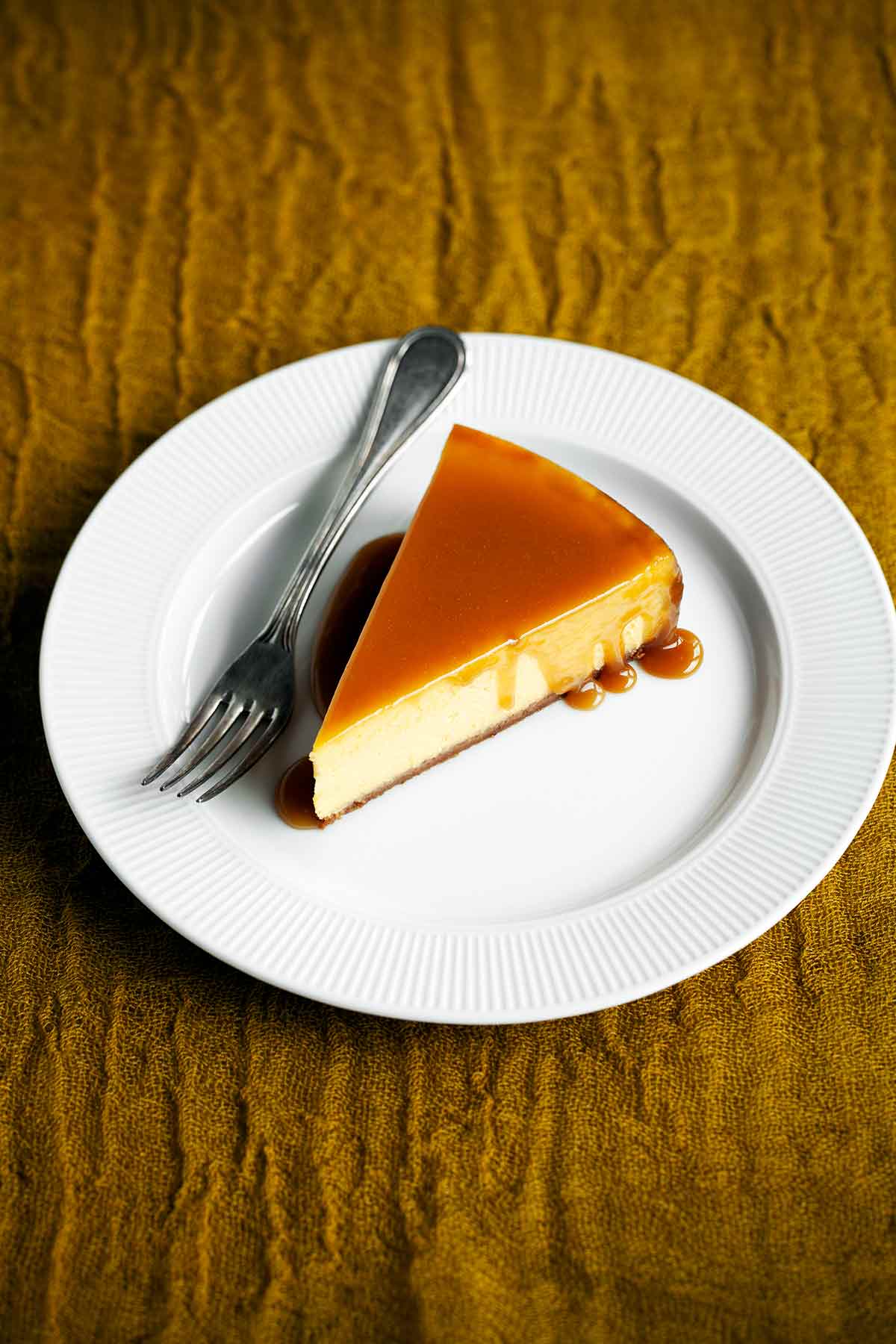
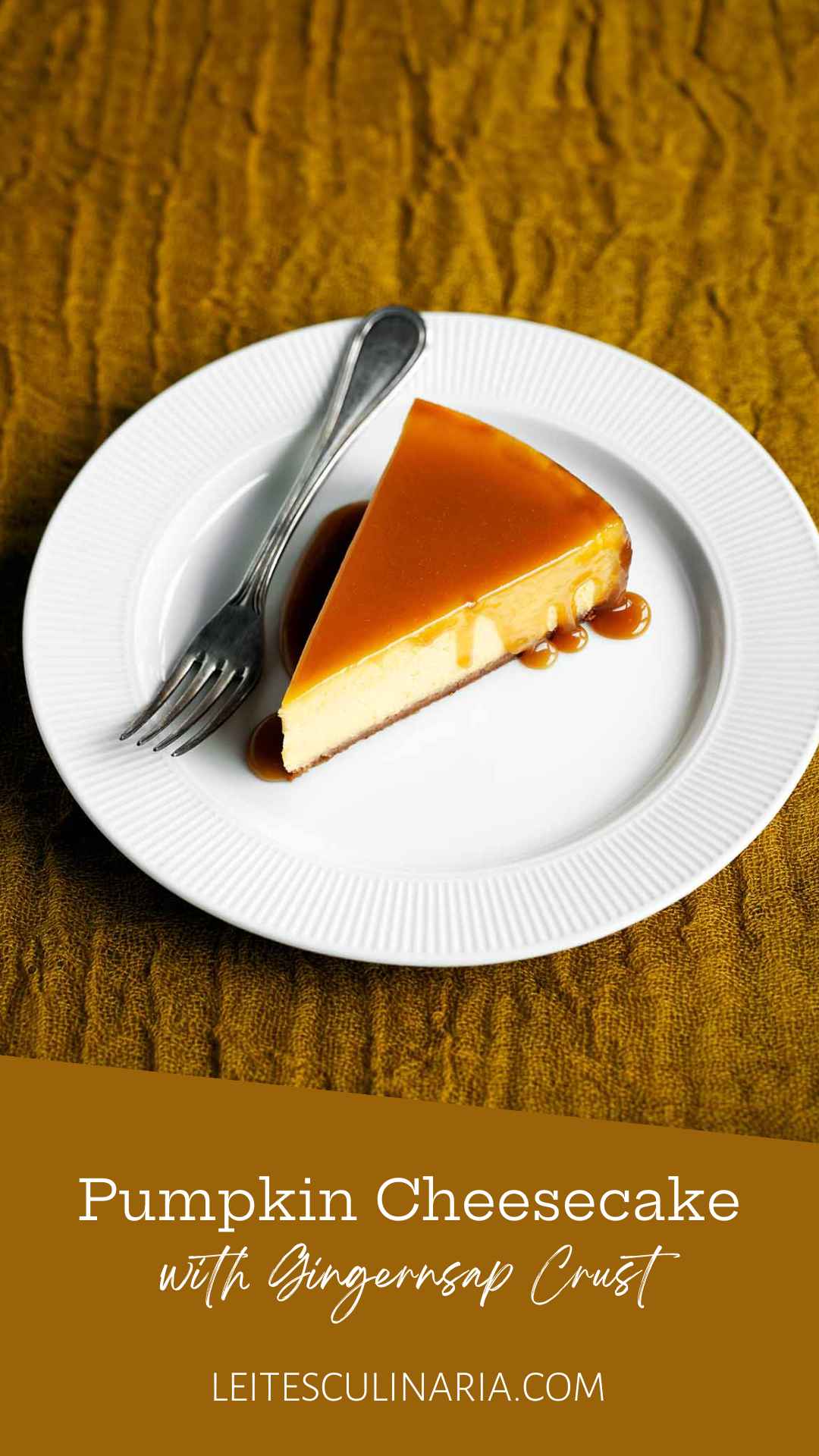
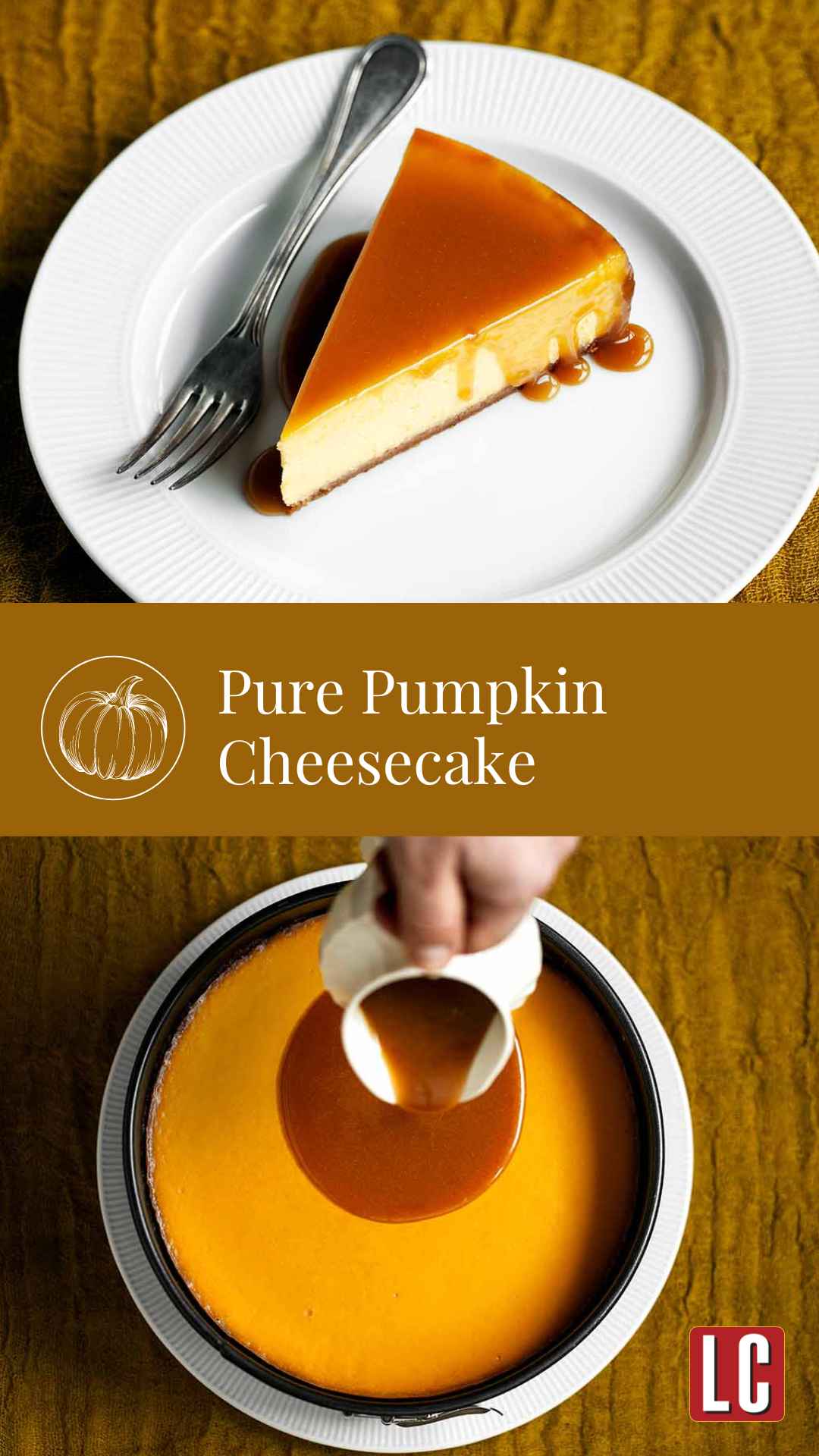
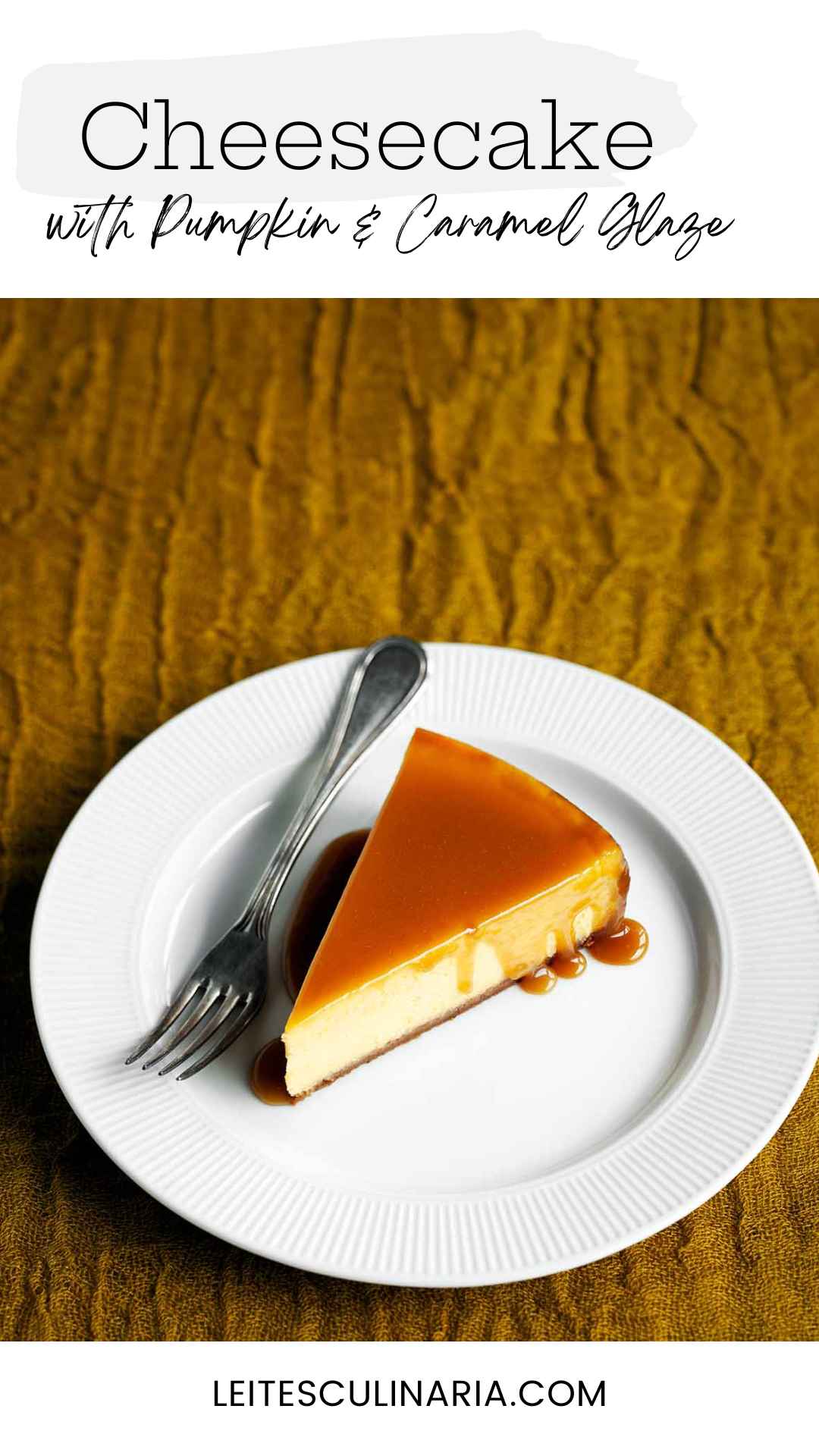
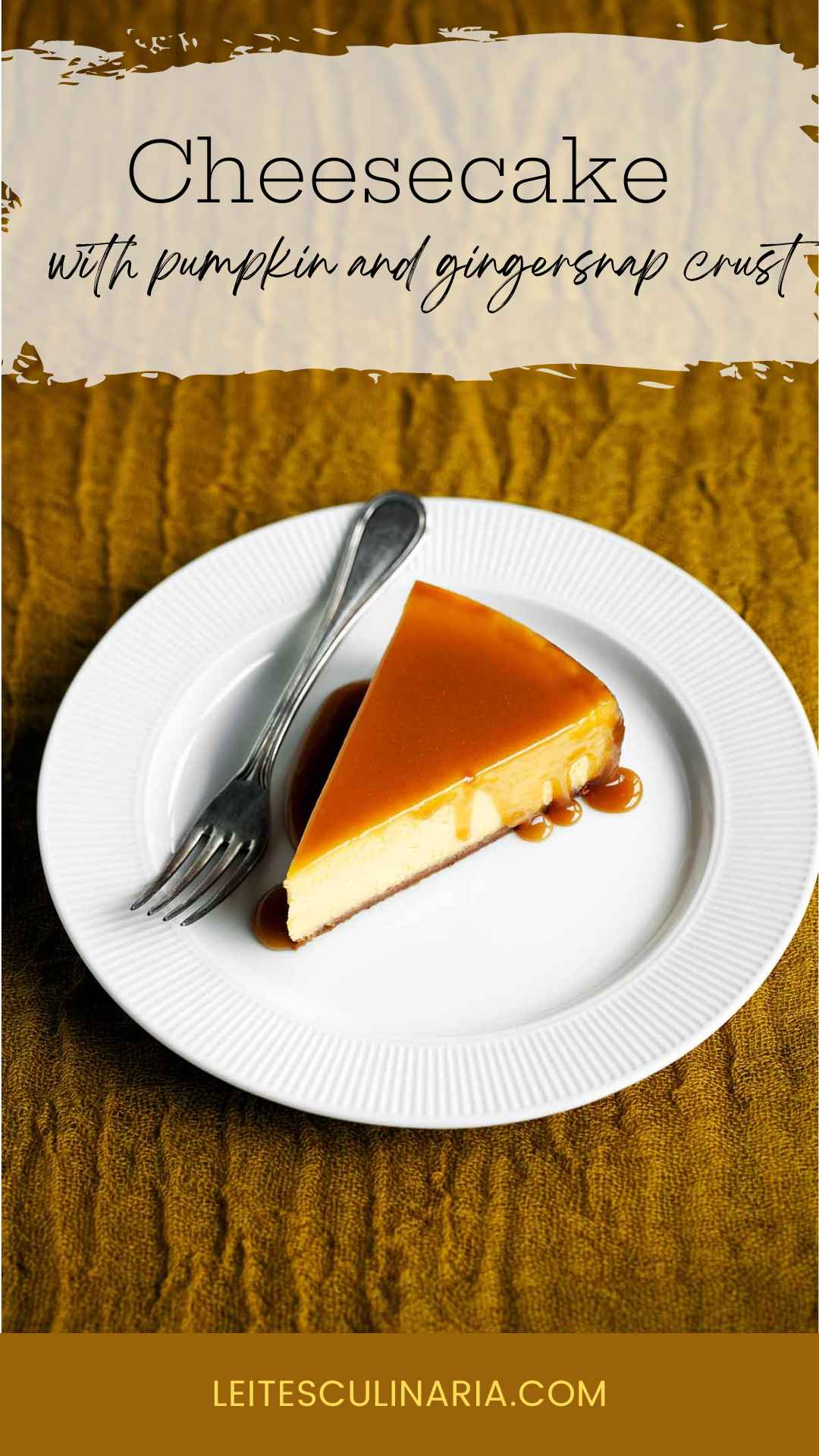
I am forever grateful that the editors of Fine Cooking magazine encouraged me to create this pumpkin cheesecake recipe. I had feared that the spices usually associated with pumpkin-flavored desserts would fight with the cream cheese, but I discovered that leaving out the spices and using turbinado sugar, with its mild overtones of molasses, made it possible to enjoy the true pumpkin flavor. The addition of a caramel glaze that ties all the flavors together perfectly means this has become one of my very favorite cheesecakes.–Rose Levy Beranbaum
What’s the difference between pure pumpkin and pumpkin pie mix?
Canned “pure pumpkin,” as the label reads, is exactly what you’d expect. Pumpkin and nothing but pumpkin. Canned “pumpkin pie mix,” on the other hand, contains added spices and sugar. The latter is a shortcut and is a fairly common ingredient in some pumpkin pie recipes. As you can imagine, the two are not interchangeable in recipes, as the remaining ingredients in your pie or, as in this case, cheesecake will have been adjusted accordingly.
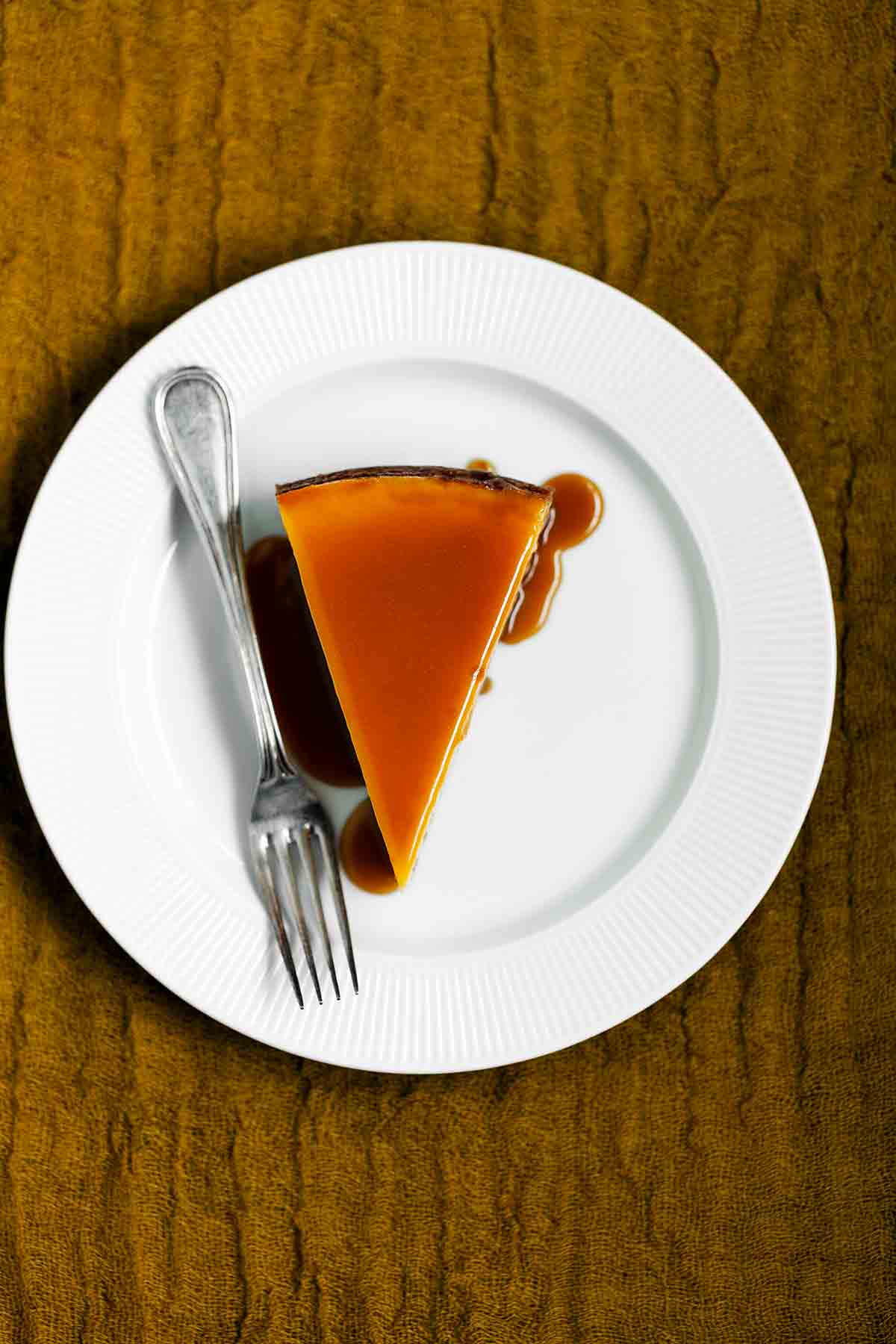
Pure Pumpkin Cheesecake
Equipment
- One 9-inch springform pan with sides 2 1/2- to 3-inches deep
Ingredients
For the gingersnap crust
- Nonstick cooking spray
- 1/2 cup pecan halves
- 1 cup lightly packed gingersnap crumbs, preferably a Swedish brand
- 1 tablespoon granulated sugar
- 2 pinches salt
- 4 tablespoons (2 oz) unsalted butter, melted
For the pumpkin cheesecake filling
- 1 cup canned unsweetened pumpkin*, (see *What’s the difference between pure pumpkin and pumpkin pie mix? above)
- 1 cup turbinado sugar
- 2 cups heavy cream, cold
- 1 pound cream cheese, cut into several chunks, at room temperature [65°F to 70°F (19°C to 21°C)]
- 2 large eggs, at room temperature
- 2 large egg yolks, at room temperature
For the caramel glaze
- 1/2 cup granulated sugar
- 1/2 tablespoon corn syrup
- 2 tablespoons water
- 1/4 cup heavy cream, heated
- 1 tablespoon (1/2 oz) unsalted butter, at room temperature [65°F to 70°F (19°C to 21°C)]
- 1/2 teaspoon vanilla extract
Instructions
Prepare the oven and pan
- Spray a 9-inch (23-cm) springform pan that has sides 2 1/2 to 3 inches (7 to 8 cm) deep with nonstick cooking spray. Wrap the outside of the pan with a double layer of heavy-duty aluminum foil to prevent leakage. Also make sure you have a 12-by-2-inch (30-by-5-cm) round cake pan or a large roasting pan.
Make the gingersnap crust
- Preheat the oven to 350°F (175°C) and adjust the oven rack to the lower third of the oven.
- Spread the pecans evenly on a rimmed baking sheet and bake for about 7 minutes, stirring once or twice to ensure even toasting. Immediately transfer the toasted nuts to a plate and let cool before using.
- In a food processor, combine the gingersnap crumbs, pecans, sugar, and salt and process until fine crumbs form, about 20 seconds. Add the melted butter and pulse just until incorporated, about 10 times.
- Using your fingers or the back of a spoon, press the crumb mixture into the bottom of the pan and partway up the sides. Using a flat-bottomed, straight-sided measuring cup or a 6-inch (15-cm) round cake pan, smooth the crumbs evenly over the bottom of the pan and at least 1 1/2 inches (4 cm) up the sides.
☞ TESTER TIP: To keep the crumbs from sticking to your fingers, place a piece of plastic wrap over the crumbs and press them into the pan through the wrap.
Make the pumpkin filling
- In a small, heavy saucepan over medium heat, stir together the pumpkin and sugar and, stirring constantly, bring the mixture to a sputtering simmer. Reduce the heat to low and cook, stirring constantly, until thick and shiny, 3 to 5 minutes.
- Using a silicone spatula, scrape the mixture into a large food processor and process for 1 minute with the feed tube open. With the motor running, add the cold cream. Then add the cream cheese in several pieces and process for 30 seconds, or until smoothly incorporated, scraping down the sides of the bowl 2 or 3 times. Add the eggs and yolks and process just until incorporated, about 5 seconds.
- Using the silicone spatula, scrape the filling into the prepared pan. Smooth the surface evenly with a small offset spatula. Place the pan in the larger cake or roasting pan and add enough very hot water to the larger pan to reach a depth of 1 inch (25 mm).
- Bake the pumpkin cheesecake, turning the pan halfway after the first 25 minutes, for 45 minutes. Turn off the oven—without opening the door or peeking in any way—and let the cheesecake cool for 1 hour.
- Place the pan on a wire rack and let cool to room temperature, about 1 hour. Cover the cheesecake with a large overturned bowl or plastic wrap and refrigerate overnight.
Make the caramel glaze
- Have ready a 1-cup heatproof glass measure coated lightly with nonstick cooking spray.
- In a medium heavy saucepan, preferably nonstick, stir together the sugar, corn syrup, and water until all the sugar is moistened. Heat, stirring constantly, until the sugar dissolves and the syrup is bubbling. Stop stirring completely and allow the mixture to boil, undisturbed, until the mixture turns a deep amber [360°F (180°C) or a few degrees lower because its temperature will continue to rise].
- Remove the pan from the heat as soon as it reaches temperature. Immediately but slowly and carefully pour the hot cream into the caramel. It will bubble up furiously. Use a silicone spatula or wooden spoon to stir the mixture gently, scraping the thicker part that settles on the bottom.
- Return the pan to very low heat, continuing to stir gently, for 1 minute, until the mixture is uniform in color and the caramel is fully dissolved. Remove it from the heat and gently stir in the butter until incorporated. The mixture will be a little streaky but becomes uniform in color once cooled and stirred.
- Pour the caramel into the prepared glass measure and let it cool for 3 minutes. Gently stir in the vanilla and allow the caramel to cool until no longer warm to the touch, stirring gently 3 or 4 times. (The glaze keeps, covered, for up to 3 days at room temperature and for 3 months refrigerated. To reheat, place the caramel in a heatproof glass container, if it isn't already in one, and place the container in a pan of simmering water until warm, about 7 minutes, or microwave it on high for 1 minute, stirring twice.)
Assemble the cheesecake
- To unmold the cheesecake, wipe the sides of the pan with a dish towel that you've run under hot water and wrung out. Then carefully remove the side of the pan.
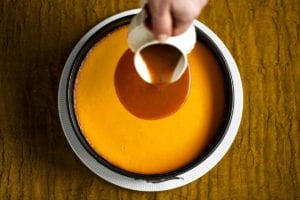
- Pour the caramel glaze over the pumpkin cheesecake from the glass measure or, for greater precision, use a pastry bag fitted with a small decorating tip,or a resealable plastic bag with a very small semicircle cut from one corner. Slice and serve and be ready to listen to oohs and aahs.

Notes
How To Ensure Your Caramel Is As Flavorful As Possible
Rose Levy Beranbaum prefers a full-flavored caramel and typically brings the ingredients to 360°F (180°C) for maximum flavor. But the darker you make the caramel, the more you risk burning it if you don’t have an absolutely accurate thermometer. A viable alternative, says Rose, is to use a light-colored or transparent silicone spatula so that you can see the exact color of the caramel as it darkens. I’ve also found that It’s best to have the cream hot and the butter at room temperature to avoid splattering when they’re added to the hot caramel. Cold cream, however, speeds the cooling and is practical if you are pressured for time, although it must be added very slowly.
Nutrition
Nutrition information is automatically calculated, so should only be used as an approximation.
Recipe Testers’ Reviews

This is the smoothest, creamiest, most delicious pumpkin cheesecake I’ve ever had. I’ve actually made this cheesecake multiple times over the years (I first tried it when it was published in Fine Cooking). Each time I’ve made it, I receive rave reviews and people often go back for seconds.
It’s very good without the caramel sauce, but the sauce does add a nice touch. The last time I made it I substituted Greek yogurt (full fat) for half the cream and the texture was still wonderful.

This pumpkin cheesecake is a very sophisticated dessert to impress any guest. My husband said, “Move over, pumpkin pie!” Elegant looking and irresistible, this may be his new favorite pumpkin dessert.
The gingersnap crust was perfect, even though I used grocery-store gingersnaps for the crumbs. I loved not having to prebake the crust. The instructions were a bit lengthy, but easy for anyone to follow. The filling was rich and creamy. Make sure to allow for turning the oven off and letting the cheesecake sit for 1 hour, cooling to room temperature, and refrigerating overnight. It’s perfect for making a day ahead.
Caramel is always a careful watching game, but this one can be made ahead, too. I made twice the amount of caramel so as to have enough to drizzle on the plate (and sample a spoonful when it’s cool!). I made the caramel in 2 separate batches. A true winner at our house!










This recipe was a lot of firsts for me. First baking in a water bath, first purchasing of gingersnap cookies (so that’s what they are), first ever attempt at a cheesecake. I believe it to have both spoiled me and ruined me.
I didn’t even have a food processor, just ziplock baggies and several hammer-esque cooking utensils. I believe your recipe resulted in exactly what was intended with the crust providing the perfect amount of pumpkin pie flavor. I used an actual sugar pumpkin, roasted and blended, but I’m not sure that had anything to do with how amazingly decadent and delicious this turned out.
Hands down, the best cheesecake I’ve ever had! I look forward to trying your other recipes! I hope everyone tries this.
Thank you, Amanda! Your cheesecake looks amazing and we’re so pleased that you enjoyed this recipe and it turned out so well. Please do let us know what you try next.
Should the cheesecake filling contain spices? “spice of pumpkin pie spice” mentioned in the description but I do not see this ingredient… any thoughts?
Sorry I haven’t made this but had to rate in order to post.
Thanks for noticing that, Liz. You will get some of those spice flavors from the gingersnap crust and the use of turbinado sugar in the filling, but it’s not a true ‘pumpkin spice’ flavor. We’ll update it to make it more accurate.
thank you, megan, for reminding me how much i love this cheesecake. and wait until you try my new favorite from my upcoming book the baking bible–mango cheesecake! pub date is fall of 2015, but it will be here before we know it!