


As you know, I’m a thoroughbred Portuguese, both sides of the family are from the Azores for as way back as anyone can remember.
And one of the things I adore are bolinhos de bacalhau, or salt cod fritters. It would be considered cultural treason if I didn’t love those little fried nuggets of salt cod and potato goldenness. What’s not to love? We Portuguese have been marrying the two ingredients for centuries: bacalhau à Gomes de Sá (casserole of cod, sliced potatoes, onions, hard-boiled eggs, and olives), bacalhau à Brás (scrambled eggs encasing shoestring potatoes and flakes of cod), bacalhau cozido com todos (basically, boiled cod, potatoes, and vegetables), and—well, you get the idea.
So when The One and I recently went to a sweet little restaurant in Great Barrington, MA, and I took a look at the menu, for a moment everything around me went pleasantly fuzzy. Kind of like looking at the world through the wrong end of a smudgy telescope. There, at the top of the appetizer list, was simply, innocently the phrase “salt cod fritter” with harrisa aïoli. So what if harrisa was a North African condiment? The real balls of the dish (pun intended) were the fritters. It was my national duty, being a citizen of Portugal, to order them.
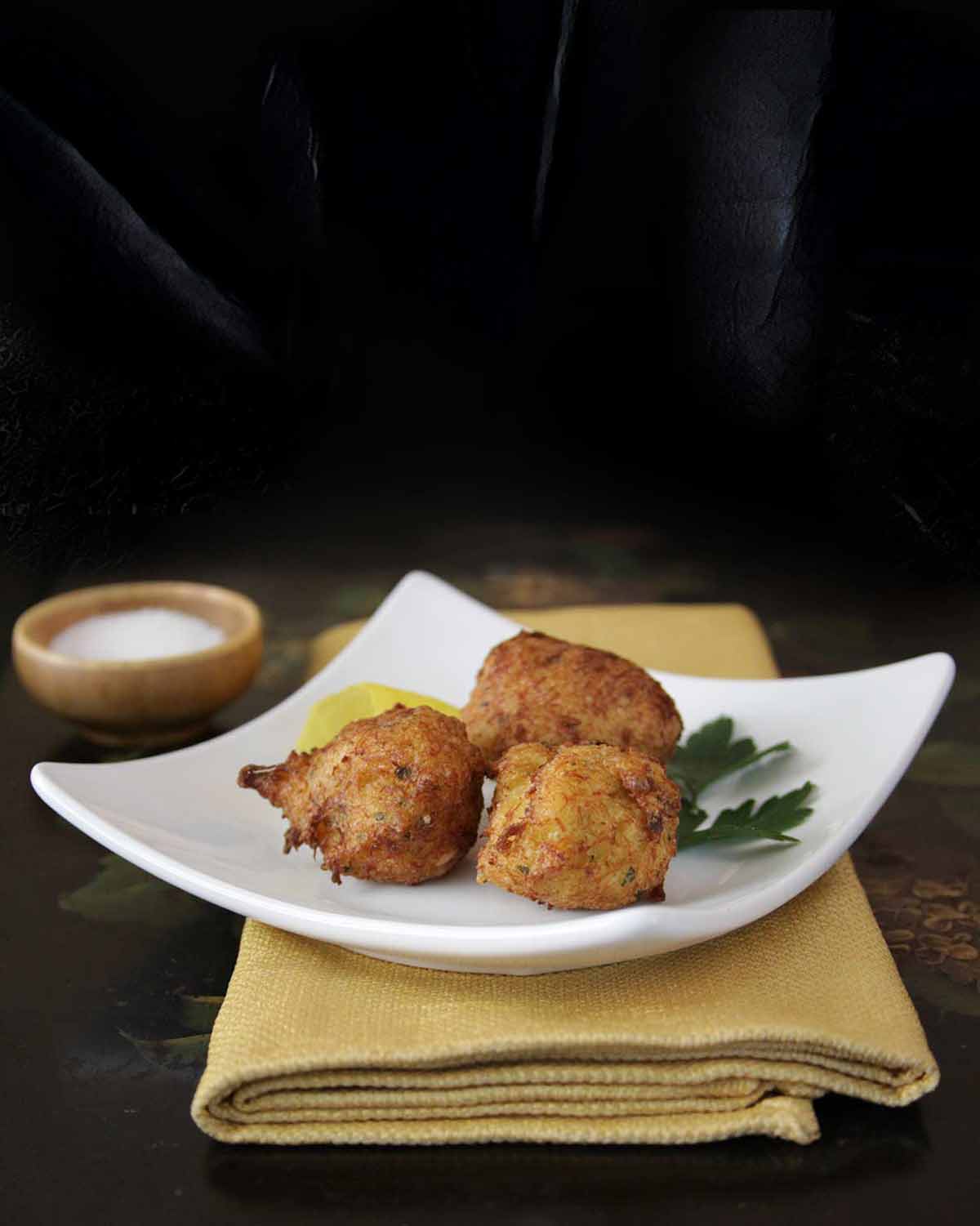
When the waitress, a jejune little thing who was utterly clueless as to the fritters’ provenance, put down the plate, I knew something was off-kilter. These were clearly different than the ones I grew up eating. The tidy, carefully shaped golf balls and quenelles of my formative years were replaced here with irregularly shaped, asteroid-like fritters with spiky ends and, on some, little beards of shredded cod, fried crisp. I’m sure if I looked close enough I could probably see the face of Christ, or, at the very least, Mrs. Sullivan, my unkempt high-school librarian.
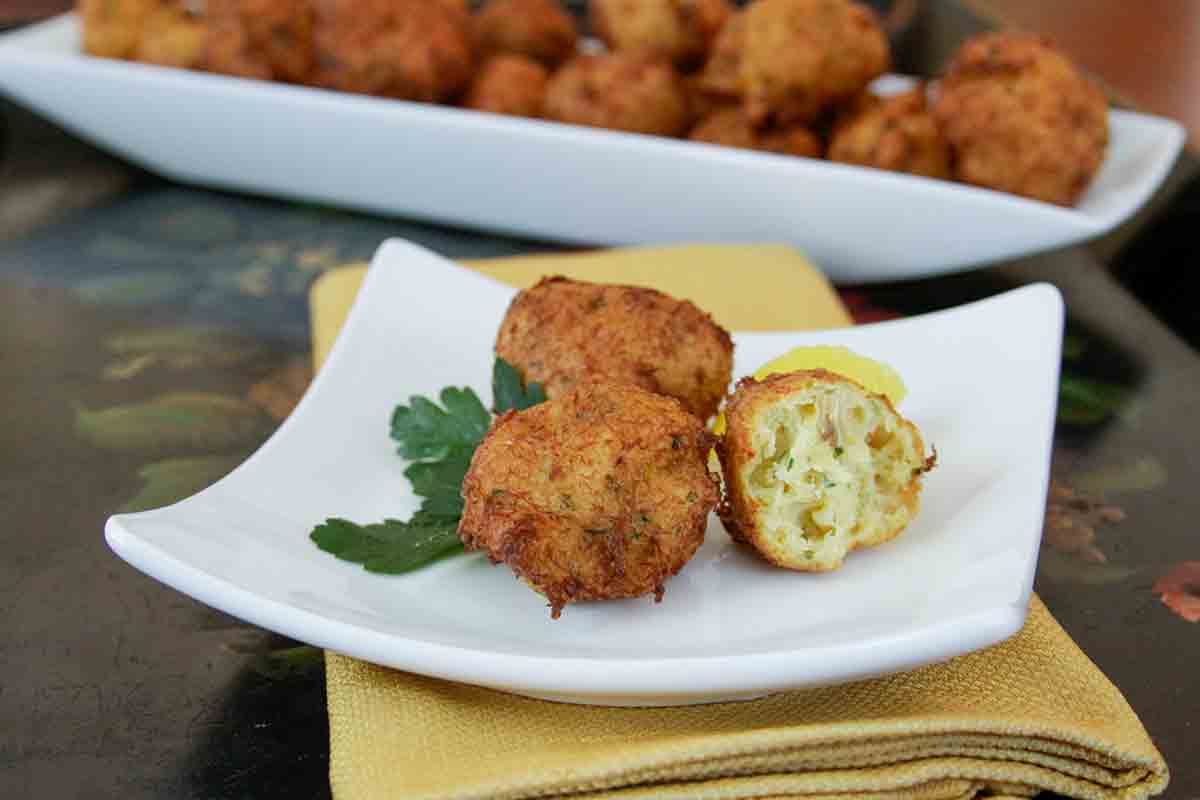
(Okay, so the photo above shows well-coiffed bolinhos. Old habits die hard. I shaped these with a spoon. So sue me.)
I popped one of the salt cod fritters in my mouth, and those fuzzy ends shattered. They were nothing like the soft bites I’ve snacked on for decades. Besides being frittery, they were light—so light you couldn’t eat just one. Or seven. Confession: The One got less than his fair share, as I took advantage of his need to wash his hands before dining to get a head start. But what intrigued me most was the potato didn’t act like Spackle, filling in gaps and holding together these boca bites. Instead, the potato balanced the dish. These were, in short, some of the best fritters I’d ever had.
After massaging the recipe out of the chef, Michael Pancheri, I instantly knew why these golden nuggets of deep-fried love were different. They weren’t Portuguese at all. They were, of all things, Spanish. Ack! The famous buñuelos de bacalao I’d heard so much about.
Besides potato, this fritter called for a batter made from flour, water, and oil. A small distinction, I know, but it’s a colossal difference to a Portuguese. As I tried not to like them (I really, really did, but it was an utterly impossible task), I could feel a whole nation turning its collective shawl-covered back on me. Nothing comes between the Portuguese and their salt cod fritters. Especially anything espanhol. (The Portuguese have had an uneasy détente with Spain after centuries of Spanish one-upsmanship and better PR.) But I truly, madly, deeply loved these fritters. What’s a Portagee boy to do? What else? Master them.
This past Saturday in CT, as I was stealing yet another treasonous bite of my perfected Spanish booty before serving it to The One and Brazilian cookbook author Leticia Moreinos Schwartz, a friend e-mailed me a link to a post about Portuguese salt cod fritters penned by the talented food writer Francis Lam. Then I saw his Tweet: “COD FRITTERS good enough to make even the Portuguese happy.”
Oh, poor Francis. Poor, misguided Francis. There has been a four-decade-long kitchen war in the Leite clan over a fritter that can make just us happy, let alone an entire nation of citizens certain each of their mothers makes the world’s best bolinhos. Such sweeping generalities can get a man in trouble, my dear Francis. And, I don’t know about you, but I have feeling there’s a fritter a throwdown in our future. You, me, salt cod, and lots and lots of oil.
If you want a killer dessert to finish your Spanish repast, check out my decadent pomegranate Basque cheesecake. You’ll thank me.
Chow,

Spanish Salt Cod Fritters FAQs
The differences are small, but if you ask a Portuguese, they’re enormous. Portuguese salt cod fritters are made with salt cod, potatoes, onion, garlic, eggs, and parsley. They shape beautifully into balls or lovely quenelles (ovals). Spanish bacalao fritters are made from the same ingredients but also contain flour and frequently baking soda for lightness. Oftentimes saffron or turmeric are added for flavor and color. They also have an irregular, crunch shape.
The short answer is it will last a very long time–months if properly stored. Salting and drying are how sailors preserved salt cod centuries ago.
First, rinse the salt cod well under running water to remove any surface salt. Then place the piece or pieces of cod in a large bowl or other, more oblong container and add enough cold water to cover by at least a couple of inches. Stretch some plastic wrap over the bowl so it’s tightly covered and refrigerate, changing the water several times, until the fish is sufficiently desalted for you, anywhere from 12 to 48 hours, depending on the type and size of the fillet.
Take a nibble now and again. If the cod seems too salty, change the water again and let it sit for a few more hours. Bear in mind: You can always add more salt to the recipe later, but you can’t take any more salt away once the cod has been incorporated into your recipe.
Spanish Cod Fritters ~ Buñuelos de Bacalao
Equipment
- Deep-fry or candy or instant-read thermometer
Ingredients
- 10 ounces salt cod, soaked
- 1 small onion, peeled and quartered
- 1 bay leaf
- 1 medium Yukon Gold potato, diced
- 2 garlic cloves, minced
- 2 tablespoons chopped flat-leaf parsley leaves
- Salt and freshly ground black pepper
- 3/4 cup water
- 1 tablespoon olive oil
- 1/4 cup all-purpose flour
- 2 large eggs
- Vegetable oil, for frying
Instructions
Prepare the filling
- Transfer the cod to a medium saucepan, add the onion and bay leaf, cover with fresh water by 2 inches, and bring to a gentle simmer over medium-low heat. Cook the salt cod until it flakes easily when poked with a fork, 10 to 12 minutes. Using a slotted spoon, transfer the cod to a plate, leaving the onion and bay leaf in the pan, and set aside until the fish is cool enough to handle.
- Bring the water the salt cod was simmered in to a boil, drop in the potato, and cook until tender, about 10 minutes. Drain in a colander. Toss the bay leaf, keep the onion.
- Dump the potato and onion into a bowl and mash them well. If the onion refuses to submit, really have at it, cutting it with a knife, if needed.
- Remove any skin, bones, and miscellaneous bits and bobs from the cooled cod, then shred it. My grandmother vovó Costa used to dump the cod on one half of a tea towel, fold over the other half, and massage it, rubbing the towel back and forth with the heel of her hand until it left nothing but little clouds of finely shredded fish. The food processor does the same thing in 10 seconds. Sorry, vovó. Stir the cod shreds, garlic, and parsley into the potato mixture. Season with salt and pepper to taste. It’s not a bad idea to over-season a bit here, as the batter will tame the flavor some. Set aside.
Make the batter
- Rinse the saucepan you’ve been using (a real one-pot meal), pour in the water and oil, and bring to a boil over medium heat. Shake in the flour slowly and stir with a wooden spoon to make a batter. It’ll be lumpy, but press on. A few more minutes and it’ll all work itself out.
- Remove the pan from the heat and continue beating the batter for 2 to 3 minutes to cool it. Add the eggs one at a time, incorporating completely after each addition.
- Add the cod mixture to the pan and stir to combine. It should be the consistency of a nice thick-enough-to-stand-your-spoon-up-in-it oatmeal. Let the batter cool to room temperature. This is the best part: If you wish, you can keep it for several hours and fry off the fritters whenever guests arrive, or when you’re in a white-hot state of hunger.
Fry the fritters
- Heat 3 inches of the oil in a high-sided saucepan over medium-high heat until it reaches 350°F (177°C). Spoon out a rounded tablespoon or so of the batter, scrape it into the oil using another spoon—remember, irregular is better—and fry until golden brown and cooked through, 2 to 3 minutes. Drain on a brown paper bag (vovó always said paper towels make fried foods soft) and serve hot, hot, hot. Don’t give these puppies time to cool down and lose their crunch.

An LC Original
View More Original RecipesNutrition
Nutrition information is automatically calculated, so should only be used as an approximation.
Recipe Testers’ Reviews

A Portuguese making Spanish salt cod fritters? Much like David, I found this to be tough for me…what do Spaniards know about our 400 different ways of cooking salt cod? But I put my Portuguese pride to the side and decided to make this recipe.
At first, the recipe seems very similar to the Portuguese version of cod fritters. The main difference is that we don’t create a béchamel-style batter. The end result was creamier, lighter, and less cod-intense compared to Portuguese fritters.
I must say that if you’re a virgin with salt cod, try these fritters prior to the Portuguese ones. The salt cod taste is much more subtle and somehow more elegant. I think this is a perfect addition for a cocktail party as well as a terrific appetizer or even a snack. Though they are indeed better just out of the frying pan, seriously, they’re just as good nice and cold after an hour on top of the counter.
For those of you who think you will not find salt cod around where you live, check out Latin American or Asian grocery stores. To make this recipe even more authentically Spanish, I would say to fry them in olive oil. Spaniards fry everything in olive oil. As I made 2 batches I fried the first ones in canola oil and the second in olive oil. Though the first batch was not as greasy and was lighter, I did however like the olive oil taste in the second batch.
And if you’re eating the fritters with a spicy sauce, the olive oil will just enhance the whole experience. After all of them were fried, I suddenly thought of adding smoked sweet paprika to the batter. I think it would really work well and be a nice Spanish addition.

These Spanish cod fritters were amazing. I’ve eaten cod fritters before and even made them at home, but they were nothing like these. Soft, fluffy, and super crisp on the outside. So delicious. I served them as an appetizer with some chipotle mayo and oven-roasted Romanesco florets.
When I told people the buñuelos de bacalao fritters were made with salt cod (you know, that dried, ugly-looking, smelly fish you sometimes see in specialty markets), they wouldn’t believe me. Everybody loved them! And they’re great for entertaining, too.
You can make the batter hours in advance and just fry them off and serve them piping hot. I soaked my cod for about 36 hours, and it was pretty mild after that. (I actually had to add some salt later.) I then roughly shredded it by hand, and put it in the Cuisinart together with the roughly chopped cooked onion and 10 seconds was all it took. It worked great.
I made the batter around noon and kept it in the fridge to fry it off at 6 that evening. No problems there. I used a #40 ice cream scoop (roughly 1 ounce/ 25 grams) to form the fritters. That worked perfectly to make uniform size fritters that easily released into the hot oil. The frying time in my case was about 4 minutes per side at 350°F—a little longer than stated in the recipe. I fried them in 3 batches and kept the already fried fritters in the hot oven on newspaper. They stayed nice and crisp.

Bolinhos de bacalhau have been a mainstay of my entertaining repertoire for a long time. Crisp and salty, the fritters seem to be loved by everyone, even avowed fish-haters. I was introduced to them in Brazil, so the version I make is Brazilian, which is pretty much in line with Portuguese versions. This Spanish buñuelos de bacalao rendition, however, is a different animal.
The first difference was that the onion in this recipe is boiled along with the salt cod, whereas in my usual version it’s added raw to the potato and cod mixture. The cooked onion is completely soft and very mellow in flavor.
This version calls for a flour-based batter, and I have to eat gluten-free. So a little adaptation was in order. I used sweet rice flour to make the batter. The flour made a thick paste when added to the oil and water, as expected. Everything looked good. And when the finished batter was added to the salt cod mixture, I had about the right texture as per the recipe description. But upon frying, the fritters were breaking apart and absorbing too much oil. Increasing the oil temperature did not help at all, so I added more flour to the fritter mixture. A total of 5 tablespoons did the trick, and after that, they fried up perfectly.
The soaking time for the cod will vary greatly depending upon the thickness of the fillets. I’m afraid it’s something you just have to get a feel for. I had very thin fillets, and a good rinse to get off the external salt plus a 24-hour soak in a bowl with no changes of water did the trick for these. Keep in mind that your salt cod will lose even more salt during the boiling process. As for breaking up the cooked fillets, I break them up by hand, then add them to the potatoes, and mash them all together.
Now for the important part. How did they taste? Well, they tasted delicious, of course. How could fried potato and salt cod not be delicious? These do differ significantly from my usual version, and which is better is largely a matter of personal taste. This version is milder in flavor with a fluffier interior and more delicate texture.
Normally I don’t think that salt cod fritters need any kind of a dipping sauce, but these were so mild, I wanted one. Wait one minute here…didn’t the essay mention a harissa aioli? A quick rummage through the fridge and I’d whipped together an ad hoc version. Just some mayo, harissa, and a squeeze of lemon. It would have been better with homemade versions of the harissa and mayo, both of which can be found on this site. Wait! Better yet, make David’s milk mayonnaise and season it with a bit of harissa. The lighter texture would be even better with these.










I Adore “pasteis de bacalhau”, so had to try this Spanish version. It was delicious and love the bechamel concept, as it provided a more creamy feel. I like both this Spanish and Portuguese versions, but if you’re asking me to be honest, the Portuguese version provides a more of a punch. What can I say, I’m a Portuguese girl and LOVE those little gems. Thank you, David, for sharing this recipe here with us.
ForeverMama, I’m so glad you enjoyed these, and thanks for weighing in on the eternal debate of Portuguese vs. Spanish!
You got me just at the word ‘bacalao’, so I have to have a go at these David. My first taste of this iconic fish was on a trip to Portugal in 2012, when the other half had just got his first Schengen visa ( we did Portugal, Italy and Switzerland in the same mad trip), and fell I in love with this flavour. I notice from the comments that the recipe has, ahem, been doing the rounds a few years, so here in 2022, and now in Beijing, I’ll try my best to have a go at this. Pics to follow hopefully. Wish me luck!
Johnnie, get on board the bacalao train! Now, these are a bit different than the pastéis de bacalhau in Portugal, but they are equally delicious!
I don’t usually like deep-frying stuff in my tiny kitchen but made an exception for this and had to stop myself from eating them as they cooled. I took the recommendation to not shape the batter into neat balls/quenelles to heart and ended up with loads of jagged crispy edges. Will definitely remake again!!!
strangevagaries, they look fantastic, and I’m delighted you enjoyed them so!