
TL;DR (Quick-Answer Box)
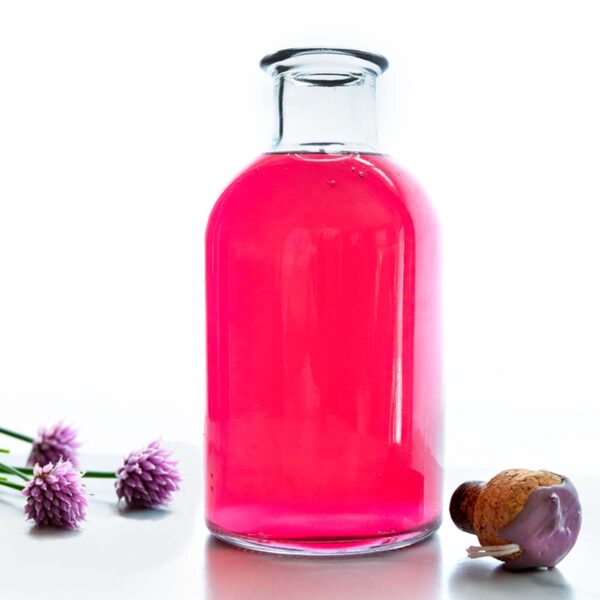
- What it is: A vibrant, blush-pink infused vinegar made by steeping fresh chive blossoms in warm white wine vinegar for a delicate, savory + floral finish.
- Why you’ll love it: It’s insanely easy, calls for only two ingredients, and transforms garden clippings into a stunning DIY gift or a gourmet salad dressing.
- How to make it: Wash blossoms in cold water, then pack into a jar. Pour warm white wine vinegar over + steep in a dark spot for 2 weeks until it reaches a vibrant pink hue. Strain + enjoy.

Jump To
Chive blossoms are a bittersweet flower for me. Sweet because their lavender dandelion-like pompoms herald warmer weather—and after the blunt-force snowstorm we had last October, they certainly are a welcome sight. Bitter because our backyard garden bed has been the site of countless murders, our Devil Cat escorting less nimble animals to their maker.
Deaths aside, The One and I have grown chives for 15 years. At first, we used to hurry to eat them early in the season before their annoying puffs started to bud. We mistakenly thought the plants were spent when that happened, and so left them to the wildlife.
A few years later, we went to On Rue Tatin Cooking School, headed up by La Dame Susan Herrmann Loomis. One afternoon, while I tossed a salad for the class, she pulled me into the herb garden and instructed me to pluck those puffy lilac blossoms.
“You mean you eat them?” I asked.
“Oh, David,” she said, looking at me as if I were a mentally challenged cocker spaniel. “Bien sûr.“
Since then, every May, The One and I practically pull our chairs up to the side of the garden and wait for the blossoms. Once they burst, we sprinkle them over green salads, spritz them on potato salads, and toss a single puff into a Gibson (when we have a Gibson lover visiting).
This year, inspired by my spate of DIY projects, we’re steeping them in vinegar to lend a hint of onion to all kinds of dishes. And every time we shake the infusion on French fries or make a lemon vinaigrette, we say a little prayer for the dearly departed.
Chow,

Featured Review
I just took the steeping chive vinegar out of the cabinet and jarred it up today. It’s been in there for about two months, just patiently getting more and more chivey. I have never seen such a beautiful vinegar before. It’s deep purple in color, and the [aroma] is enough to drive a person crazy with desire for something to eat it with RIGHT NOW. Jarred up my mint vinegar and fennel vinegar today also. We are ready for the coming six months of eating.
Jack Burton
Notes on ingredients
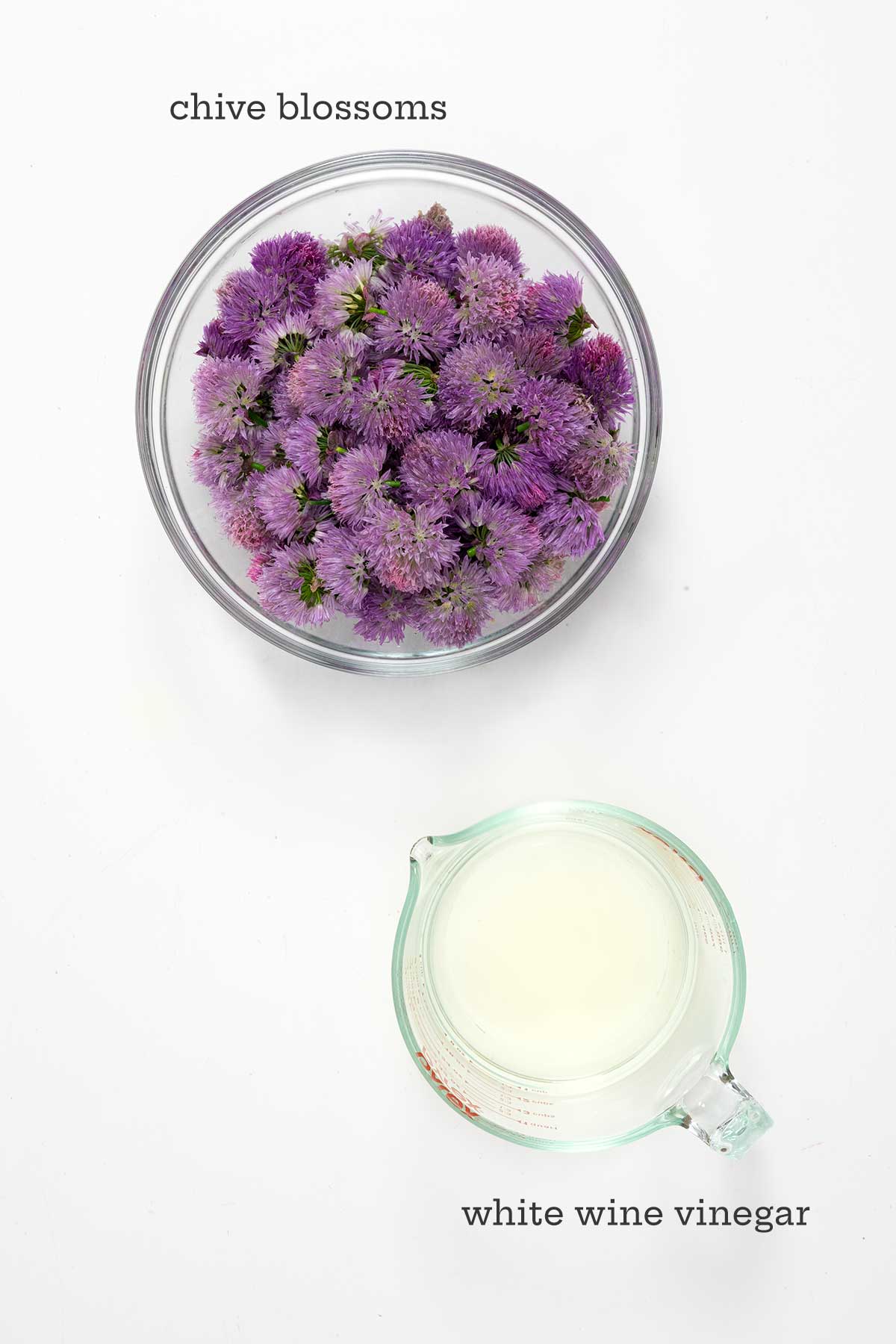
- Vinegar—For the best flavor, use Champagne or white-wine vinegar. The fruitiness of these enhances the delicate flavor of the blossoms. Rice wine vinegar will also work.
- Chive blossoms—These pretty purple flowers are best picked right after they’ve opened before they begin to fade. Don’t include any of the stems in your vinegar.
How to make chive blossom vinegar: Visual Guide
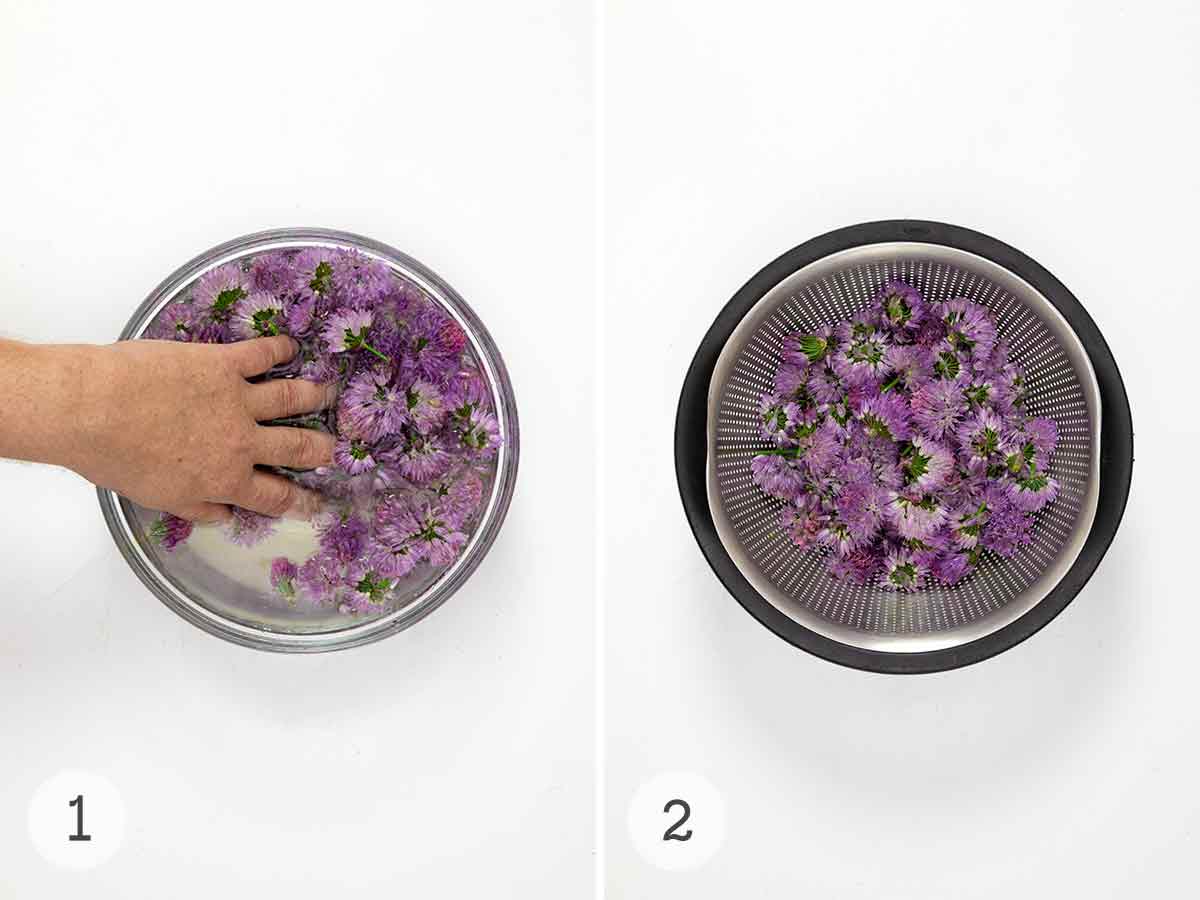
- Place the chive blossoms in a bowl of cold water. Gently swish to remove any dirt.
- Drain the flowers. Give the colander a firm tap against the sink to remove any extra water.
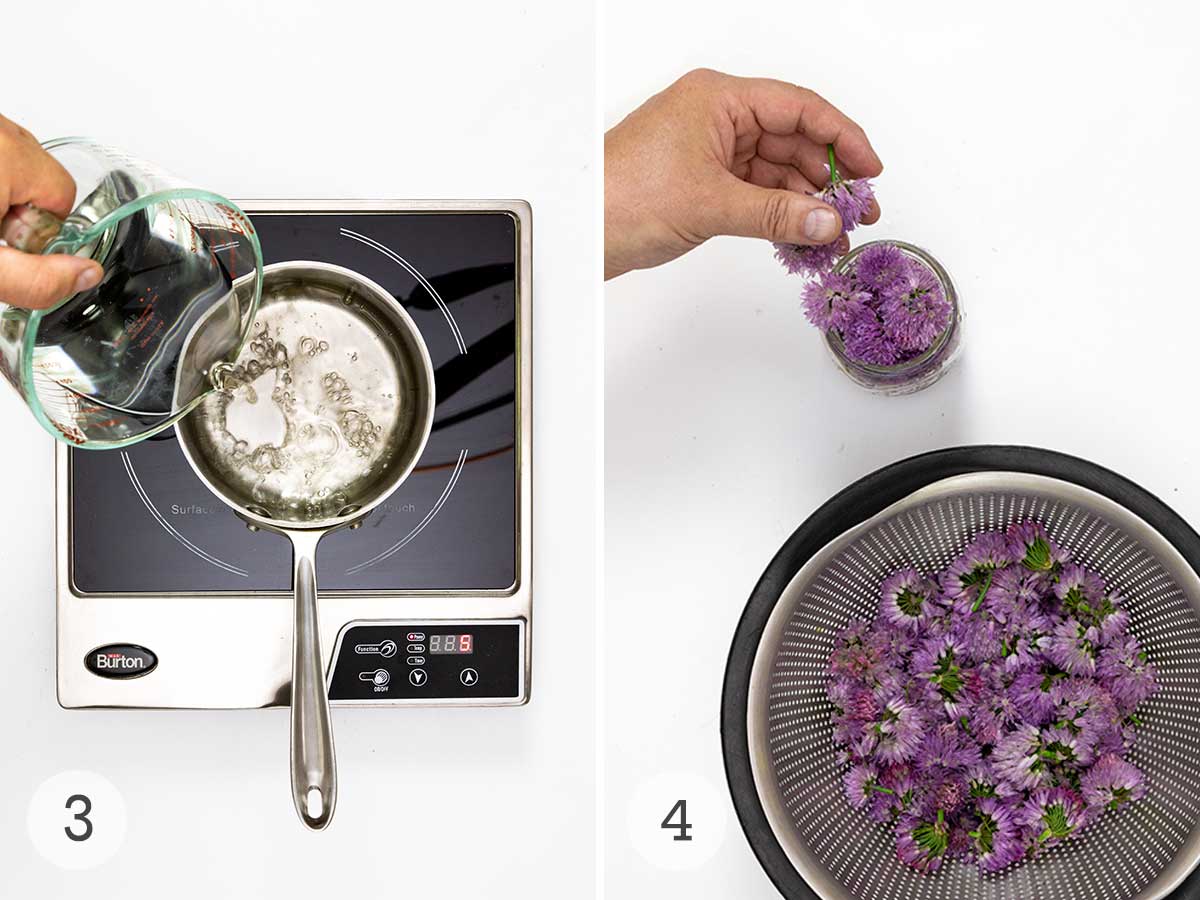
- Heat the vinegar in a metal saucepan over low heat just until warm.
- Transfer the chive blossoms to a jar.
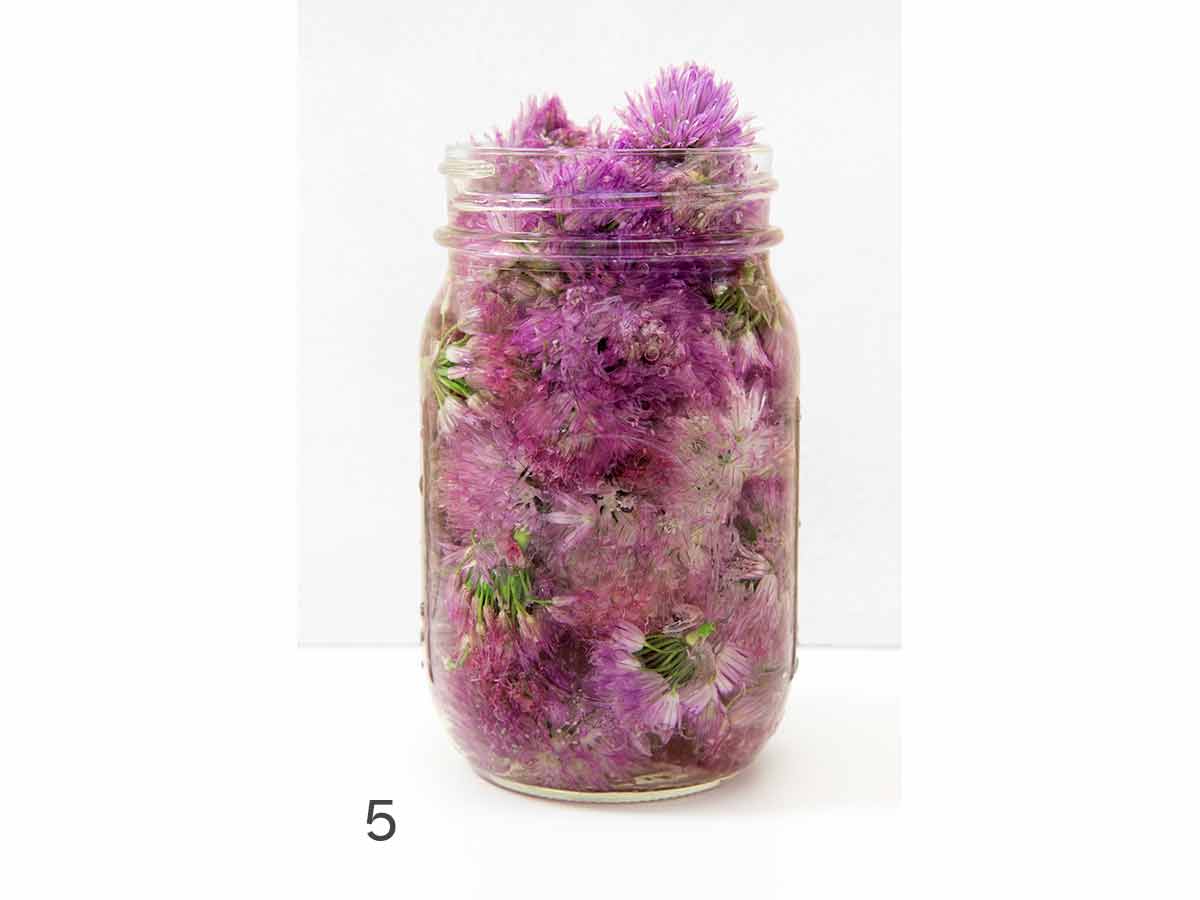
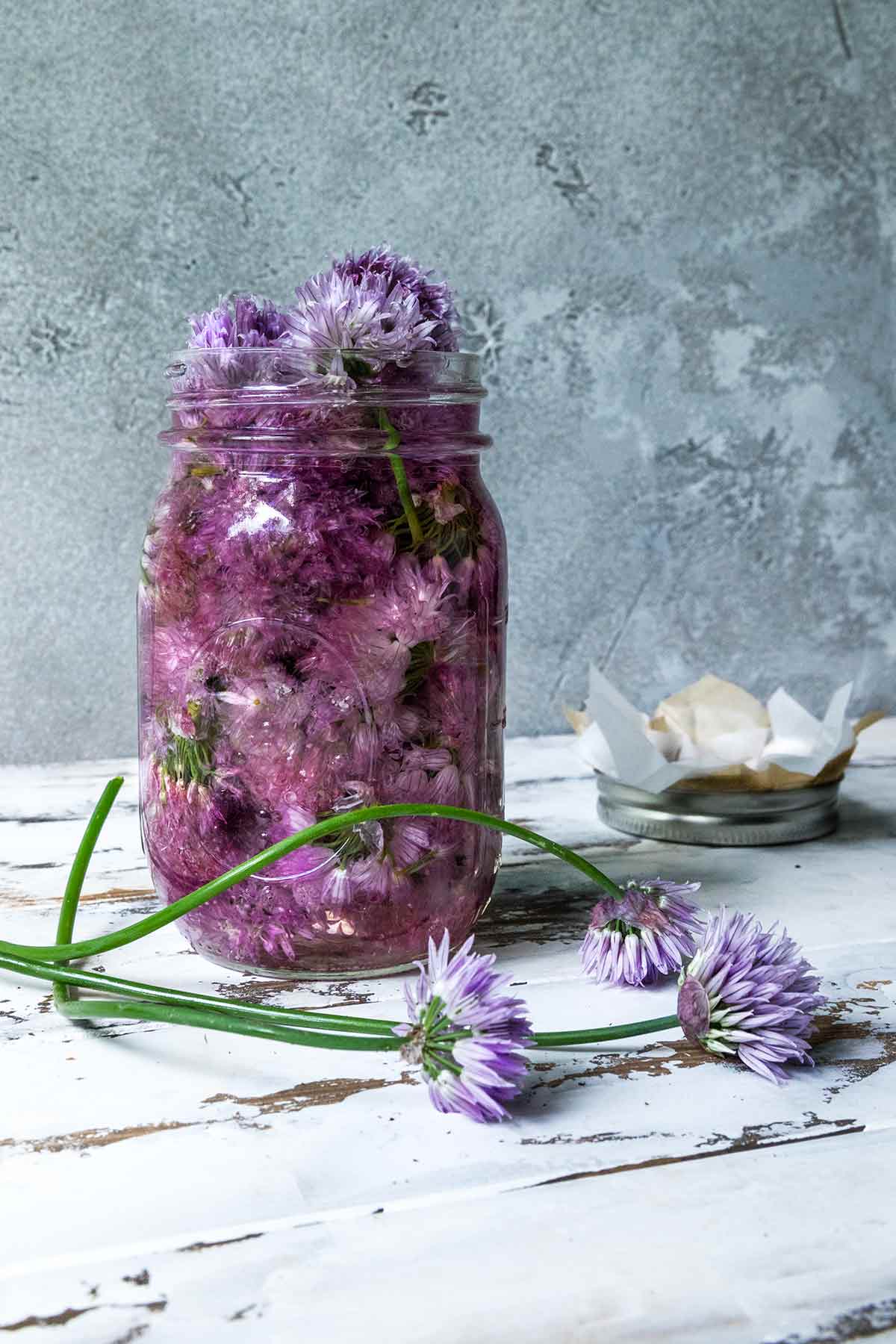
- Pour the warm vinegar over the blossoms in the jar. Cool completely before covering and storing in a cool, dry place for two weeks.
- Strain the vinegar into a clean jar.
Your chive blossom vinegar questions, answered
Chive plants bloom in late spring or early summer, depending on the region.
Getting that deep, jewel-toned pinkish magenta usually comes down to 1) patience and 2) the amount of blossoms used. While the recipe calls for a minimum of two weeks, some readers find that letting it steep for up to two months results in a waaay more intense color and a “chive-y” punch. Just make sure the blossoms are fully submerged for the best color and flavor.
Nope. Refrigeration isn’t necessary if you plan to use it within 3 months. Simply store in a cool, dark place, away from direct sunlight.
If you’d like to prolong the life of the vinegar, store it in the fridge for up to 8 months. Alas, the flavor of it will fade over time.
What CAN’T you do with them? Use them in any recipe that calls for chives. Try adding them to this gorgeous smoked salmon pasta, tossing them onto crispy, cheese latkes, or mixing them with butter to create a stunning compound butter. The One adds them to his famous potato salad. And I add them to anything with eggs: scrambled, omelets, quiche… you get the idea.
Pro tips & troubleshooting
☞ A dry blossoms is a good blossom
Make sure to dry the blossoms before adding them to the vinegar. All those little floral nooks and crannies can hold water, diluting the acidity.
☞ Avoid metal canning lids
The acidity of the vinegar can corrode traditional metal canning lids. If possible, reach for a glass-topped can jar, such as Weck 742 jars (19.6 ounces). Plastic lids are also a great option. If all you have are metal lids and rings, simply cut a square of parchment, crimp it over the jar, and screw on the lid!
☞ Give the gift of oniony goodness
This chive flower vinegar makes a wonderful homemade food gift.
How to use homemade chive blossom vinegar?
A reader, Catherine Kelly, wrote me asking for even more ways to use chive blossom vinegar, as she’s sitting on a veritable forest of chives. So, thanks for the nudge, Catherine!
Unexpected main & side sishes
- Gourmet French Fries: Swap out malt vinegar for chive vinegar. It adds a sophisticated, onion-tinged zing to hot, salty fries.
- Quick Pickling Liquid: Use it to make quick-pickled red onions, pickled eggs, or pickled shallots. The pink vinegar will deepen the color and add a layer of herbal complexity.
- Soup Finisher: Stir a teaspoon into heavy or earthy soups right before serving. It is particularly good in creamy potato fennel, hearty pea soup, or asparagus soup to cut through the richness.
- Deglazing Agent: Use it to deglaze a pan after searing pork chops or chicken. The vinegar picks up the browned bits and creates a savory pan sauce with a built-in “shallot” vibe. And it would be wildly good in these pickle juice-brined pork chops.
- Steamed Seafood: Drizzle a little over steamed mussels, Portuguese clams, or grilled white fish. It mimics the classic pairing of butter and chives but with a cleaner, acidic finish.
Savory baking & dairy
- Focaccia & Sourdough: Brush the vinegar over focaccia dough before baking for a tangy crust, or use the leftover pickled blossoms from the bottom of your jar as a topping.
- Fresh Cheese: Use the vinegar as the acid to curdle milk for homemade ricotta or tofu, resulting in a subtly seasoned fresh cheese.
- Compound Butter: Fold a few drops (along with the strained blossoms) into softened butter for a “chive butter” that has an extra hit of acidity.
Cocktails & drinks
- The Chive Gibson: Traditionally made with a pickled onion, a Gibson cocktail is even better if you use gin infused with chive blossoms or add a tiny splash of the vinegar as a savory “shrub.”
- Savory Shrub: Mix 1/2 oz of the vinegar with gin, limoncello, and simple syrup for a tangy, botanical cocktail that pairs perfectly with fatty appetizers like cheese boards.
- Bloody Mary Zest: Add a splash to your Bloody Mary mix instead of lemon juice for an extra savory, allium-forward kick.
More amazing homemade condiments
Basil Oil
45 mins
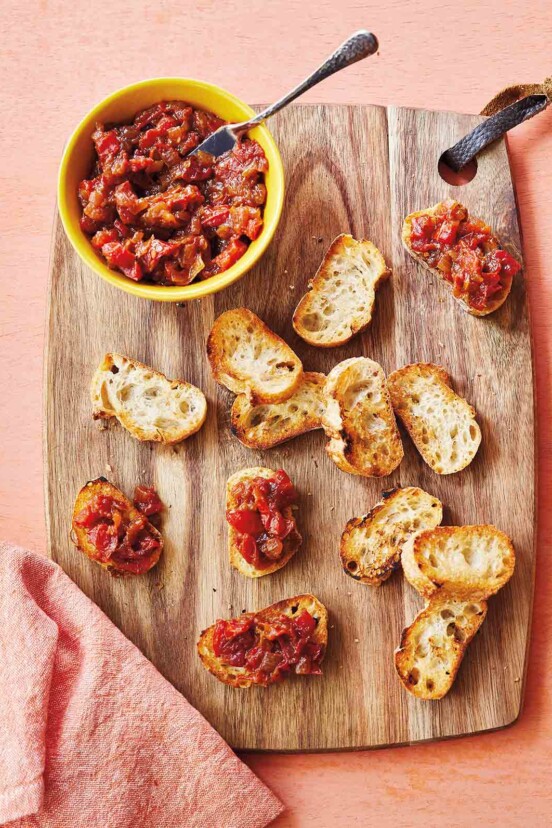
Caramelized Onion and Tomato Jam
1 hr 30 mins
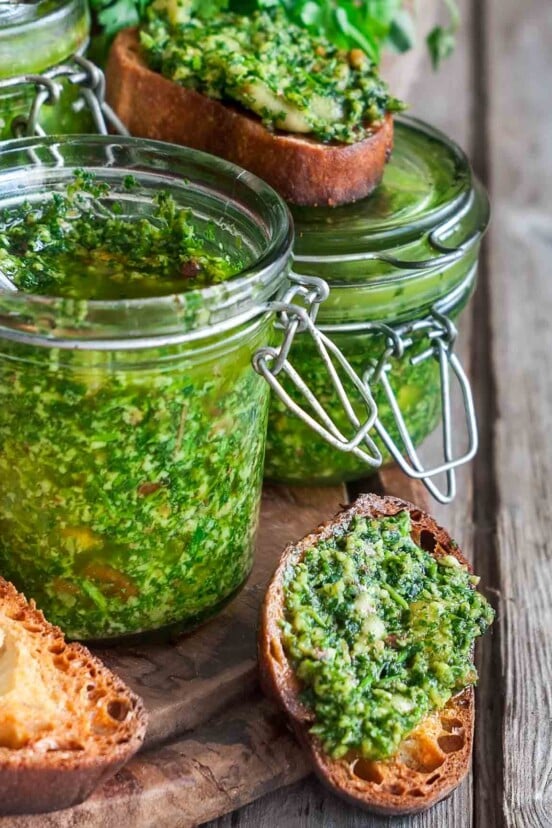
Cilantro Sauce
10 mins
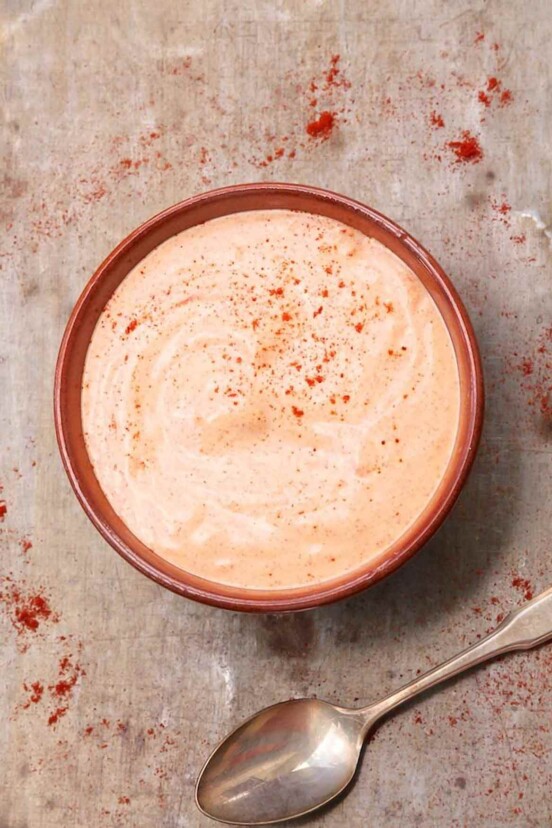
Paprika Mayonnaise
5 mins
Write a Review
If you make this chive blossom vinegar recipe, or any homemade condiment on LC, consider leaving a review, a star rating, and your best photo in the comments below. I love hearing from you.–David
Featured Review
This was such a beautiful way to use my chive blossoms before they faded away! Super simple recipe…. I ran out of white-wine vinegar, so I used about half distilled white vinegar, and it worked out just fine. It’s a great thing to dress up salads, and the color is just SO pretty! Thanks for this recipe!
ashley
Chive Blossom Vinegar
Equipment
- 1 sterilized 1-pint canning jar preferably one with a glass or plastic top
Ingredients
- 1 1/2 cups Champagne or white wine vinegar
- 2 1/2 cups chive blossoms, snipped right beneath the head
Instructions
- Heat the 1 1/2 cups Champagne or white wine vinegar in a small saucepan over low heat until just warm. Keep an eye out so that it doesn't boil; you want the warmth of the vinegar to seduce the coy, subtle flavor out of the blossoms, not immolate them.
- Meanwhile, plunge the 2 1/2 cups chive blossoms in a bowl of cold water and gentle swish them around to flush out any dirt and bugs that have taken up residence. Dump the flowers into a colander and thwack it against the side of the sink to shake off the excess water. Gently blot the flowers dry.
- Stuff the pint jar with the blooms. Don't be too Martha about this. It's okay if the blossoms get crushed a bit.
- Pour enough of the warm vinegar into the jar just to submerge the blossoms, using a metal spoon to push down any errant blooms that want to float up over the top. You might not need all of the vinegar.
- Let the vinegar cool, then cover tightly.
☞ TESTER TIP: If using a metal canning lid and ring, cut a square of parchment, cover the jar, and screw on the lid. The vinegar will erode the finish and ruin the taste of your infused vinegar.
- Place the container in a dark, cool spot that's so hidden you'll forget about it. This infusion benefits from a long steep—1 to 2 weeks minimum. Trust me, the vinegar will bless you abundantly for your patience—or your forgetfulness.
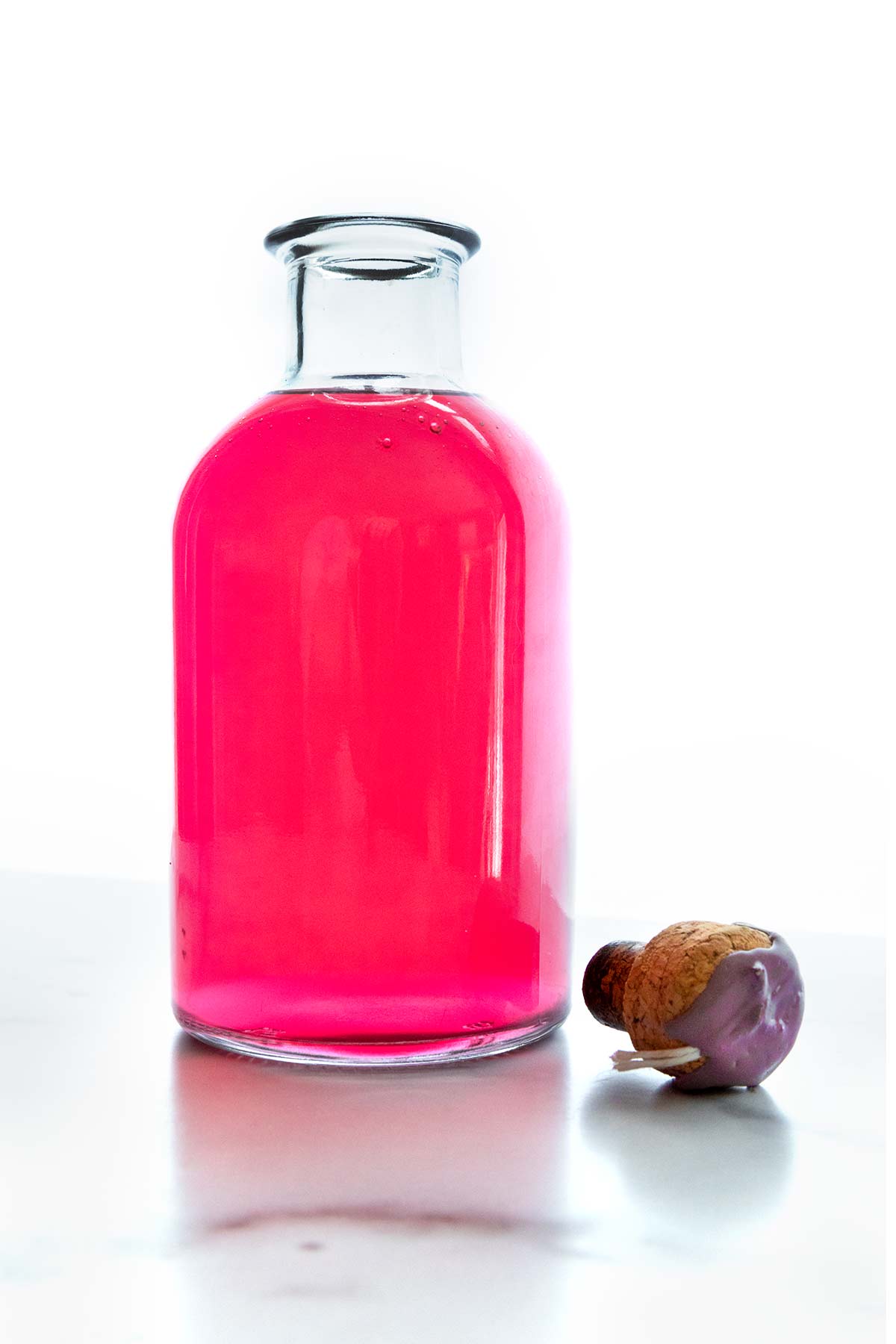
- When you're happy with the chive-y strength of the brew, strain it through a fine sieve and toss the spent blossoms. Pour the vinegar into your favorite (preferably glass) sterilized bottle with a rubber stopper and display prominently. Its hue—the blush of a very embarrassed Rosé—is a great conversation starter.

An LC Original
View More Original RecipesNutrition
Nutrition information is automatically calculated, so should only be used as an approximation.










Have to also give kudos to your writing style and wording!!!!! 💗💗💗 I’m an advanced home cook, usually looking at recipes for inspiration and then lots of “measurements from the heart” and ad-libbing as I go. Usually with success, but also makes it hard to re-create! 😉
Anyways, lots of sites get way too wordy, no fun, too precise, etc…I love your “real talk.” The use of Martha and Whack made me smile!!! 👍😍😅
About to use my chive blossoms from last year, FYI they thrived in my Wisconsin garage over the winter with only 2x water. By thrive, I mean looked pretty terrible but came back with a vengeance and something to prove this spring once outside again!
Whoa, KT…you winter over your chives? Amazing. It never dawned on me to do that. And thank you very much for your kind words. I do try to give people a few chuckles every once in a while. If you make the recipe, do come back and let me know how it turns out.
So pretty and delicious. I need to plant a few more plants because next year I’m giving bottles as Christmas gifts. Thank you for this recipe!
Terri, you are more than welcome. And how lucky are the people on your Christmas list? A burst of spring brightness in the middle of winter!
This was a joy to read let alone make the recipe! Very funny. Thank you.
Why, thank you, Katie. I really appreciate it.