
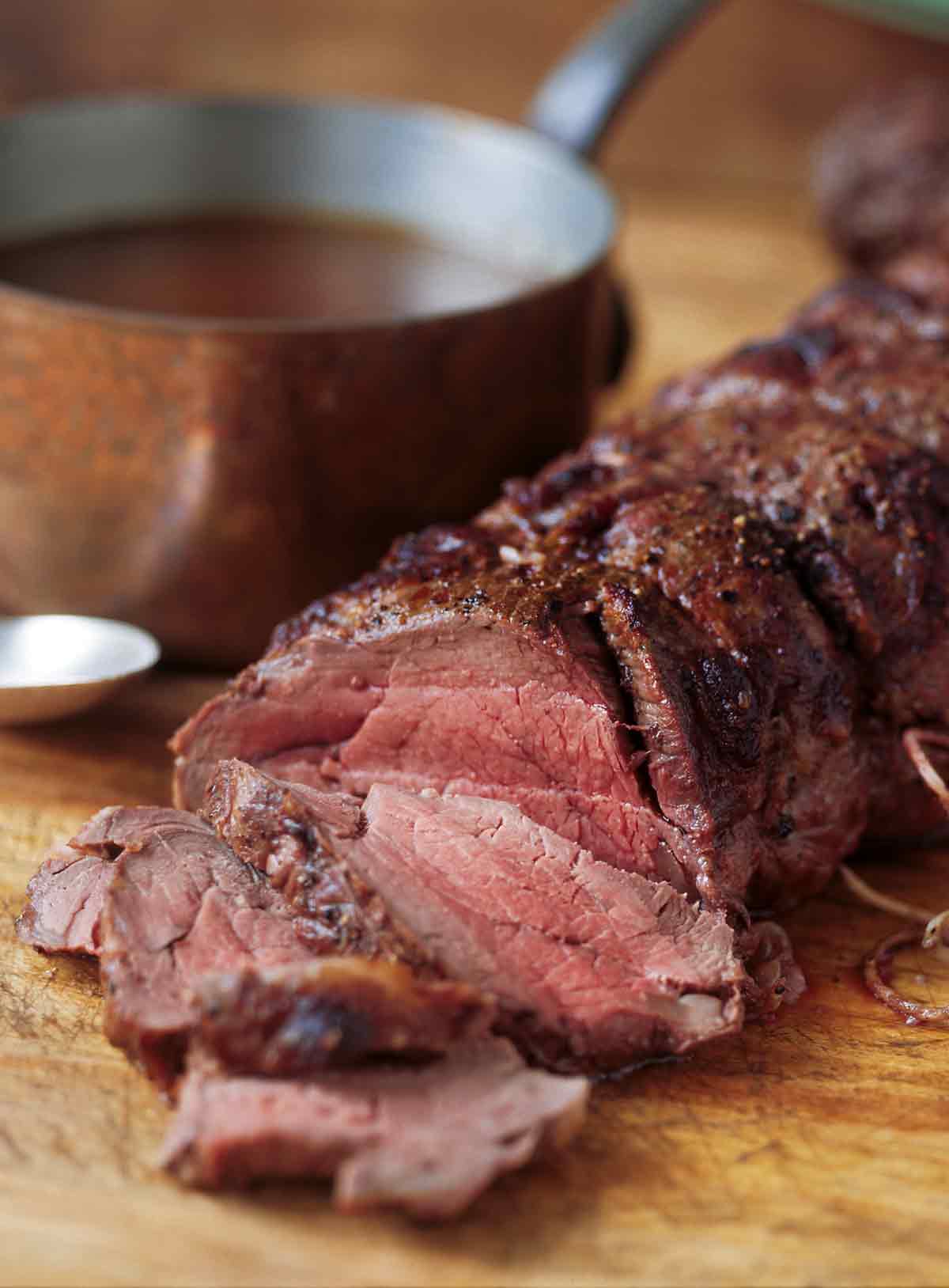
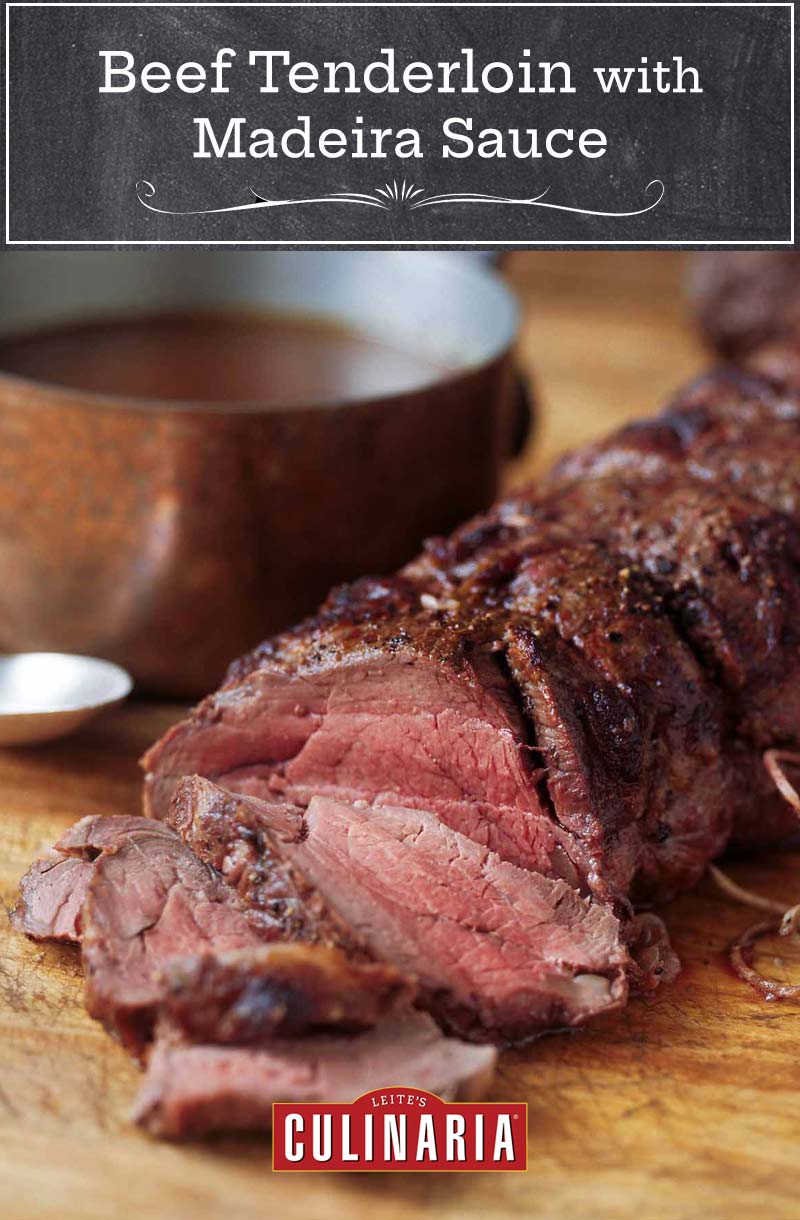
No more worrying about whether your fancy (and pricey) beef tenderloin will turn out perfectly for guests. This goof-proof beef tenderloin recipe is eminently reliable, requires no last-minute fussing, and doesn’t ambush you with any last-minute carving trickery. It’s just a simple, supple roast beef tenderloin napped with a slightly boozy but exceptionally well-balanced sauce. As easy as it is impressive.
Featured Review
I made this tenderloin for Christmas dinner. I did the prep early in the day, which included cooking the onions so as my guests were arriving, I just had to add the tenderloin and pop it in the oven. I had a tenderloin that was 4 lb. 12 oz. and cooked it to perfection for 35 minutes. This allowed the thicker pieces to be on the rare side while the thinner pieces approached medium doneness. The Madeira sauce was quick and easy and all go rave reviews. Delicious!
Nadine Bonda
Which Madeira should I use?
A quick heads up before you head to the liquor store: Not all Madeira is created equal. It ranges from quite dry to syrupy sweet. For a savory, rich sauce like this, you want to avoid the dessert styles (often labeled Malmsey or Bual). Instead, look for Rainwater or Medium-Dry (Verdelho) on the label. These have enough body to stand up to the beef without making the sauce taste like candy. As for brands, I love Broadbent. Also, Blandy’s is a reliable, widely available option that works beautifully here.
More meaty beef tenderloin recipes
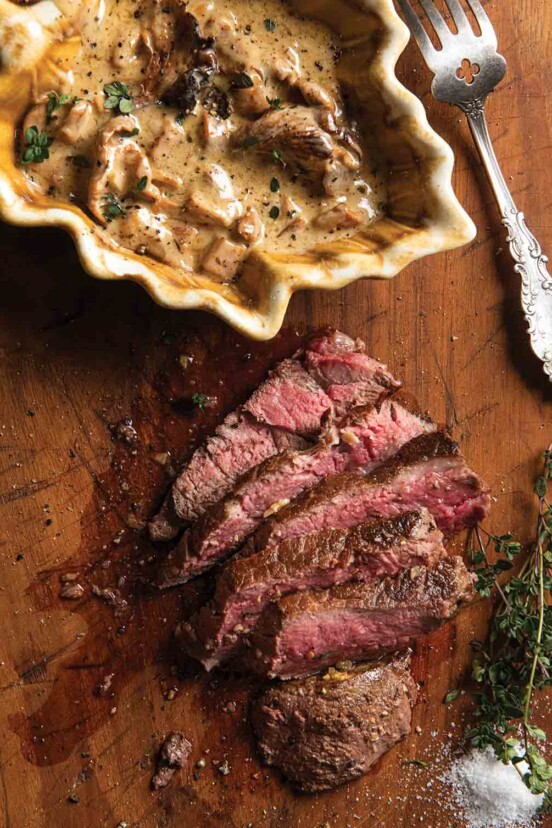
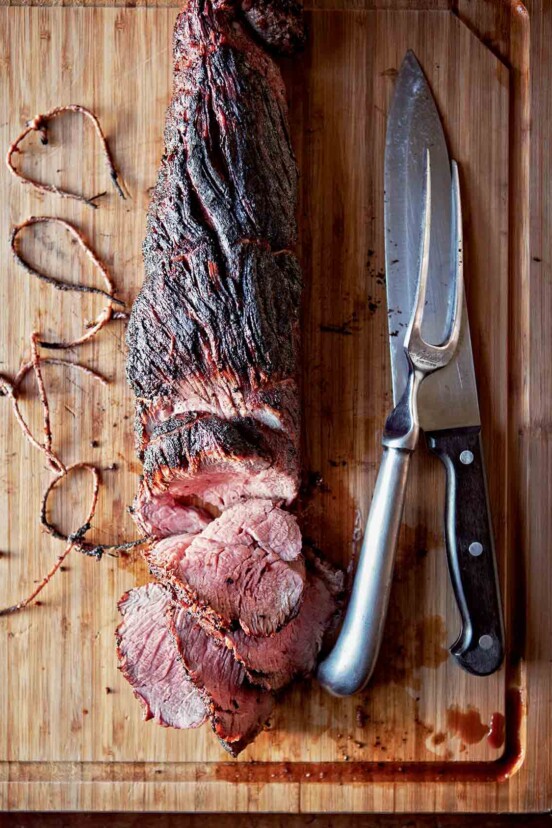
Grilled Beef Tenderloin
1 hr 30 mins
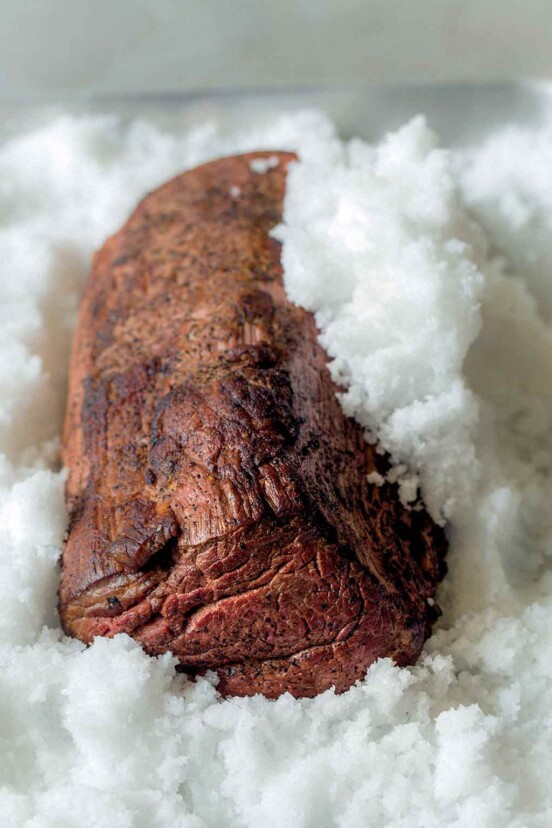
Salt-Crusted Beef Tenderloin
1 hr 30 mins
Beef Tenderloin Roast with Shawarma Spice Rub
4 hrs 35 mins
Write a review
If you make this recipe, or any dish on LC, consider leaving a review, a star rating, and your best photo in the comments below. I love hearing from you.–David
Featured Review
Sometimes meals are just magical. This was one of them. My fellow diners declared this meal one of the best I’ve ever made… I pulled it off exactly when it hit 125°F… It was perfect—and cut easier than butter! After last year’s failed attempt at overcooking a whole tenderloin, this tenderloin will go down in history as absolutely amazing! You guys are my go-to website for superb recipes.
Jeanne
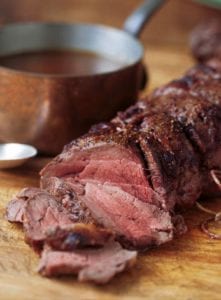
Beef Tenderloin with Madeira Sauce
Video
Equipment
- Kitchen string
Ingredients
For the beef tenderloin
- One (6-pound) whole beef tenderloin
- 4 tablespoons extra-virgin olive oil
- Kosher salt and freshly ground black pepper
- 2 1/2 pounds large Vidalia or other sweet onions, about 5 (cut into slices 1/4-inch [6-mm] thick)
- 2 fresh thyme sprigs
- 1 tablespoon balsamic vinegar
For the Madeira sauce
- 1/2 cup Madeira, (preferably Rainwater or Medium-Dry/Verdelho), or more as needed
- 3 cups beef stock or reduced-sodium beef broth
- 2 to 3 tablespoons beef demi-glace
- 1 tablespoon red wine vinegar
- Kosher salt and freshly ground black pepper
- 2 tablespoons (1 oz) unsalted butter, at room temperature
- 2 tablespoons all-purpose flour
Instructions
Cook the beef tenderloin
- Preheat the oven to 425°F (220°C). Position a rack in the upper third of the oven.
- Using a sharp, thin-bladed knife, remove the long thin muscle and connective tissue that runs almost the length of the beef tenderloin. Reserve it for another use, such as stir-frying or ground beef. Then remove and discard the silver skin and most of the surface fat from the tenderloin.
- Next, about 5 to 6 inches (13 to 15 cm) from the narrow end of the beef tenderloin, make a shallow cut crosswise across the tenderloin, cutting about halfway through the meat. Fold this narrow end piece under so that the tenderloin is uniformly thick from one end to the other. Secure the tenderloin with kitchen string, tying it at 1 1/2-inch (4-cm) intervals along the length of the tenderloin.
- Place the tenderloin on a rimmed baking sheet. Brush or rub the meat on all sides with 2 tablespoons of the olive oil. Season generously with salt and pepper, firmly pressing the seasonings in with your fingertips. (The roast can be refrigerated, uncovered, for up to 24 hours. Let stand at room temperature for about 1 hour before roasting.)
- In a large skillet over low heat, warm the remaining 2 tablespoons olive oil. Add the onions, stir to coat with the oil, and season to taste with salt and pepper. Cook for 2 to 3 minutes, then add 1/4 cup water, the thyme, and the balsamic vinegar. Cover and cook over low heat, stirring occasionally, until the onions are very soft but not browned, about 15 minutes.
- Uncover and, if any liquid remains in the skillet, increase the heat to medium-high and cook just until the liquid evaporates. Again, do not let the onions color.
- Arrange the onions along the center of a shallow roasting pan just large enough to hold the tenderloin. (If you have a rather lengthy roast, you can spread the onions on the diagonal to make space for it in the pan.) Place the tenderloin on the onions. Roast the tenderloin until a thermometer inserted into the thickest part registers 125°F (52°C) for medium-rare, about 45 minutes. The roast will vary somewhat in doneness depending on the thickness of its sections.
- Remove the pan from the oven, transfer the meat to a platter, and tent with aluminum foil. Let rest for 10 to 15 minutes before slicing.
Make the Madeira sauce
- In a saucepan over medium-high heat, bring the 1/2 cup Madeira to a boil and cook until reduced to 1/4 cup.
- Pour about 1/2 cup of the pan juices from the roasting pan through a fine-mesh sieve into the saucepan. Discard the thyme but reserve the onions in the roasting pan. Add the beef stock or broth to the saucepan, bring to a boil, and cook for 2 to 3 minutes to reduce slightly and blend the flavors. Reduce the heat to medium-low and stir in the demi-glace and red wine vinegar. Season to taste with salt and pepper and, if desired, 2 to 3 tablespoons more Madeira.
- Meanwhile, place the butter and flour in a small bowl and mix with a fork until well combined to make a beurre manié. [Editor's Note: A beurre manié is a simple manner of thickening a sauce, lending it a rich, smooth, velvety consistency.] Reduce the heat under the sauce to low, whisk the beurre manié into the liquid a little at a time, and simmer until the sauce reaches the desired consistency, 2 to 3 minutes. Keep the sauce warm by covering it and placing it over very low heat.
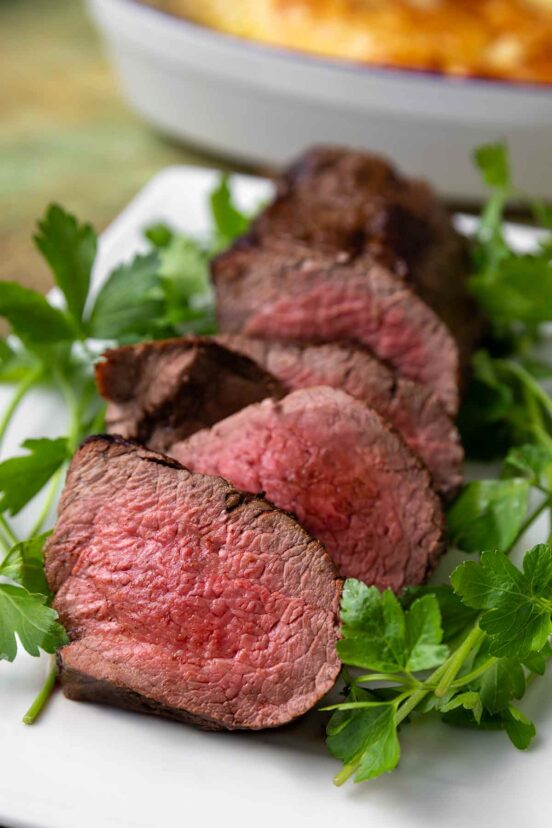
- Transfer the tenderloin to a carving board. Remove the strings and simply slice the roast into slices about 1/2 inch (12 mm) thick. Place a spoonful of the reserved onions onto individual plates and top with a slice of tenderloin. Spoon a little of the sauce over the meat and pass the remaining sauce at the table.
Nutrition
Nutrition information is automatically calculated, so should only be used as an approximation.
Recipe Testers’ Reviews
Did you know only 68% of the recipes we test make it onto the site? This recipe survived our rigorous blind testing process by multiple home cooks. It earned the Leite’s Culinaria stamp of approval—and the testers’ reviews below prove it.

This Madeira sauce was simple yet delicious—silken and tasty but transparent enough to allow the flavor of the beef to shine through. It’s a keeper!
I made the recipe using filets instead of a whole tenderloin. After cooking the steaks, I let them rest and kept them warm in foil, then sautéed a thinly sliced Vidalia onion in the pan to mimic the whole tenderloin recipe. I then added some of the beef stock to the pan to deglaze it, since I didn’t have drippings from a whole roast. I strained out the onion and reserved it for serving the fillets. I continued tasting and seasoning the sauce before adding the vinegar, settling for about 3/4 teaspoon of the red wine vinegar versus the 1 tablespoon the recipe called for. I found that amount to be perfect.
I kept the sauce warm on a very low flame, but went back later and found that it reheated perfectly, which tells me you can make this ahead of time. If you choose keep the sauce warm for a long period of time, you can also put it over a pan of simmering water.

The result was a dinner of perfection. This recipe is easy, delicious, and worth it!
Making the onions was a snap and actually kind of fun. The sauce was delicious as is, but I didn’t end up with 1/2 cup of pan drippings, so I used what I had and punted on the rest. Next time I’ll make a bit more of the beurre manié and add it until the sauce coats a spoon and has a little more body. I used almost 3 tablespoons of demiglace and no red wine vinegar. I turned the heat off, put a lid on, and the residual heat kept it just perfect.

Impressive and delicious! This beef tenderloin with Madeira sauce is so perfect for Christmas or any special occasion because of the richly flavored, slightly boozy sauce.
The instructions may seem lengthy, but don’t be discouraged. After prepping the onions and trimming and tying the tenderloin, the oven took care of almost everything else. My tenderloin weighed very close to 6 pounds before trimming, and it took closer to 1 hour to reach that medium-rare temperature. It was beautifully pink and rare on the inside.
The sauce was delicious even though I omitted the red wine vinegar. I also added 3 more tablespoons of Madeira. I kept the sauce warm in a small saucepan on a low burner until serving.










Sounds great, however, is there a substitute for demi-glace?
Thank you.
Hi Jean, you can skip it. The beurre manié is what thickens the sauce, so dropping the demi-glace won’t riun the texture—just add a splash more Madeira and season to taste.
But… if you want the depth only demi-glace can give, simmer an extra 1 or 2 cups 100% salt-free (preferably homemade) beef stock down to 2 or 3 tablespoons and stir that in instead. Same idea, no special shopping trip. It won’t be quite the same, but it’ll definitely be better. Let me know how it turns out. Chow!
After some research on Madeira as to type to use for a special beef sauce the suggestions range from dry to medium to sweet. Although a matter of taste always comes into play, it would be beneficial to be pointed to the version and even brand you recommend here. Thank you for any direction you can provide.
Den, you bring up a fantastic point—it’s a distinction that can make or break a sauce.
For a savory application like this beef tenderloin, I generally steer clear of the very sweet dessert Madeiras (like Malmsey). Instead, look for a Medium-Dry (Verdelho) or a Rainwater style. They have enough body and sweetness to stand up to the beef and demi-glace without turning the sauce into syrup. As for brands, I love Broadbent. Blandy’s is also a reliable, widely available go-to that never disappoints. I’m going to update the recipe right now to clarify that. Thanks for the nudge!