
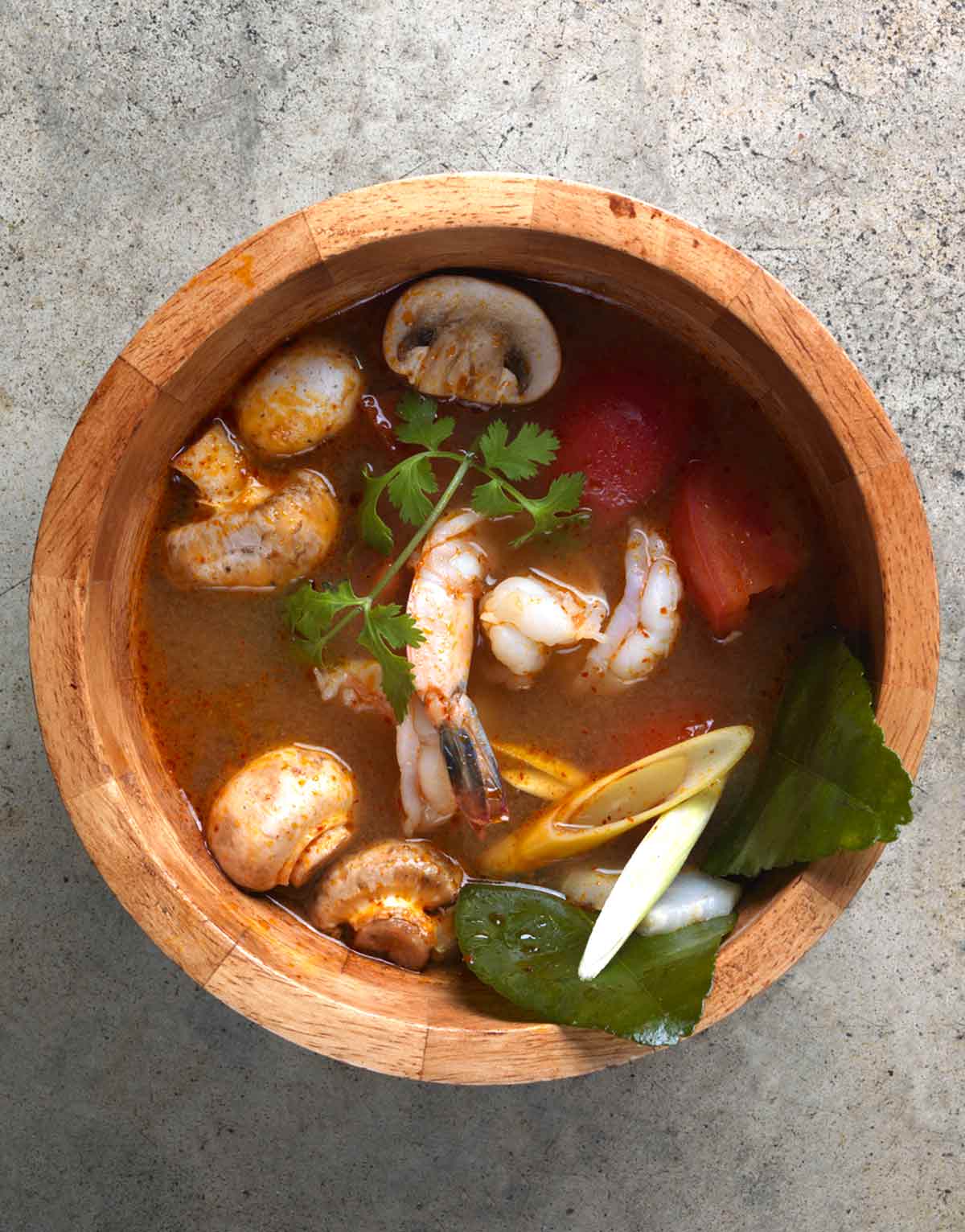
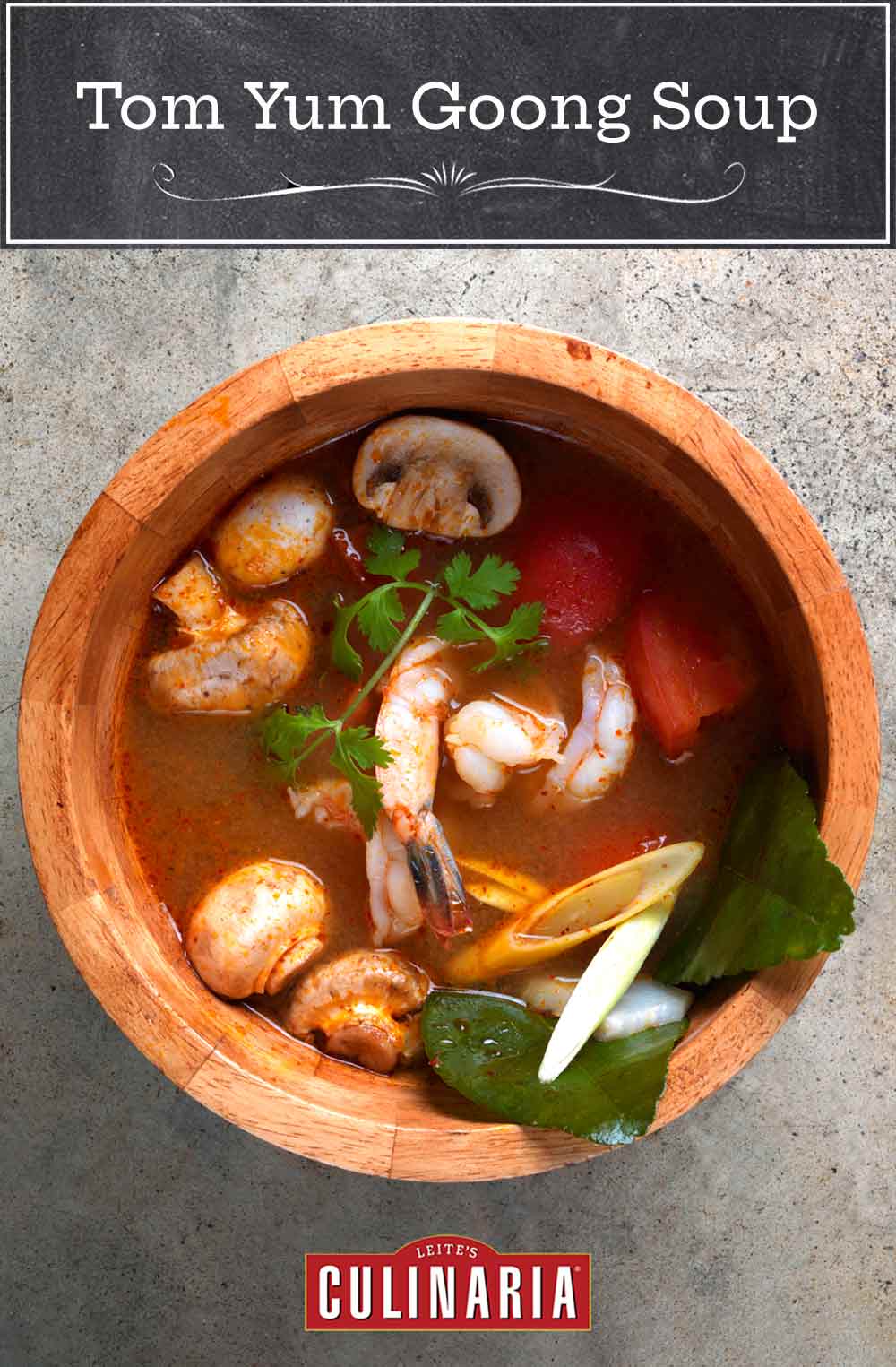
What makes tom yum goong so compelling? The fact that it’s so easy yet tastes so authentic? Its elusive lilt of lemongrass? The sour, puckery smack of tamarind? The warm-your-belly pervasiveness of galangal? The unmistakably forthright—and, let’s face it, slightly funky—flavor of fish sauce? Or how they meld to marvie effect in this exquisitely authentic rendering of an oft-replicated, but rarely-true-to-tradition, Thai soup? Pucker up for a perfectly pitched and traditional tang from Thai chef Tanaporn Tangwibulchai of Thai Market. It’s on the waaaay Upper West Side, it’s where chef Tangwibulchai presides, and it’s what we’re hearing uttered in hushed, nay, reverential tones by those who know Thai food. –David Leite
Why is tom yum goong so popular?
A sour-spicy, sweet-salty, fragrant shrimp soup, tom yum goong is right up there with pad Thai or tom kha for quintessential and perennially favorite Thai foods. An exquisite mix of the hot and tangy flavors, you get a true taste of Thailand in every bowl. Tom yum means, broadly speaking, “boiled salad” which basically defines a highly flavored broth. Goong is the shrimp (or prawn) part although chicken or pork is popular, too.
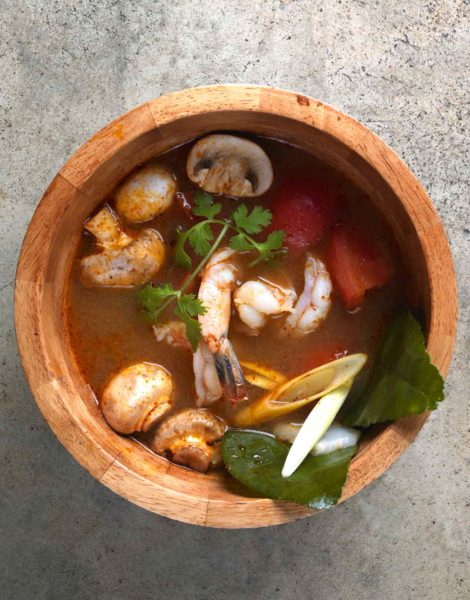
Tom Yum Goong Soup
Ingredients
- 3 stalks lemongrass, green part and root trimmed, remaining section cut into 3 pieces
- 5 lime leaves, each torn into 4 pieces
- One (2-inch) piece galangal or ginger, sliced crosswise into 6 to 7 pieces
- 2 1/2 quarts (10 cups) cold water
- 1 pound medium shrimp, peeled and deveined, left whole if small, or roughly chopped if medium or large
- 2 tablespoons tamarind paste, (you know, the block of brown tamarind found in Asian markets)
- 7 to 10 tamarind tendrils, (optional)
- 3 to 15 bird’s eye chile peppers, smashed, to taste
- 2 tablespoons nam prik pao, (roasted chile paste)
- 1/4 cup sliced button mushrooms
- 4 to 8 tablespoons fish sauce, or to taste
- 6 to 12 tablespoons fresh lime juice, or to taste
- 1/2 tablespoon granulated sugar
- 1/4 cup cilantro leaves, for garnish
Instructions
- In a large pot, bring the lemongrass, lime leaves, galangal or ginger, and water to a boil and then lower the heat to medium. Add the shrimp, tamarind paste, tamarind tendrils (if using), chile peppers, and nam prik pao, and simmer just until the shrimp is cooked through.
- Reduce the heat to medium-low. Add the mushrooms, fish sauce, lime juice, and sugar, and stir until the sugar dissolves. Ladle the soup into bowls, garnish with cilantro, and serve. Originally published March 05, 2013

Nutrition
Nutrition information is automatically calculated, so should only be used as an approximation.
Recipe Testers’ Reviews

I give this tom yum goong soup high marks for the hot and sour flavor I love, and for a pretty quick turnaround. I used ginger in place of the galangal, but if lemongrass, Kaffir lime leaves, tamarind paste, or roasted chile paste are hard to come by, there are no good substitutes and therefore there’s not much point in making this otherwise delicious soup.
This tom yum goong soup, due mainly to the tamarind and lime, has a very tangy and slightly sour quality to it. It’s nicely balanced from the saltiness of the fish sauce and the slight bit of sugar. The lemongrass and lime leaves didn’t have a strong presence in the dish, but undoubtedly added to the overall flavor. Since this is a very brothy soup, it’s really more of an appetizer than a meal.
It comes together quickly and is very straightforward and simple to make once you’ve all of the ingredients, some of which may take a bit of searching to find. I didn’t care for the raw mushrooms, which don’t have a chance to cook since they’re added at the end. I’d rather panfry the mushrooms first, or use dehydrated shiitakes in the future, which would add a nice earthiness to the soup.
To make this a meal, I think the addition of some grated carrots, fresh spinach, and perhaps Asian dumplings would be welcome without distracting from the wonderful depth of the tangy, salty, and slightly spicy notes.











everyone loved it. i make it every few weeks for my family. if you want a bit of twist, take a portion of it and add noodles.
Nurdiana, so happy everyone liked it. Great idea about having some of the soup to noodles.
1. I love the taste of “fresh” mushrooms added at the end. For others who do not want uncooked mushrooms, perhaps you could add the mushrooms a minute or two (or even longer) before turning off the heat.
2. Am I the only one missing the tomato wedges from this recipe?
3. To make this a full meal, I ladle the soup unto a smaller soup bowl and add cooked plain rice. Mouth-wateringly delicious!
Thank you for this recipe.
Cez, many thanks for taking the time to share your suggestions! Your thoughts regarding the mushrooms and rice are both terrific. And as for the tomato wedges, over the years I have seen Tom Yum Goong served in such a fashion—that is to say, with tomato wedges—at restaurants, although the recipes I’ve seen over the years for this soup—including the one featured on this page—rarely include tomato. That, even though the photo above, which accompanies this recipe in the book and which we were given permission to reprint, appears to include tomato wedges. Perhaps it’s a regional preference? Or an Americanization? I’m going to continue to research this and let you know if I learn anything.
Tamiko, the use of raw mushrooms is traditional for this dish.
Many thanks for chiming in, Merryweather. The mushrooms in this recipe are stirred in just before the soup is ladled into bowls, so actually they are effectively uncooked. Maybe just barely warmed through.