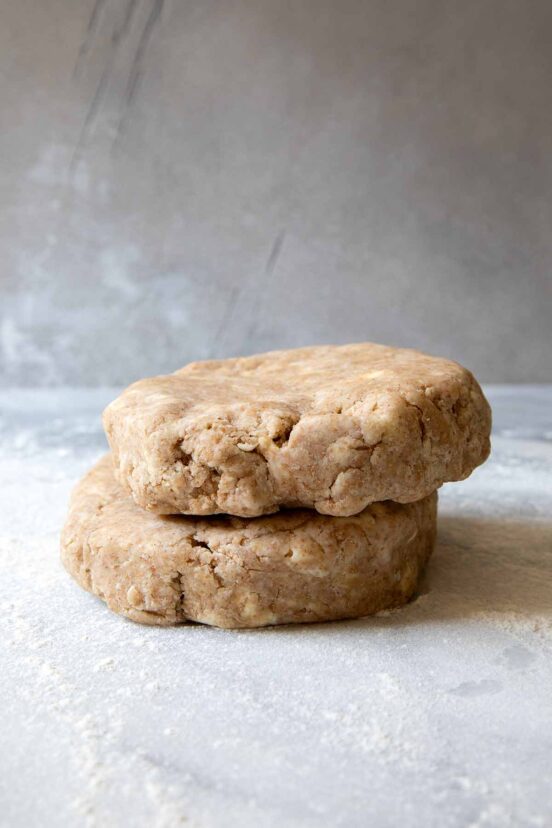
Joanne Chang's recipe for the classic French pâte sucrée is tender, chewy perfection. Used specifically for tarts, pâte sucrée forms a supportive base with a sugar cookie-like texture. It works incredibly well with all sorts of fillings from fruit to custard.
Leave it to the French to create a pastry dough specifically for tarts. Although it isn’t nearly as ridiculous as it may sound when you consider that pastry for a tart must be sufficiently sturdy to support itself—and whatever luscious filling you’ve decided to heap upon it—after the tin has been removed. (No small feat if you’re talking about something as decadent as, say, a Milky Way Tart.) It took quite a lot of egg yolks and sugar to create a solution, but the result, known as pâté sucrée, was worth it. It’s more tender and chewy than flaky and crispy, for what we think are obvious reasons. We haven’t heard any complaints yet.
If you make this pâte sucrée, or any pastry on LC, consider leaving a review, a star rating, and your best photo in the comments below. I love hearing from you.–David
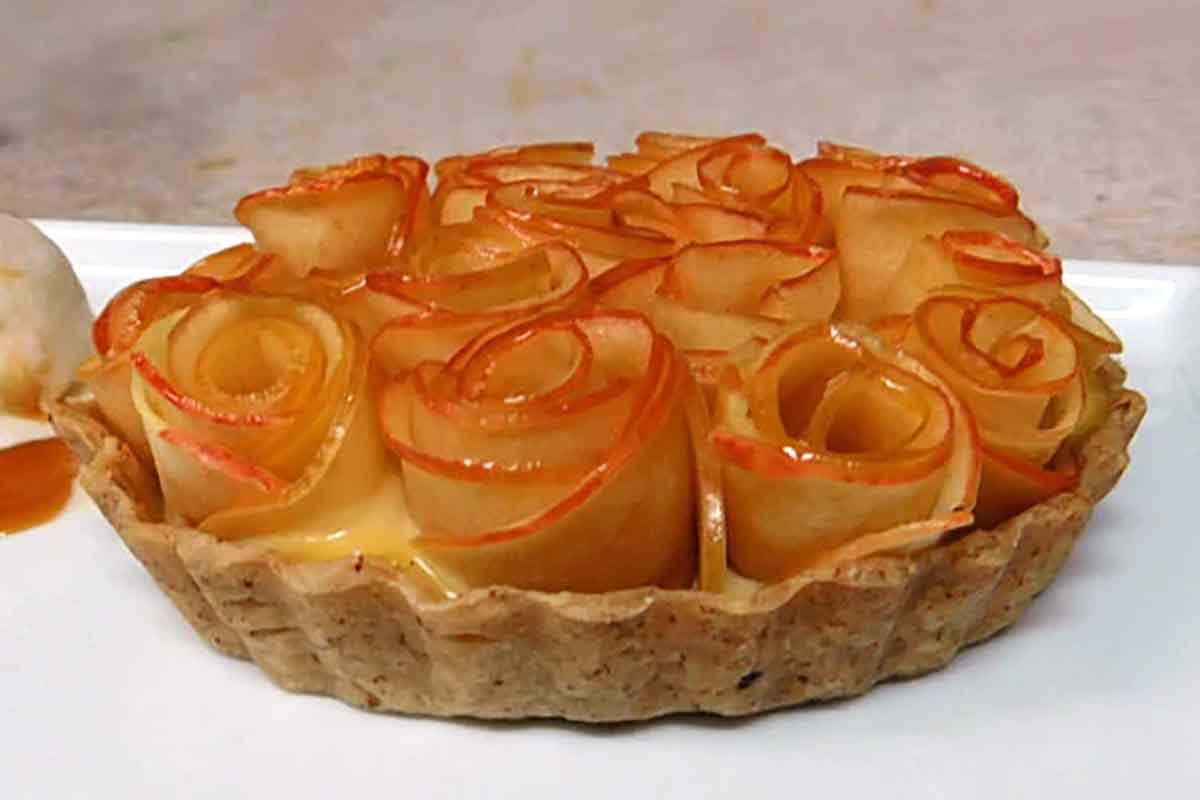
Finally! I have been experimenting for months, trying to find the perfect recipe for my apple rose tarts. Adding the butter at room temperature is the key. No shrinkage, and I can roll it super thin. Thank you!
Pâte Sucrée
4 / 4 votes
Pâte sucrée makes a remarkable tart crust for nearly any filling that you desire. It's more like a sugar cookie than a flaky, delicate crust so it stands up incredibly well.
1/2cup (1 stick)unsalted butter, at room temperature, cut into 8 pieces
1/4cupgranulated sugar
1/2teaspoonkosher salt
1cup plus 2 tablespoonsunbleached all-purpose flour
1egg yolk
Instructions
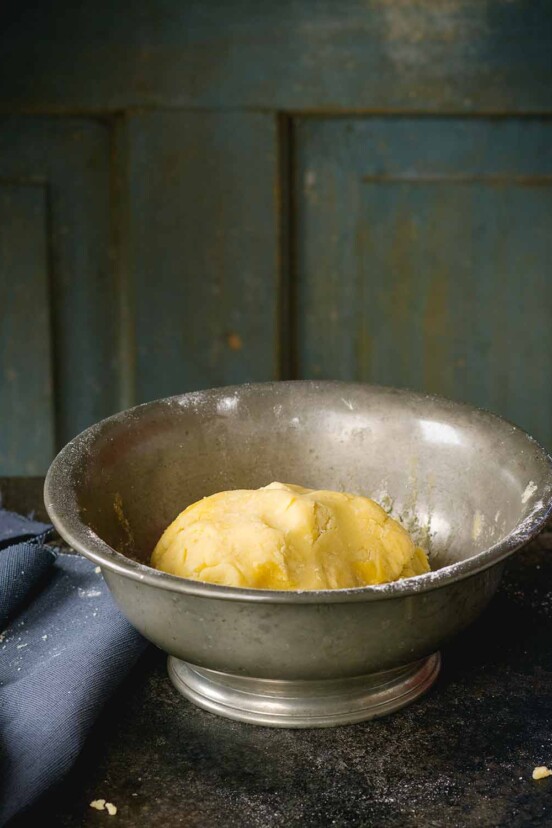
Using a stand mixer fitted with the paddle attachment, cream together the butter, sugar, and salt on medium speed for 2 to 3 minutes, or until pale and light. Scrape the sides and bottom of the bowl with a rubber spatula. Add the flour and beat on low speed for about 30 seconds, or until the flour mixes with the butter-sugar mixture. The mixture will look like wet sand. Add the egg yolk and continue to mix on low speed for about 30 seconds, or until the dough comes together.
Wrap the dough tightly in plastic wrap and refrigerate for about 1 hour. (At this point, the dough can be stored in the refrigerator for up to 5 days or in the freezer for up to 2 weeks. If frozen, thaw it in the refrigerator overnight before using.)
If making a pie shell, have ready a 9-inch pie pan dish. If making a tart shell, line a baking sheet with parchment paper and place a 10-inch tart ring on top. Remove the dough from the refrigerator and let soften at room temperature for about 30 minutes. Using a rolling pin, bang and flatten the dough into a disk about 1/2 inch thick. Flour the work surface, and then sprinkle the dough disk with a little flour. Roll out the dough into a circle 10 to 11 inches in diameter and about 1/4 inch thick for a 9-inch pie shell, or about 12 inches in diameter and just under 1/4 inch thick for a 10-inch tart shell. Make sure the work surface is well floured so the dough doesn’t stick to it, and make sure the disk itself is floured well enough to keep the rolling pin from sticking to it. Roll from the center of the disk outward, and gently rotate the disk a quarter turn after each roll to ensure the disk is evenly stretched into a nice circle. Don’t worry if the dough breaks a bit, especially toward the edges. You can easily patch any tears once you have lined the pan.
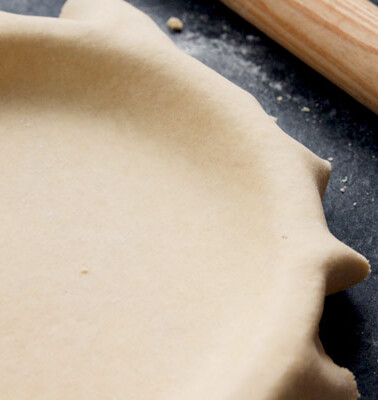
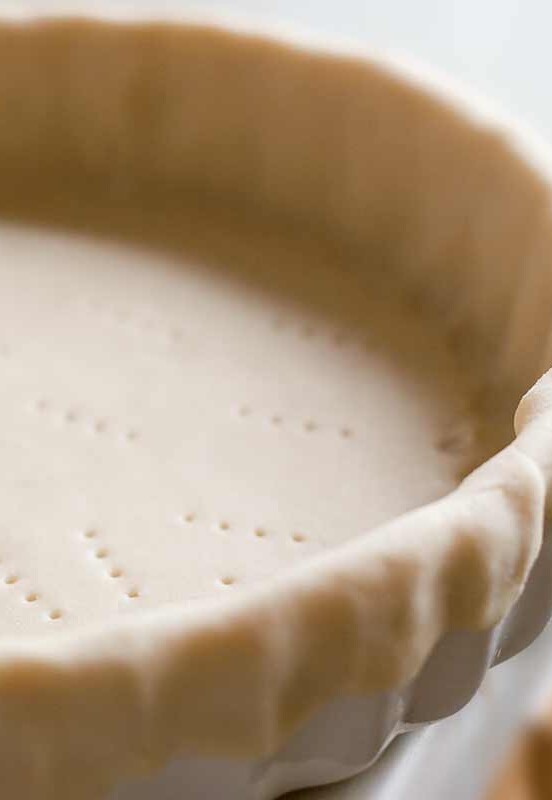
Roll the dough circle around the pin and then unfurl it on top of the 9-inch pie pan or the 10-inch tart ring. Press the dough well into the bottom and sides of the pan or ring, and use any scraps or odd pieces to patch up any tears or missing bits. Make sure the entire interior is well covered with dough, and then press one last time all the way around to ensure any holes have been patched. Trim the edge of the dough so it is even with the rim of the pan or ring.
Refrigerate the pastry shell for at least 30 minutes. The gluten needs a little time to relax so the pastry doesn’t shrink in the oven. (The pastry shell can be tightly wrapped in plastic wrap and refrigerated for up to 1 day or frozen for up to 2 weeks. Bake directly from the refrigerator or freezer.)
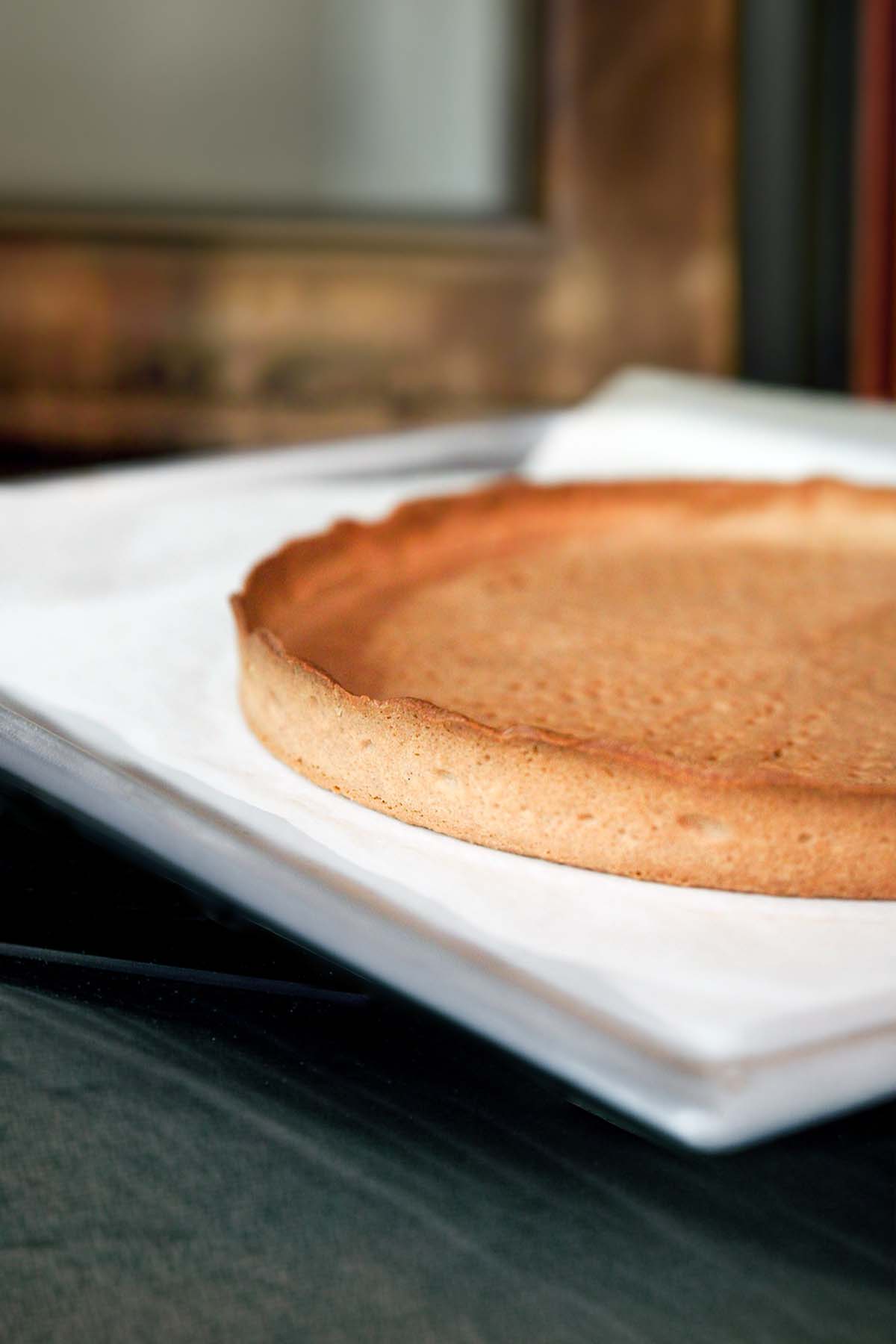
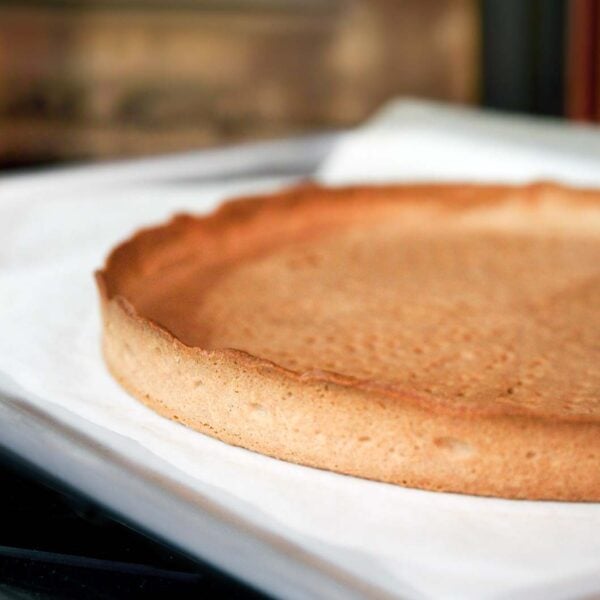
Position a rack in the center of the oven, and heat the oven to 350°F (176°C). Bake for 30 to 35 minutes, or until golden brown. Let cool to room temperature on a wire rack. If you are making a tart shell, remove the tart ring. Proceed as directed in individual recipes.
☞ TESTER TIP: To prevent the sides from slumping down, line the shell with foil and fill with pie weights for the first 15 minutes of baking, then remove and continue baking until golden.
Did you know only 68% of the recipes we test make it onto the site? This recipe survived our rigorous blind testing process by multiple home cooks. It earned the Leite’s Culinaria stamp of approval—and the testers’ reviews below prove it.
Pâte sucrée sounded to me like something that should only be attempted by a professional pastry chef, but was surprisingly easy. It’s not nearly as finicky as working with traditional pie crust dough, which I usually struggle with trying to get the amount of water just right. After mixing the ingredients, it seemed very, very soft, but it firmed up quite nicely after an hour in the fridge.
While this recipe doesn’t say anything about using pie weights, I checked my tart after 10 minutes, and it appeared to be sinking down slightly along the sides of the pan. I quickly placed a piece of foil with my pie weights and baked it for another 15 minutes. At this point, I removed the foil and weights and returned the tart shell to the oven for another 8 minutes. It turned out perfectly.
I used the filling from the Meyer Lemon Tart with a Layer of Chocolate for the filling, substituting key lime juice for Meyer lemon juice because that’s what I had on hand. I also added 2 tablespoons of sugar to the curd because the juice I had was quite tart. It was delicious! Key lime plays quite nicely with chocolate, and the crust was just sweet enough without being too sweet, like a traditional graham cracker crust can sometimes be. This pâte sucrée recipe will be my new go-to for tarts and many single-crust pies.
Your recipe makes no sense. The butter to flour ratio is ridiculously high at 90.4% (113/125). I am not even going to attempt this doomed-to-fail recipe. I would have given it zero stars, but I do not have that option.
Tom, thanks for bringing this recipe back to my attention. I haven’t looked at it in quite a while, and this gave me a chance to update the post, so thank you.
I did a deep dive, going back to the cookbook, Flour, by the James Beard Award-winning baker Joanne Chang, which is where this recipe comes from. The proportions are correct. I also dropped her a note, and she assured me all is good. I then went back into the comments to see if any readers had made this. And as you can see, Cheryl F. made it and included a photo. I added both her review and photo to the recipe itself. Last, I checked the Milky Way tart recipe, which uses this crust. Several of our recipe testers made the tart with no problem.
One thing that I messed up, and I do apologize, is that I relied upon the metric calculator to automatically convert one cup of flour to 125 g. In the original recipe, Joanne calls for 140 g. She uses a heavier hand when it comes to volume measure. So I corrected that, and changed the “1 cup flour” to “1 cup plus 2 tablespoons flour” because many cooks use the spoon-and-level method. And of course, it changes the math considerably.
But I’ll put this into triage testing, and I’d love for you to give it a go once I’ve completed testing and report back here. Stay tuned.
Tom, I did put this into triage testing. Nancy Garcia, one of our testers, made it—and she nailed it. She was surprised by how approachable it was, noting it’s far less finicky than a traditional pie crust. Yes, the dough came out very soft, but after an hour in the fridge, it firmed up beautifully.
She noticed the sides beginning to sink slightly during baking and used pie weights to remedy it — a handy tip I’ll be adding to the recipe.
The result? A perfect tart shell. She filled it with a key lime curd (a riff on our Meyer Lemon Tart with a Layer of Chocolate), and said the crust was just sweet enough without going overboard the way a graham cracker crust can.
Her verdict: it’s now her go-to for tarts and single-crust pies.
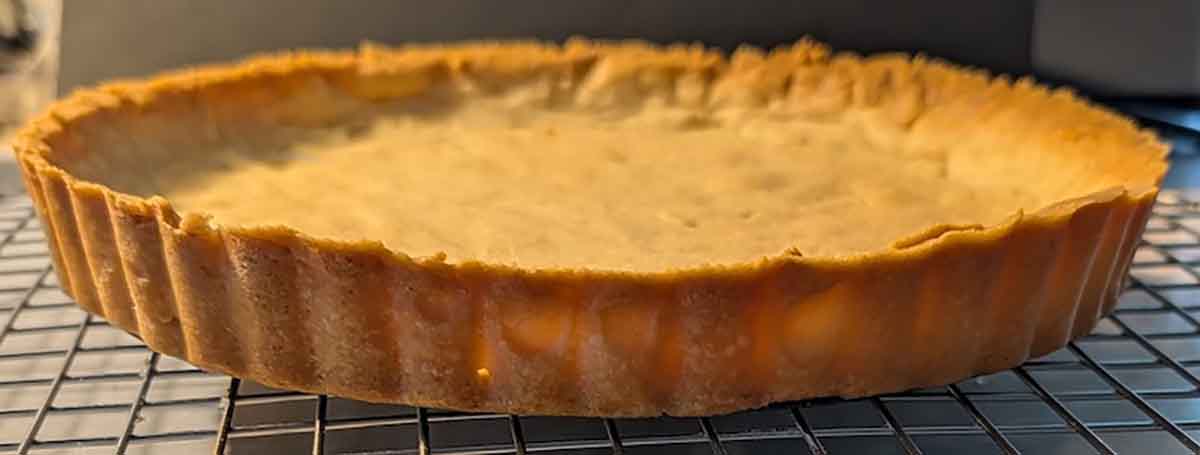
I’m including one of her photos so you can see the results for yourself. In short, the recipe works. I hope you’ll give it a try!
Elen, this pastry is more sturdy than flaky and will stand up to a heavier cream or custard filling. The extra rest before baking will help to keep it from shrinking and we’ve had success with just pricking it lightly before baking, but have not needed to blind bake.












Your recipe makes no sense. The butter to flour ratio is ridiculously high at 90.4% (113/125). I am not even going to attempt this doomed-to-fail recipe. I would have given it zero stars, but I do not have that option.
Tom, thanks for bringing this recipe back to my attention. I haven’t looked at it in quite a while, and this gave me a chance to update the post, so thank you.
I did a deep dive, going back to the cookbook, Flour, by the James Beard Award-winning baker Joanne Chang, which is where this recipe comes from. The proportions are correct. I also dropped her a note, and she assured me all is good. I then went back into the comments to see if any readers had made this. And as you can see, Cheryl F. made it and included a photo. I added both her review and photo to the recipe itself. Last, I checked the Milky Way tart recipe, which uses this crust. Several of our recipe testers made the tart with no problem.
One thing that I messed up, and I do apologize, is that I relied upon the metric calculator to automatically convert one cup of flour to 125 g. In the original recipe, Joanne calls for 140 g. She uses a heavier hand when it comes to volume measure. So I corrected that, and changed the “1 cup flour” to “1 cup plus 2 tablespoons flour” because many cooks use the spoon-and-level method. And of course, it changes the math considerably.
But I’ll put this into triage testing, and I’d love for you to give it a go once I’ve completed testing and report back here. Stay tuned.
Tom, I did put this into triage testing. Nancy Garcia, one of our testers, made it—and she nailed it. She was surprised by how approachable it was, noting it’s far less finicky than a traditional pie crust. Yes, the dough came out very soft, but after an hour in the fridge, it firmed up beautifully.
She noticed the sides beginning to sink slightly during baking and used pie weights to remedy it — a handy tip I’ll be adding to the recipe.
The result? A perfect tart shell. She filled it with a key lime curd (a riff on our Meyer Lemon Tart with a Layer of Chocolate), and said the crust was just sweet enough without going overboard the way a graham cracker crust can.
Her verdict: it’s now her go-to for tarts and single-crust pies.
I’m including one of her photos so you can see the results for yourself. In short, the recipe works. I hope you’ll give it a try!
Does this recipe make a flaky pastry or just a sturdy one? also, shouldn’t it be blind-baked and not just baked? Will it not collapse on its own?
I haven’t made it yet…I love David Leite but I’m not sure about this one.
Elen, this pastry is more sturdy than flaky and will stand up to a heavier cream or custard filling. The extra rest before baking will help to keep it from shrinking and we’ve had success with just pricking it lightly before baking, but have not needed to blind bake.
I should also say that I added finely chopped pecans to the dough. I have a few trees on my property so they get added to a lot of things.
Well, Cheryl, that is beautiful! And lucky you: fresh pecans!