
TL;DR (Quick-Answer Box)
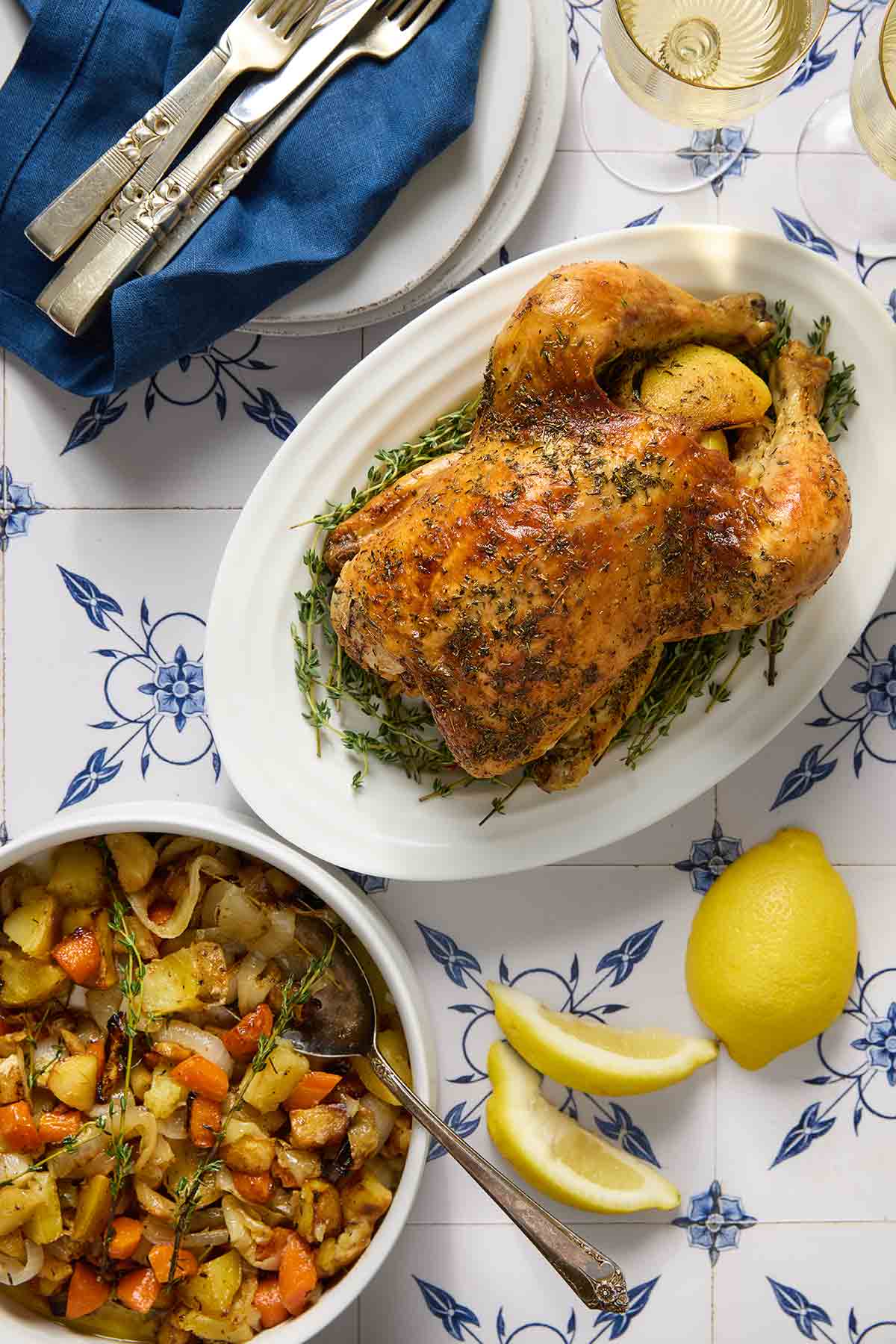
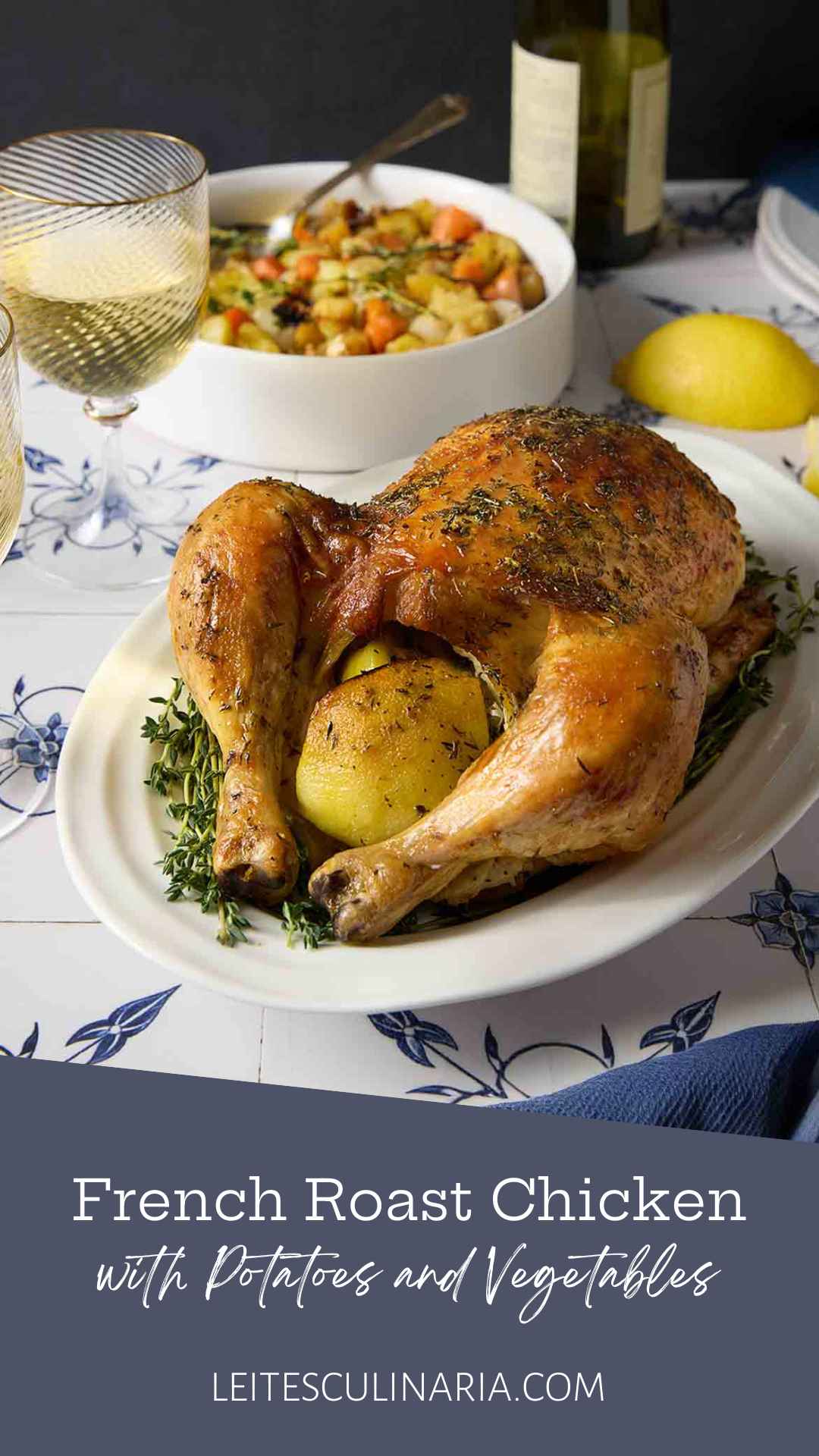
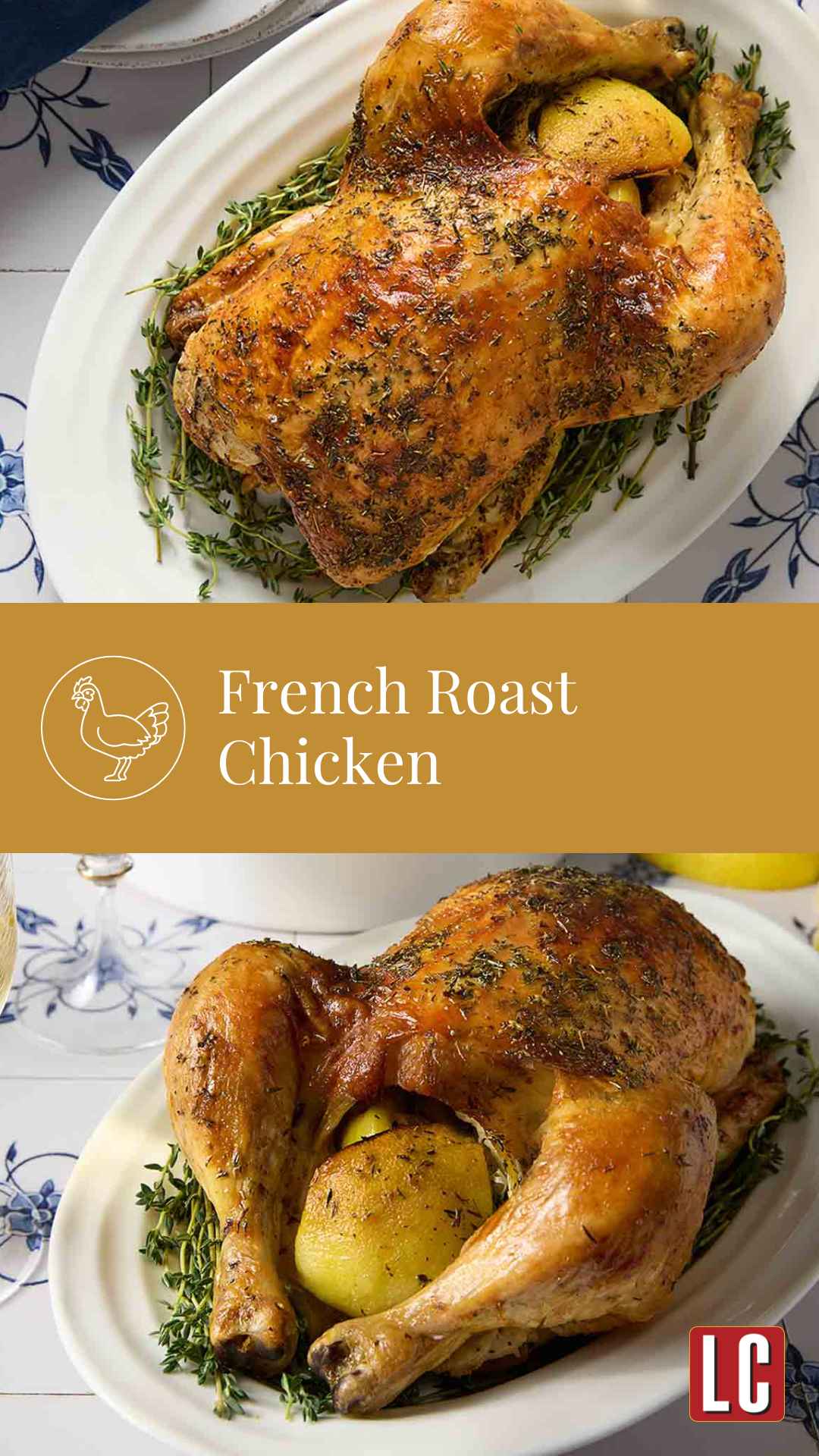
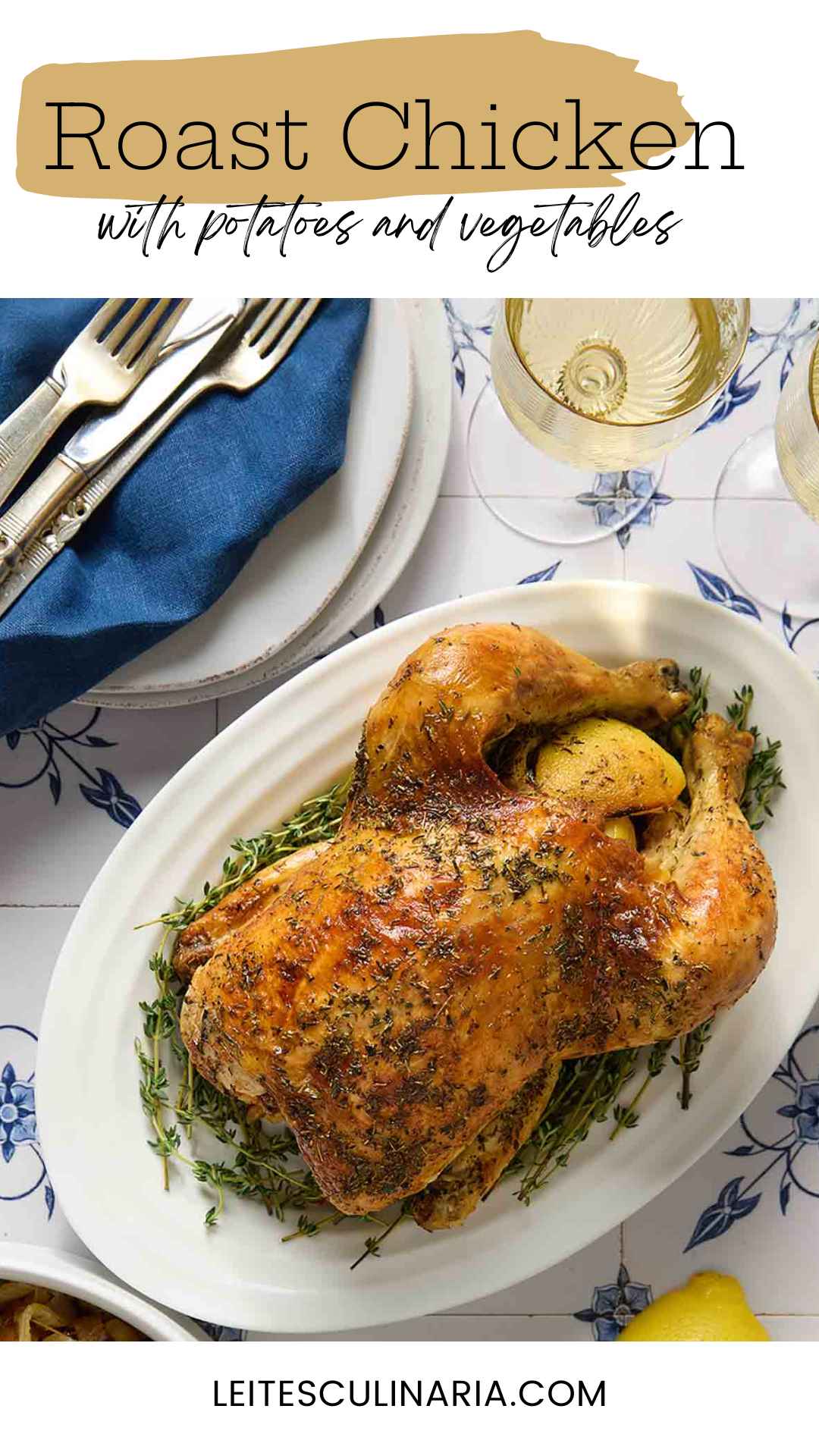
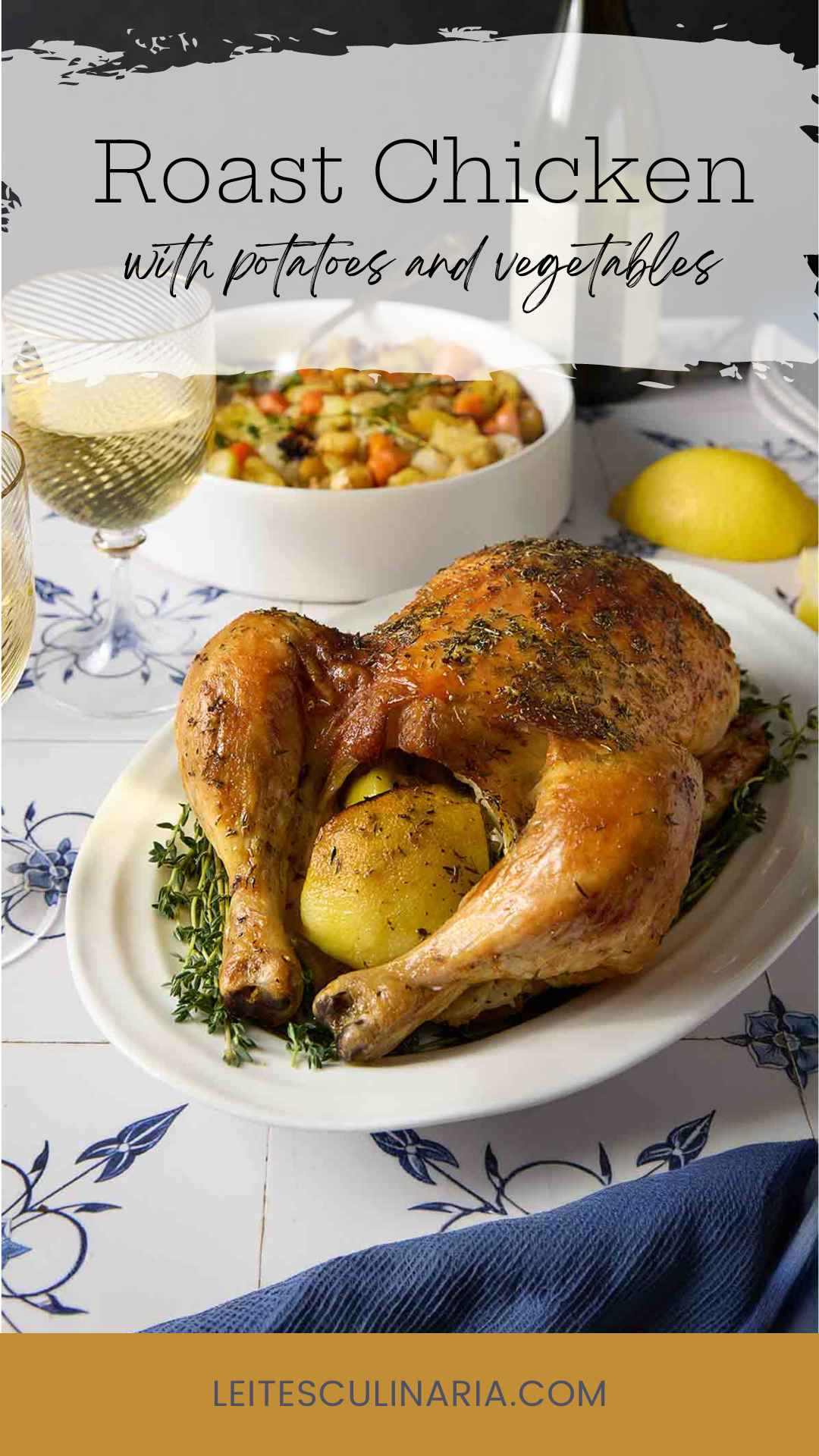
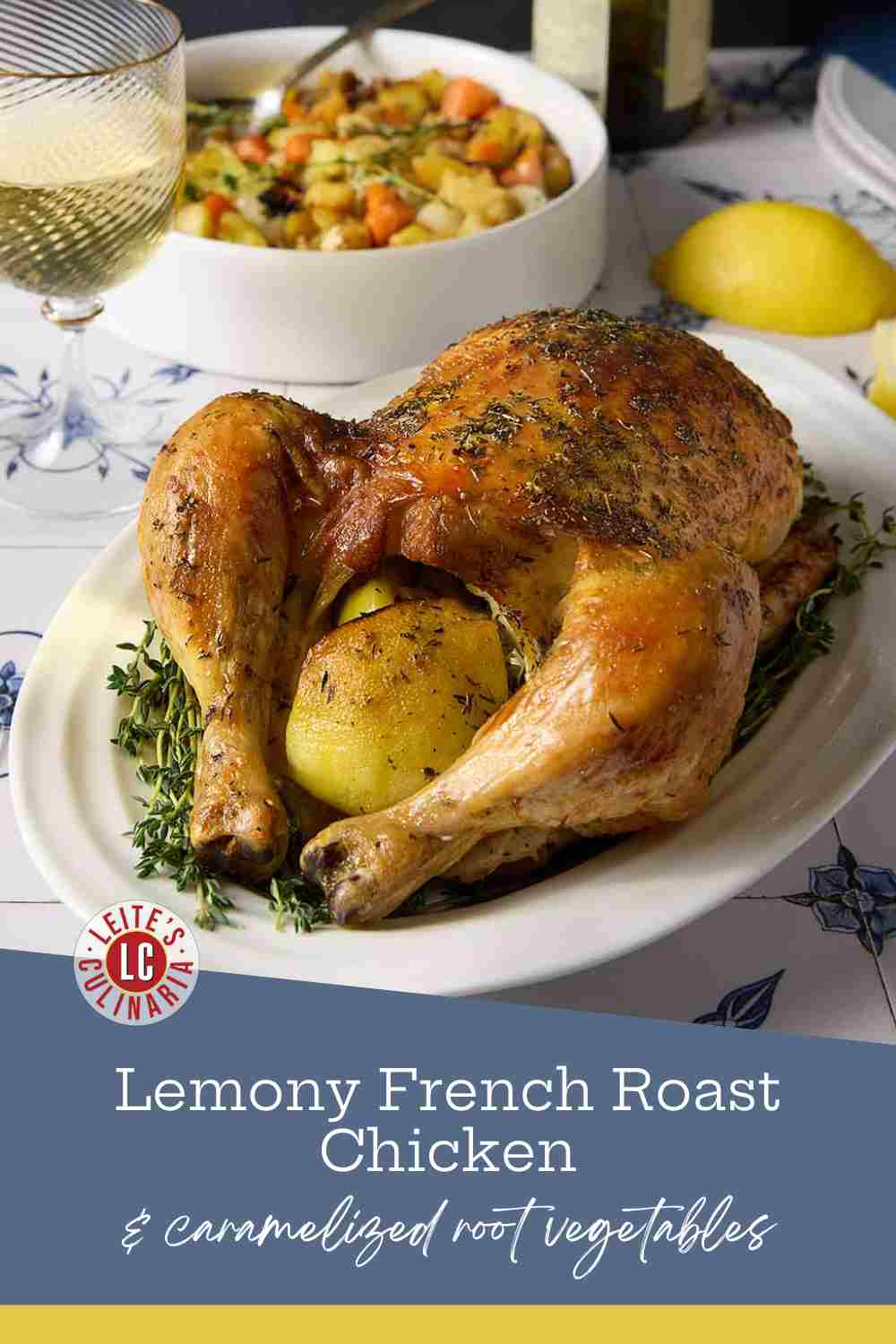
- What it is: A quintessential French roasted chicken seasoned with herbes de Provence and garlic, butter-basted for crispy skin, and cooked over savory root vegetables.
- Why you’ll love it: It’s an effortless one-pan dinner that feels fancy. The butter-under-the-skin trick guarantees juicy results, while the vegetables roast in the flavorful drippings.
- How to make it: Dump vegetables in a baking dish, tuck butter under chicken skin, and roast. Baste with garlic butter until golden brown, then let rest for a perfect finish.
Jump To
- TL;DR (Quick-Answer Box)
- Why our testers loved this
- Notes on ingredients
- How to make French Roasted Chicken
- Your French roast chicken questions, answered
- What to serve with polet rôti
- Want to make chicken gravy?
- Pro tips & troubleshooting
- Storage and reheating
- More outstanding roast chicken recipes
- Write a review
- French Roast Chicken ~ Poulet Rôti Recipe
- More outstanding roast chicken recipes
- Write a Review
- Recipe Testers’ Reviews
This approach to roast chicken is like a French woman’s approach to tossing a scarf around her neck. With little effort but just the right technique, something incredibly simple and commonplace is suddenly made sophisticated.
That’s what happens when you slip some lemon, herbs, and root vegetables in with your plain old hen: a more beautiful roasted bird. And no one has to know just how simple it is. Just nod and graciously accept the compliments.
Chow,

Featured Review
It was one of those days when your heart longs for the smell of a roasting chicken in the oven. This was a one-pot wonder; we loved the root veggies all slathered in that liquid gold. Green salad and French bread, it was perfection. Next day? Slow cooker chicken broth… ’twas a no-brainer! Merci!
BBQGpddess

Why our testers loved this
My testers gushed over this simple French roast chicken recipe that “has it all–tender, juicy meat bursting with flavor and wonderful, crisp skin, and the roasted veggies bathed in rich buttery-lemon-garlic-chicken juices!” Makes you want to try it, doesn’t it?
Notes on ingredients
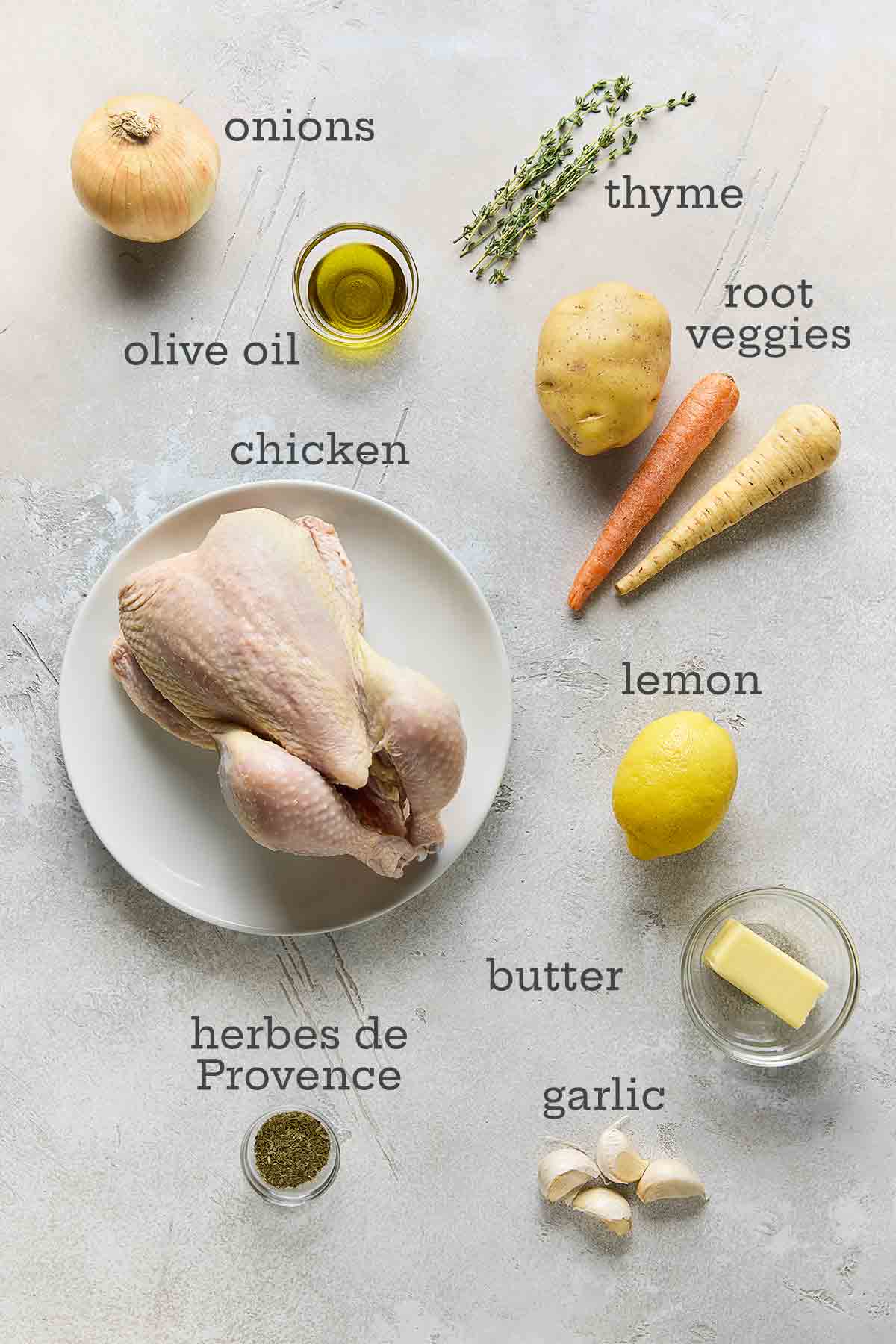
- Root vegetables—Use any combination of your favorite root veggies, including potatoes, carrots, parsnips, or turnips. Cut them into similar-sized pieces so that they cook evenly.
- Chicken—Buy a chicken between 3 and 4 pounds, often labeled as a fryer chicken. Larger roasting chickens provide more meat but take longer to cook, and you may end up with overly crispy chicken or vegetables.
- Lemons—These add flavor to the chicken while it roasts. Leaving them in large wedges keeps the lemon flavor subtle.
- Salted butter—Using salted butter saves you the step of salting the chicken. If you’re using unsalted butter, sprinkle a big pinch of salt inside the cavity of the chicken and season the outside of the chicken well after rubbing it with butter. Room-temperature butter will be much easier to spread than cold butter, so be sure to take it out of the fridge a couple of hours before cooking.
- Garlic—Smash the cloves of garlic cloves in their skins by laying each one on its side and pressing firmly on it with the flat side of a large knife. Keeping them in their skins allows the garlic to infuse the chicken and butter with flavor without overpowering it.
How to make French Roasted Chicken
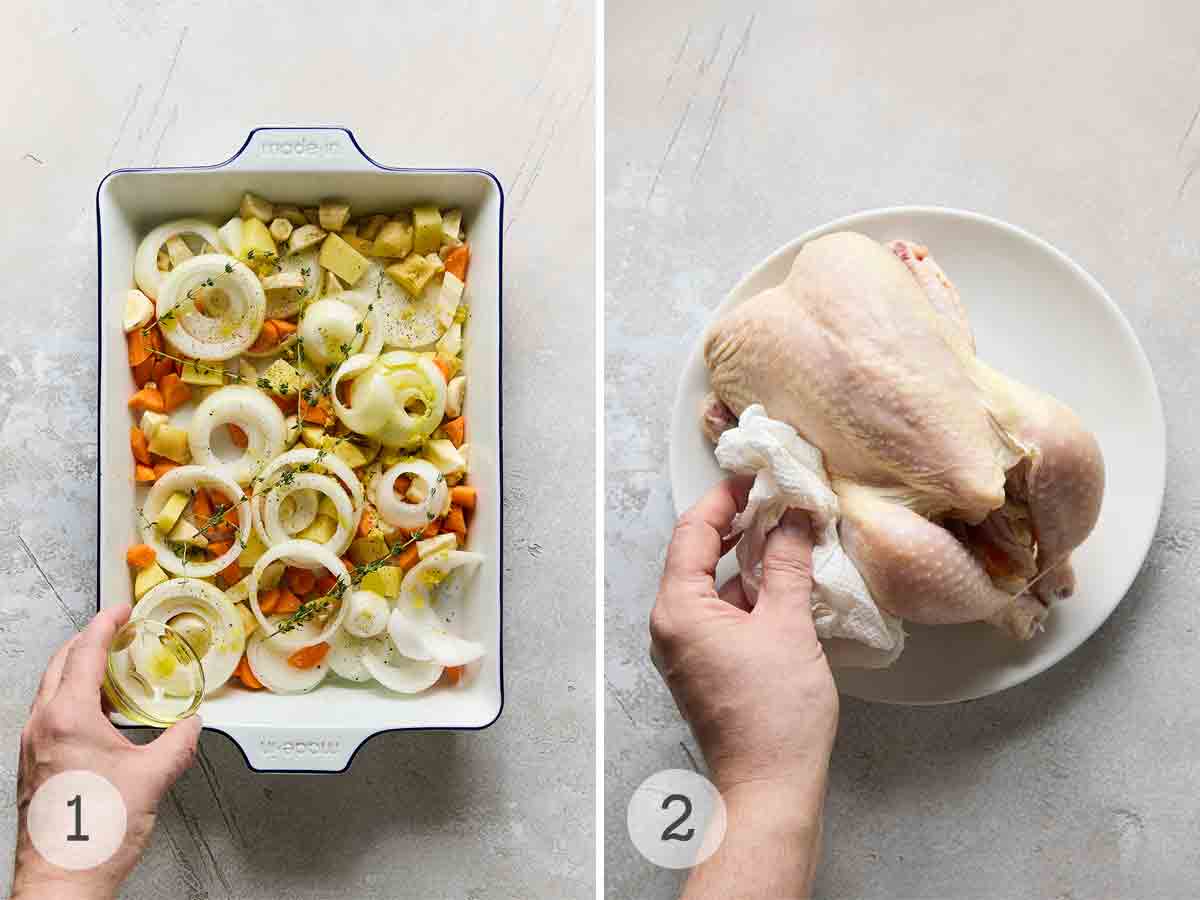
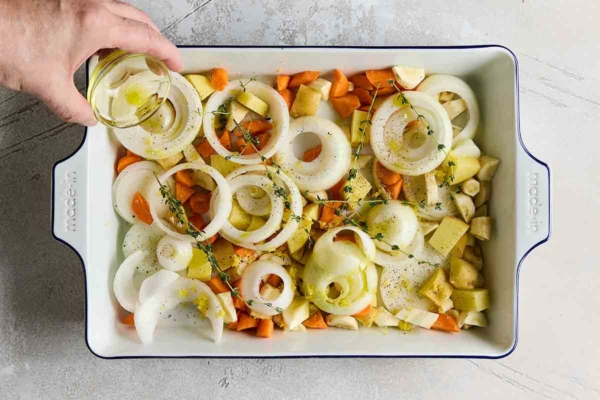
- Combine the vegetables, onions, oil, lemon zest, thyme, salt, and pepper in a roasting pan. Mix well to coat everything, then arrange in a single layer.
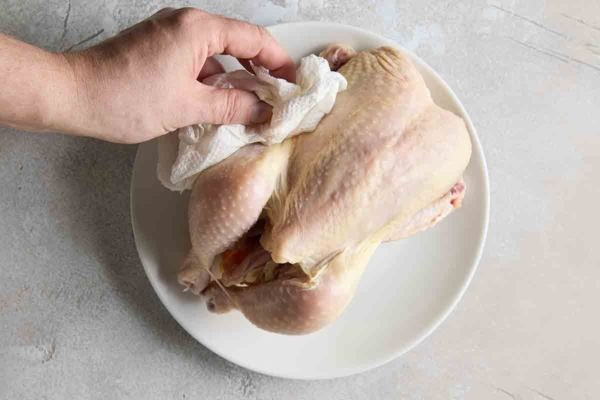
- Pat the chicken dry using paper towel.
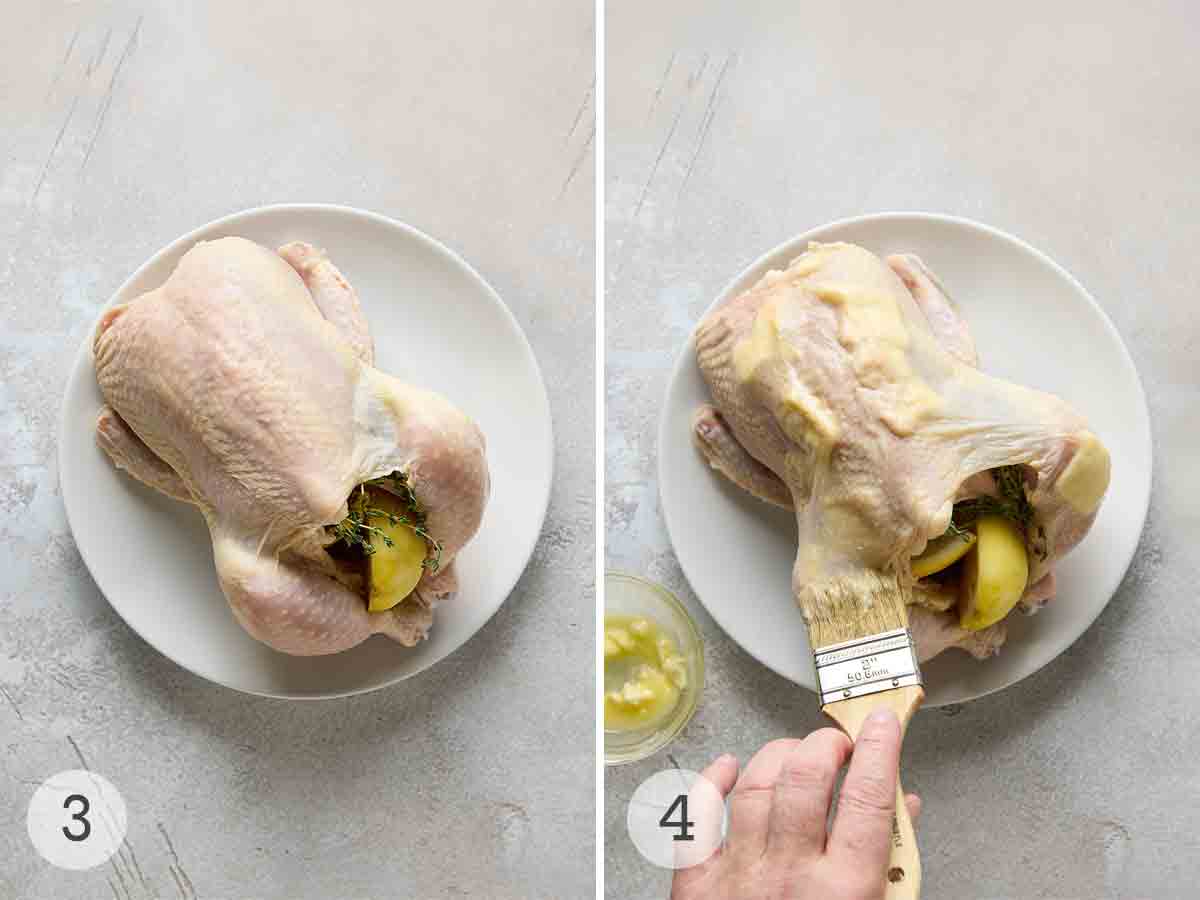
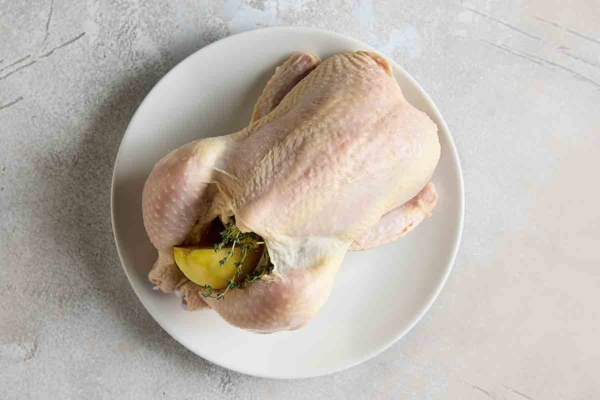
- Quarter the lemons and stuff them inside the chicken cavity with the smashed garlic and some thyme.
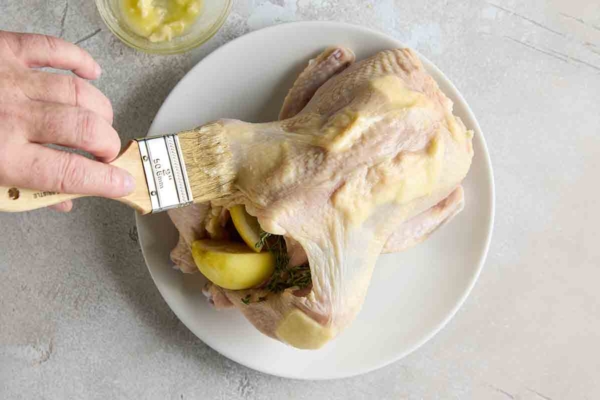
- Rub half of the butter under the chicken’s skin, then spread the remainder over the outside. Sprinkle herbes de Provence and pepper over the chicken.
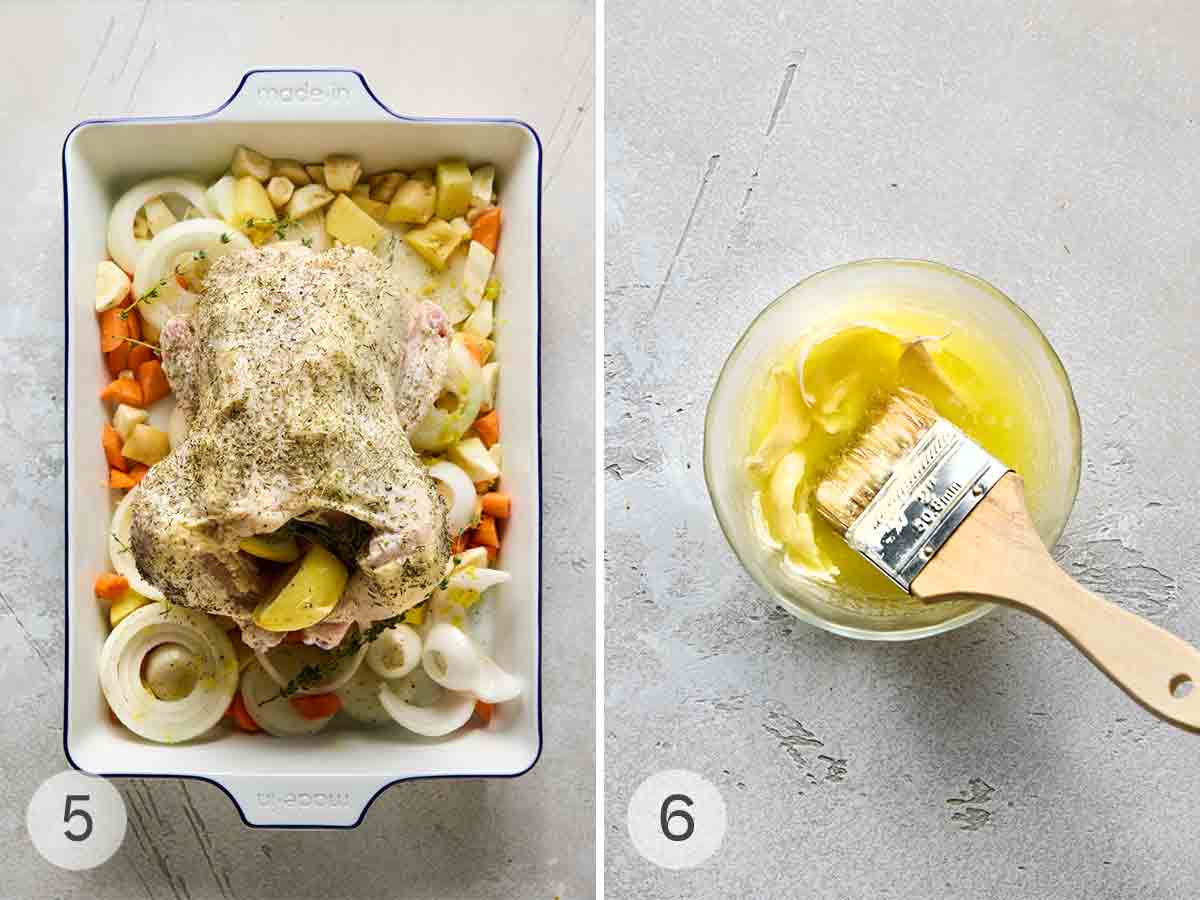
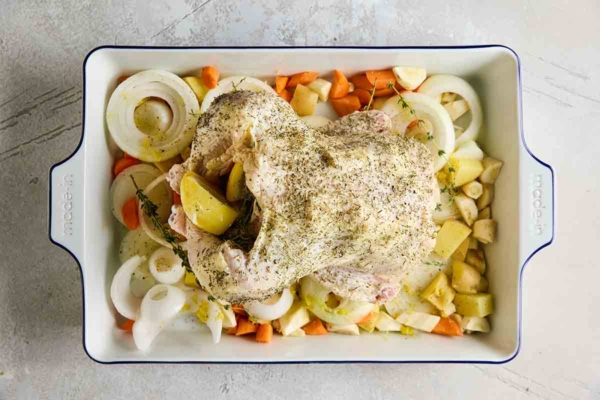
- Place the chicken on top of the vegetables.
- Melt the butter in a small saucepan. Add the smashed garlic and keep warm.
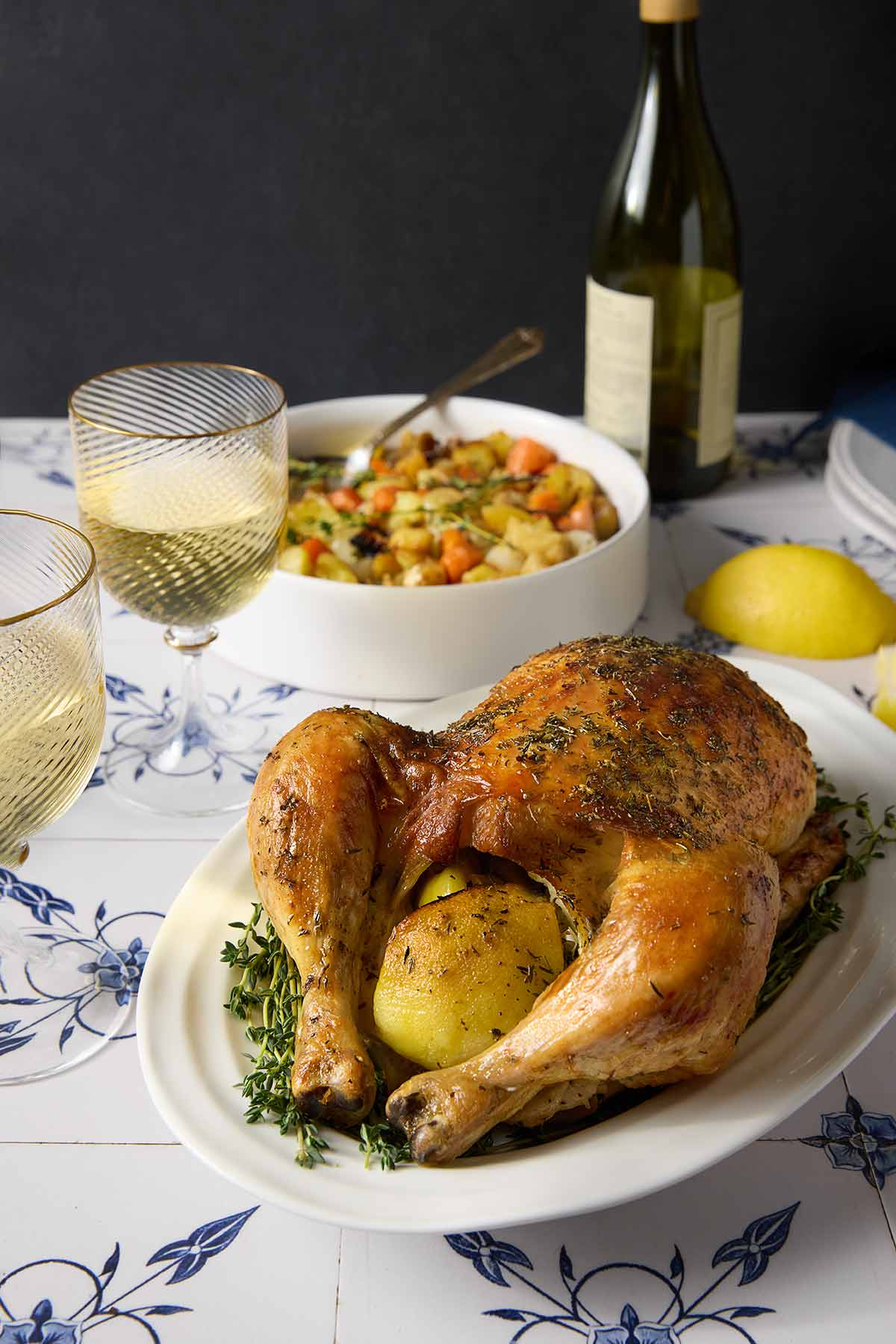
- Roast the chicken at 425°F until the skin begins to brown. Reduce the heat to 400°F and cook, basting every 20 minutes with the garlic butter, until it reaches an internal temperature of 165°F.
Your French roast chicken questions, answered
The best way to determine doneness is with a meat thermometer. Insert it into the thickest part of the thigh, avoiding any bone. When it reads 165°F (74°C), the chicken is done.
Begin by laying your cooked chicken on a flat surface. Using a sharp knife, cut between the leg and the breast until you reach the hip joint. Press firmly to cut through the joint while gently pulling the leg away. Cut between the drumstick and thigh, and repeat with the second leg.
To carve the breast, slice into the top of the breast next to the breastbone. Guide the knife along the bone towards the ribs while gently pulling the breast away from the bone. Follow the ribs until you reach the wing joint, and press firmly to cut through the joint, then separate the wing from the breast.
Slice the chicken breast, if desired, and repeat with the remaining breast.
It’s up to you. Trussing the chicken can help it to cook more evenly, but it’s not required for this recipe.
What to serve with polet rôti
Since you’ve got juicy, tender chicken and caramelized root vegetables in one dish, all you need to add is a crisp green salad drizzled with tangy lemon vinaigrette. That said, I’d never turn down a loaf of crusty artisan bread for sopping up the buttery juices. Or, if you want to add a touch of indulgence to your French meal, serve potatoes Dauphinoise on the side. It makes a great Mother’s Day recipe, too!
Want to make chicken gravy?
Wait! Don’t toss those drippings. See those caramelized brown bits at the bottom of the pan? Those are flavor bombs. If you want to turn them into liquid gold—without a single lump—watch my new video on how to make no-fail pan gravy. It comes together in 15 minutes while the bird rests.
Pro tips & troubleshooting
- With so few ingredients, it’s important to find the best quality chicken you can.
- If your chicken is browning too quickly, cover it loosely with aluminum foil.
- Save your chicken carcass for making slow cooker chicken stock.
Storage and reheating
Fridge: Leftover chicken can be stored in a sealed container in the refrigerator for up to 4 days. Reheat it in a 300°F oven until warmed through.
More outstanding roast chicken recipes
Write a review
If you make this French roast chicken recipe, or any dish on LC, consider leaving a review, a star rating, and your best photo in the comments below. I love hearing from you.–David
Featured Review
Fantastic and versatile! It was too hot to turn on an oven, so I used my outdoor gas barbecue to roast the chicken. The skin was beautifully caramelized, and the meat was juicy and flavourful. To keep the dish summery, I omitted the root vegetables and set the chicken on a bed of onions, herbs, and lemon slices. The onions were delicious. Grilled fresh corn basted with the garlic butter was an excellent side. We liked the basting butter with a bit of Dijon mustard, lemon juice, and thyme added.
Sadie
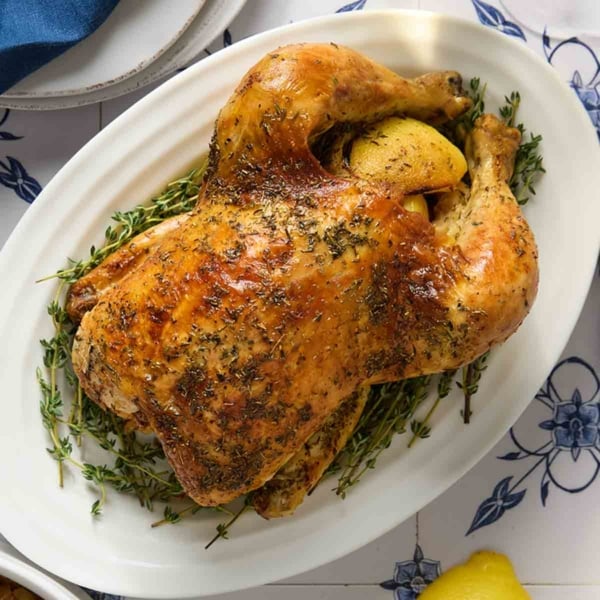
French Roast Chicken ~ Poulet Rôti
Ingredients
For the chicken
- 2 to 3 cups roughly chopped root vegetables , (carrots, parsnips, potatoes)
- 2 medium yellow onions, thickly sliced
- 2 tablespoons olive oil
- 2 small lemons, preferably organic, zest grated from 1
- 6 sprigs fresh thyme
- 2 teaspoons flaky sea salt
- 1 teaspoon freshly ground black pepper
- one (3-pound) chicken
- 2 garlic cloves, unpeeled and smashed
- a few sprigs fresh thyme
- 4 tablespoons (2 oz) salted butter, at room temperature
- 1 to 2 teaspoons dried herbes de Provence, or dried thyme
- freshly ground black pepper
For basting
- 4 tablespoons (2 oz) salted butter
- 2 garlic cloves, unpeeled and smashed
Instructions
Make the chicken
- Preheat the oven to 425°F (220°C).
- Scatter the 2 to 3 cups roughly chopped root vegetables and 2 medium yellow onions in a roasting pan and drizzle with the 2 tablespoons olive oil. Add the zest from 1 lemon, 6 sprigs fresh thyme, 2 teaspoons flaky sea salt, and 1 teaspoon freshly ground black pepper to the vegetables and, using your hands, mix until all the vegetables are coated and then spread into a single layer.

- Using paper towels, pat the one (3-pound) chicken completely dry, inside and out.
- Cut both lemons in quarters and tuck them in the cavity of the bird with the smashed 2 garlic cloves and a few sprigs fresh thyme. If all the lemon quarters don’t fit, you can pop them in the pan with the vegetables—just don’t forget to take them out when you serve the chicken.
- Cut about half the 4 tablespoons (2 oz) salted butter into small pieces and place the pieces under the skin of the bird. To do this, start at the cavity end of the chicken and slide one or two fingers between the meat and the skin. Work slowly, separating the skin from the meat as far as you can reach. Squish the butter pieces slightly and fit them under the skin as best you can.
- Spread the remainder of the butter over the outside of the skin. The easiest way to do this is with your hands. Season the bird with the 1 to 2 teaspoons dried herbes de Provence or dried thyme and a scrunch of pepper.
- Place the bird directly on the vegetables in the roasting pan and place in the oven on the bottom rack for 20 minutes, until the skin starts to brown nicely.
Make the basting mixture
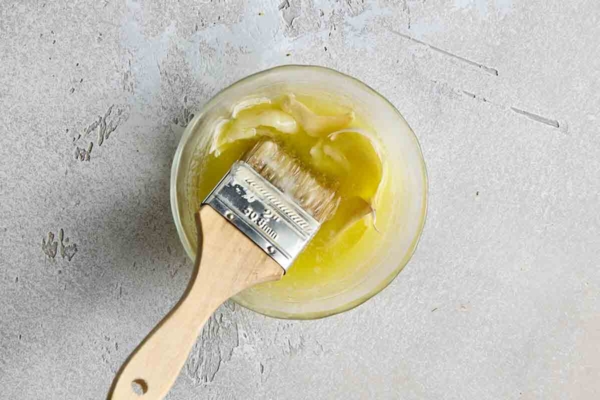
- In a small saucepan, melt the 4 tablespoons (2 oz) salted butter. Add the smashed 2 garlic cloves and place over very low heat. You will use this to baste the chicken while it’s roasting.
- Turn down the oven to 400˚F (200˚C) and roast the chicken for 60 to 70 minutes more, or until a meat thermometer inserted into the high part of the thigh registers 165˚F (74˚C). Normally you can count on about 20 minutes’ cook time per pound (454 g) of chicken but to be absolutely sure, a meat thermometer is the way to go!
- While the bird is cooking, baste it every 20 minutes or so with the melted butter and smashed garlic. This will season the bird even more.
To serve
- Once the chicken is cooked, remove it from the oven (leave the vegetables in the roasting pan), place it on a cutting board (preferably one that has a drain ridge to catch any juices), cover it loosely with aluminum foil and allow it to rest for about 10 minutes before you carve it.
- Give the vegetables a good stir and place the roasting pan back in the oven until you are ready to serve the meal. If the vegetables are not crisp enough, you can set the broiler to high (around 400˚F/200˚C, if your broiler has a temperature display) and broil them for about 5 minutes, but do keep an eye on them as they might burn.
Notes
- Choosing your chicken–With so few ingredients, it’s important to find the best quality chicken you can.
- Tenting the chicken–If your chicken is browning too quickly, cover it loosely with aluminum foil.
- Make stock–Save your chicken carcass for making slow cooker chicken stock.

Nutrition
Nutrition information is automatically calculated, so should only be used as an approximation.
More outstanding roast chicken recipes
David Leite’s Best Brined Roast Chicken
1 d 1 hr 30 mins
Stout and Soy Roasted Chicken
3 hrs 15 mins
Roast Chicken with Sweet Potatoes and Dates
1 hr 30 mins
Write a Review
If you make this French roast chicken recipe, or any dish on LC, consider leaving a review, a star rating, and your best photo in the comments below. I love hearing from you.–David
Recipe Testers’ Reviews
Did you know only 68% of the recipes we test make it onto the site? This recipe survived our rigorous blind testing process by multiple home cooks. It earned the Leite’s Culinaria stamp of approval—and the testers’ reviews below prove it.

This French roast chicken dish has it all—tender, juicy meat bursting with flavor, wonderful, crisp skin, and roasted veggies bathed in rich buttery lemon-garlic chicken pan juices! I’m still thinking about it!
The dish takes a bit of time from start to finish, but what a perfect meal to make for guests when all the work is done ahead. After guests arrive, all you have to do is peek in the oven and baste every now and then while you’re enjoying some cocktails with your friends.
The only accompaniment you need for this dish is a crisp salad with a bracing vinaigrette to cut through the richness of all that butter and a really good baguette.

This roast chicken recipe turned out to be one I’ll reach for again and again. The result was a chicken full of flavor with crisp skin and moist flesh—even the white meat. But the star of the dish was the vegetables. The combination of lemon zest with fresh herbs, salt, and pepper was delicious and made me sorry there weren’t more morsels of carrot and potato to eat.
A classic and well-written roast chicken recipe! It just goes to show that basic ingredients cooked well can turn into a fabulous main course!
Don’t skip the basting with the garlic butter; it helps produce a beautiful golden brown, crispy skin. And definitely use a thermometer so you don’t overcook your bird! I made this on Monday for lunch and am looking forward to enjoying the rest of it during the week—so many possibilities!
This poulet roti is a wonderful dish to serve for dinner and is a big hit with adults and children. The chicken is incredibly moist with a delicious flavor.










I made this yesterday and refrigerated it for tonight. It smelled divine while cooking. I used Russet potatoes. My husband is actually waiting for dinner.
Christine, honestly, I couldn’t ask for anything more! I love the overnight tour of duty in the fridge. If you do it again, I hope you do, consider keeping it uncovered. I know it sounds counterintuitive. But what happens is the skin begins to dry out, because refrigerators are a very dry environment. And that helps the skin to really crisp in the oven.
I love the recipe in the seasoning however it wasn’t completely cooked through after the amount of time designated but I think it was because I’m at high altitude 4,650 feet and I didn’t make that adjustment. my son said if I flipped it up with breast side down and cooked it for half the time and then turned it over and cooked it for the other half of the time it might have been completely cooked. What do you think?
Hi Jamie. It’s actually a myth that high altitude slows down oven roasting. According to the USDA Food Safety and Inspection Service, food roasted in an oven isn’t affected by elevation—so sea-level recipe times should work perfectly. (Braising and simmering are affected.) If your bird wasn’t done in time, classic kitchen variables like your oven running a bit cool or the chicken being slightly larger or colder when it went in are probably the culprits.
As for your son’s advice, flipping a chicken breast-side down is a fantastic technique to keep breast meat juicy, but it won’t actually speed up the cooking time. Plus, with this specific recipe, trying to flip a hot, buttery bird directly on top of those chopped root veggies would get pretty messy and scrape off that delicious herbed skin.
Next time, the absolute best tool in your arsenal is a digital meat thermometer inserted into the thickest part of the thigh. Once it registers 165°F, your chicken is perfectly cooked, no matter your elevation. Hope this helps.
This is my go-to roast chicken recipe for the past five years. As a Francophile, I’m always looking to incorporate French flavors in my cooking and this one doesn’t disappoint! The basting creates delicious crackly skin and the potatoes really absorb the lemony, chicken-y goodness.
I made this tonight for company and tomorrow, I will make broth with the leftover carcass. I like to save any leftover chicken and lemon wedges to put in the soup at the very end, as it ensures the meat stays tender and the lemon brightens the soup at the last minute.
Joann, FIVE YEARS?! I’m deeply honored to have been a part of your kitchen rotation for that long. You’re right—there’s nothing quite like the way those potatoes soak up all that lemony, chicken-y loveliness is there? Using the roasted carcass and then adding those roasted lemon wedges at the very end to brighten the broth is genius. Does the lemon give it an avgolemono vibe .