
TL;DR (Quick-Answer Box)
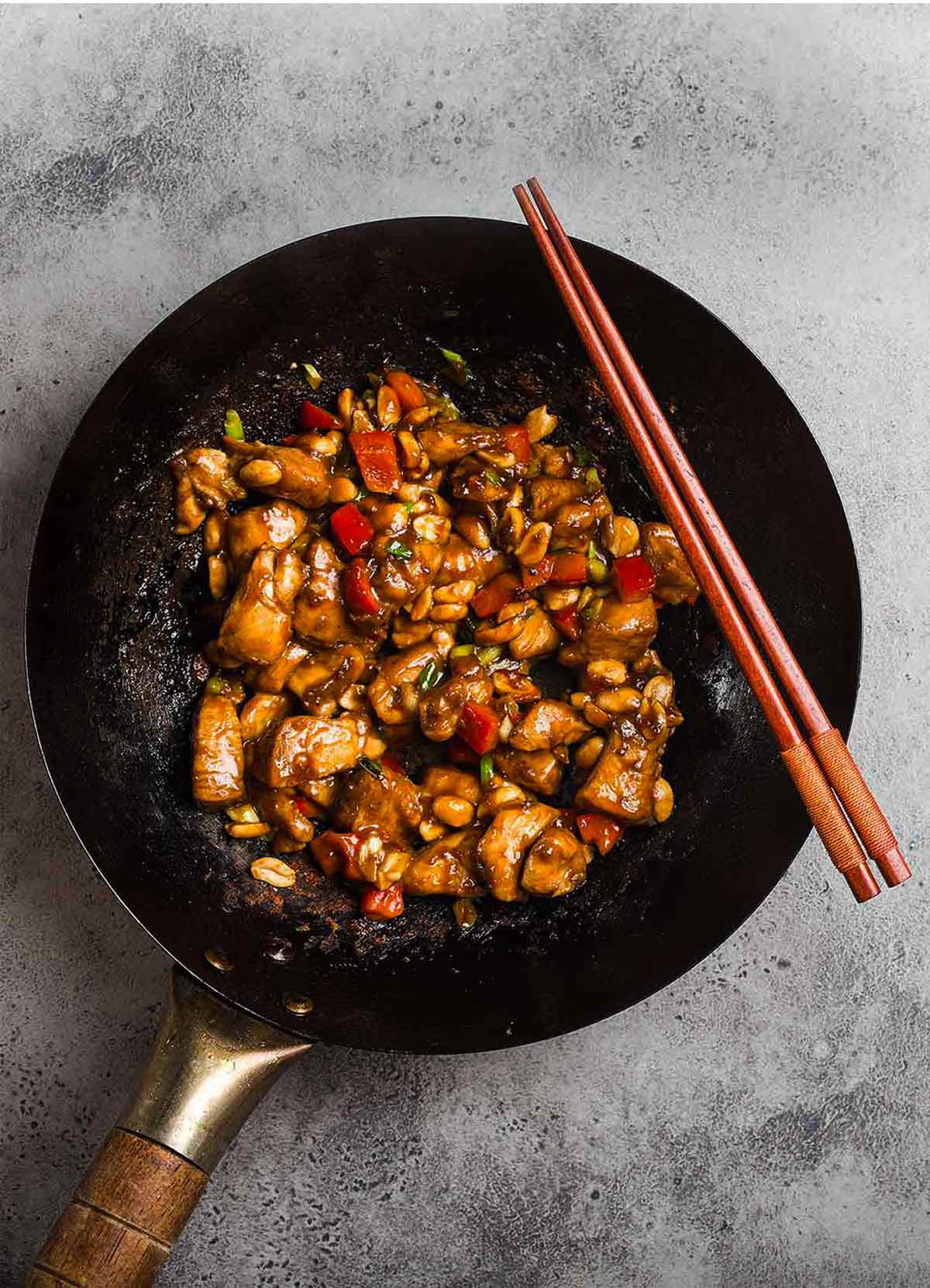
- What it is: A classic Sichuan stir-fry featuring tender chicken breast, crunchy peanuts, and dried chiles in a savory-tangy sauce made with black vinegar and toasted sesame oil.
- Why you’ll love it: It delivers bold, restaurant-quality heat and numbing flavor in just 25 minutes, making it an incredibly fast and authentic weeknight meal.
- How to make it: Marinate the chicken, whisk the sauce, and stir-fry chiles and peppercorns. Sear the chicken with aromatics, then swirl in the sauce and peanuts.
Jump To
- TL;DR (Quick-Answer Box)
- Why this Kung Pao Chicken recipe works
- How to pronounce Kung Pao Chicken
- The history of Kung Pao Chicken
- Notes on ingredients
- Your Kung Pao Chicken questions, answered
- Kung Pao Chicken pro tips & troubleshooting
- What to serve with Kung Pao Chicken
- Storage & reheating
- More superb Chinese chicken recipes
- Write a review
- Kung Pao Chicken With Peanuts Recipe
- Recipe Testers’ Reviews
Featured Review
This is now my favorite Kung Pao recipe! No celery or distractions from the spice. I like it very spicy, and it was!
Meribeth

Why this Kung Pao Chicken recipe works
This isn’t your average cornstarch-laden takeout; it’s a bright, balanced, and authentic version of the Sichuan classic. Because it’s based on a recipe by Chinese culinary expert Fuchsia Dunlop, you’re getting the real deal—smoky heat, tangy black vinegar, and that signature numbing sensation from the Sichuan peppercorns. It works because it’s incredibly fast (we’re talking 10 minutes of actual cooking, people!) and uses a velveting technique to keep the chicken breast tender and juicy. Plus, since you’re the cook, you can control the “hiccup threshold” by adjusting the number of chiles to suit your heat tolerance.
Call it laziness. Call it downright knee-shaking fear. I’ve studiously avoided cooking Chinese dishes in my home ever since…well, forever.
After all, I do live in New York City, even though I deign to stay there only a few days every few months. And that means delivery. All I have to do is pick up the phone, and in less time than it takes for someone else to get offed on “Stranger Things” I have all the Chinese food I could possibly want.
But a curious thing happened on the way to UberEats. I’ve either become a better cook or Chinese takeout has gotten worse on the Upper West Side. I think it’s probably the latter, as friends who don’t even cook think the food has tanked.
And that has left a gaping hole in my cravings. I was waving 再见 (goodbye) to cold sesame noodles, Chinese roast pork, hot and sour soup, General Tso’s Chicken, beef and broccoli, egg foo young, and Gung Bao (aka Kung Pao) chicken. Out of sheer desperation, I manned up to the wok, placed a huge order with Amazon for ingredients, and went for it.
This Gung Bao chicken is the first dish I made from the formidable writer and Chinese culinary expert Fuchsia Dunlop. In fact, it’s the first Chinese recipe I’ve ever made. And it worked perfectly out of the (takeout) box, so to speak. It smacked of the flavors I so love, but without all that gloppiness attendant with takeout Chinese.
Now, as you know, The One doesn’t like spicy foods (yes, yes, a problem), and I know this recipe has been described as being so hot it approaches the “hiccup threshold.” So I cut back on the peppers (I didn’t use Sichuan peppers but rather substituted piri-piri peppers) to great effect. It all came together in no time—even the prep work, which can be daunting in Chinese cooking—was a breeze.
I had everything ready before The One came home to Connecticut. When he walked in, I just revved up the skillet and started. Ten minutes later, we were seated at the dining room table. The only thing I’d do differently next time would be to use a nonstick pan. I don’t own a traditional wok (although I’m now eyeing them), and the sauce began to stick to the skillet due to the sugar. Beyond that, it was flawless.
Gong Bao chicken has almost succeeded in toppling spaghetti alla carbonara as my top a go-to weeknight dish (sorry, Italy). We loved it so much, we’re serving it to guests this week. Now all I have to do is learn to speak Chinese (see the “How To Pronounce Kung Pao Chicken” note below), and I’ll be set.
Chow,

How to pronounce Kung Pao Chicken
Curious how to properly pronounce the classic Chinese dish you’re about to make? We certainly were! While most of us know it as Kung Pao (pronounced kuung-pow), you might also see it spelled as Kung Po on some menus.
In digging for the true pronunciation, we found that “Kung Pao” is the Americanized version of Gong Bao (pronounced gong-baow), which is short for the traditional Sichuan name Gong Bao Ji Ding.
The history of Kung Pao Chicken
Interested to learn more about the history of this dish? Author Fuchsia Dunlop explains:
“This dish has the curious distinction of having been labeled as politically incorrect during the Chinese Cultural Revolution. It’s named after a late Qing Dynasty (late 19th century) governor of Sichuan, Ding Baozhen—Gong Bao was his official title—who is said to have particularly enjoyed eating it.
“No one can quite agree on the details of the dish’s origins: Some say it was a dish Ding Baozhen brought with him from his home province of Guizhou; others that he ate it in a modest restaurant when he went out in humble dress to observe the real lives of his subjects; still others, rather implausibly, that his chef invented the finely chopped chicken dish because Ding Baozhen had bad teeth.
“Whatever the truth of its origins, its association with an imperial bureaucrat was enough to provoke the wrath of the Cultural Revolution radicals, and it was renamed ‘fast-fried chicken cubes’ (hong bao ji ding) or ‘chicken cubes with seared chiles’ (hu la ji ding) until its political rehabilitation in the 1980s.”
Notes on ingredients
- Chicken: I prefer boneless chicken breasts cut into uniform chunks, but you can certainly use thighs if you want a bit more fat and flavor.
- Potato flour or cornstarch: This is essential for the marinade. It creates a protective coating—a technique called “velveting”—that keeps the meat from drying out in the high heat of the wok.
- Chinkiang vinegar: AKA Chinese black vinegar, this is the heart of the dish. It’s malty, complex, and less sharp than balsamic. If you can’t find it, a mix of balsamic and red wine vinegar can work in a pinch…but the flavor won’t be quite the same.
- Sichuan peppercorns: These aren’t spicy-hot like chiles. Rather, they lend a tingly, (and very desirable) numbing sensation (called ma) that balances the heat.
- Dried red chiles: I like to use a handful of dried Sichuanese chiles. I prefer the flavor but not that intense burn, so I leave them whole or in large pieces so The One and guests can pick them out.
Your Kung Pao Chicken questions, answered
Kung Pao chicken (also known as Kung Po or Gong Bao ji ding) is a legendary Sichuan stir-fry of cubed chicken, crunchy roasted peanuts, and dried red chiles. Authentic versions use Sichuan peppercorns to create that signature tongue-numbing buzz. The sauce typically blends soy sauce, Chinkiang black vinegar, and sugar, resulting in a complex savory, spicy, and slightly tangy flavor profile.
Yes, traditional Kung Pao chicken packs a punch thanks to an army of red chiles and Sichuan peppercorns. They create a unique tingling sensation known as mala. (Think party in your mouth.) If you’re a heat wimp (like The One), just leave the chiles whole or dial back the peppercorns—no judgment here.
The main difference is the preparation and the peanuts. Kung Pao is stir-fried, lighter, and focuses on a complex spicy-tangy balance. General Tso’s is the heavier cousin: battered, deep-fried, and smothered in a thick, sugary sauce. Kung Pao is considered more complex and less sweet. But, hey, both are great.
Velveting is the secret sauce to restaurant-quality meat. (Literally.) The meat is coated in a slurry of cornstarch and liquid (such as rice wine or egg white) before it hits the wok. This creates a barrier that locks in moisture during high-heat cooking, keeping the meat tender, juicy, and silky rather than becoming dry, sad nuggets.
Kung Pao Chicken pro tips & troubleshooting
☞ Prep is everything
Stir-frying happens at lightning speed. (I mean wicked fast.) You won’t have time to mince garlic or measure soy sauce once the oil is hot, so make sure your mise en place is ready before you even think about turning on the stove.
☞ Don’t burn the spices
When you add the chiles and peppercorns to the oil, they only need a few seconds to bloom and become fragrant. If they turn black, they’ll taste bitter. If things are getting too hot, don’t be afraid to yank the wok off the burner for a moment.
☞ Use a nonstick skillet
If you don’t own a traditional and well-seasoned carbon steel wok, a large nonstick skillet is actually your BFF here. The sugar in the sauce can stick and burn in a regular stainless steel pan, but it’ll glide right off a nonstick surface.
☞ Watch the sauce
Swirl the sauce in at the very end. It should only take a minute or two to thicken and become shiny. As soon as it coats the chicken beautifully, it’s done.
What to serve with Kung Pao Chicken
To round out a proper Chinese feast, I like to serve this alongside a few other dishes from the site. Here are some of my favorite pairings:
Shrimp Toast: An old-school fave that adds a nice crunch to the meal.
Hot and Sour Soup: A classic starter that mirrors the tangy-spicy profile of the chicken.
Fried Pork Dumplings: You can’t have a Chinese dinner without a side of crispy, juicy potstickers, now can you?!
Stir-Fried Lettuce: This sounds simple, but the crisp, fresh greens are the perfect cooling contrast to the heat of the Kung Pao.
Shanghai Fried Noodles: If you want something more substantial than steamed white rice, these noodles are a total crowd-pleaser.
Storage & reheating
Fridge: If you happen to have leftovers (good luck with that!), they’ll keep perfectly in an airtight container in the fridge for up to 3 or 4 days
Reheating: I recommend warming the chicken in a skillet over medium heat with a tiny splash of water or chicken broth to loosen the sauce. You can use the microwave, but be careful—chicken breast can turn rubbery if it’s zapped for too long.
More superb Chinese chicken recipes
Write a review
If you make this kung pao recipe, or any dish on LC, consider leaving a review, a star rating, and your best photo in the comments below. I love hearing from you.–David
Featured Review
Kung Pao is my absolute favorite Szechuan food. This is the third recipe I’ve tried, and Ding! Ding! Ding! It’s far and above the winner! I could eat this every night. Beats take out every single time.
I used arrowroot flour/starch instead of potato or corn flours and ended up with the stickiest cling-to-the-chicken sauce I’ve ever stir-fried. Yummy! Just like my favorite national high-end sit-down restaurant.
ShoppeGirlMN
Kung Pao Chicken With Peanuts
Ingredients
For the marinade
- 1 1/2 teaspoons potato flour or 2 1/4 teaspoons cornstarch
- 1/2 teaspoon salt
- 2 teaspoons light soy sauce
- 1 teaspoon Shaoxing rice wine or medium-dry sherry
- 1 tablespoon water
- 2/3 pound boneless chicken breasts, skin-on or skinless, cut into 1/2-to-3/4-inch (12- to 18-mm) chunks
For the sauce
- 1 tablespoon granulated sugar
- 3/4 teaspoon potato flour, or 1 1/8 teaspoons cornstarch
- 1 teaspoon dark soy sauce
- 1 teaspoon light soy sauce
- 1 tablespoon Chinkiang or Chinese black vinegar
- 1 teaspoon toasted sesame oil
- 1 tablespoon homemade chicken stock or canned chicken broth, or water
For the Kung Pao chicken
- 1 handful dried red chiles, (at least 10) preferably Sichuanese
- 2 tablespoons peanut oil
- 1 teaspoon whole Sichuan peppercorns
- ginger, (enough to equal the volume amount of garlic), thinly sliced
- 3 garlic cloves, thinly sliced
- 5 scallions, white and green parts, cut into 1/2-inch lengths
- 2/3 cup roasted unsalted peanuts
Instructions
Make the marinade
- In a small bowl, combine the 1 1/2 teaspoons potato flour or 2 1/4 teaspoons cornstarch and 1/2 teaspoon salt. Slowly add the 2 teaspoons light soy sauce, 1 teaspoon Shaoxing rice wine or medium-dry sherry, and 1 tablespoon water, mixing constantly with a fork.
☞ TESTER TIP: f using potato flour, the marinade will be more of a paste than a liquid marinade. That's okay.
- Add the 2/3 pound boneless chicken breasts and stir to evenly coat the chicken. Let it stand at room temperature while you make the sauce.
Make the sauce
- In a small bowl, combine the 1 tablespoon granulated sugar, 3/4 teaspoon potato flour, 1 teaspoon dark soy sauce, 1 teaspoon light soy sauce, 1 tablespoon Chinkiang or Chinese black vinegar, 1 teaspoon toasted sesame oil, and 1 tablespoon homemade chicken stock or canned chicken broth.
Make the Kung Pao chicken
- Snip the 1 handful dried red chiles into 2 or 3 pieces. Wearing rubber gloves, discard as many chile seeds as possible.
☞ TESTER TIP: For a milder—but still spicy—flavor, keep the peppers whole or use fewer.
- Add 2 tablespoons peanut oil to the wok and place it over high heat. When the oil is hot but not yet smoking, add the chiles and 1 teaspoon whole Sichuan peppercorns and stir-fry briefly until crisp and the oil is spicy and fragrant. Whatever you do, be mindful not to burn the chiles and pepper. You can remove the wok from the heat if necessary to prevent overheating.
☞ TESTER TIP: Keeping the peppercorns whole and the dried chiles in larger pieces allows the heat-averse eaters at your table to pick around them.
- Plop in the chicken pieces and cook, stirring constantly. As soon as the chicken cubes have separated, add the ginger, 3 garlic cloves, and 5 scallions and continue to stir-fry for a few minutes until everything is fragrant and the chicken is cooked through. (You may want to slice into one of the larger pieces of chicken to make sure it's done.)
- Stir the sauce and then carefully swirl it into the wok, continuing to stir and toss. As soon as the sauce is warmed through and becomes thick and shiny, add the 2/3 cup roasted unsalted peanuts, stir to combine, and serve immediately.
Notes
Kung Pao Chicken Variations
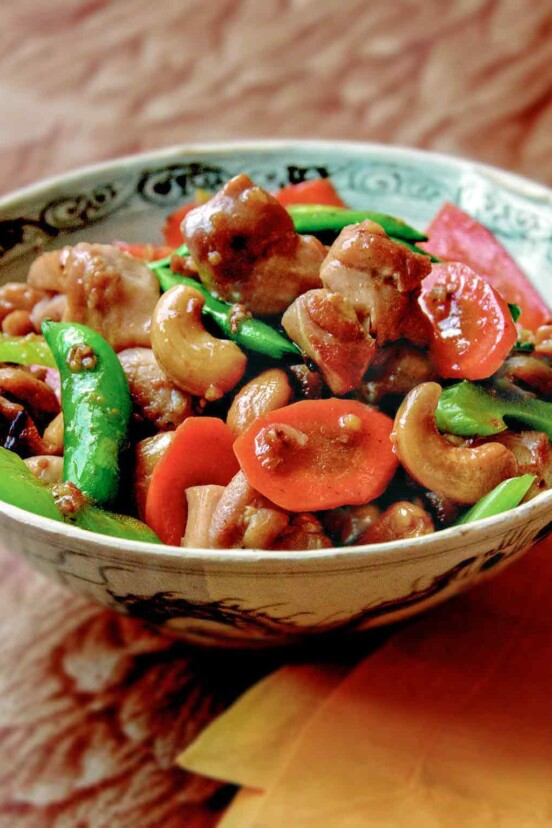
Kung Pao Shrimp or Pork You can substitute prawns (shrimp) or chunks of pork in place of the chicken. Kung Pao Chicken with Cashews Cashews can be used instead of traditional peanuts for a slightly grander version of this dish. Kung Pao Chicken with Whatever’s in Your Fridge I love this Kung Pao chicken recipe without changing a thing. However, if you’re the sort who prefers a little extra vegetable to make you feel a little more virtuous after having cold cereal for dinner last night, or if you happen to have some vegetables languishing in the fridge or canned items in the back of the pantry that you know you won’t use if they linger any longer, then go ahead and toss them in. Red bell peppers, water chestnuts, even asparagus, they all work here. Follow your bliss.
Nutrition
Nutrition information is automatically calculated, so should only be used as an approximation.
Recipe Testers’ Reviews
Did you know only 68% of the recipes we test make it onto the site? This recipe survived our rigorous blind testing process by multiple home cooks. It earned the Leite’s Culinaria stamp of approval—and the testers’ reviews below prove it.

This Kung Pao Chicken is just like what’s on the menu at my favorite Szechuan restaurant. Rich, complex, not ridiculously spicy, and a perfect consistency for the sauce. Some of the ingredients aren’t standard issue in most American kitchens, but any reasonable Asian market should be able to help you out.
I was careful to remove most, if not all of the seeds from my dried chiles, as my wife doesn’t like things too hot. The “ma la” tongue-tingling sensation was just right; I think if the Szechuan peppercorns had been ground, it would have been out of control. Also, keeping the peppercorns whole and the dried chiles in larger pieces allows the heat-averse to pick around them.
As with many stir-fry recipes, it’s more work to prep than to cook, but this could easily be done on a weeknight once you have the specialty ingredients.
For me this was a real winner.

This Kung Pao chicken is a very flavorful dish that was a wonderful treat for a weekday meal. I used Guajillo peppers that gave a delicious flavor but weren’t too hot. The peanuts work well with the complex flavors of the different kinds of soy sauce, the rice vinegar, and the sesame oil.
My one suggestion is that there be a bit more vegetable mixed in. I used the white part of 5 large scallions but it would have benefitted from more or perhaps an onion cut into wide strips or chunks. I served it with a salad of spring lettuces with cut-up apple, which provided a nice balance with the chicken.










Is potato flour the same as potato starch?
Nan, no, they’re different. Potato flour is crushed, cooked, dried, and ground potatoes. Potato starch is what is washed off the crushed potatoes.
Use can also use corn starch.
Thanks, Elmer.
Made it. Ate it. Loved it!
As I was not quite certain which peppers to use based on what I had on hand, I chose Tien Tsin, which I admit have been on the shelf for a little longer than intended. Perhaps that is why my peppers were not a beautiful, bright red, but rather a dull brown. I was careful not to burn them. The next time I am in Tulsa, I will seek a Chinese market for a different pepper.
Though I followed the recipe (except for the peppers) the dish lacked a beautiful caramel color, though perhaps that is due to only having dark soy sauce, or maybe my camera is a bit off.
Many thanks for sharing this recipe!
Karen, I use Tien Tien peppers, and it find it plenty hot. I buy them online at Penzy’s. Was your dish too dark?
David, I bought my peppers from Spice House. The dish was not what I would call dark, but bland colored, almost as though someone put a filter over my view. It wasn’t bright and caramel colored, but dull. It tasted wonderful, but lacked that photographic pizzazz like yours. Hmm. I’ll definitely make it again, though.
Well, Karen, I’d choose taste over looks any day!
Karen if you are in Illinois or Wisconsin, I assume Spice House is either Milwaukee or Evanston spice shops, a family branch of Penzy’s (the family split in the spice business). I used Tien Tsin peppers from Milwaukee’s Spice House when cooking Fushia Dunlop’s recipe for Gong Bao Chicken. Like David, I go for flavor over image. David, at least you credit Fushia Dunlop with the recipe, many websites rip off her recipe without credit (a key clue is “3 cloves garlic, an equal amount of ginger” from the New York Times web site giving her recipe). It is the best Gong Bao recipe I have made.
Thanks for your advice, Mike. And yes, we value writers and recipe developers more than words can say and wouldn’t dream of not giving credit where credit is due.
And that, my dear, is one of the very many reasons why I love Leite’s so much!
Oh gosh, thanks, dear Karen!
Hello Mike, unfortunately, I am far from the spice shops I love so dearly, but do mail order. I was able to visit the Spice House in Chicago and also in Texas recently. 🙂
This Gong Bao recipe as posted is not complete. No veggies.
Mo, compared to what, may I ask? Your understanding of the classic Gong Bao recipe? Or your preferred rendition?
Hi, Mo. This came directly from Fuchsia, who has spent part of each year in China for a long time. I know that I’ve seen Gong Bao at my local Chinese takeout place with, say, broccoli, but I think that may be a nod to American tastes. I can ask Fuchsia for you, if you wish.
Mo your asking for the American version. Just make a side of veggies for yourself not everyone likes a pound of bean sprouts on their plate. It’s delish just the way it is.
Coral, thank you for clarifying, yes, the classic doesn’t call for many vegetables at all. Love that you know your Chinese food and that you like it so! Although we’re not averse to anyone adding a few more if they like. It’s not traditional, to be sure, although it could still turn out quite nice…