
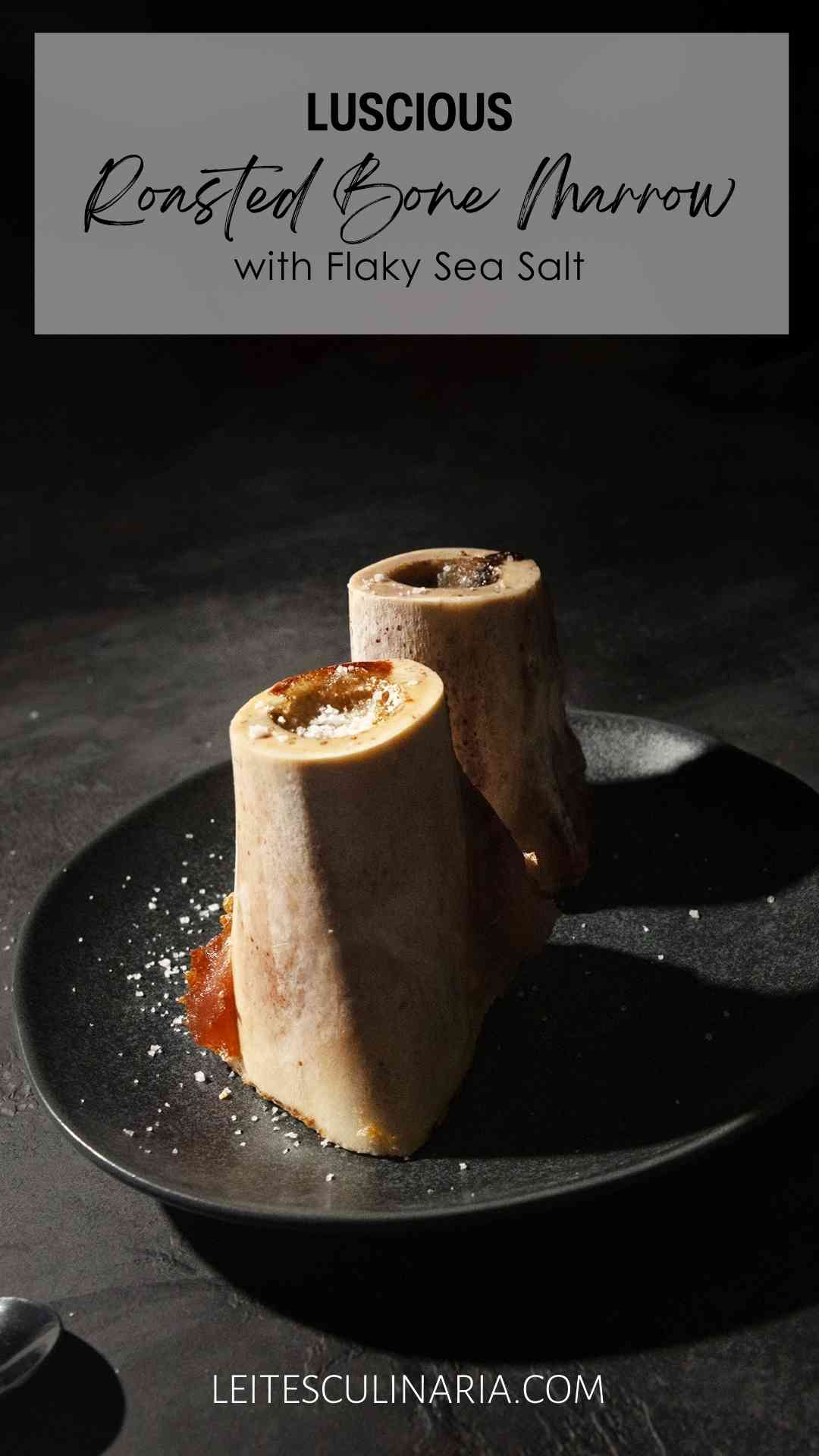
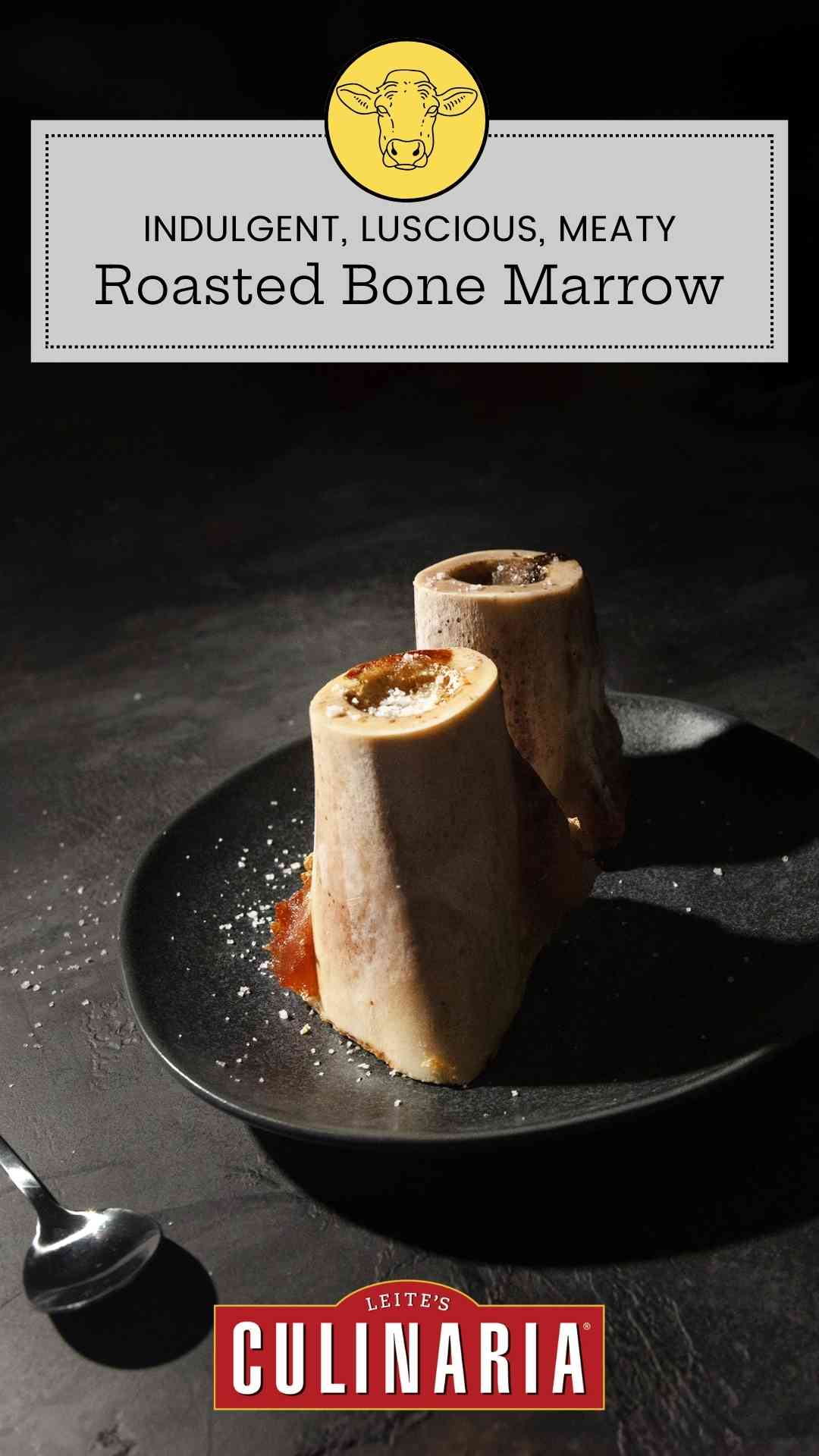
TL;DR (Quick-Answer Box)
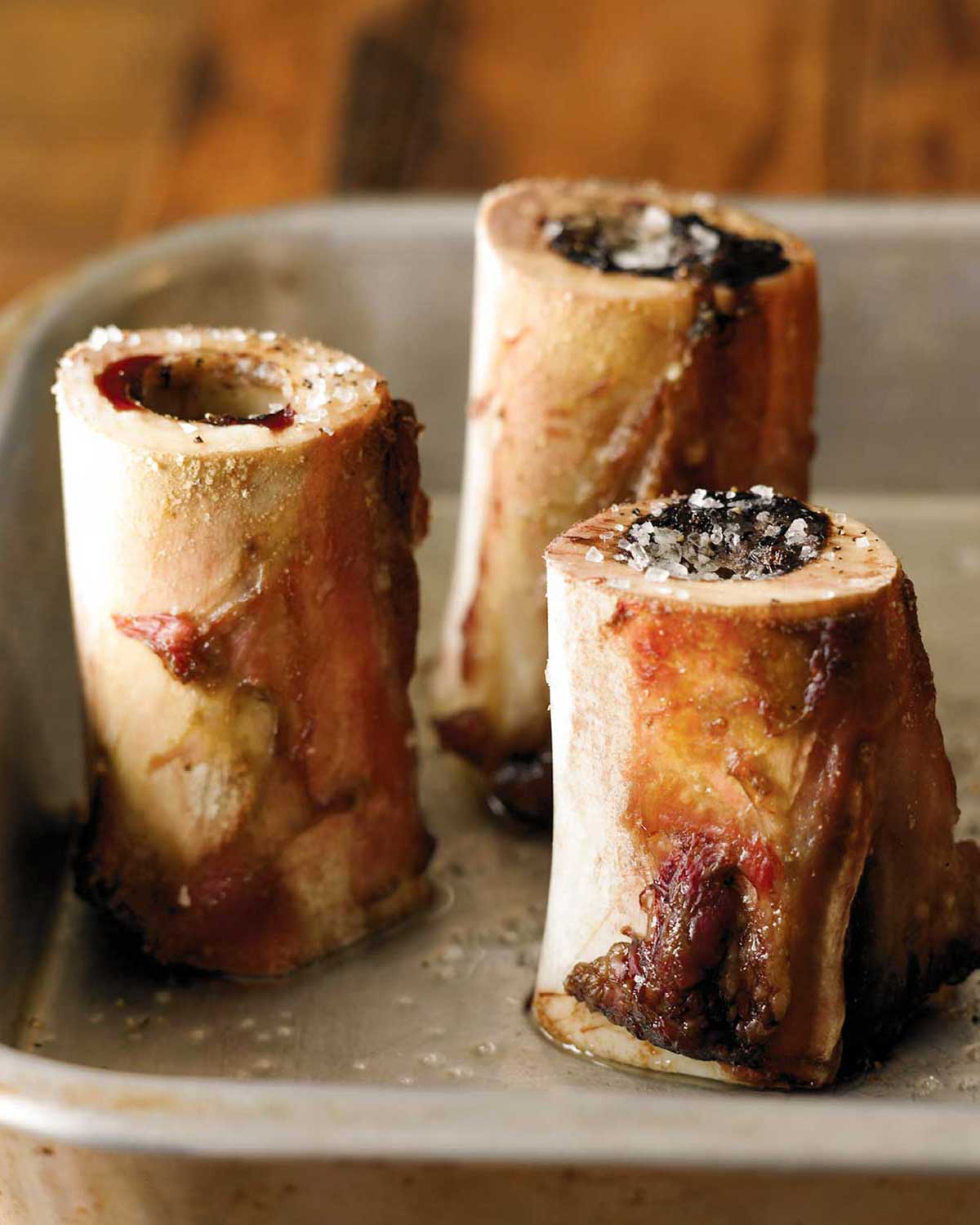
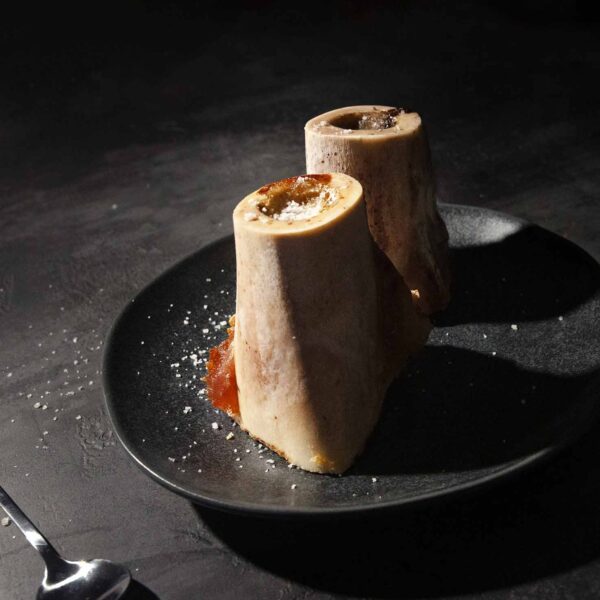
- What it is: Roasted bone marrow is an appetizer consisting of beef femur bones (center-cut or split lengthwise) roasted until the marrow becomes soft, spreadable, and rich.
- Why you’ll love it: It has the texture of savory “meat butter” and is surprisingly nutritious, containing 69% unsaturated fat. It requires only 3 ingredients.
- How to make it: Soak the bones in salted ice water for 12 to 24 hours to draw out blood and impurities. Roast at 450°F (230°C) for 15 to 25 minutes until the marrow puffs slightly. Season with sea salt and serve.

Jump To
- TL;DR (Quick-Answer Box)
- Why this roasted bone marrow recipe works
- Notes on ingredients
- How to make roasted bone marrow: For visual learners
- Your roasted bone marrow questions, answered
- Pro tips & troubleshooting
- Storage & reheating
- What to serve with marrow bones
- More outstanding beef recipes
- Write a Review
- Roasted Bone Marrow Recipe
- Recipe Testers’ Reviews
I don’t like bone marrow. Never have. But The One is nuts for it. I remember one time we were dining at Dinner by Heston Blumenthal in London. The minute he saw roasted marrow bones on the menu, he was locked and loaded. It included snails, parsley, anchovy, mace and pickled vegetables. His passion for it was palpably primal.
That’s when I caved and decided to make it for him. I knew I would have to look no further than my friend Jennifer McLagan, author of Odd Bits. Over dinner in NYC, eating what I’m sure was a plate of innards knowing Jennifer, she told me people avoid roasted bone marrow because it’s fat. But, she pointed out, that marrow is 69 percent unsaturated fat. Plus, it’s also full of iron, phosphorus, vitamin A, and trace amounts of thiamin and niacin. It even contains elements that boost the immune system. I was still unmoved and unconverted. What can I say, I’m a heathen. But The One gets his marrow every now and again. Cue “What I Did for Love” from A Chorus Line.
Chow,

Featured Review
I loved this beef bone marrow recipe! I have been so anxious about making it, but it was super easy! I did just as the recipe instructed, and it turned out beautifully!
Denise

Why this roasted bone marrow recipe works
The secret to restaurant-quality marrow lies in the soak. Dunking the bones in salted ice water draws out blood and impurities. The result? A pure, savory flavor and lovely color rather than a blech metallic. Roasting at a high 450°F (230°C) is also a must. Bone marrow is mostly fat, so a lower temperature would simply melt it away. The high heat caramelizes the surface while keeping the center rich and puddin’-like before it renders out.
Notes on ingredients

- Beef marrow bones: Ask your butcher for center-cut beef femur bones, cut crosswise into 2- to 3-inch lengths (often called “pipes”). Just like when ordering a semi-boneless leg of lamb for the Tuscan lamb, I go to a real butcher-butcher, not the guy at the supermarket counter who just gives me confused looks. This part of the leg has the highest ratio of marrow to bone.
- Sea salt: Use a coarse sea salt or Maldon flakes for finishing. The marrow is incredibly rich, so you need that aggressive, crunchy salinity to cut through the fat. Standard table salt will just disappear.
How to make roasted bone marrow: For visual learners
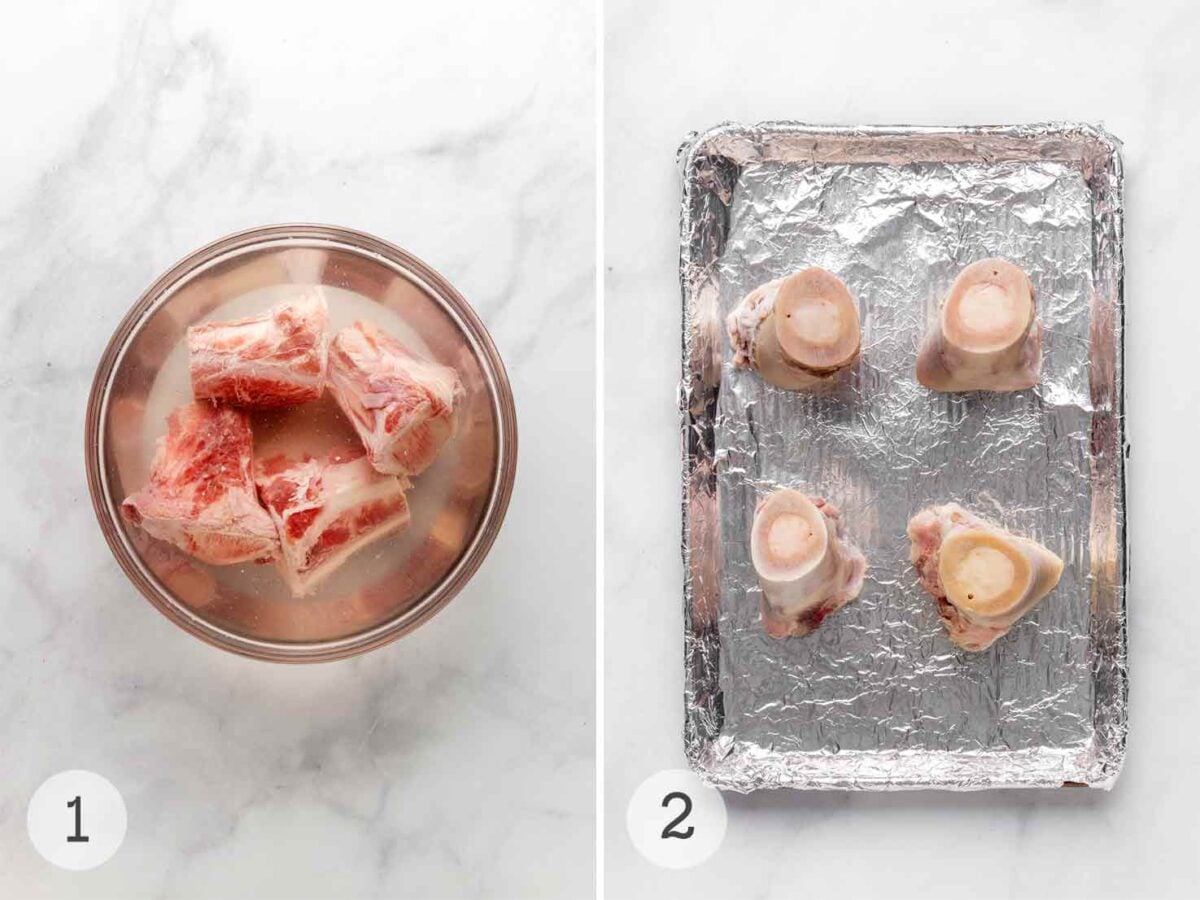
- Add the marrow bones to a large bowl and fill it with ice water, making sure they’re submerged. Add 1 teaspoon of salt for each cup of water in the bowl. Refrigerate for 12 to 24 hours, replacing the salt water solution every 4 hours.
- Drain the bones, cover them, and chill until you’re ready to roast them. Preheat the oven to 450°F. Place the bones, cut side up, in a roasting pan or on a sturdy baking sheet.
- Roast until the marrow is puffed and has reached an internal temperature of 145°F (63°C). Sprinkle with sea salt and serve immediately.
Your roasted bone marrow questions, answered
According to dietitian Rachael Ajmera on Healthline, marrow has a very high collagen content, which improves joint and skin health and reduces inflammation.
I recommend it. Soaking the bones draws out any remaining blood or impurities. It’s cosmetic, and there isn’t any harm in cooking the marrow without soaking, but it makes for a prettier presentation, and you won’t find any clumps of coagulated blood while you’re enjoying your meal.
Yes. I recommend defrosting the bone marrow in the refrigerator before cooking. You can cook it directly from frozen, but the roasting time will increase.
Pro tips & troubleshooting
- Choose your length: Marrow bones can be cut to any length you want. Ask your local butcher for pieces cut from the center of the leg bone, where the ratio of marrow to bone is highest. It’s tricky to judge how much marrow you’ll get from any bone as it ranges widely depending on the thickness of the bone: A 3-inch (7.5-centimeter) bone usually averages around 1 1/2 ounces (40 grams).
- Stop the leak: Since cross-cut bones stand upright, the rendering fat can sometimes escape out the bottom. To prevent this, I wrap a small piece of foil around the base of each bone, creating a seal with just a smidge of a rim crimped up the sides. This catches that liquid gold so it stays in the bone (or at least on your plate) rather than ending up in the bottom of your roasting pan.
- Stock up: Buy extra bones to be sure you have enough. Bone marrow freezes well in or out of the bone.
- Canoe cut: You can ask for the bones to be cut lengthwise, called canoe cut. This makes the marrow easy to get at with any spoon—no need for a fancy long-handle spoon.
Storage & reheating
Once soaked, bone marrow should be refrigerated and cooked within 24 hours or frozen for up to 3 months. To freeze bone marrow, wrap the soaked bones in plastic, then store them in a resealable bag or airtight container.
After cooking, roasted bone marrow can be refrigerated for up to 2 days or frozen for up to 3 months. Reheat in a 300°F (150°C) oven until warmed through. Do keep an eye on it, as it will begin to melt if overheated.
Leftover cooked bone marrow can also be mixed into butter to create an excellent compound butter topping for grilled beef tenderloin.
What to serve with marrow bones
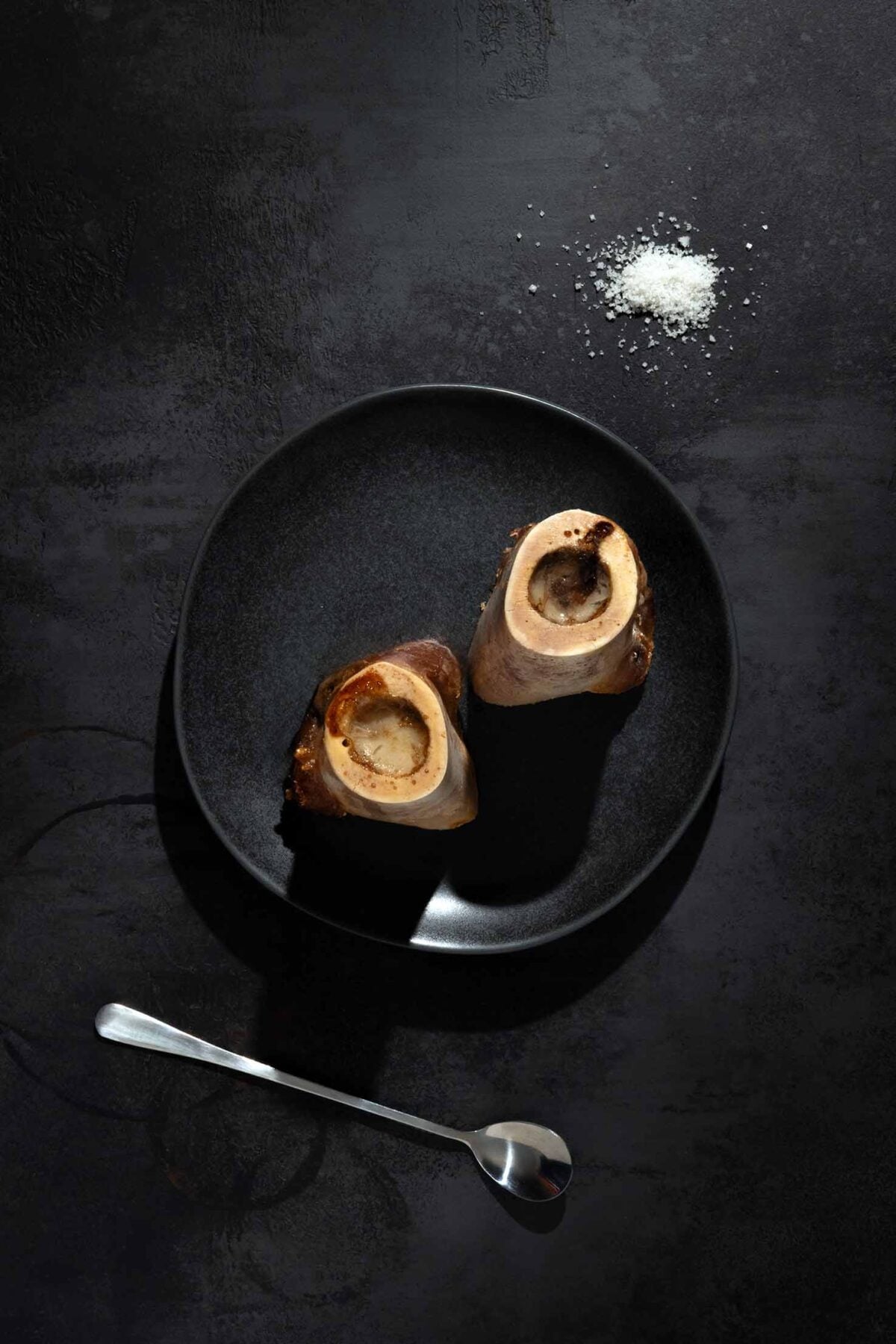
If you’re serving these as a first course or appetizer, simply sprinkle with a bit of salt and pepper, garnish with some fresh herbs or microgreens, and serve with some toasted bread rounds.
If you want to make this a main course, offer it alongside a fresh salad dressed with lemon vinaigrette or some veggie dish, such as lovely roasted asparagus tart or maybe char up up some charred broccolini in the skillet.
More outstanding beef recipes
Beef Bone Broth
12 hrs 40 mins
Veal Osso Bucco
3 hrs 15 mins
Sriracha Beef Jerky
4 hrs
Daube ~ French Beef Stew
4 hrs 30 mins
Write a Review
If you make this recipe, or any dish on LC, consider leaving a review, a star rating, and your best photo in the comments below. I love hearing from you.–David
Featured Review
This is one of the best recipe pages I’ve seen, and the recipe is accurate and clear. As a professional chef specializing in French cuisine, I’ve seen many ways of doing just about everything, and the comments reflect how versatile this ingredient is. The photo, explanation, civility when questioned, etc. all work together to make this a very nice place to look for ideas. Thanks very much!
Michael E.
Roasted Bone Marrow
Ingredients
- four (3-inch) marrow bones
- coarse sea salt
- freshly ground pepper
Instructions
- Fill a large bowl halfway with ice water and add 1 teaspoon of coarse sea salt per 1 cup water. Add the four (3-inch) marrow bones and refrigerate for 12 to 24 hours, changing the water every 4 hours and replacing the salt each time.
☞ TESTER TIP: Some testers have asked us, "Do I need to soak the bones?" The answer is yes. This removes the blood and any impurities from the marrow.
- Drain the bones, cover, and refrigerate until you're ready to roast the marrow. Be sure to roast the soaked marrow within 24 hours or freeze the drained bones for up to 3 months.
- Crank the oven to 450°F (230°C).
- Place the marrow bones in a roasting pan. If the bones are cut crosswise, place them standing up; if the bones are cut lengthwise, place them cut side up.
- Roast for 15 to 25 minutes, until the marrow has puffed slightly and has an internal temperature of 145°F (63°C) in the center when measured with an instant-read thermometer. If you don't have a thermometer, insert a metal skewer into the center of the bone, then touch it to your wrist to gauge the marrow’s temperature; the roasted bone marrow should be very hot. Do take care not to burn yourself. There should be no resistance when the skewer is inserted, and some of the marrow will have started to leak from the bones.
- Sprinkle with sea salt and freshly ground pepper. Serve immediately with small marrow spoons for scooping.
Nutrition
Nutrition information is automatically calculated, so should only be used as an approximation.
Recipe Testers’ Reviews
Did you know only 68% of the recipes we test make it onto the site? This recipe survived our rigorous blind testing process by multiple home cooks. It earned the Leite’s Culinaria stamp of approval—and the testers’ reviews below prove it.

What an elegant treat this roasted bone marrow was! This dish is the epitome of classic French cooking to me—simple ingredients and methods with outrageously delicious results. And oh so impressive!
Served alongside a warm baguette, this appetizer was a real winner. Rich, creamy bone marrow spread on a piece of crusty bread—you can’t get much more decadent than that. It’s nature’s equivalent of butter on bread.
I sprinkled the tops of the marrow bones with kosher salt right when they came out of the oven for a little added flavor. A fancy, coarse sea salt would work well, too. I cooked my bones at 450°F for 30 minutes and the marrow came out perfectly.
I was incredibly excited to have the opportunity to make this recipe to ring in the New Year, especially since I’ve had this dish in several French bistro-style restaurants but never at home, as New Year’s to me is all about decadent food that’s comforting at the same time. My grocery store always seems to carry bone marrow, so believe me when I say that one of my New Year’s resolutions is to treat myself to this culinary delight many more times this year!

Although I personally thought the recipe was too long-winded—I’ve made roasted marrow before without the soaking—it turned out perfectly, and we thoroughly enjoyed eating it.










Okay — I tired this and the raw bones didn’t free up the marrow. So… I have a plan. It seems to work but it’s a little dangerous so you have to be wildly careful. You are, right? If not, don’t read further.
In many of the bones, there’s a boney growth inside the bones at or near the site where the butcher bandsawed the femur. It’s delicate but it’s still bone and it can stop you dead. So, take an old, worn, you-no-longer-care-about chef’s knife, and use the tip to ream out a hole. Don’t go nuts. You’ll get it done in about 15 seconds, after which resistance increases. STOP — that’s as good as it gets.
Check both ends of the bone. One side is usually narrower than the other — that’s your pal. slowly press a cylindrical piece of wood in, slowlt pressing the marrow out the larger side. I use an old spoon with a cylindrical handle for this, but I imagine anything solid and of the right diameter will do. Work slow. And this may take some pressure so, once again, be careful.
If you can’t get a piece out, let it soak for another hour and try again, until you admit defeat or it works.
Good luck with this!
CJB, brilliant! Thank you!
Well it was great fun. Sort of stood back and watched until, as our Leader said, the marrow started to pull away at spot on 15 minutes. Lettuce tops, radishes, celery cubes, and yes, small green olive bits. Not normal but it all worked. Not much salt and bit of lemon pepper to enjoy the marrow taste. Kept back a few bones and will do again in a few days for kids. Such fun and lots of memories.
Larry
Lovely, Larry. Just lovely. Thank you so much.
At age 74, having began life in a cattle ranch in Northern Nevada, as a child bone marrow, sweetbreads, brains, and “Rocky mountain oysters” were staples. After spring branding, etc., some of the above were eaten over a “Dutch oven” hung out over the branding iron fire. Yes, I know, very descriptive but those were the days.
Now to the marrow. That arrived after the butcher was done and we had the entire remains. Again sorry for the descriptions but real. We and our most trusted “hands” and their families literally made a meal or froze “in our old rock house buried in the ground” all parts for use in future meals. No waste. So cut to the chase and sorry for long preamble, my wife of years came home with three large steer bones and said “OK old boy, do your thing”. Just ran out of pickled tongue last week so (after 60 years) I said YES… So fled to this web site hoping for my Eldorado. YES what a find. So now class I have completed 24 hours of the salt stuff and ready to move on to the final cooking. For the small family attending to view the Academy Awards tomorrow night. Wish me well. More to come. Regards and sorry for long boring e mail.
Best, Larry
Larry, wishing you well with your bone marrow endeavor! And not boring at all! I love your descriptions and can only imagine…I grew up on a farm in Iowa but I was not privy to the butchering and so your tales are highly interesting and informative. Thank you so much for taking the time to share. Kindly let us know if the bone marrow tastes like that of yesteryear…