
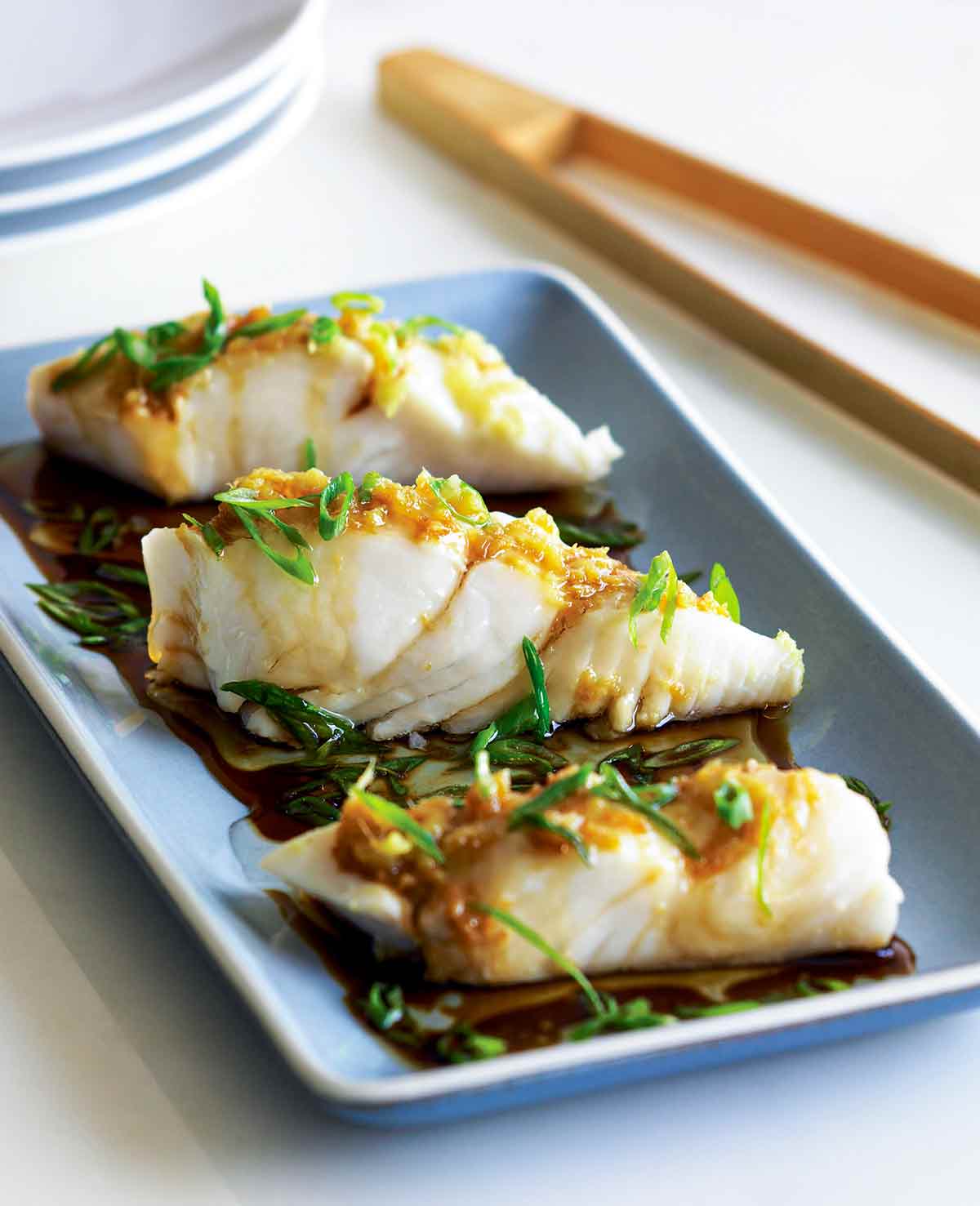
TL;DR (Quick-Answer Box)
- What it is: Flaky halibut fillets gently steamed and finished with a savory-salty drizzle of soy sauce, sesame oil, and fresh ginger. An elegant, restaurant-quality seafood dish.
- Why you’ll love it: It’s incredibly healthy, requires minimal cleanup, and moves from prep to plate in just 20 minutes—perfect for a sophisticated weeknight meal.
- How to make it: Steam seasoned fish with ginger until opaque. Transfer to a platter. Scatter with scallions. Pour hot oil over top to sizzle the aromatics. Drizzle over the soy-wine sauce.

Jump To
This steamed halibut with fresh ginger and scallions is an elegant and easy riff on a classic Chinese technique. And it’s ideal for novice home chefs as well as the fish-averse given that it’s quick, almost effortless, and dramatically reduces the, er, aroma that so often deters folks from cooking fish at home.
Featured Review
This halibut dish is divine, David! It’s so elegant and easy to make. Drizzling on hot oil just before serving is genius—watching it sizzle over the scallions, ginger just adds to the anticipation. And boy does the taste deliver! Thank you for a great recipe.
Marissa Stevens
On average, halibut takes 6 to 12 minutes to steam, depending on the thickness. A good rule of thumb is to steam for about 10 minutes per inch of thickness. The fish is done when the flesh is opaque throughout and flakes easily with a fork.
If I tell you, I’d have to kill you. (Just joking!) The key is heating a neutral oil like vegetable or peanut oil until it’s just shimmering but not smoking. When poured over the raw ginger and scallions on the cooked fish, it “flash-fries” them, releasing an ah-MAZ-ing aroma and creating a silky sauce instantly.
Yes, you can, but big caveat: Make sure it’s completely thawed and pat super dry with paper towels before steaming. All that excess moisture from frozen fish can dilute the delicate soy and ginger sauce.
If you can’t find halibut, any firm white fish works beautifully. Cod and sea bass are the most popular substitutes, though snapper or grouper also hold up well in the fish steam bath.
Steamed halibut pro tips
☞ Remember the order: Oil then sauce
By drizzling the hot oil over the ginger and scallions before adding the sauce, you’re flash-frying the aromatics. This blooms their flavor and creates a wildly fragrant base that the soy sauce then seasons. Do it in reverse, and the sauce cools the aromatics—losing that signature restaurant sizzle. 🤬
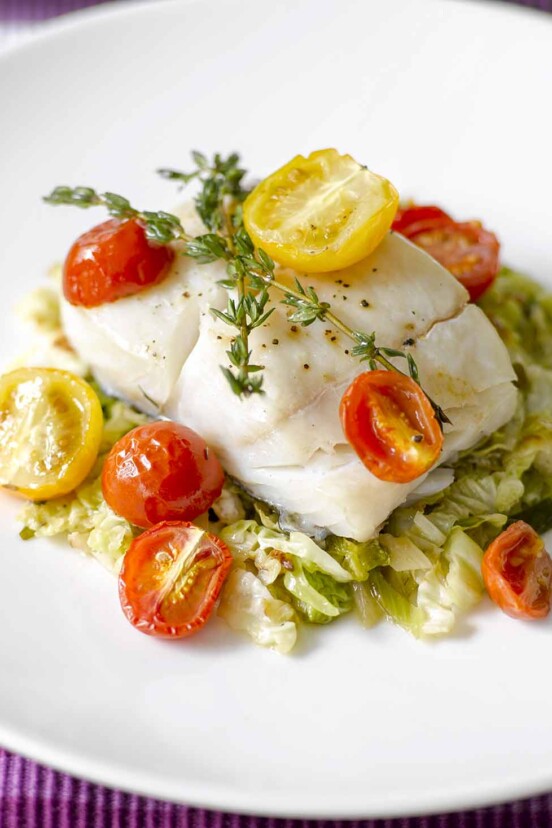
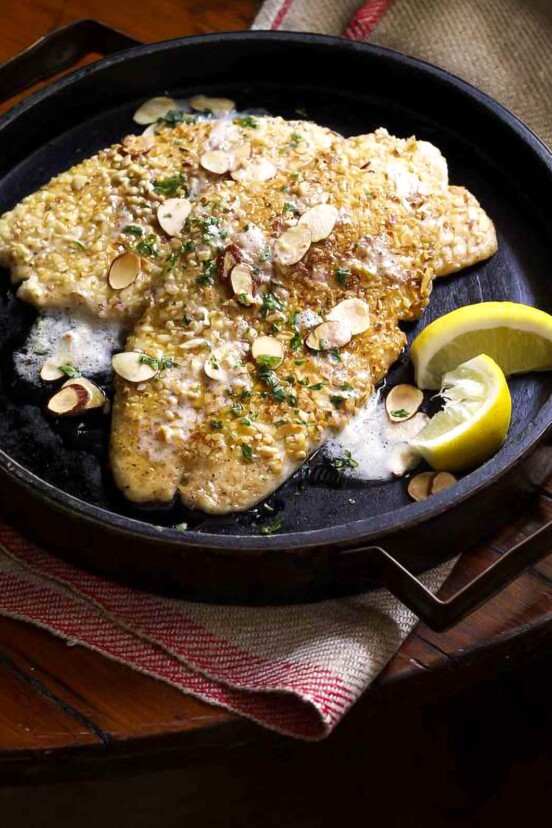
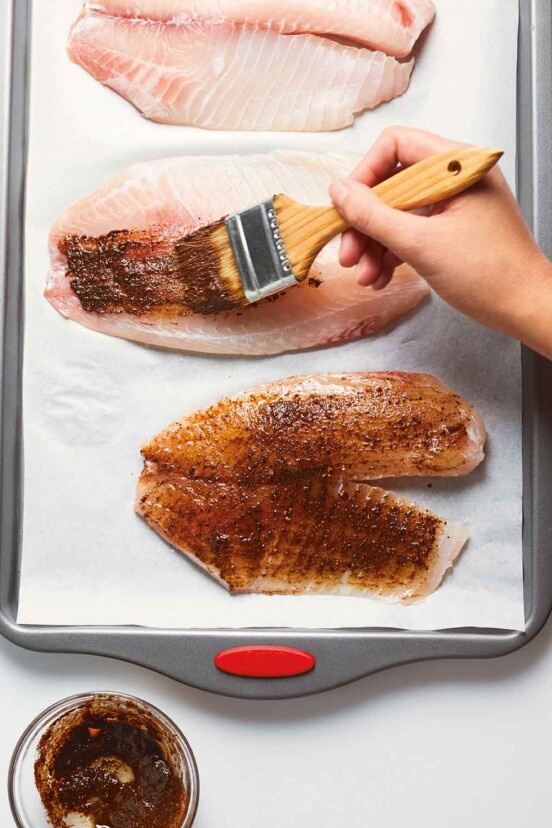
More elegant white fish recipes

Write a review
If you make this steamed halibut, or any seafood dish on LC, consider leaving a review, a star rating, and your best photo in the comments below. I love hearing from you.–David
Featured Review
A great way to honor a slice of halibut. I didn’t have any sherry, so I used an equal amount of good port—yum! I also used a frozen fillet, and while the drying treatment was a bit of a chore because of the excess moisture, the steam restored that silky, fall-apart texture you love in a fresh fillet. I usually find that fish left in the freezer too long can be fibrous and tough, but this recipe saved it. This will be my go-to halibut recipe from now on. Thanks, David!
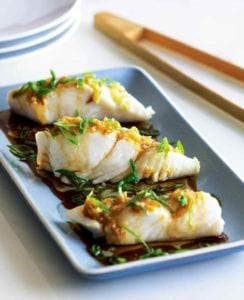
Steamed Halibut with Ginger
Equipment
- Steamer basket with lid and wok
Ingredients
For the soy-wine sauce
- 2 tablespoons soy sauce
- 2 tablespoons Shaoxing rice wine, or dry sherry
- 2 teaspoons sesame oil
For the halibut
- 3/4 pound halibut fillets, or another white fish such as cod or snapper, skinned if desired
- 1/2 teaspoon table salt
- 2 tablespoons shredded or grated fresh ginger
- 2 tablespoons mild vegetable oil
- 3 tablespoons thinly sliced scallion
Instructions
- In a small bowl, combine the 2 tablespoons soy sauce, 2 tablespoons Shaoxing rice wine, and 2 teaspoons sesame oil, and stir well.
☞ TESTER TIP: Once you begin cooking, this fish comes together very quickly. Have your sauce, tongs, and serving plate for the fish ready before you start cooking.
- Fill the base of a steamer pan or a wok with about 4 inches (10 cm) of water. Place the steamer basket over the water.
- Arrange the 3/4 pound halibut fillets, skin-side down, on a plate that will fit inside the steamer. (If you have more than 1 piece of fish, leave a little space between them.) Lightly season the fish with the 1/2 teaspoon table salt and then scatter the 2 tablespoons shredded or grated fresh ginger over the fish.
- Place the plate in position inside the basket or on the rack, and bring the steaming water to a rolling boil over high heat.
- When the steam a-flowing well, adjust the heat to maintain an even flow, and cover the steamer basket with its lid. Cook until the fish is opaque throughout when checked at the thickest part, 6 to 12 minutes, depending on the thickness of the fish. Turn off the heat and leave the fish in the steamer.
- In a small pan or skillet over medium-high heat, warm the 2 tablespoons mild vegetable oil until hot and tiny wisps of smoke appear, about 1 minute.
- Meanwhile, transfer the fish to a platter, leaving any liquid behind. Scatter the 3 tablespoons thinly sliced scallion over the fish.
- Now, here’s the trick to that restaurant-quality finish: Drizzle the hot oil directly over the scallions and ginger. It'll sizzle and pop, instantly waking up all those gorgeous aromatics.
- Pour the soy-wine sauce over the whole shebang and rush to the table.

Nutrition
Nutrition information is automatically calculated, so should only be used as an approximation.
Recipe Testers’ Reviews
Did you know only 68% of the recipes we test make it onto the site? This recipe survived our rigorous blind testing process by multiple home cooks. It earned the Leite’s Culinaria stamp of approval—and the testers’ reviews below prove it.

This was a wonderful, simple entree. I couldn’t have asked for an easier preparation. I would highly recommend this to a novice cook inexperienced with fish. Steaming fish is not only healthful but also controls any lingering smell that so many home cooks fear.
I only made one portion for myself and to have something so delicious and simple when cooking for one is a real asset to have in my repertoire.
I used a bamboo steamer and wok combo and it worked perfectly. My fish cooked in about 7 minutes, which was barely enough time to get any side dishes assembled! I thought the ginger could be too much but I ate it all happily.
I especially enjoyed finishing the halibut with the hot oil and could only imagine what a hit it would have been if I had done it for my family.
Your family will think that the chef from your local Cantonese restaurant came to your house to make dinner if you put this on the table. Served with brown rice and steamed broccoli, it’s a perfect, delicious, healthy meal.
The halibut that I purchased was a bit thick and required more than the 10 minutes in the steamer. The cod and snapper that were in my market were very thin and I was afraid that they would overcook too quickly.
I appreciated all of the details about getting everything ready in advance and it making the cooking process seamless. I must admit that, much to my disappointment, I didn’t get a big sizzle. Perhaps my oil wasn’t hot enough.
I used skin-on fish but wondered if it was absolutely necessary. My steamer was a bamboo one set over a wok.
This recipe was incredibly easy and delicious! The prep was simple and the cooking time was less than 10 minutes. I loved the effect of pouring the sizzling hot oil over for a crackling sound.
I served the fish atop a bed of brown rice with braised coconut milk bok choy.
And do make sure to buy a nicer quality sherry for the sauce so that you can drink a glass with your meal!

We really enjoyed this dish. It is certainly “quick and easy” and just about foolproof with the very detailed instructions provided in the recipe. I used skin-on snapper fillets which took only 6 minutes to cook in the steamer. I’m sure that halibut or cod would be equally wonderful.
I loved the “sizzle” when the hot oil was poured on. I served the fish with steamed jasmine rice and a Thai cucumber salad. It all came together as a very flavorful and healthy meal.
I would definitely make this again.

This was a totally new technique for me but I will definitely do this again.
I steamed my fish for 14 minutes and probably could have stopped a minute or two earlier. The oil really popped when poured over the fish. I was afraid it would taste oily but it did not at all.
The oil brought out a lovely aroma and made everything blend perfectly. I was surprised how much I liked it and how quickly it came together.
When you’ve got a nice piece of fish and need dinner in a hurry, this is the recipe to use. It’s fast, easy and relies on pantry staples you’re sure to have on hand if you do any Asian cooking at all. The flavor is fantastic and no one will know all you need to do is mix the sauce ingredients, steam the fish, and pour some heated oil over it all. It really tastes like a much more complicated recipe.
The recipe is written with lots of helpful information to get you started with steaming techniques. After you’ve done it once, this recipe is easy enough to commit to memory for repeat performances.
This is sure to be a weeknight staple in my kitchen as well as one I’d be proud to serve to guests.
Simple and extremely flavorful, this recipe provides a very accessible introduction to Chinese cooking. I liked how light it was and how the ginger, while powerful, didn’t overwhelm all of the other flavors. Very nuanced and also delicious. And fast, which makes it ideal for weeknight cooking.
I used cod instead of halibut, and it worked beautifully. And I put the fish directly in the steamer basket instead of on a plate, which wouldn’t fit in my steamer. It worked fine, though was more difficult to remove from the steamer.
I found adding the oil at the end to be a bit pointless. Maybe it wasn’t hot enough but there was no sizzle and the extra oil seemed unnecessary given the generous quantity of sesame oil already in the sauce. So I ended up using maybe half.
This was definitely a homerun for dinner tonight. My husband, who is a reluctant fish eater, went back for seconds. This was such a simple yet very flavorful method for cooking fish.
I used trout fillets for this recipe and the flavors worked well. I have a large stainless steel steamer so I was able to cook 4 fillets at one time.
The tips for having everything close by for the finish helped a lot—love it when recipes do that!
Will definitely use this method again for other types of fish. Next time, I’ll add some red pepper flakes to the soy sauce for extra zip.










This dish was easy to prepare and absolutely delicious!! Can’t wait to make it for my friends and family. Thank you for sharing it!
Angela, you are more than welcome!