
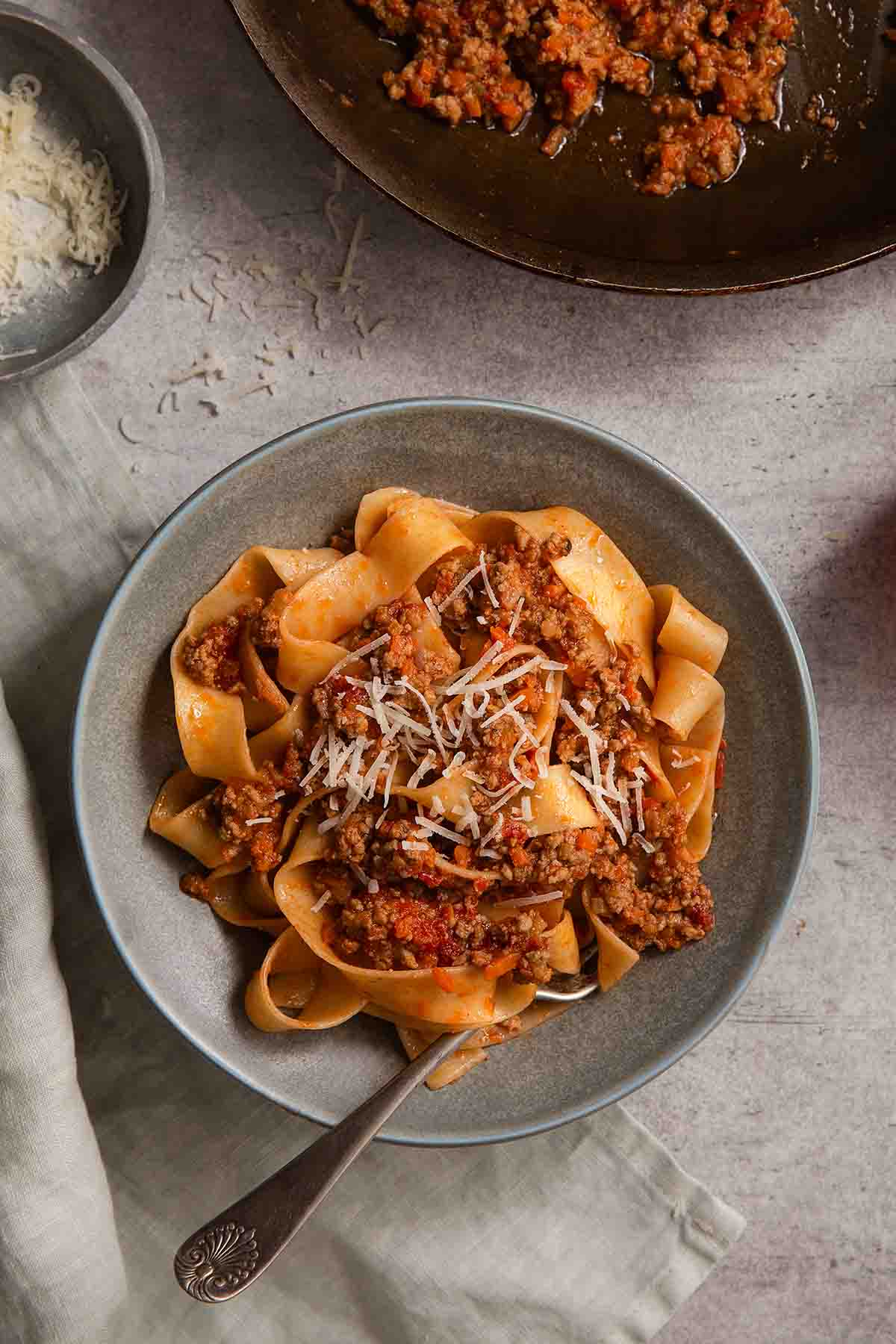
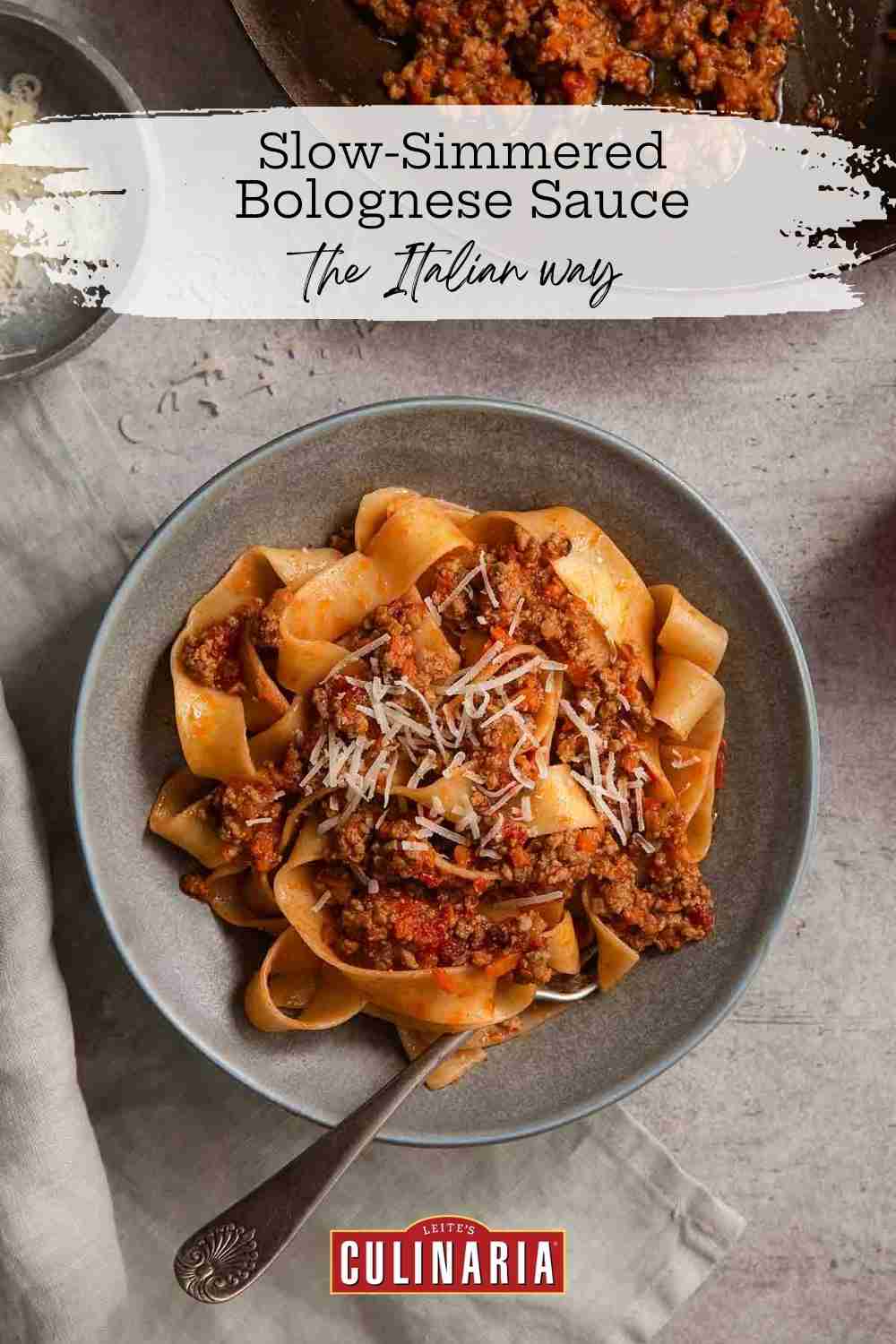
Update: I’ve expanded this guide with new tips on meat substitutions, the best pasta pairings (hint: put down the spaghetti), and troubleshooting advice to ensure your sauce achieves that perfect, velvety texture every time.
TL;DR (Quick-Answer Box)
- What it is: An authentic Bolognese sauce inspired by the queen of Italian food herself, Marcella Hazan, featuring a mix of meats slowly simmered with milk, dry white wine + San Marzano tomatoes for ah-maz-ing depth.
- Why you’ll love it: This slow-simmered sauce boasts incredible flavor and tenderness, creating a luxurious texture that’s perfect for special meals and everyday dinners.
- How to make it: Sauté vegetables in oil and butter, brown ground meats, simmer in milk until evaporated, then add wine + tomatoes, cooking gently for hours until velvety.
Jump To
- TL;DR (Quick-Answer Box)
- Why Marcella’s Bolognese sauce recipe works
- Notes on ingredients
- Shortcuts & variations
- How to make Bolognese sauce: For visual learners
- Your Bolognese Sauce questions, answered
- Bolognese pro tips & troubleshooting
- What to serve with Bolognese Sauce
- Storage & reheating
- More spectacular pasta recipes
- Write a Review
- Marcella Hazan’s Bolognese Sauce Recipe
- Recipe Testers’ Reviews
This Bolognese sauce from Marcella Hazan is, simply put, exceptionally lush, meaty, and has a gentle acidity due to the remarkably small amount of tomato, as compared to some other sauces. It boosts no herbs, just a whisper of nutmeg, and gets its brio from the sofritto (sautéed onions, carrots, and celery) and the long simmering of the meat.
Hazan was already a beloved cooking teacher in New York City in the 1970s, but when her first cookbook, The Classic Italian Cookbook, came out in 1973, she became a national treasure. Thanks, in large part, to this recipe.
Marcella’s Bolognese has been on repeat in our house for more than 30 years. And in that time, I strayed a bit from her original. I’ve added veal and pork to the beef, which adds a richer, more complex flavor. And I’ve doubled it because, well, we never had any leftovers to freeze! But fret not, dear cook, I got the seal of approval from La Regina herself for my tweaks. She said veal and sometimes pork are added to enrich the dish.
Yes, it does take a while to make, although for most of that time the Bolognese gently simmers unattended on the back burner, except for occasionally making lazy eights with a wooden spoon.
Chow,

Featured Review
I’ve never gotten so many compliments in my entire life. They would not shut up about it. And I agree! I make Marcella’s probably once every couple of months, and it’s my favorite meal. Yours was even more excellent. What little was left, my sister ate right out of the Tupperware. Great stuff!

Why Marcella’s Bolognese sauce recipe works
This Bolognese works because it respects the science and the tradition. Simmering the meat in milk ain’t just old-school—it enhances tenderness by gently breaking down proteins. The calcium and mild lactic acid in milk help activate the meat’s natural enzymes, softening the texture without making it mushy. The long, slow cooking breaks down the connective tissue in the meat, while milk’s fat and proteins also add moisture and richness, both lending the ragú its signature velvety mouthfeel.
The San Marzano tomatoes cook down during the long cooking, lending balanced sweetness and acidity. That last knob of butter enriches and emulsifies the sauce. About the only concentration not going on here is yours; this is pretty much a set-it-and-forget-it sauce.
Notes on ingredients
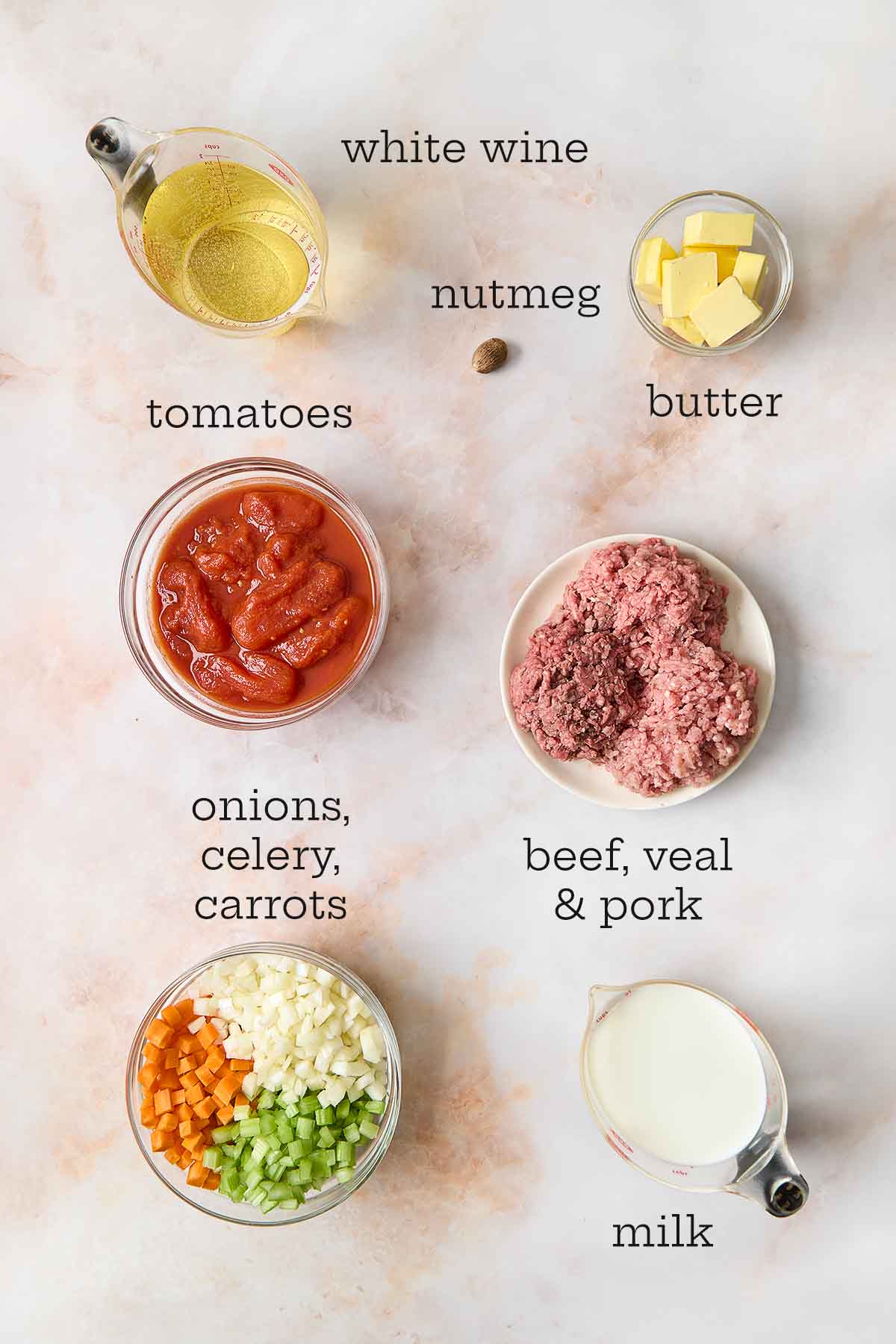
- Ground chuck—You can use all beef or a combination of veal and beef. The fat renders slowly during the long simmer, adding richness and preventing the meat from drying out. According to Hazan, the most desirable cut of meat is the neck portion of the chuck. You may have to put a special order for it from your butcher.
- Milk—The enzymes in milk help to soften the proteins in the meat to make it more tender. Don’t be tempted to use low-fat milk; the added fat in whole milk adds a welcome layer of richness to the sauce.
- San Marzano tomatoes—Their lower acidity and dense flesh make them ideal for long-simmering sauces like Bolognese, breaking down beautifully without adding excess water. I prefer whole tomatoes that I squeeze into the pot. It adds texture.
- White wine—Stick with a dry white here, such as Sauvignon Blanc or Pinot Grigio. Avoid sweet wines, as they’ll change the flavor of the sauce.
- Parmesan cheese—Use the imported stuff (Parmigiano-Reggiano). It makes a world of difference. Trust me.
Shortcuts & variations
Tomato Type
The recipe calls for San Marzano tomatoes. If unavailable, use the best-quality canned whole peeled tomatoes you can find. Avoid pre-diced tomatoes, which often have calcium chloride added to maintain their shape, preventing them from breaking down into a smooth sauce.
Meat Mix
Marcella’s original recipe calls for ground beef, and sometimes beef and veal. You can pass on the pork and veal and use just beef.
Wine Swap
Pour a light-bodied dry red wine, think a Sangiovese or even a lighter Pinot Noir, for a richer, more robust, and slightly darker sauce. Boo-yah!
How to make Bolognese sauce: For visual learners
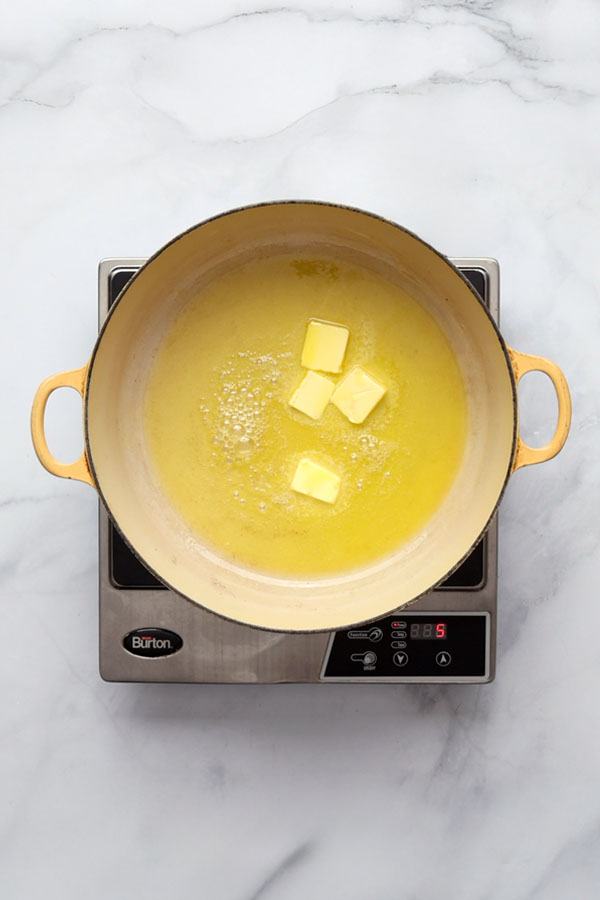
- Heat the oil and 6 tablespoons of the butter in a large, heavy-bottom Dutch oven until the butter is melted and stops foaming.
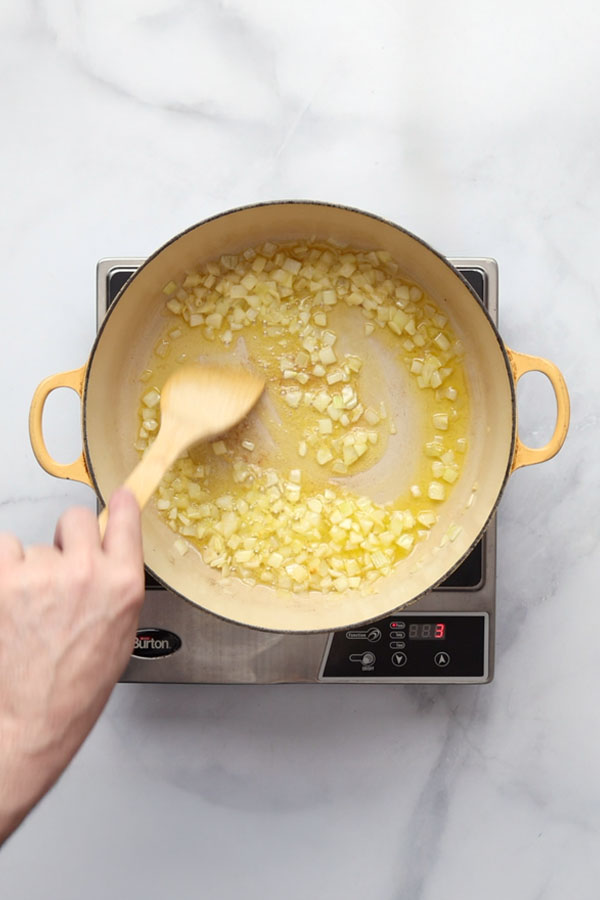
- Add the onion and sauté until softened.
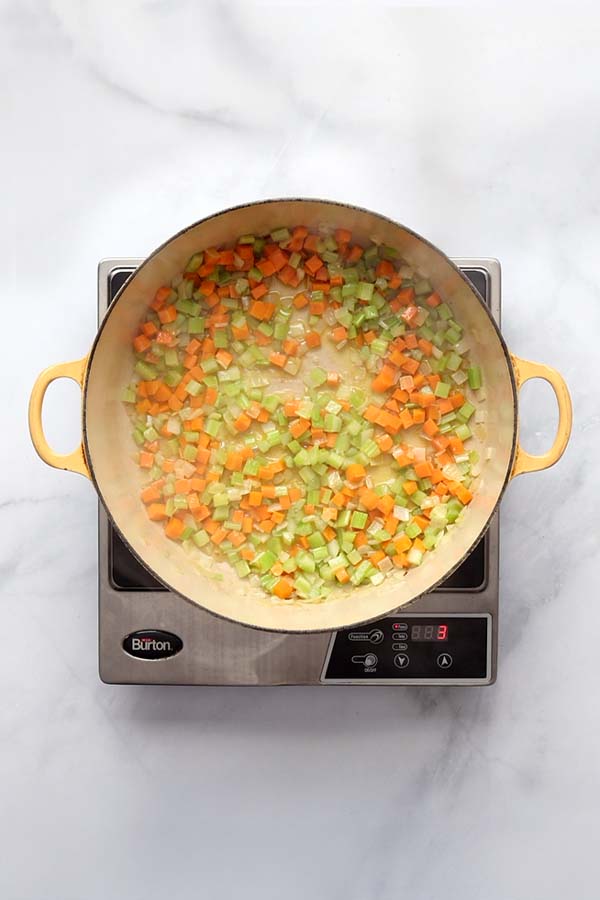
- Stir in the celery and carrot and cook for 2 minutes.
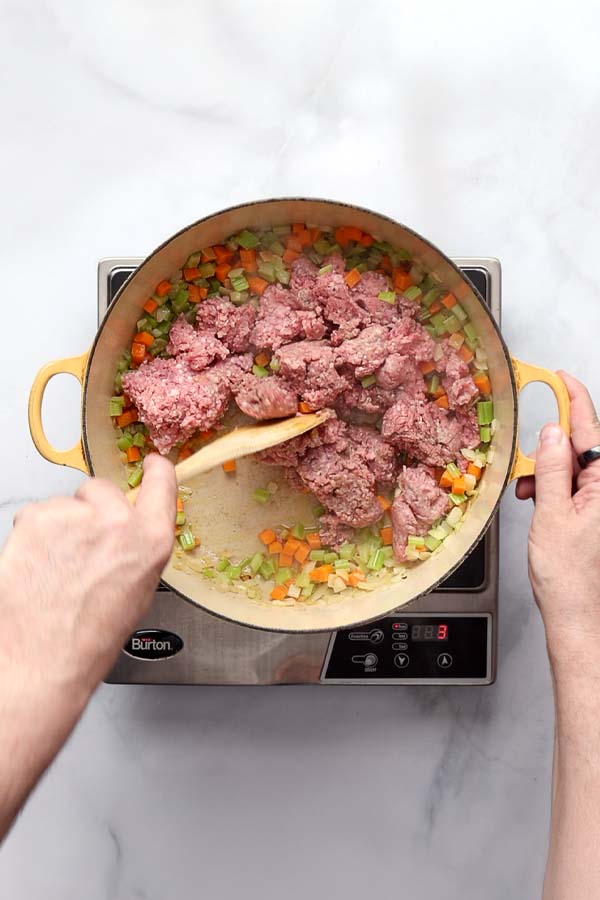
- Add the meat and season with salt. Cook, stirring occasionally, until the meat is no longer raw.
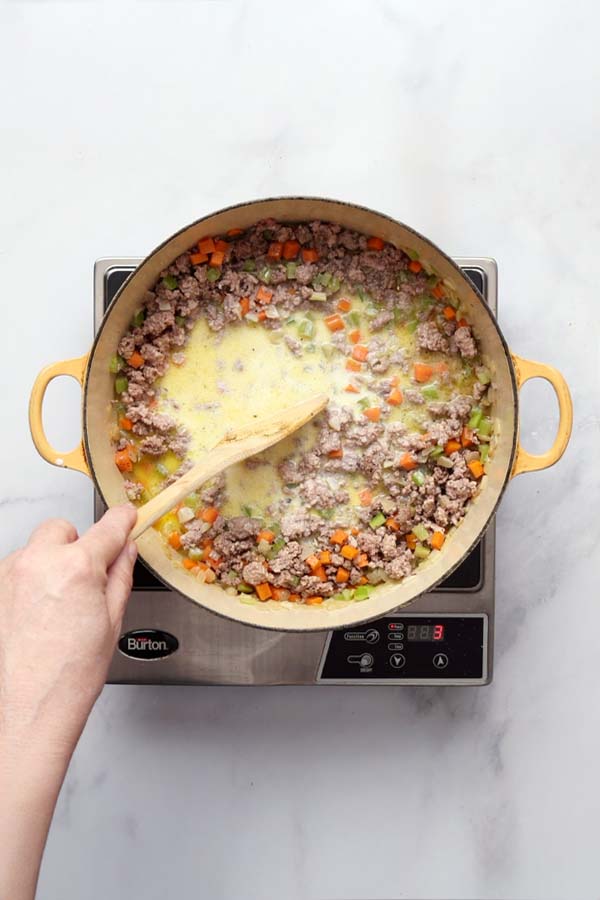
- Pour in the milk and simmer over low heat until evaporated.
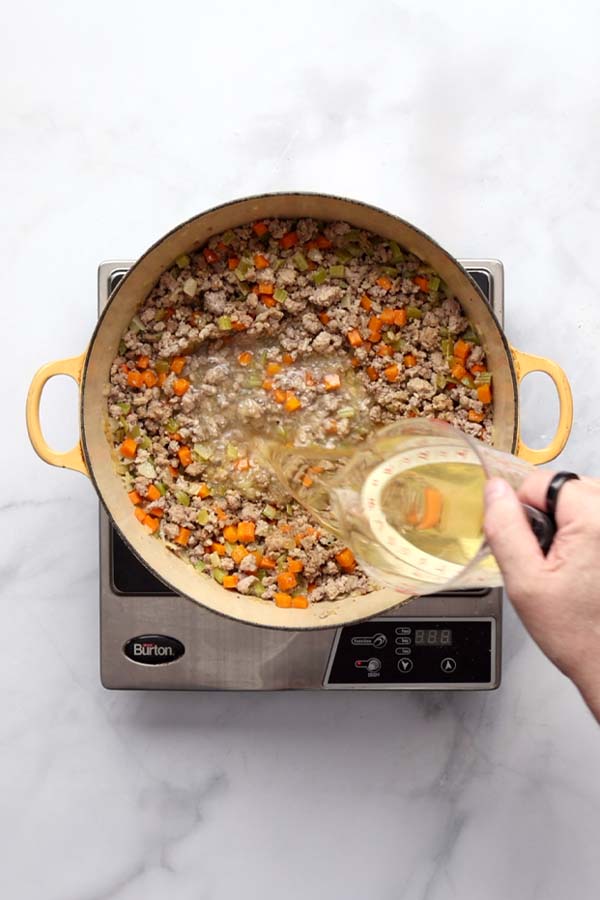
- Add the nutmeg and wine and continue to simmer until the wine has evaporated.
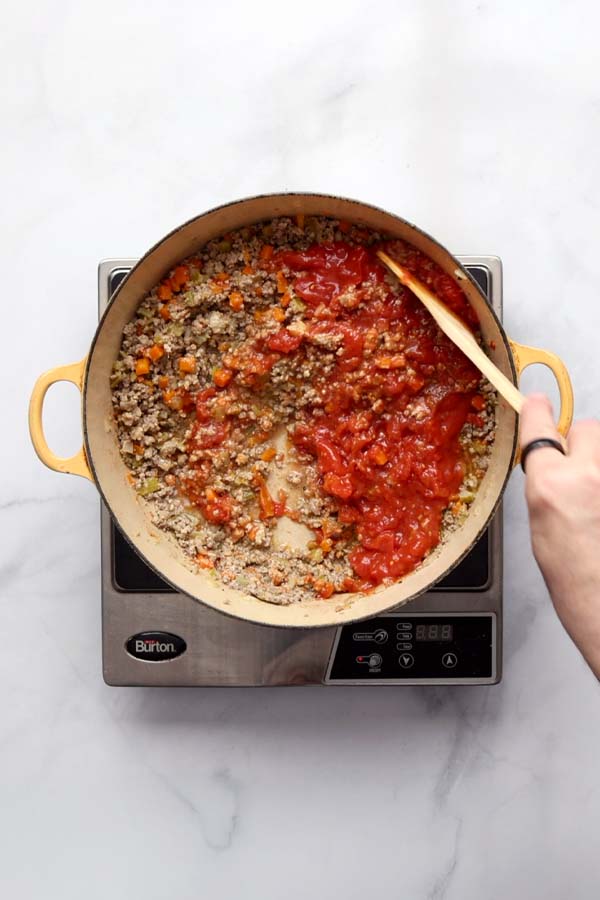
- Stir in the crushed tomatoes and simmer gently, stirring occasionally, until the fat separates from the sauce.
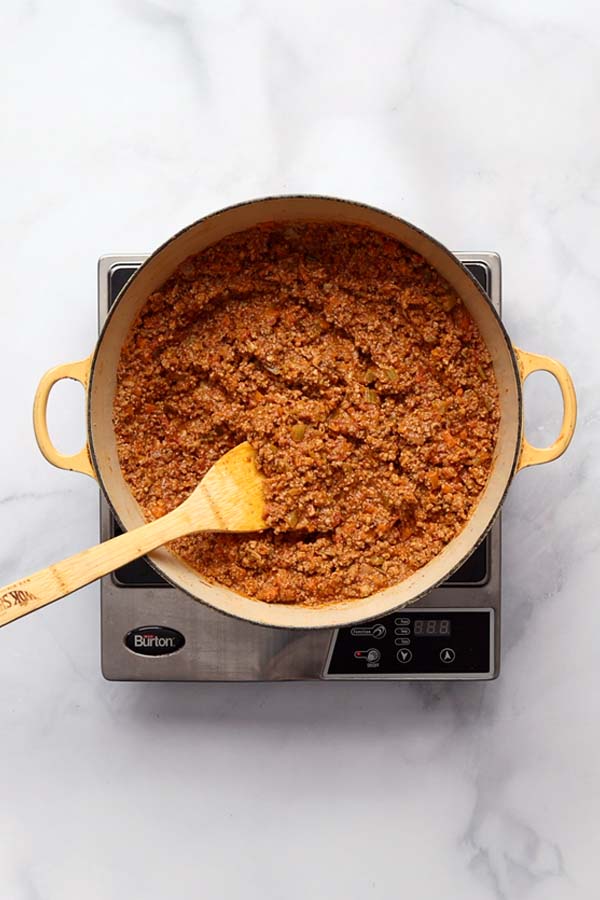
- Season to taste and serve with cooked, drained pasta and freshly grated Parmigiano-Reggiano.
Your Bolognese Sauce questions, answered
Bolognese is a traditional Italian meat sauce from Bologna. This isn’t your typical nonna’s tomato-heavy spaghetti sauce. Known in Italy as ragù alla bolognese, it’s made with ground meat, soffritto (onion, carrot, celery), milk, wine, and just a touch of tomato.
What makes it unique is the long, gentle simmer. The meat softens in milk and wine before the tomatoes go in, creating a rich, velvety sauce that clings to pasta. When I took pasta making classes in Florence, my teacher was adamant: Serve it with tagliatelle or layered into lasagne—not over spaghetti. (You’ve been warned, kids!)
Traditional Italian Bolognese (ragù alla bolognese) is a rich, slow-simmered meat sauce featuring beef (or sometimes beef and pork), a goodly amount of milk, wine, and only a hint of tomato. The result? A silky, less acidic ragù. It passes on garlic and aromatic herbs like basil and oregano, and is usually served with broad, flat pastas like tagliatelle.
“American Bolognese” or “meat sauce (aka “Sunday gravy,” like my friend Matty Roselli makes), often contains a much higher proportion of tomatoes, making it redder and more acidic. They frequently boast garlic, basil, and oregano, and are served over spaghetti—think the classic American spaghetti with meat sauce.
I know, surprising, isn’t it? Believe it or not, traditional Bolognese has none of the herbs or spices we think of as classic Italian. You might be tempted to add them, but, please, I’m begging, just say no to the zhuzh. Nutmeg, on the other hand, is a must.
You’d think adding milk to a meat sauce sounds a bit off, right? But there’s real food science behind it. I called my colleague Harold McGee, author of On Food and Cooking, to get the lowdown. He said the calcium kickstarts the natural enzymes in meat that help break down proteins, softening it while cooking without making it mushy.
Plus, the milk’s fat and proteins also add moisture and richness, giving the sauce that signature velvety mouthfeel. Many cooks, including La Marcella, believe that adding milk before wine and tomatoes helped “protect” the meat from acid. Some say that just kitchen lore, but I don’t care. All that matters is the technique turns out a ragù that’s rich, balanced, and honestly, life-changing.
Absolutely, 100% yes. In fact, Marcella Hazan’s original recipe called for just beef. I use a mix of beef, pork, and veal (often sold as “meatloaf blend”) because the pork and veal add a lush, silky mouthfeel that I love. If you use all beef, choose ground chuck (20% fat) so the sauce isn’t dry. Fat is your friend, here.
It comes down to volume. I’ve doubled Marcella’s original ingredient list because this sauce freezes beautifully. And, well, we want leftovers. Reducing all that milk and wine takes a lot longer—about 4 to 6 hours—to evaporate properly. But in the end, you have that signature dense, velvety consistency. If you want to cut the time in half, make half the amount. I won’t tell.
Bolognese pro tips & troubleshooting
- For Best Flavor and Texture
Keep the sauce at the laziest simmer until the fat separates and pools on top—that’s your sign the liquids have fully evaporated and the flavors have deepened. If the sauce starts looking too dry before that happens, add a splash of hot water to keep things moving. - To Fix Sauce That’s Too Thin or Too Thick
If your sauce’s a little loose at the end, let it simmer longer, uncovered, until it tightens up. If it’s gone too far and turned thick or sticky, loosen it with a bit of warm water or beef stock until it clings nicely to your pasta. - When the Meat Feels Tough
If the meat in your ragù still has bite, it probably just needs more time. Gentle, extended simmering breaks down the connective tissue and gets you to that melt-in-your-mouth tender texture you’re after. Be patient, dear reader—it’s worth it. - Prevent Scorching
Use a heavy pot that retains heat well. I use my Le Creuset 5-quart Dutch oven. Avoid using cast iron, as the acid can interact with the metal and turn the sauce a blech color.
What to serve with Bolognese Sauce
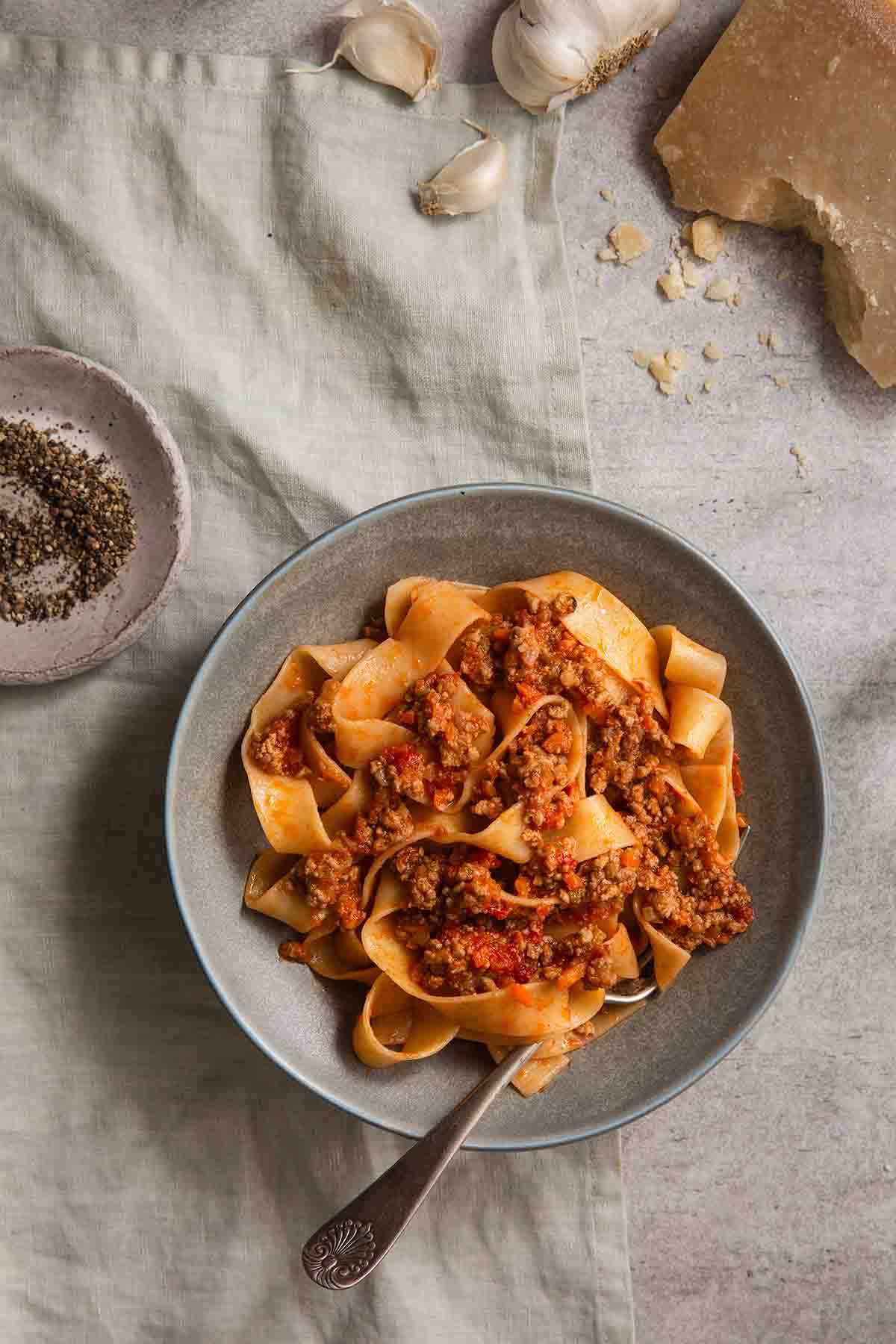
Marcella recommends serving her Bolognese sauce with tagliatelle, but if you prefer spaghetti Bolognese, you can do that or even layer the sauce between sheets of pasta to create a lasagne Bolognese. Round out your meal with an easy Italian salad and a loaf of crusty bread. For dessert, definitely reach for our best tiramisu recipe.
Storage & reheating
Fridge: Let your sauce cool completely before storing it in an airtight container in the refrigerator for up to 4 days.
Freezer: Bolognese sauce can be frozen in zip-top bags or freezer-safe containers for up to 3 months. Thaw it in the refrigerator overnight before using.
Reheating: To reheat your sauce, place it in a large saucepan over low heat and warm gently, stirring occasionally.
More spectacular pasta recipes
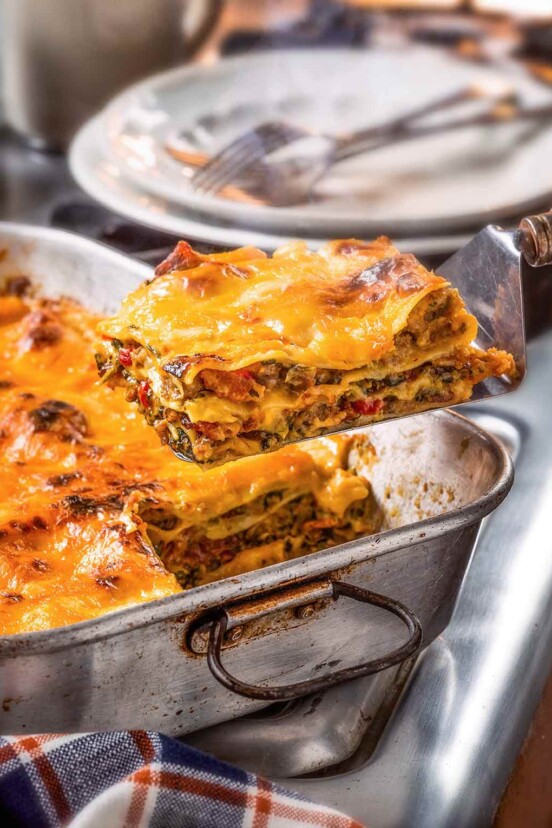
Garth Brooks’ Favorite Breakfast Lasagna
2 hrs 30 mins
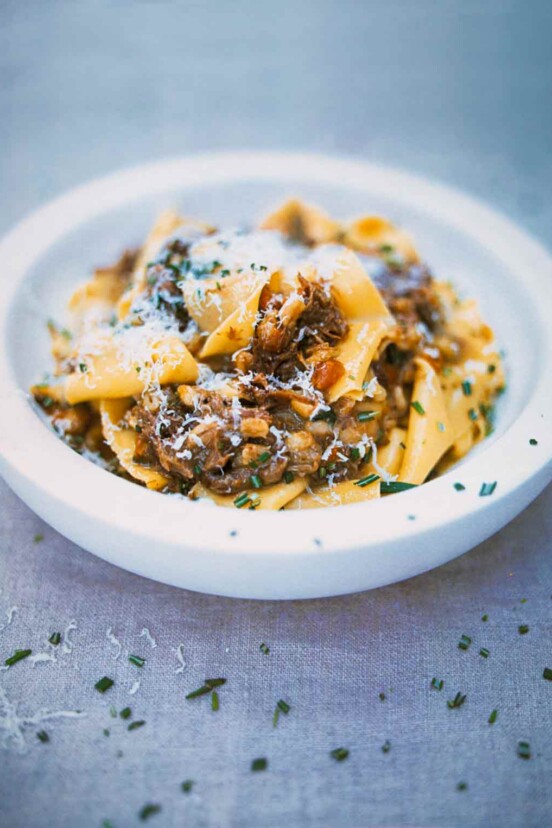
Jamie Oliver’s Pappardelle & Beef Ragu
3 hrs 40 mins
Craving more pasta sauce magic? Try our bold and spicy marinara sauce, perfect for everything from spaghetti to meatball subs. Got a favorite meatloaf recipe? Transform leftovers into gold with this wildly clever leftover meatloaf pasta sauce—yep, really. And don’t miss this simple roasted tomato sauce, which brings deep, caramelized flavor to every bite.
Write a Review
If you make this bolognese sauce recipe, or any dish on LC, consider leaving a review, a star rating, and your best photo in the comments below. I love hearing from you.–David
Featured Review
I’ve made this many times; it’s an absolute staple in our house. I double David’s doubling of the recipe (quadrupling it), except I don’t double the amount of milk and wine—I use about 1 1/2 times the amount. I also use Santa Margarita Pinot Grigio. I don’t double the tomatoes either; I just use one 28-ounce can of whole San Marzanos. Sometimes I add a little tomato paste and darken it prior to adding the canned tomatoes, but that’s just personal preference. It comes out great every time! I simmer it at the final stage for about five hours, which I think makes a huge difference. Mine turns out more orange than red. For those who want to double the recipe (quadruple, really], I hope this is helpful!
Jana Sansbury
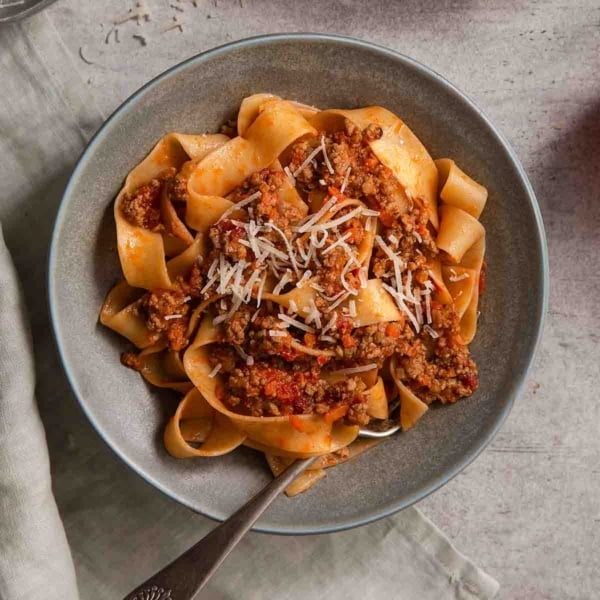
Marcella Hazan’s Bolognese Sauce
Video
Equipment
- 5-quart Dutch oven
Ingredients
- 2 tablespoons vegetable oil
- 8 tablespoons (4 oz) unsalted butter, divided
- 1 cup chopped onion
- 1 1/3 cups chopped celery
- 1 1/3 cups chopped carrot
- 1 pound ground chuck, (I used 1/2 pound chuck and 1/2 pound veal)
- 1/2 pound ground pork
- kosher salt and freshly ground black pepper
- 2 cups whole milk
- 1/8 teaspoon freshly grated nutmeg, or a pinch of ground nutmeg
- 2 cups dry white wine
- 3 cups canned imported San Marzano tomatoes, (Italian plum tomatoes) with their juice
- 1 pound tagliatelle, (homemade or storebought), cooked and drained
- freshly grated Parmigiano-Reggiano cheese, at the table
Instructions
- Warm the 2 tablespoons vegetable oil and 6 tablespoons of the butter in a heavy 5-quart Dutch oven over medium heat until the butter melts and stops foaming. Toss in the 1 cup chopped onion and cook, stirring frequently, until the onion is softened and translucent, about 5 minutes.
- Toss in the 1 1/3 cups chopped celery and 1 1/3 cups chopped carrot and cook, stirring to coat them with the oil and butter, for 2 minutes.
☞ TESTER TIP: Make sure the soffritto (the onions, carrots, and celery) doesn't brown. That way, you get sweetness and depth without introducing bitter notes.
- Add the 1 pound ground chuck (and veal if using) and 1/2 pound ground pork, a very healthy pinch of kosher salt and freshly ground black pepper. Crumble the meat with a wooden spoon and cook, stirring occasionally, until the meats have just lost their raw-red color.
☞ TESTER TIP: If there's a lot of fat in the bottom of the pan due to the pork, you can spoon some out before adding the milk.
- Reduce the heat to low. Pour in the 2 cups whole milk and simmer gently, stirring frequently, until the liquid has completely evaporated, leaving just a coating of fat in the bottom of the pan, about 1 hour.
- Stir in the 1/8 teaspoon freshly grated nutmeg. Pour in the 2 cups dry white wine and gently simmer, stirring frequently, until it's evaporated, about 1 1/4 hours more.
- Add the 3 cups canned imported San Marzano tomatoes and stir well. When the sauce begins to bubble, turn down the heat so that the sauce cooks at the laziest of simmers, with bubbles breaking the surface every few seconds.
- Cook, uncovered, for 3 hours or more, stirring from time to time. While the sauce is burbling away, there's a chance that it'll start drying out. To keep the sauce from sticking to the bottom of the pot and scorching, add 1/2 cup water if necessary, just know that it's crucial that by the time the sauce has finished simmering, the water should be completely evaporated, and the fat should separate from the sauce.
- Taste a spoonful—or two—of sauce and season with salt and some good grindings of pepper to taste.
- Add the remaining 2 tablespoons butter to the cooked, hot pasta and toss with the sauce. Serve with freshly grated Parmigiano-Reggiano cheese on the side.
Notes
What You Need To Know About Making The Most Classic Italian Bolognese
- The more marbled the meat, the sweeter the ragu. (The most desirable cut of meat is the neck portion of the chuck. You may have to special order it from your butcher.)
- In Marcella’s original recipe, she calls for only ground chuck. Over the years, I’ve added veal and pork to the recipe. You can opt for a full-beef version.
- It’s important to salt the meat as soon as it hits the pan. This draws out the juices and imparts flavor to the Bolognese.
- Use a heavy pot that will retain heat. I use my Le Creuset 5-quart Dutch oven. Avoid using cast-iron, as the acid can interact with the metal and turn the sauce a blech color.
Nutrition
Nutrition information is automatically calculated, so should only be used as an approximation.
Recipe Testers’ Reviews
Did you know only 68% of the recipes we test make it onto the site? This recipe survived our rigorous blind testing process by multiple home cooks. It earned the Leite’s Culinaria stamp of approval—and the testers’ reviews below prove it.

This is the perfect Italian Bolognese to make if you’re stuck in the house doing chores and can’t leave. A little prep work and a little stir every now and then give you a wonderful smell throughout your house and a nice, thick sauce for your pasta.
Unlike most commercial jar sauces, this sauce doesn’t have a strong tomato taste. I love that. It is pure, hearty, stick-to-your-ribs comfort food.
All you need is some warm bread, and you have a meal. The next time I make it, I’ll probably omit the oil, as I felt there was a little too much oil floating on top when it was ready to serve.










I have a question about this part of the recipe – “just know that it’s crucial that by the time the sauce has finished simmering, the water should be completely evaporated, and the fat should separate from the sauce.”
Are we supposed to remove the fat? Or do we leave it in there.
Aubrey, I’m so glad you caught that detail—it’s a good one. The fat separating at the end is actually a visual cue that the sauce is done simmering. You’re not meant to remove it; it’s part of what gives the sauce its richness and helps coat the pasta beautifully. That said, earlier in the recipe (after browning the meat), you can spoon out excess fat if there’s a lot in the pan—especially from the pork—but once the sauce is done? Leave the fat in. Stir it through and trust the process—Marcella knew what she was doing!
Excellent!
My family was asking for bolognese so I went looking for Marcella’s classic recipe… and was happy to find yours which is basically hers/doubled. If you are going to spend this much time on a recipe, might as well have some for the freezer! Absolutely delicious using the beef/veal/pork “meatloaf blend” from the butcher and high quality parm reg. Fam very happy, thank you!
JBandK9s, you just made my day. I took a deep breath before adapting Marcella’s classic—it’s practically sacred!—but doubling it and using that meatloaf blend felt right. And it sounds like your family agrees!
You nailed it with the freezer logic, too. If you’re going to let a sauce burble away all afternoon, you might as well have a stash tucked away for future cravings. So glad it delivered—thanks for the kind words!
I’m curious what you’d recommend to someone on a lower fat diet for whatever reason – obviously we won’t get the original bolognese experience but is it worth doing a modified version? Or should we give up and cook something else entirely?
I used your recipe for inspiration, but I used kangaroo mince, which is like extremely lean beef, or maybe venison. And only a small amount of butter. (I didn’t give a rating as that wouldn’t be fair.)
The result was pretty good. A deep, rich flavour. But I personally didn’t enjoy it as much as lighter pasta sauces where the tomato is not so cooked down.
I’ll try adding a dash of vinegar when I have it again tomorrow. But maybe it would suit my preferences to cook the meat long, but the tomato for a much shorter time.
I realise I’ve left the path here and I’m doing something very different here, but if you do have thoughts on this, I’ll be most interested.
Chris, you get to the core issue—classic Bolognese is by definition a long-simmered ragù that builds its signature richness on rendered fat, collagen, and hours of melding flavors. When you strip away most of that fat, you end up missing the very soul of the sauce.
Rather than trying to jury rig a Bolognese, let’s lean into a quick-cook direction that embraces lean meat and bright tomato flavor:
15-Minute Lean-Meat “Marinara-Style” Ragù
Ingredients
2 tablespoons extra-virgin olive oil
4 cloves garlic, thinly sliced
Pinch of red-pepper flakes (optional)
1 lb lean ground turkey (or chicken breast, pork tenderloin, or plant-based crumble)
1 (28-oz) can high-quality crushed tomatoes
1 teaspoon sugar or honey (to soften acidity)
1 teaspoon red-wine or sherry vinegar
½ teaspoon kosher salt (adjust to taste)
Freshly ground black pepper (to taste)
2 tablespoons chopped fresh basil (or 1 teaspoon dried oregano)
Cooked pasta of your choice
Grated Parmigiano-Reggiano or Pecorino Romano, for serving (optional)
Method
1. Heat oil & garlic (2 min): In a large skillet over medium heat, warm the olive oil. Add the sliced garlic (and red-pepper flakes, if using) and sauté until fragrant and just turning golden, about 1–2 minutes.
2. Brown the meat (3–4 min): Push the garlic to one side, add the lean ground meat, and cook until no pink remains, breaking it into small pieces with a spatula.
3. Add tomatoes & sweetener (1 min): Pour in the crushed tomatoes and stir in the sugar or honey.
4. Season & deglaze (optional): If you like, splash in a little white wine or stock to lift any fond, then stir in the vinegar, salt, and a few grinds of black pepper.
5. Simmer briefly (8–10 min): Let the sauce bubble gently, stirring occasionally, until it thickens slightly and the flavors meld, but still taste bright.
6. Finish & serve: Stir in the fresh basil (or oregano), adjust seasoning if needed, then toss with hot cooked pasta. Top with grated cheese if desired.
This streamlined ragù delivers a vibrant, lean-meat pasta sauce in just 15 minutes—no marathon simmer required. Jump back and get out of town with that long-simmered mindset, and enjoy your lean, lively sauce!
I forgot to spoon out the fat until after the milk simmered for over an hour. I spooned out a decent amount of fat before adding the wine. I hope this doesn’t ruin the sauce?
Julie, it absolutely won’t ruin the sauce! If you’re concerned, what you can do is refrigerate the sauce overnight. That will rise to the top and you could easily spoon it off.
I have never spent so much time on a recipe that was this unremarkable. It got even worse when augmented with the white sauce as suggested in the book. Because the recipe took so long I made the unfortunate decision to double it. At least the second half does not have the white sauce added. I might be able to rescue it with peppers or pepper flake or something. Not one to repeat.
Chris, I’m so sorry that you didn’t enjoy the recipe. We actually had it last night! But I’m a bit confused. What white sauce are you referring to? The recipe doesn’t make mention of any white sauce. Do you mean the white wine?
In the book there is a baked polenta using this meat sauce along with the bechamel. Page 277 in the 1992 edition. DON’T DO IT! Visually it’s a real loser too.
Chris, thank you for the clarification—and I really appreciate you sticking with the recipe all the way through, even doubling it. I can absolutely understand how frustrating it is to invest so much time and effort only to be let down, especially when a béchamel is added to the mix and doesn’t deliver on flavor or visual appeal.
That said, I’m honestly surprised it came out so flat. Marcella’s Bolognese is a classic, and one I’ve made more times than I can count—with consistently rich, layered results. And judging from the many glowing reviews, I know it’s resonated with a lot of folks.
If you’re open to a bit of troubleshooting, here are a few possibilities:
As for the baked polenta with béchamel—yeah, that’s a different beast altogether. If the Bolognese itself didn’t sing for you, layering it with a white sauce would absolutely compound the issue. Your instincts were spot on to keep the second batch separate!
If you do try to rescue the leftovers with a hit of spice or acid, let me know how it goes. I’m always curious how folks make a dish their own—even when the first go doesn’t quite work out.
Wow! I just had to say something on this thread. I have used this Bolognese recipe both at home and in my time as a food professional. I usually use a bit more tomato in it, as that is my taste and I almost always have some on my freezer. I obviously enjoy it and my customers raved about it. Not sure what could have gone so wrong. Also, I use this for Bolognese Lasagna with said béchamel!
Cathy, thank you so much for stepping in here—your comment is very welcome. I appreciate your sharing your long-time love for this recipe, especially given your experience both at home and professionally. That’s no small praise.
I know tastes vary, and while Chris had a rough go with it, hearing how it’s become a go-to for you—and even made its way onto your customers’ plates—really reinforces just how versatile and beloved this Bolognese can be. Your tweak with extra tomato is a great reminder that recipes are living things. And like you, I use this in a béchamel-layered lasagna. Superb!
Thank you again for bringing your voice (and vote of confidence) to the table. It means a lot.