
Jump To
- Why This Recipe Works
- Notes on Ingredients
- How to Make Coq au Vin
- Variation: Slow Cooker Coq au Vin (Easy Julia Child Adaptation)
- Common Questions
- Pro Tips
- Storage & Reheating
- What to Serve with this Recipe
- French Desserts to Finish the Meal
- Tried This Coq au Vin? Share Your Thoughts!
- Coq au Vin from Julia Child (Classic and Easy) Recipe
- Recipe Testers’ Reviews
Everyone needs, nay requires, an impressive French chicken dish for family, company, and special events. But no one needs the drudgery of stooping over the counter for hours, juggling a gazillion ingredients and steps.
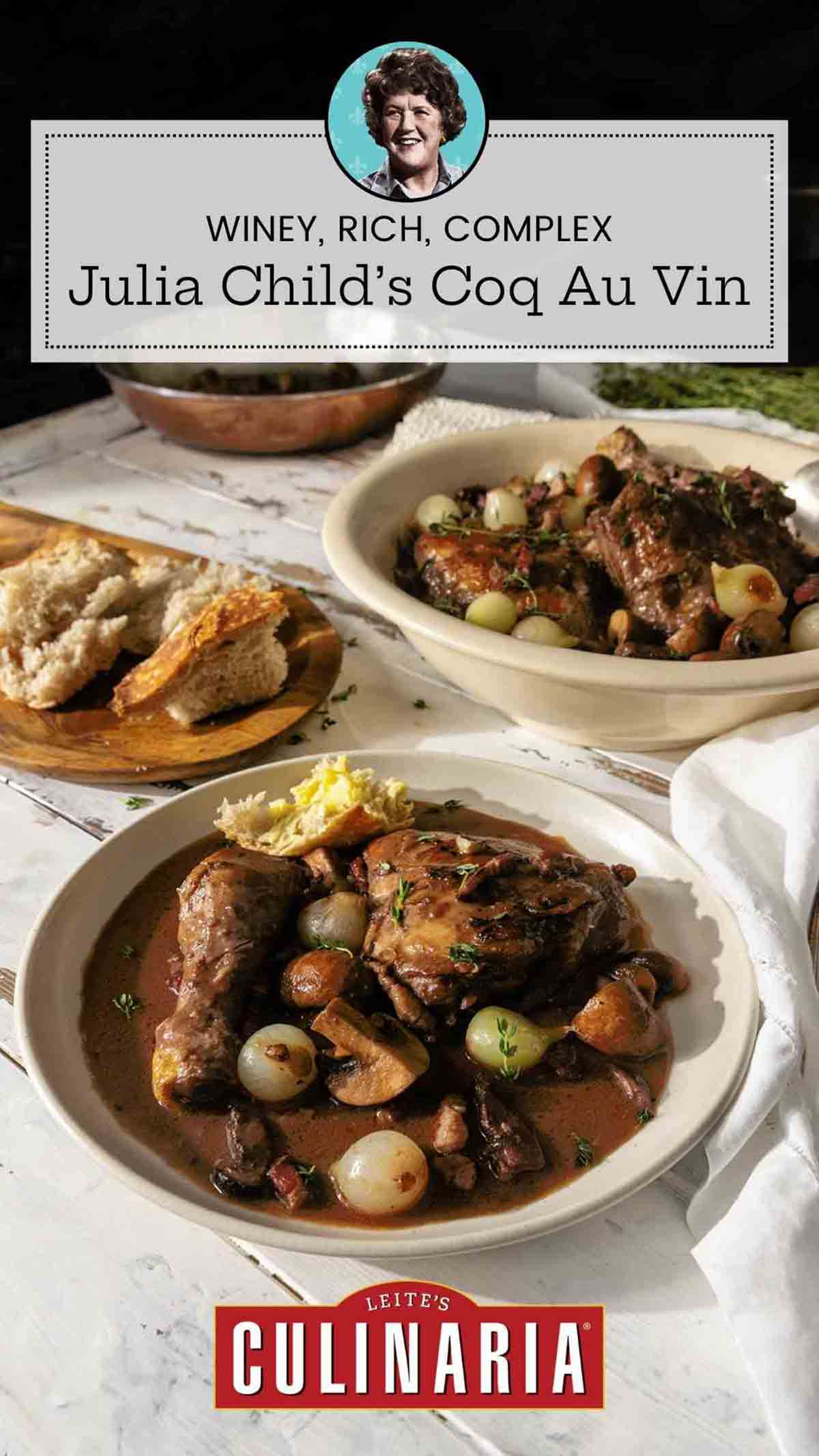
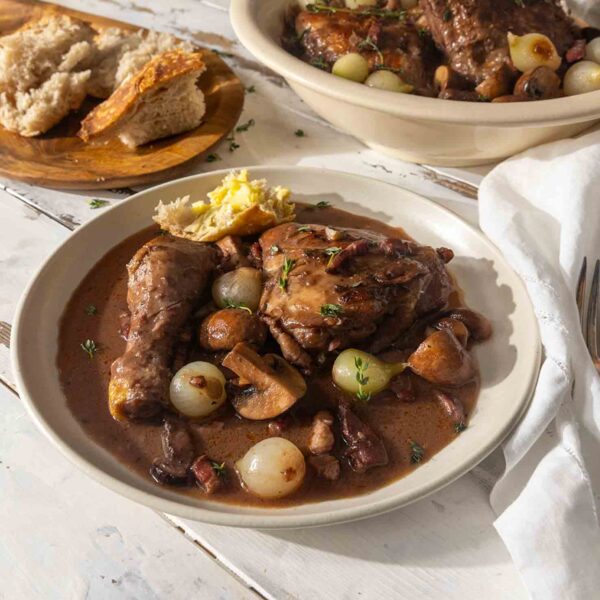
Say bonjour to Julia Child’s classic French coq au vin recipe—a dish that’s both fancy-pants enough to impress guests and easy enough for a weeknight dinner. (And if you love Julia’s recipes, don’t miss her steak au poivre, Eggs Benedict, or her scrambled eggs for kids—they’re just as foolproof and delicious.)
The only “unusual” ingredients, if you can call them that, are Cognac and lardons. The first is a staple at liquor stores, and you can substitute thick-cut bacon for the second. In just 1 1/2 hours, you’ll have a meal that’ll make you ache for Paris.
To be honest, I hadn’t made this coq au vin recipe since last winter. After whipping it up this week, I was reminded how simple, easy, and deeply flavored it is. I guess classics are classics for a reason.

Why This Recipe Works
This streamlined coq au vin captures the essence of Julia Child’s beloved classic while snipping out some steps for a quicker, equally flavorful result.
- By skipping lengthy marination and cooking the pearl onions alongside the chicken instead of separately, this version reduces overall time without sacrificing depth of flavor.
- A robust brown chicken stock, a splash of Cognac, and perfectly seared chicken build layers of flavor efficiently, while mushrooms are added late to preserve their texture.
- The result? A rich, velvety sauce, tender chicken, and a dish that delivers all the charm of the original in nearly half the time.
Notes on Ingredients
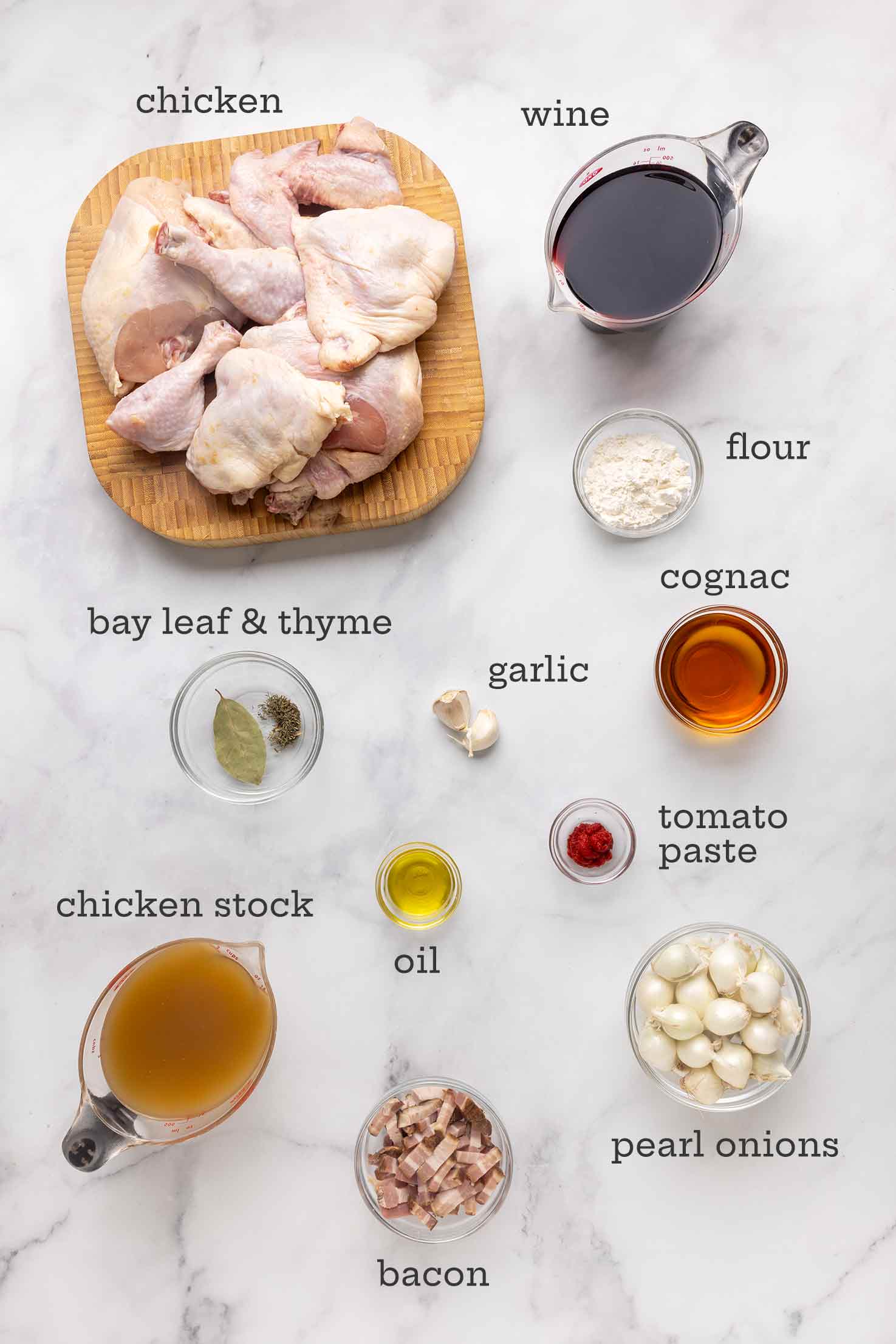
- Lardons—Popular in French cuisine, these are strips of salty slab bacon that crisp when cooked, with just the right amount of meatiness. If you can’t find lardons, pick up slab or thickly sliced bacon and slice it into 1/4-inch matchsticks.
- Chicken—You can use any assortment of bone-in chicken pieces for coq au vin. I like using thighs and drumsticks because they’re dark meat and more flavorful.
- Cognac or Armagnac—Both are French brandies and will work equally well in the dish. Cognac is a bit smoother, while Armagnac has a bit more punch to it.
- Pearl onions—To peel pearl onions easily, blanch them in a pot of boiling water for about 2 minutes, then plunge into an ice bath. The peels will slip right off. And if you’re not in the mood for that, buy frozen pearl onions. I won’t hold it against you.
- Red wine—This is a classic French chicken dish from the Burgundy region, so I recommend using a Burgundy or Côtes du Rhône.
Wine Quality: Does that mean you have to break the bank to make this dish? Absolutely not. As the experts at The New York Times discovered, expensive wines lose their complexity when cooked, while cheaper wines’ flaws are reduced. Whatever you do, don’t choose a sweet wine. - Chicken stock—Stock is one of the major flavor components that can make or break this dish. This isn’t the time to reach for a bargain-bin store brand. Many markets make their own homemade stock; you can usually find this in the deli or prepared foods section.
That being said, homemade is the best. And not just any chicken stock, but a homemade brown chicken stock. You can make it by searing or roasting raw chicken pieces (backs, necks, and wings are ideal) until browned, then simmering them in water with carrots, celery, and onion for 2 to 3 hours. Strain the stock before using. Store-bought chicken or beef broth can be used as a substitute.
What about using beef stock? Some recipes call for beef stock as a way to get richer flavor in the dish. The problem with that is it muddies the flavor, making it taste closer to a beef stew than coq au vin. Traditional French versions always use chicken stock to let the wine shine through. Brown chicken stock adds depth at the same time enhancing the taste. - Mushrooms—Regular white button or brown (cremini) mushrooms work well here, but if you have access to another type of mushroom, such as shiitake, feel free to experiment.
How to Make Coq au Vin
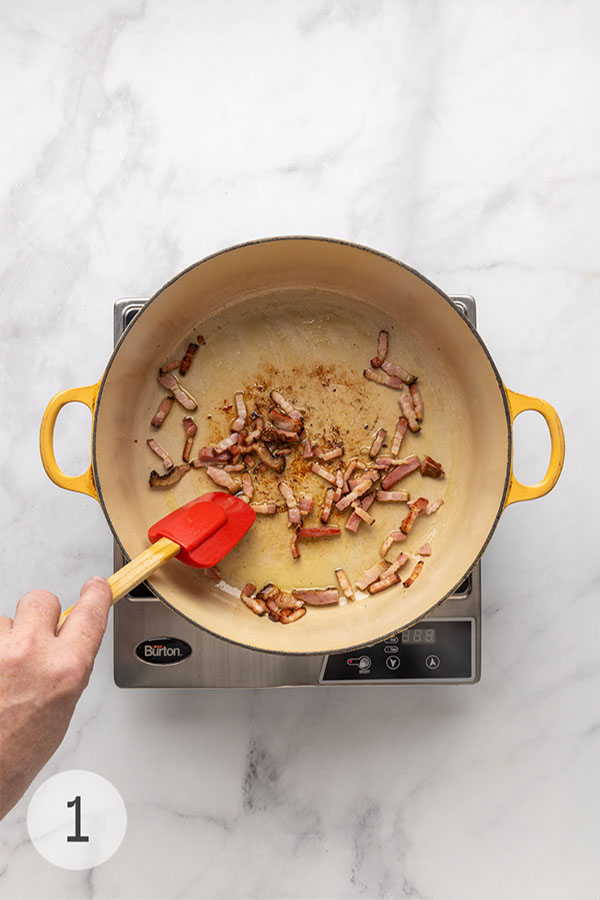
- Cook the lardons or bacon in 2 tablespoons of oil in a large pot until browned and crispy. Use a slotted spoon to transfer the lardons to a plate.
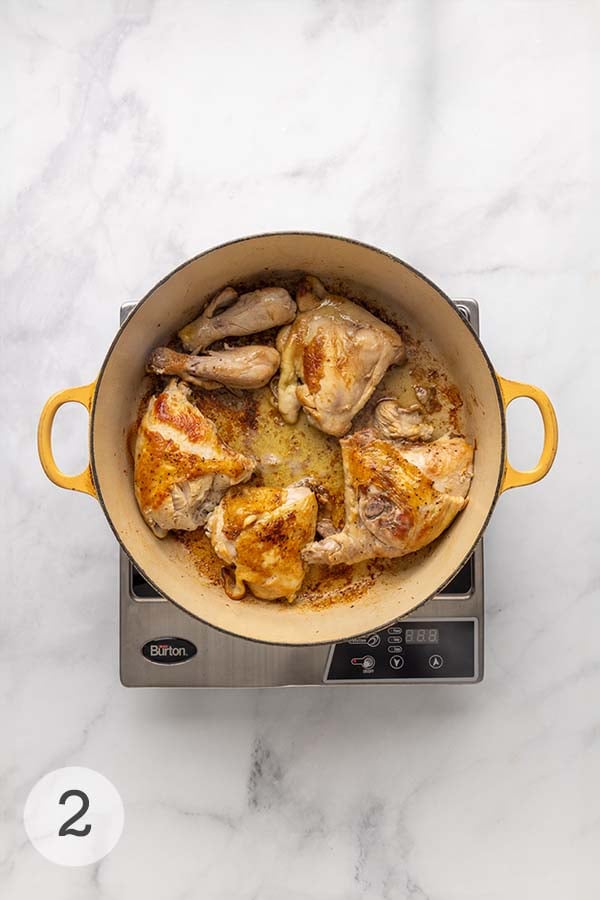
- Working in batches if necessary, brown the chicken pieces in the drippings. Return the chicken to the pot.
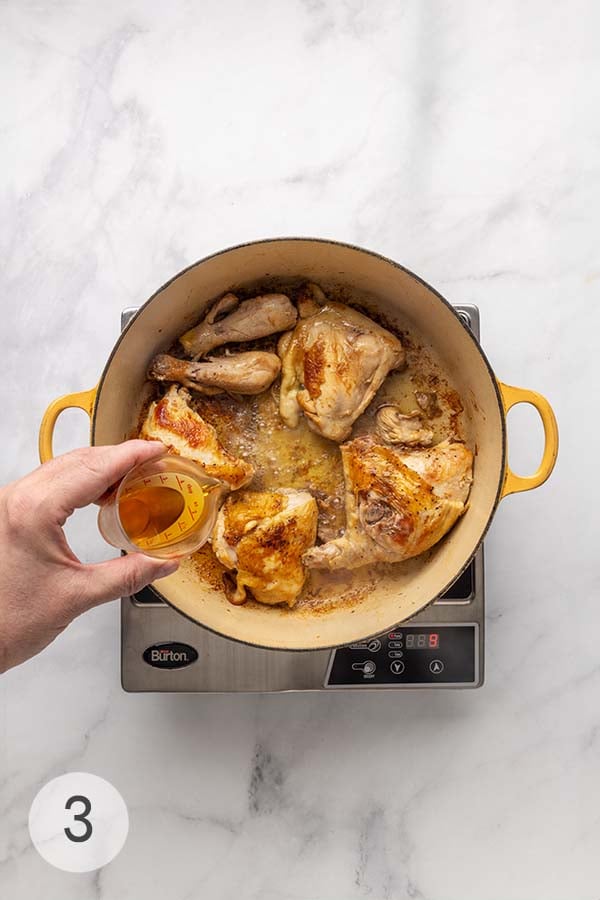
- Pour in the Cognac or Armagnac.
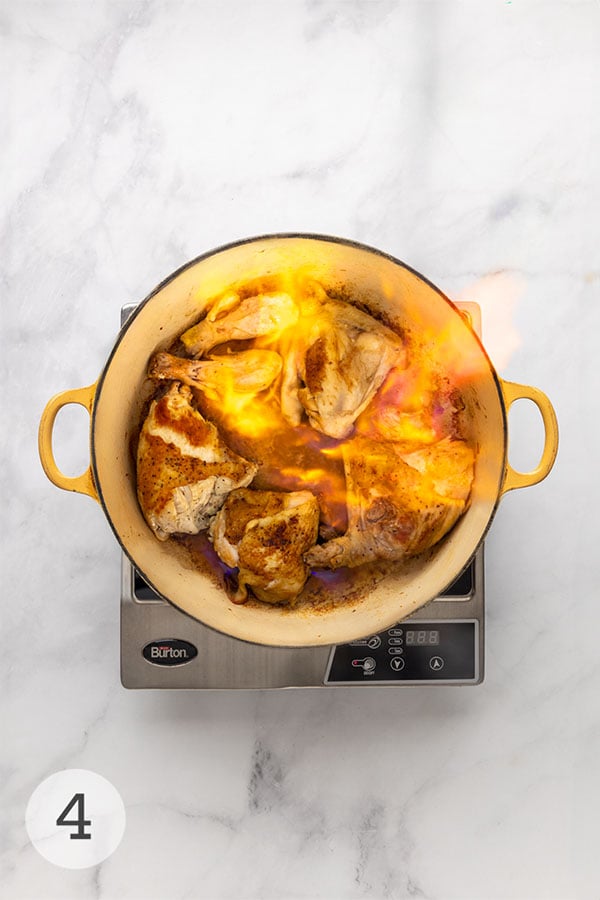
- Carefully(!!) ignite the liqueur if desired. Let the alcohol flame for a minute, then cover the pot to extinguish.
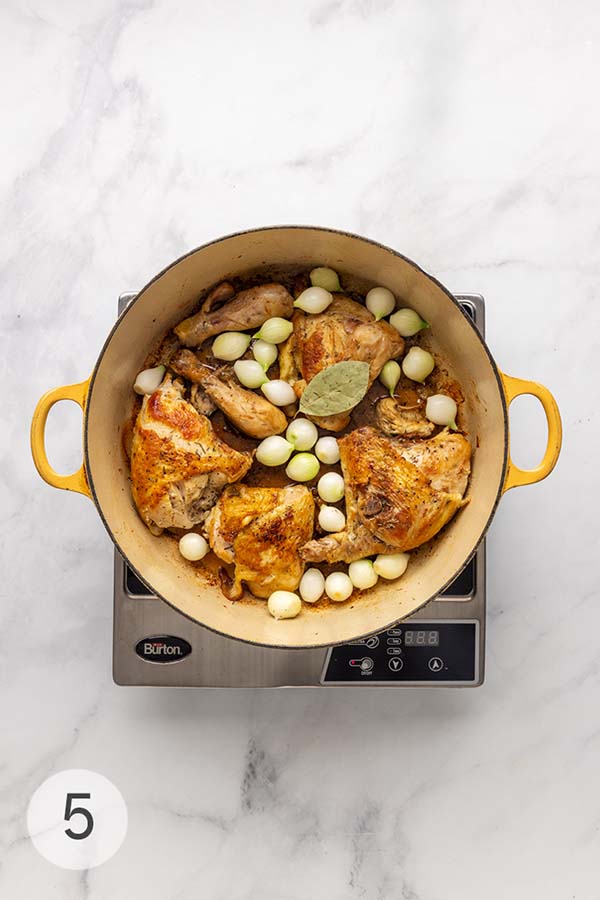
- Add the bay leaf, thyme, and onions. Cover and simmer for 10 minutes, turning the chicken pieces once. Season with salt and pepper.
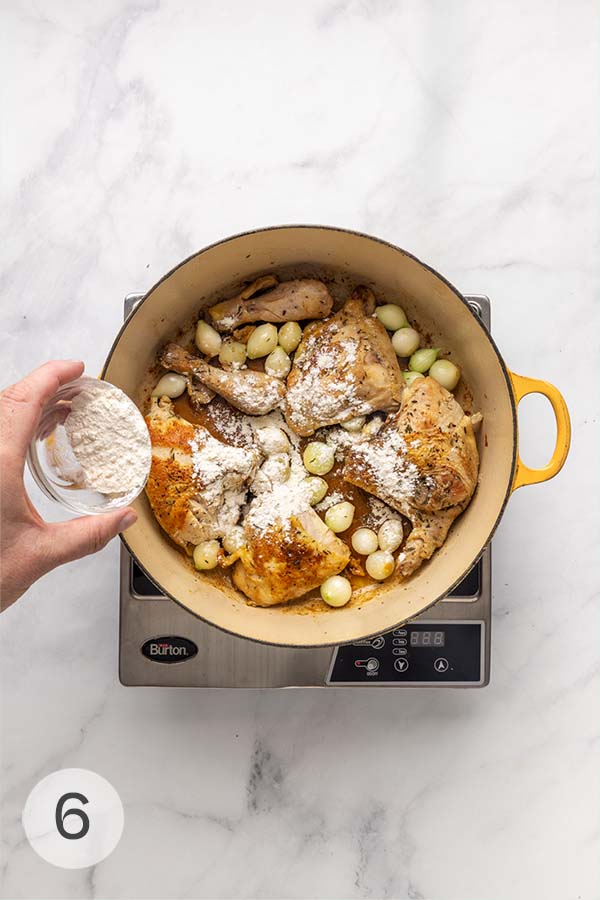
- Sprinkle the flour over the chicken and turn the pieces so the flour is incorporated into the sauce. Cover and cook for 3 to 4 minutes.
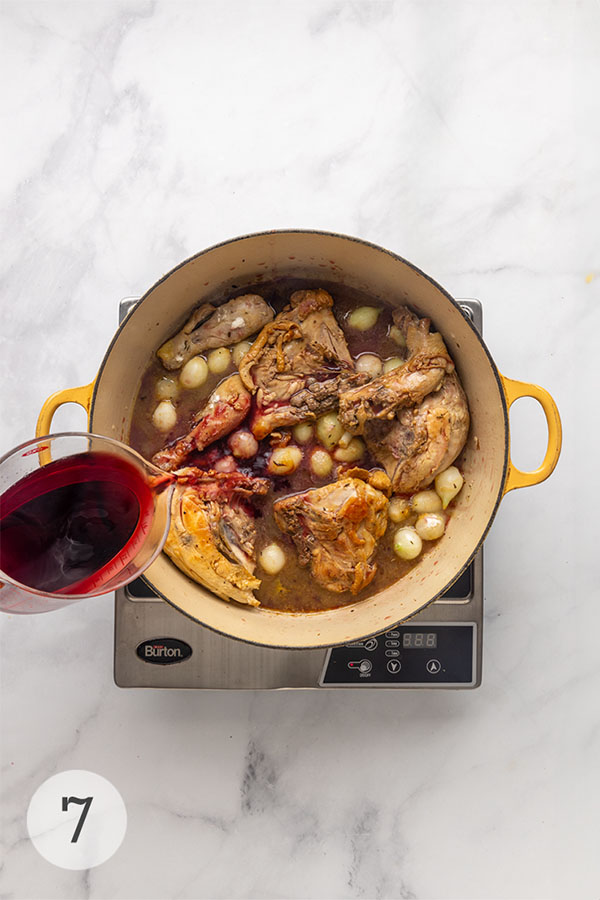
- Off the heat, swirl in the wine and stock, adding enough stock to almost cover the chicken. Stir in the lardons, garlic, and tomato paste. Cover and simmer for 25 to 30 minutes.
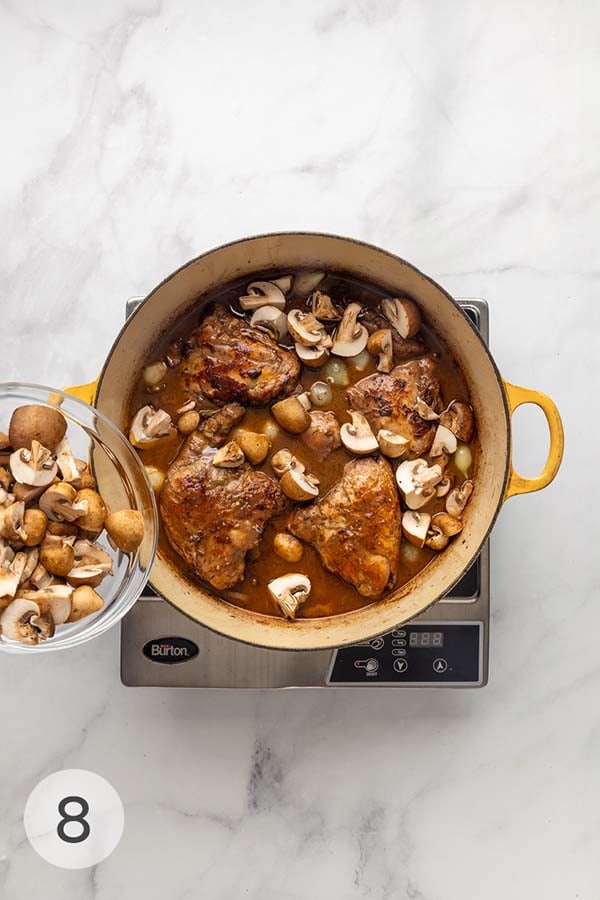
- Add the mushrooms and cook until tender. Season to taste and serve.
Variation: Slow Cooker Coq au Vin (Easy Julia Child Adaptation)
Yes, you can make Julia Child’s coq au vin recipe in a slow cooker. Just understand that the complexity of this French classic relies in large part on the caramelization that comes from searing or sautéing various ingredients in a hot skillet prior to jumbling them all together to simmer. Making coq au vin in a slow cooker still turns out a lovely and worthwhile stew, albeit one with just slightly less depth of flavor.
If using the lardons (or bacon), toss them in a heavy-bottomed casserole or pot along with 2 tablespoons oil over medium or medium-high until lightly browned, about 2 minutes. Add the lardons and their drippings to the slow cooker and add the remaining ingredients except for the oil and the flour, using only 1 cup of stock.
Cook on medium heat for 5 1/2 to 6 hours, until the chicken is tender. Transfer the chicken to a platter or a serving dish.
Heat the olive oil in a saucepan over medium-high heat, stir in the flour, and cook until it forms a paste and just begins to turn brown at the edges. Stirring constantly, very slowly strain the liquid from the slow cooker into the saucepan and simmer until it has reduced to a consistency that’s thick enough to coat the back of the spoon.
Transfer the onions to a platter with the chickens and discard the bay leaf. Pour the reduced sauce over the chicken and onions.
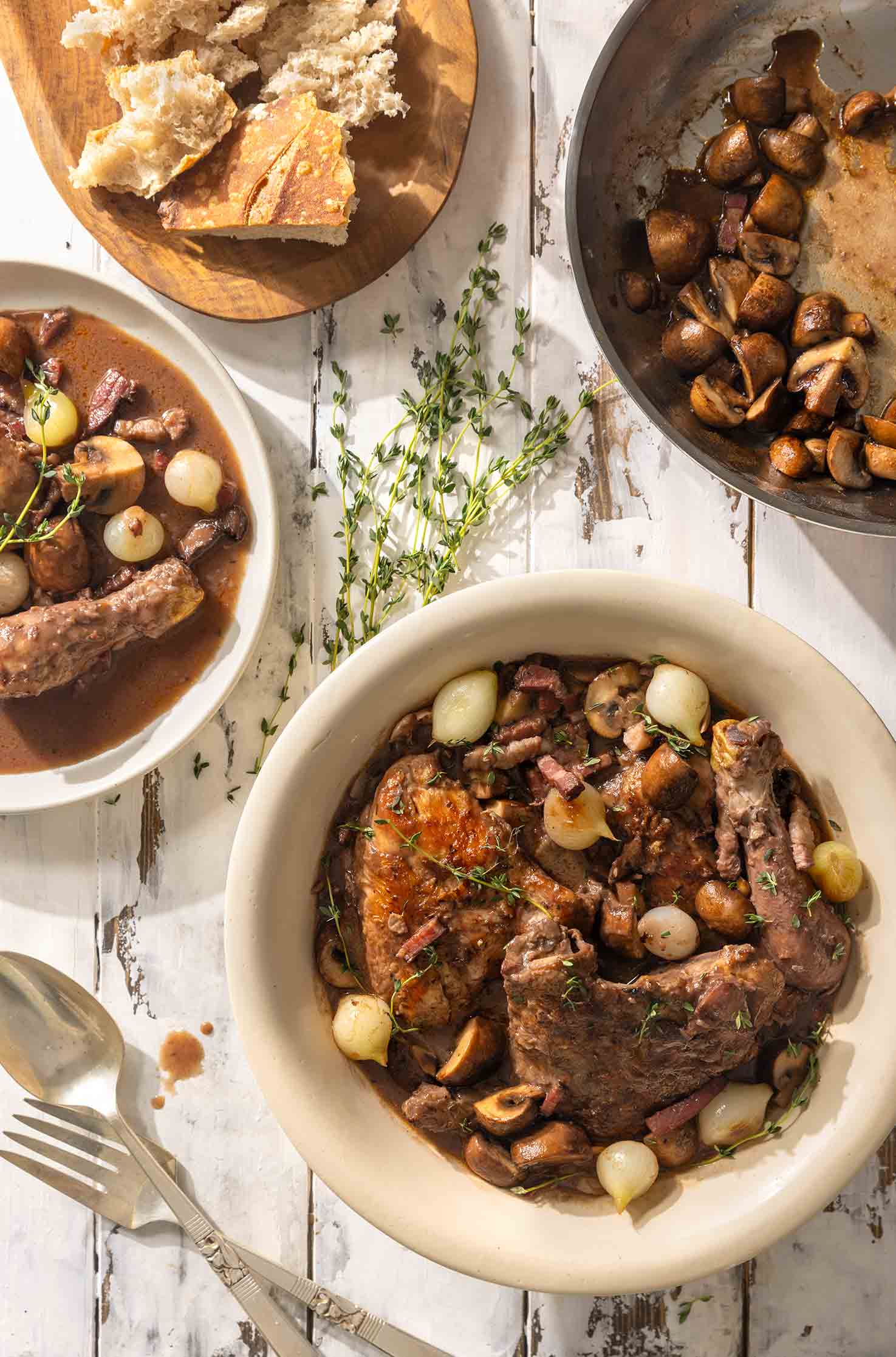
Common Questions
Julia recommends you use a full-bodied red Burgundy, Cotes du Rhone, or Beaujolais, and I heartily agree. That said, select a wine you enjoy drinking, as you’ll have some left to enjoy while your chicken is simmering away.
With all due respect to Madame Child—the doyenne of French cooking for the American kitchen—her quick coq au vin cuts corners so you can make the iconic chicken-and-wine stew during the week. But Julia’s genius is her ability to translate complex French cooking into something doable for American home cooks without sacrificing soul or flavor.
That said, a few classic techniques—skipped here in her streamlined version—can up your coq au vin game considerably, but it will take that rarest of all ingredients: time.
First, let the chicken marinate in red wine overnight. Sure, it’ll emerge with an odd maroon blush, but that soak infuses the meat with a depth of flavor that this quicker take can’t replicate. Drain and pat the pieces before searing, reserving that wine for the next step.
Next, sauté the pearl onions in the bacon drippings until they’re golden and glistening before adding them to the stew. The same goes for the mushrooms—let them sizzle in the skillet first for an extra layer of caramelized richness.
And never, ever serve the stew straight away from the stovetop; rather, let it cool and then refrigerate it ’till the next day, skimming any fat from the surface and heating the coq au vin gently—and I do mean gently—over low heat until warmed through. And you thought you didn’t know how to speak French.
Although it’s not traditional, I have had many requests for how to make coq au vin with carrots added to it. I tried it and found the best way is to add 1-inch carrot chunks to the pot in step 6, along with the bacon, garlic, and tomato paste.
Yes! Coq au vin actually tastes better the next day. Store in the fridge for up to 3 days. Reheat gently over low heat.
Absolutely. This chicken stew freezes beautifully for up to 1 month. For best results, Let the dish cool completely before transferring it to an airtight container.
Freeze for up to 1 month.
Pro Tips
- If your chicken pieces have excess skin or fat hanging off them, trim it away before cooking.
- When searing the chicken pieces, don’t crowd the pot. This will lead to steaming instead of searing. The pieces should fit comfortably in the bottom of the pot, with a bit of space between each piece. Brown the chicken in batches if necessary.
Storage & Reheating
You can prepare this coq au vin recipe up to 3 days before serving it. Store it in a sealed container in the refrigerator, then gently reheat it in a large pot or Dutch oven over low heat until everything is warmed through.
What to Serve with this Recipe
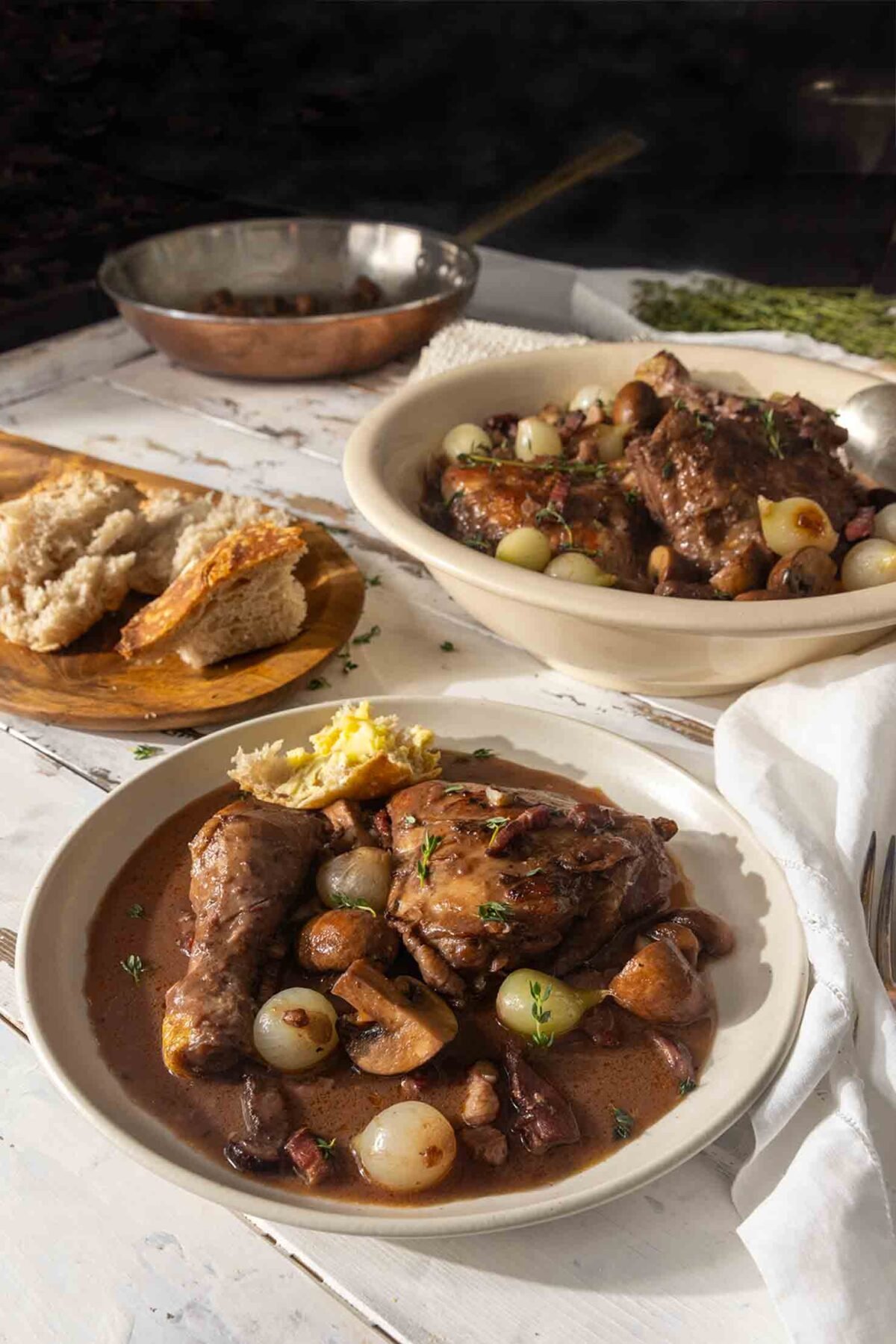
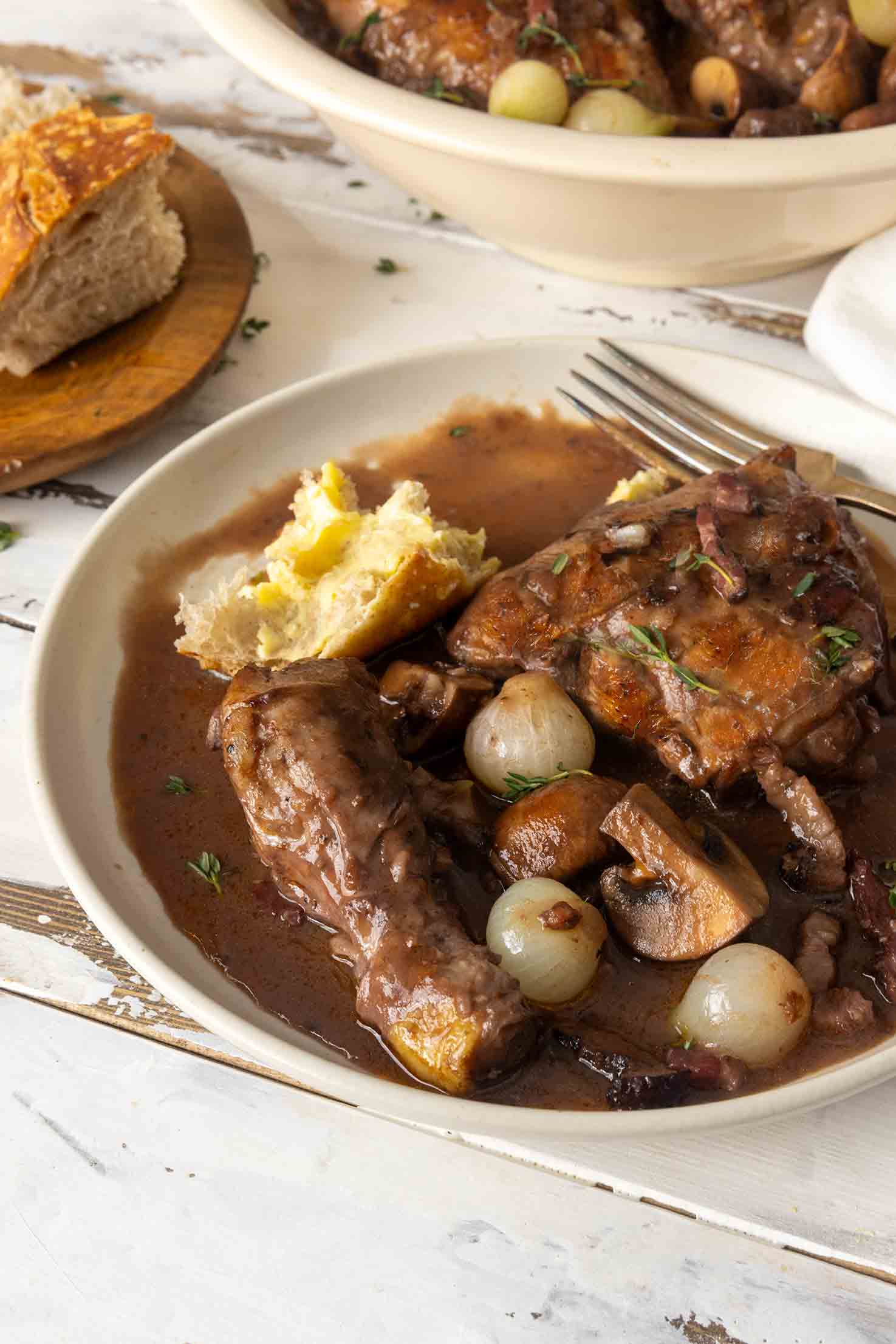
You’ll want to sop up every last drop of that beautiful sauce, so I highly recommend serving this with mashed potatoes, homemade wide noodles, or some crusty, easy no-knead bread.
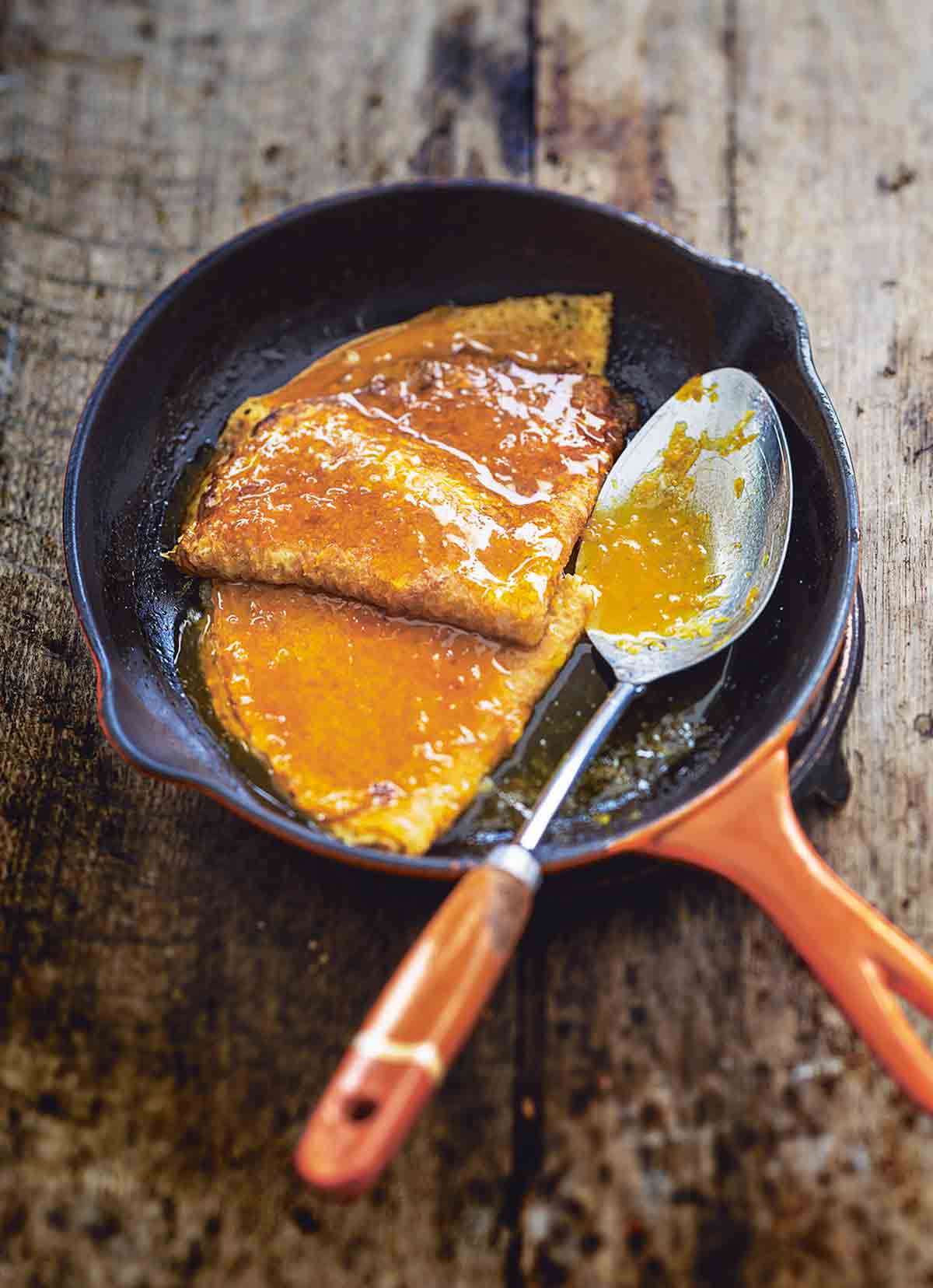
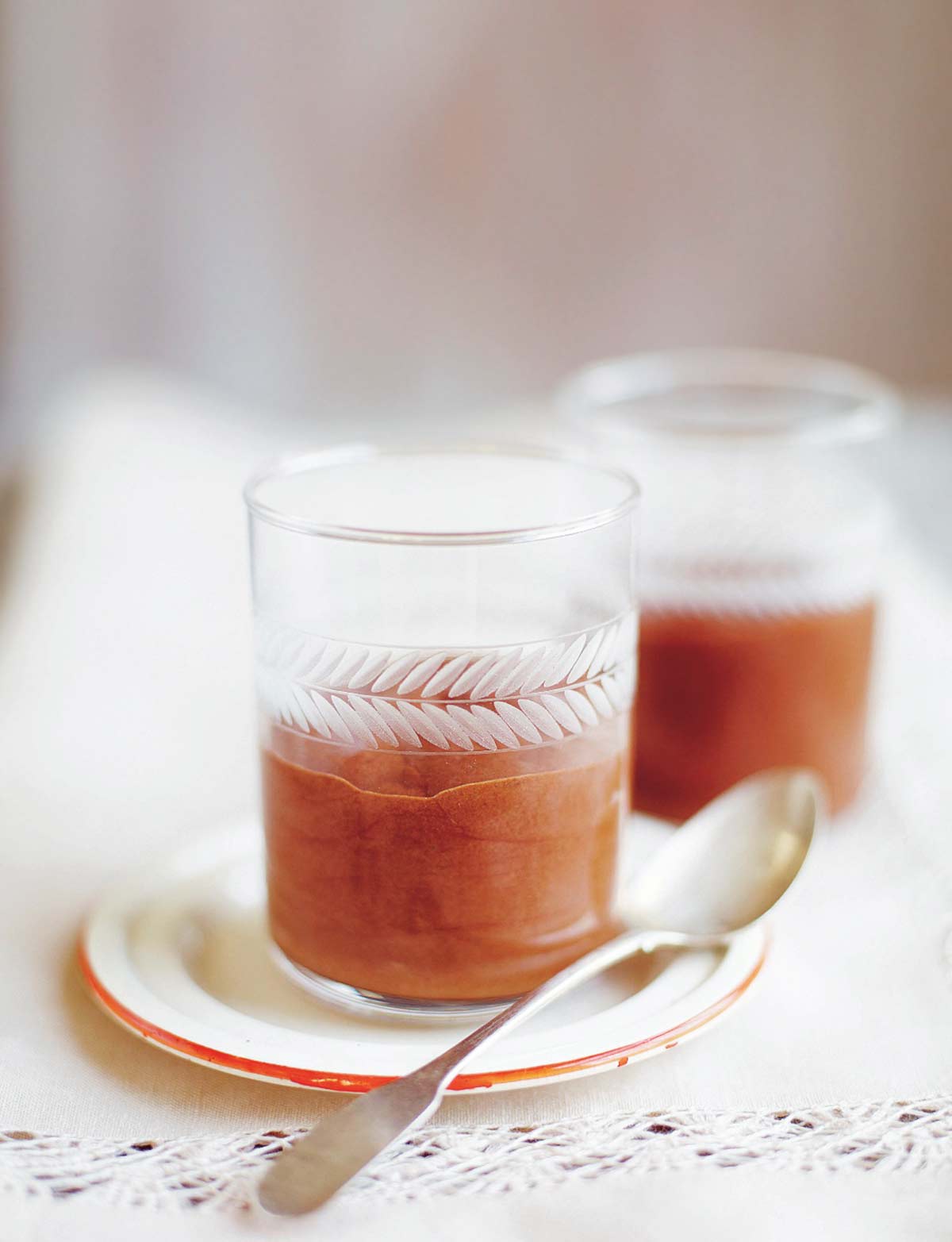
French Desserts to Finish the Meal
Tried This Coq au Vin? Share Your Thoughts!
Did you make this coq au vin recipe? Tell me what you think! Share your experience in the comments below—was this your first time making it, or are you a Julia Child pro? Bonus points for sharing a photo!
This is the best coq au vin recipe I’ve ever eaten. Absolutely delicious and great to make ahead.
Karen
Coq au Vin from Julia Child (Classic and Easy)
Ingredients
- 1/2 cup lardons or thickly sliced bacon, cut into 1/4- by 1 1/2-inch (6- by 36-mm) strips (optional)
- 2 tablespoons olive oil, more if needed
- 3 1/2 to 4 1/2 pounds chicken, cut into pieces (or all the same piece), thoroughly dried with paper towel
- 1/4 cup Cognac, or Armagnac
- salt and freshly ground black pepper
- 1 bay leaf
- 1/4 teaspoon dried thyme
- 20 pearl onions, peeled
- 3 tablespoons all-purpose flour
- 2 cups red wine, preferably Burgundy or Côtes du Rhône
- About 2 cups homemade chicken stock, preferably brown chicken stock (see headnote above)
- 2 garlic cloves, mashed
- About 1 tablespoon tomato paste
- 3/4 pound fresh mushrooms, trimmed, rinsed, and quartered
- fresh thyme sprigs, for garnish (optional)
Instructions
- Sear the 1/2 cup lardons or thickly sliced bacon in the 2 tablespoons olive oil in a heavy-bottomed pot over medium-high heat until lightly browned, about ⏲ 2 minutes. Transfer to a plate, leaving the drippings in the pot.
- Add the 3 1/2 to 4 1/2 pounds chicken, being careful not to crowd the pieces. You may need to work in batches. Sear the chicken, turning occasionally, until nicely browned on all sides. (If working in batches, return all the chicken to the pot.)
- Carefully pour the 1/4 cup Cognac into the pot and wait until it becomes bubbling hot. If desired—and if you're brave—ignite the sauce with a match. Let it flame for a minute, gently tilting the pot by its handle and swirling the sauce to burn off the alcohol. To extinguish the flames, simply cover the pan with its lid.
- Add the 1 bay leaf and 1/4 teaspoon dried thyme to the pan, nestle the 20 pearl onions around the chicken, and season with salt and freshly ground black pepper. Cover the pot and simmer gently, turning the pieces once for about ⏲ 10 minutes.
- Uncover the pot, sprinkle the 3 tablespoons all-purpose flour over everything, and turn the chicken and onions so the flour is absorbed by the sauce. Cover and cook, turning once or twice, for 3 to 4 minutes more.
- Remove the pot from the heat and gradually stir in the 2 cups red wine and enough About 2 cups homemade chicken stock to almost cover the chicken. Add the lardons, 2 garlic cloves, and About 1 tablespoon tomato paste, cover, and simmer gently for ⏲ 25 to 30 minutes.
- Test the chicken for doneness. (There should be no trace of pink, and the juices should run clear when the meat is pierced with a knife.) Transfer the pieces to the plate when they're done.
- If the onions aren't quite tender, continue cooking them in the sauce, then return the chicken to the pot, add the 3/4 pound fresh mushrooms, and simmer for 4 to 5 minutes.
- The sauce should be just thick enough to coat the chicken and vegetables lightly. (If the sauce is too thin, bring it to a boil and reduce it to the desired consistency. If the sauce is too thick, thin it with spoonfuls of stock.) Taste and correct the seasoning accordingly.
- Serve immediately, garnished with fresh thyme sprigs.
Notes
- Trimming the chicken–If your chicken pieces have excess skin or fat that hangs off of them, trim it away before cooking.
- Storage and reheating–You can prepare this coq au vin recipe up to 3 days before serving it. Store it in a sealed container in the refrigerator, then gently reheat it in a large pot or Dutch oven over low heat until everything is warmed through.

Nutrition
Nutrition information is automatically calculated, so should only be used as an approximation.
Recipe Testers’ Reviews

Wonderful recipe, Julia! Great layers and depth of flavors. I made this using 9 skin-on, bone-in chicken thighs. I seasoned the thighs with salt and pepper before browning them in a Dutch oven because that seemed to make more sense than seasoning them afterward.
After browning the chicken thighs in batches, I browned the pearl onions in the bacon grease mixed with the fat from the chicken thighs. There was too much chicken fat left in the pot, as well as a charred buildup, so we cleaned the pan before adding the Armagnac, igniting it, and proceeding with the recipe.
I used 2 cups Syrah for the red wine, since Syrah is one of the grapes used in Côtes du Rhône. When it came to finally simmering the chicken, the thighs were done after 20 minutes. The onions were not quite done at this point, so I removed the chicken, added the mushrooms, and simmered for about 3 to 4 minutes more. I allowed everything to cool down, put the chicken back into the pot, and put the pot into the refrigerator.
The next day I took the pot out a couple of hours before dinner to let everything come up to room temperature before reheating. There was no congealed fat on the surface of the stew. I think that cleaning out the pot after browning the chicken and the onions was the way to go.
I let everything warm up very, very slowly on a simmer setting. I made velvet mashed potatoes using a ricer so that they were extremely silky and creamy.
Julia Child’s coq au vin served over the mashed potatoes was, in a word, succulent. By the way, I added more mushrooms and pearl onions than the recipe called for, and we hungered for even more. This was a beautiful dish served with multi-colored baby carrots.
We had an Oregon medium-bodied pinot with this dish. It was a good choice, because it let the coq au vin shine on its own. A bigger wine would’ve overpowered it.

I adapted Julia Child’s coq au vin recipe for a slow cooker. I put all the ingredients except the olive oil and the flour in the slow cooker and cooked it on medium heat for 6 hours. I omitted the bacon/lardons. I used the full 2 cups wine but only 1 cup broth. I used bone-in skin-on chicken legs and thighs (about 4 pounds).
When the chicken was tender, I transferred it to a bowl, heated the olive oil in a pot, added the flour and cooked it, and stirred in the entire amount of liquid from the slow cooker and reduced it so that it was thick enough to coat the chicken.
The chicken was incredibly juicy, tender, and flavorful. I could perhaps have reduced the cooking time to about 5 1/2 hours and been just fine. This worked really well for me.










I can’t believe I made this on a weekday. The only thing that slowed me down a tiny bit was cutting up my bird, I had a whole chicken. Very flavorful and the chicken very tender. I do give a lot of credit to the local farm that raises plump and healthy birds. Followed this recipe exactly and don’t think I’d change a thing. I might try the slow cooker version next time, for a weekday!
Suebeedo, I’m seriously impressed—making Julia Child’s Coq au Vin on a weekday is next-level commitment! Breaking down a whole bird midweek? That’s big-time swagger right there. I’m thrilled the recipe hit all the right notes for you. And yes, a plump, farm-raised chicken really does make the dish.
This recipe is excellent! I’ve made coco vin many times using the longer method. I would cook my mushrooms in the pot, I would then sauté the small onions separately. But this gives you the same flavor in a fraction of a time. If you have the time, marinating the chicken overnight and wine as the variation says is a good idea. But who can plan that far ahead?! Not me. Lol
Margie, now THAT’S what I love to hear! I, too, like how much easier this is than the full-on method. I think Julia knew not everyone can spend two days on a dish. which is why she created this shortcut in a later cookbook.
This recipe required a few tweaks because it isn’t actually Julia Child’s recipe. The little things she does and the order in which they are done really makes a difference. Like you HAVE to reduce the red wine before or after cooking or the gravy is too sour. Also the onions should be cooked separately – in this they cook too long. The mushrooms should be sauteed first. A few other things too. I think the main issue is not reducing the wine enough.
Avi, I’m going to have to politely disagree with you. Julia was famous for updating and changing her recipes to make them easier for cooks. If you check page 199 of “From Julia’s Kitchen” (1975), you’ll see that this recipe very closely follows that version. The wine isn’t reduced before adding, and the mushrooms aren’t sautéed before adding. I appreciate your addition, though, as it might help others. Thank you.