
TL;DR (Quick-Answer Box)
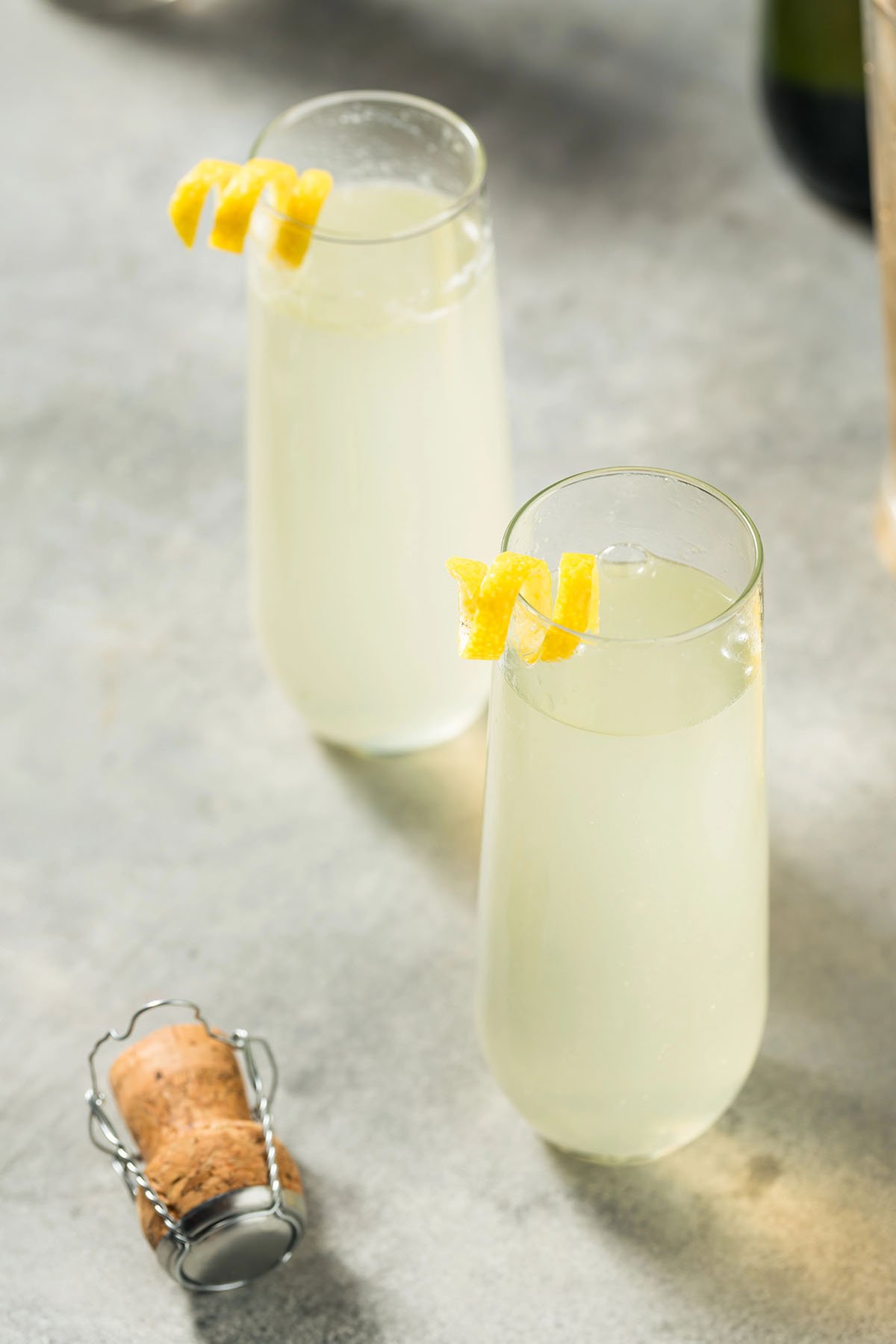
- What it is: A sophisticated, sparkling cocktail made with gin, fresh lemon juice + simple syrup, topped with chilled Champagne.
- Why you’ll love it: It’s crisp, effervescent, and botanical. Plus, this version is batched, so you can mix the base ahead of time and just pour and pop bottles when guests arrive. No playing bartender all night.
- How to make it: Shake the gin, lemon juice + syrup with ice (or mix a pitcher and chill). Strain into glasses + top with Champagne. Garnish with lemon twist.
Jump To
- TL;DR (Quick-Answer Box)
- Why this French 75 recipe works
- Notes on ingredients
- Variations
- What’s the traditional glass for a French 75?
- Your French 75 questions, answered
- French 75 pro tips & troubleshooting
- What to serve with French 75
- Storage
- More bubbly cocktail recipes
- Write a review
- French 75 Cocktail (for a Crowd) Recipe
- Recipe Testers’ Reviews
If you know anything about me, you know I always, always start a dinner party or gathering with bubbles. There’s something about the fizziness of cava, Prosecco or, the grand dame Champagne that sets the mood.
Being a dyed-in-the-wool lily gilder, sometimes I want a little sumthin’-sumthin’ more. Then that’s when I turned to the French 75. It’s lemony, fizzy with the right thwack of liquor.
And because I’m a miserably bad bartender, I like to make these in big batches and pour them from a pitcher. It makes things so much more festive and I don’t have a lineup of grousing guests waiting to get their drink!
Chow,


Why this French 75 recipe works
While the original 1920s versions often debated between Cognac and gin, the gin version has become the gold standard for a reason. The botanicals in the gin—especially juniper—cut right through the richness of the Champagne and the tartness of the lemon. It’s brighter and livelier than the Cognac version.
I’ve written this as a batch recipe because, let’s be honest, on New Year’s Eve, you don’t want to be measuring quarter-ounces while the ball drops. You want to be holding a glass, not a jigger!
Notes on ingredients
- Gin—You want a classic London Dry gin here. Beefeater, Tanqueray, or Bombay Sapphire are perfect. You want that piney juniper backbone. Save the delicate, floral, or cucumber-y gins (like Hendricks) for a G&T; they can get lost under the Champagne.
- Bubbles—It doesn’t have to be Champagne from France (though I wouldn’t say no). A dry Crémant, Cava, or a crisp American sparkling wine works beautifully. Just make sure it’s Brut. You’re adding sugar syrup, so you don’t want the wine to be sweet, or you’ll end up with a headache by 12:01 a.m. (Been there, done that.)
- Lemons—Fresh. Squeezed. Only. No bottled stuff. Since there are only four ingredients, there’s nowhere for bad juice to hide.
- Simple Syrup—You can buy it, or you can make it in three minutes. Here’s how. I usually keep a jar in the fridge for cocktail emergencies.
Variations
The French 125 (Cognac)
Prefer a warmer, richer cocktail? Swap the gin for an equal amount of Cognac (VS or VSOP). This variation is technically called a French 125 and it has a deep, oaky flavor that is fantastic in the winter.
What’s the traditional glass for a French 75?
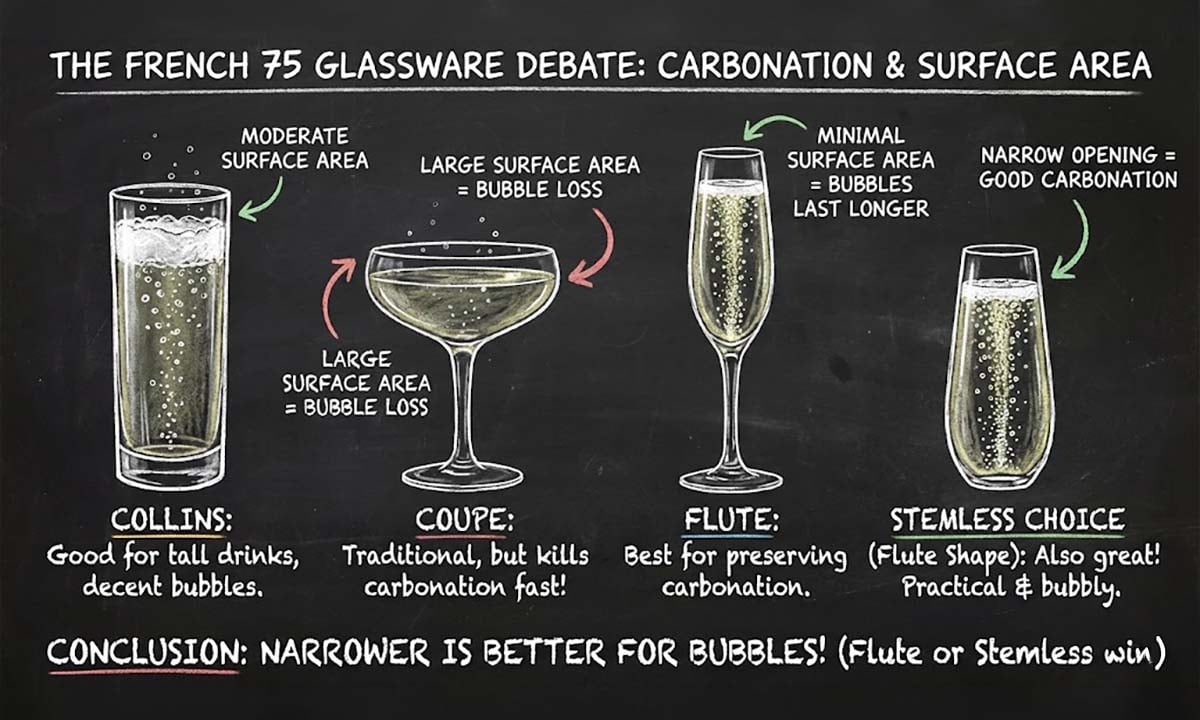
This is the subject of a massive, ongoing debate in the cocktail world. You have three distinct camps:
- The Historians (The Collins Glass): If you went to Harry’s New York Bar in Paris in the 1920s, you likely would’ve been handed a French 75 in a tall Collins glass filled with ice. The drink was named after a WWI field gun, and it was meant to be a long, potent cooler—not a delicate aperitif.
- The Romantics (The Coupe): During Prohibition and the Casablanca era, the coupe became the symbol of sophistication. It looks undeniably chic, but the wide bowl kills bubbles fast and warms up the drink quickly.
- The Modernists (The Flute): In the 80s, the flute took over. It’s practical because the narrow shape forces the bubbles up in a steady stream and keeps the drink ice-cold.
My choice? The stemless flute, all the way. I think it’s the perfect compromise. It has the cylindrical, chimney shape of the original Collins glass—nodding to the drink’s history—but it lacks the ice that dilutes the Champagne. It keeps the fizz lively like a traditional flute, but has a relaxed and modern vibe. And I’m all about relaxed!
Your French 75 questions, answered
Um, have you met me? You sure can. You can mix the gin, lemon juice, and syrup in a pitcher or jar and keep it in the fridge for up to 24 hours. When it’s party time, just pour 2 ounces of the mix into each glass and top with bubbly.
It was named after the Canon de 75 modèle 1897, a rapid-fire artillery gun used by the French in World War I. The joke was that the drink had such a kick, it felt like being shelled.
French 75 pro tips & troubleshooting
☞ Chill everything
And, kids, I mean everything. The gin, the syrup, the Champagne, and yes, even the glasses. A warm French 75 is a French tragedy.
☞ Release the oil
When you add the lemon twist, give it a good pinch (skin side down) over the glass first. This sprays lemon oil onto the surface of the drink, so the first thing you smell is bright citrus.
☞ Don’t shake the bubbly
It sounds obvious, right? But I’ve seen people do it. They get all caught up in the bartender/mixologist cosplay, they forget and do a Tom Cruise in “Cocktail.” Never put the Champagne in the shaker. It will explode. Add it after you’ve poured the base.
What to serve with French 75
This is a high-acid, bubbly drink, which means it loves fat and salt.
Shrimp Cocktail: A classic appetizer for a classic drink.
Oysters: The ultimate pairing. These oysters with a lovely mignonette sauce are perfect.
Gougères: Those cheesy French puffs are a match made in heaven. My herby, Italiante version (with proscuitto and Parmigiano-Reggiano) of the puffs will do nicely.
Fried Chicken: Trust me on this. The bubbles cut right through the grease. Opt for batter-fried chicken, Spanish chicken wings, or Japanese karaage-fried.
Storage
Fridge: If you have leftover base (gin/lemon/sugar), it’ll keep in the fridge in a sealed jar for a day or two. The lemon juice flavor might dull a wee bit, but it’ll still be drinkable. Once the Champagne is added, though, you’ve got to drink it immediately.
More bubbly cocktail recipes
Write a review
If you make this French 75 recipe, or any dish on LC, consider leaving a review, a star rating, and your best photo in the comments below. I love hearing from you.–David
French 75 Cocktail (for a Crowd)
Ingredients
For the French 75 base
- 6 ounces London Dry gin
- 6 tablespoons freshly squeezed lemon juice, preferably organic, strained
- 6 tablespoons simple syrup, or less to taste
- ice cubes
To finish
- 1 (750-ml) bottle Champagne, well chilled
- 6 strips lemon zest, for garnish, preferably organic
Instructions
Mix the gin base
- In a large pitcher or a large cocktail shaker, combine the 6 ounces London Dry gin, 6 tablespoons freshly squeezed lemon juice, and 6 tablespoons simple syrup.If serving immediately, add plenty of ice cubes and stir (if using a pitcher) or shake (if using a shaker) until very cold.If making ahead, don't add the ice. Instead, add 3 ounces of cold water to the batch (to account for the dilution you'd usually get from shaking), cover the pitcher, and refrigerate for up to 24 hours.
Assemble the cocktails
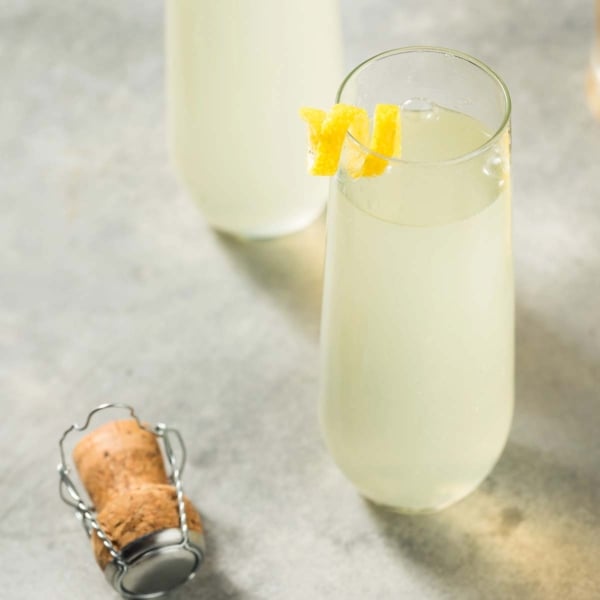
- Pour the chilled gin base evenly into 6 Champagne flutes (about 2 ounces per glass).
- Top each glass with the 1 (750-ml) bottle Champagne. Pour slowly to avoid overflowing the foam.
- Twist the 6 strips lemon zest, one over each glass, to release the oils, then drop it into the drink. Serve immediately. Rinse and repeat!
Notes
- Simple Syrup: To make your own, combine equal parts granulated sugar and water in a small saucepan. Heat gently until the sugar dissolves. Let it cool completely before using.
- Scaling: If you’re hosting a smaller group, the ratio is simply 2 parts gin, 1 part lemon, 1 part syrup.
- Glassware: If you don’t have flutes, coupes are a lovely alternative, though the bubbles will dissipate faster.
Nutrition
Nutrition information is automatically calculated, so should only be used as an approximation.
Recipe Testers’ Reviews
Did you know only 68% of the recipes we test make it onto the site? This recipe survived our rigorous blind testing process by multiple home cooks. It earned the Leite’s Culinaria stamp of approval—and the testers’ reviews below prove it.

This is a delicious recipe for a classic cocktail. It’s a good one to have in your repertoire since there aren’t many Champagne cocktails besides mimosas. It’s quick and easy to make. The lemon gives the drink some bite while the gin gives it a crisp finish.

Ooh la la! Delish. We always have a bottle of Champagne chilling in the fridge—ready for any celebratory occasion or for making sparkly sweet lemony cocktails such as this French 75, which is a lovely addition to one’s cocktail repertoire.
I had to squeeze 2 1/2 lemons to get the 1/3 cup required. My cocktail shaker couldn’t fit all 2 cups of ice, so I filled as much as possible, leaving just enough room for shaking. I used a timer to make sure I shook for 30 seconds and since the recipe produced quite a bit of mixture, I just put the shaker in the fridge to keep cold until we were ready for refills.
And refill we did…again and again and again. We actually preferred the cocktail with less syrup mixture and more Champagne at more of a 1:1 ratio, but that’s the beauty of cocktails. And this cocktail especially you can adjust to taste.

I adore classic cocktails like this one that focus on a few quality ingredients that, when combined, transform cocktail hour into something that much more special. Some of my favorites are a dry martini, Negroni, Sazerac, and of course, the French 75. These drinks are classics for a reason—they have history behind them and, well, they just taste good.
I was interested in this version of a French 75 that combines bubbly with simple syrup, lemon juice, and gin. The botanicals really make this version a perfect standout; the crispness of the gin has a refreshing taste that is perfect for any time of year.
In terms of the recipe itself, to get 1/3 cup lemon juice I actually had to use 4 lemons, but it all depends on the size and juiciness of your citrus fruits. I had enough of the gin/simple syrup mixture for 6 drinks total, and a touch more champagne leftover after that. I served these pre-dinner drinks with some smoked almonds and ricotta-stuffed dried dates. But I think any small snack would work.

Anyone who knows me is aware of my fondness for prosecco, and hence for me to really muddle up a bubbly and give it a TC is a difficult one. However it was not the case with this cocktail.
I made the Cognac variation, the French 125, It had the right amount of sweetness and sourness and the flavor of the Cognac did come through nicely without being in your face. Don’t get me wrong. One sip will give you a good buzz. But it’s a pleasant one and I think I will keep this recipe in my back pocket and bring it out every now and then.
I used a bottle of Piper Heidesieck champagne chilled.










Just delish! A nice alternative to this season’s Hugo Spritz. I always have lemon, but sometimes out of mint!
Michelle, I totally agree with you. And I forgot all about the Hugo Spritz. Thanks for the reminder. I’m placing the recipe here for those who might be curious.
HUGO SPRITZ
The Hugo Spritz is a refreshing, low-ABV Northern Italian cocktail created in 2005. It swaps the bitterness of Aperol for a floral, crisp profile.
ingredients
4 ounces chilled Prosecco
1/2 ounce to 1 ounce St-Germain (elderflower liqueur)
1 ounce club soda
1 fresh mint sprig
Ice
Lemon or lime wheel for garnish
Instructions
1. Place the mint leaves and elderflower liqueur into a large wine glass.
2. Gently muddle to extract the mint oils, and let sit for 3 to 5 minutes to infuse.
3. Fill the glass with ice.
5. Pour in the Prosecco and top with club soda.
6. Stir gently, garnish with a citrus wheel and an extra mint sprig, and enjoy!