
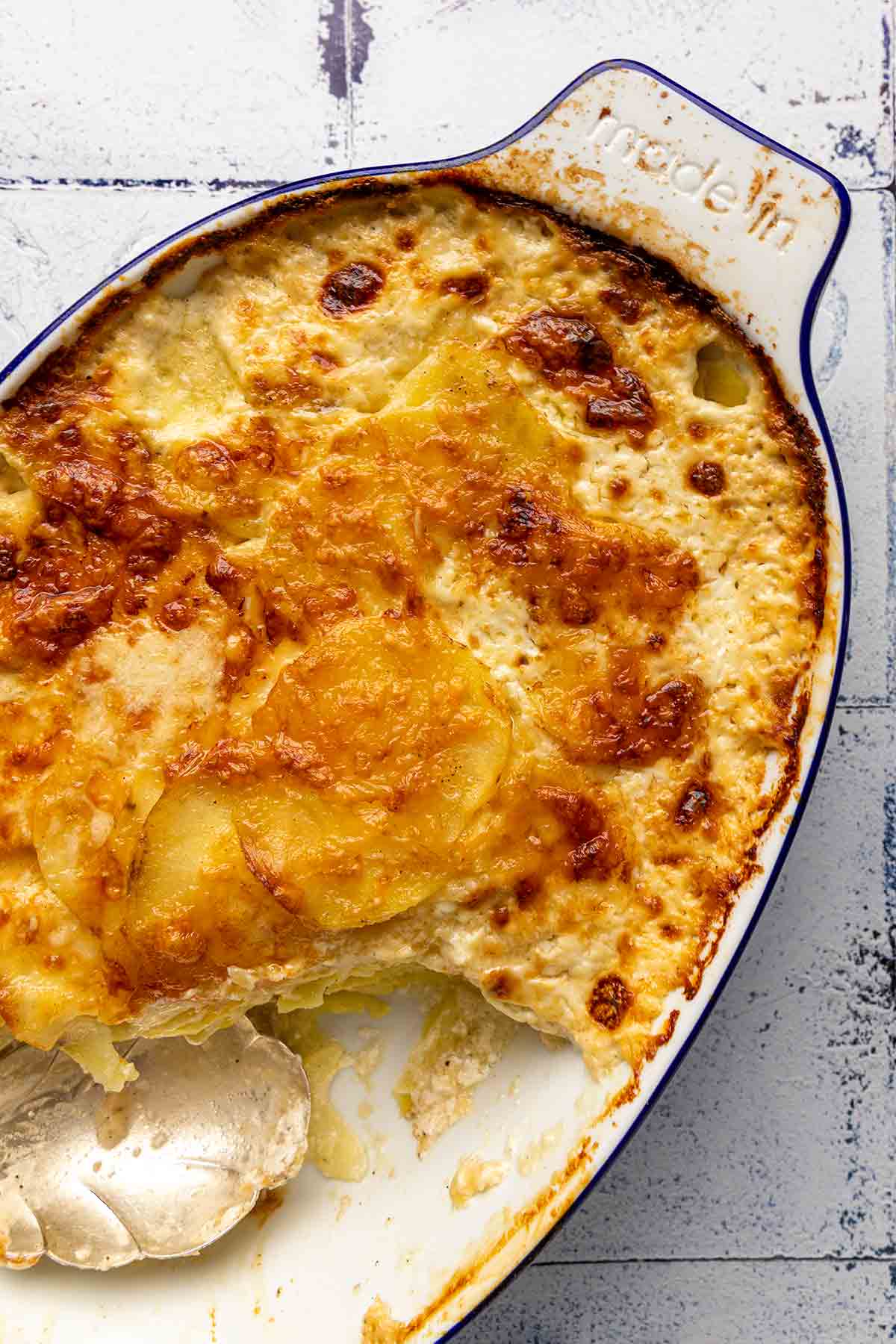
TL;DR (Quick-Answer Box)
- What it is: Sliced Yukon Gold potatoes baked in a fragrant mixture of heavy cream, garlic, thyme, and nutmeg, then topped with optional Gruyère cheese.
- Why you’ll love it: This old-timey, classic French comfort food is the ultimate side dish, featuring ultra-tender potatoes and a rich, bubbly, golden-brown Gruyère topping.
- How to make it: Rub the baking dish with garlic + butter. Layer and season sliced potatoes. Pour the warm garlic-herb-infused cream over, sprinkle with cheese, cover with foil, and bake until tender, then uncover to brown.
Featured Review
I made this Christmas Day—perfect with beef tenderloin. Rich and decadent.
Cyhtnia Thomas
Jump To
- TL;DR (Quick-Answer Box)
- Why this Dauphinoise potato recipe works
- Notes on ingredients
- Substitutions and variations
- How to make potato Dauphinoise: Visual guide
- What’s the difference between scalloped potatoes, potatoes gratin, and potatoes dauphinoise?
- Your Dauphinoise potato questions, answered
- Pro tips & troubleshooting
- More creamy potato gratin recipes
- Write a review
- Potatoes Dauphinoise Recipe
- Recipe Testers’ Reviews
Classic potato Dauphinoise is essentially a love triangle of potatoes, cream, and garlic—with a fine French lineage. The dish isn’t named for its richness as some people think (“dauphin” is the French term for a king’s eldest son) but rather for the historical region where it’s said to have originated—Dauphiné.
According to Larousse Gastronomique, the great French culinary encyclopedia, while cheese isn’t traditional in the historical sense, Gruyère is the one acceptable addition. In his landmark 1903 book, Le Guide Culinaire, George Auguste Escoffier kept things simple with a mixture of only potatoes, Gruyère, and butter. However, by the time he published Ma Cuisine in 1934, he’d updated his potatoes Dauphinoise to include a richer, custard-like base of beaten eggs, boiled milk, and cheese.
Larousse waxes on about how the quality of Dauphiné’s milk is partly responsible for cream being featured in much of the region’s cuisine. It’s also so exquisite that the locals have created gratins with their cream and cheese for almost every ingredient: macaroni, pumpkin, ground beef, wild mushrooms, and crayfish. But none is finer than their potato gratin.
I suspect les Dauphinois are quite sated and content because comfort food gets any more comforting than this.
Chow,


Why this Dauphinoise potato recipe works
The pue pleasure here lies in the infused heavy cream. By simmering the garlic and thyme in the cream before it ever touches the potatoes, you make sure every single bite is filled with flavor without biting into a hunk of raw garlic. Yukon Golds lend a buttery, velvety texture that holds its shape waaaay better than Russets. And Gruyère adds that crispy golden lid that makes this modern version so damn irresistible.
Notes on ingredients
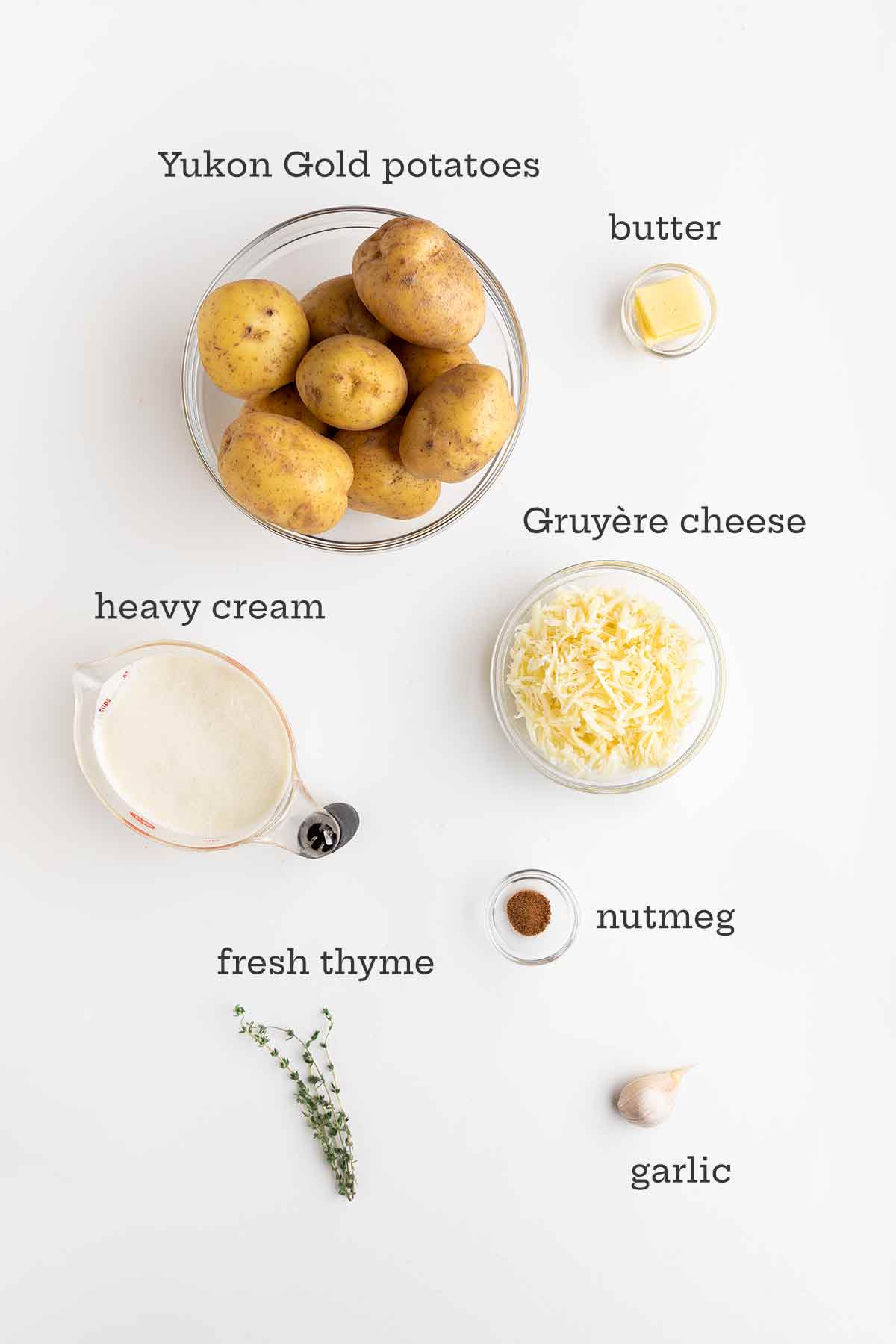
- Heavy cream—This is critical to achieving a rich, creamy sauce. You can also use two-thirds cream and one-third milk, as they do in Dauphiné. But don’t use all milk here. In my tests, I found using only milk created a runny dish.
- Potatoes—Yukon Gold potatoes, which are similar to the favored French potato for this dish (Charlotte), are creamy and hold their shape well. Don’t substitute starchy potatoes (like Russets). If you’re in a hurry or feeling lazy, you can skip peeling the potatoes.
- Gruyère cheese—This modern take calls for a nutty, semi-firm cheese that’s a classic partner for potatoes and cream. It can be a bit pricy, though. More affordable alternatives are Jarlsberg, Comté, Emmental, or Fontina.
Substitutions and variations
Historically, cheese isn’t a part of pommes dauphinoise. It’s made with potatoes, cream, butter, and garlic. Period. But French Gruyère, the great cheese from the Franche-Comté and Savoie regions, can be added, according to sources. It nudges it toward a gratin de pommes de terre.
If you want to be super strict and correct, omit the cheese. If you’re potato fluid, opt for the cheese. Either way, you’ll love it.
How to make potato Dauphinoise: Visual guide
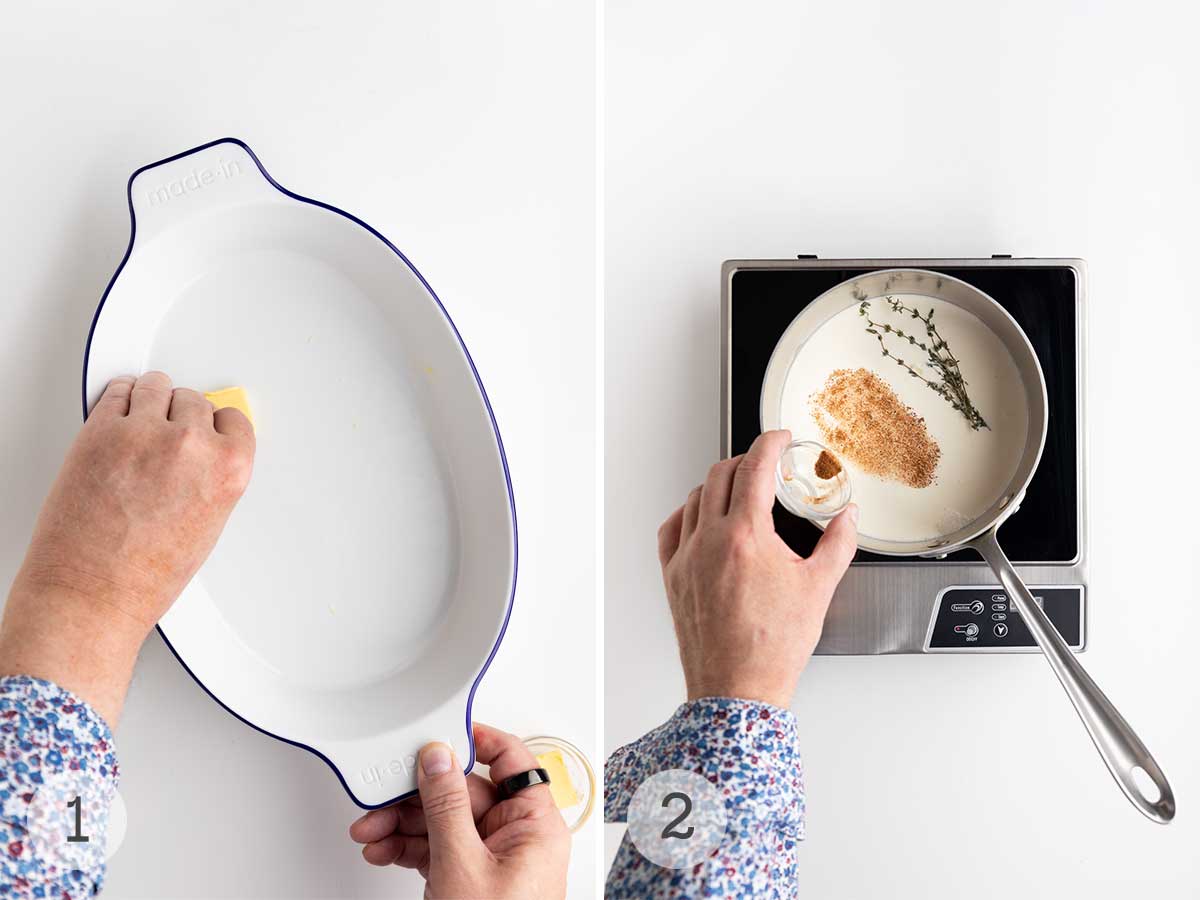
- Crank the oven to 350°F. Rub the crushed garlic clove all over the baking dish, then butter it well.
- Combine the cream, garlic, thyme, and salt in a saucepan and simmer for 10 minutes to infuse the cream. Fish out the garlic and thyme.
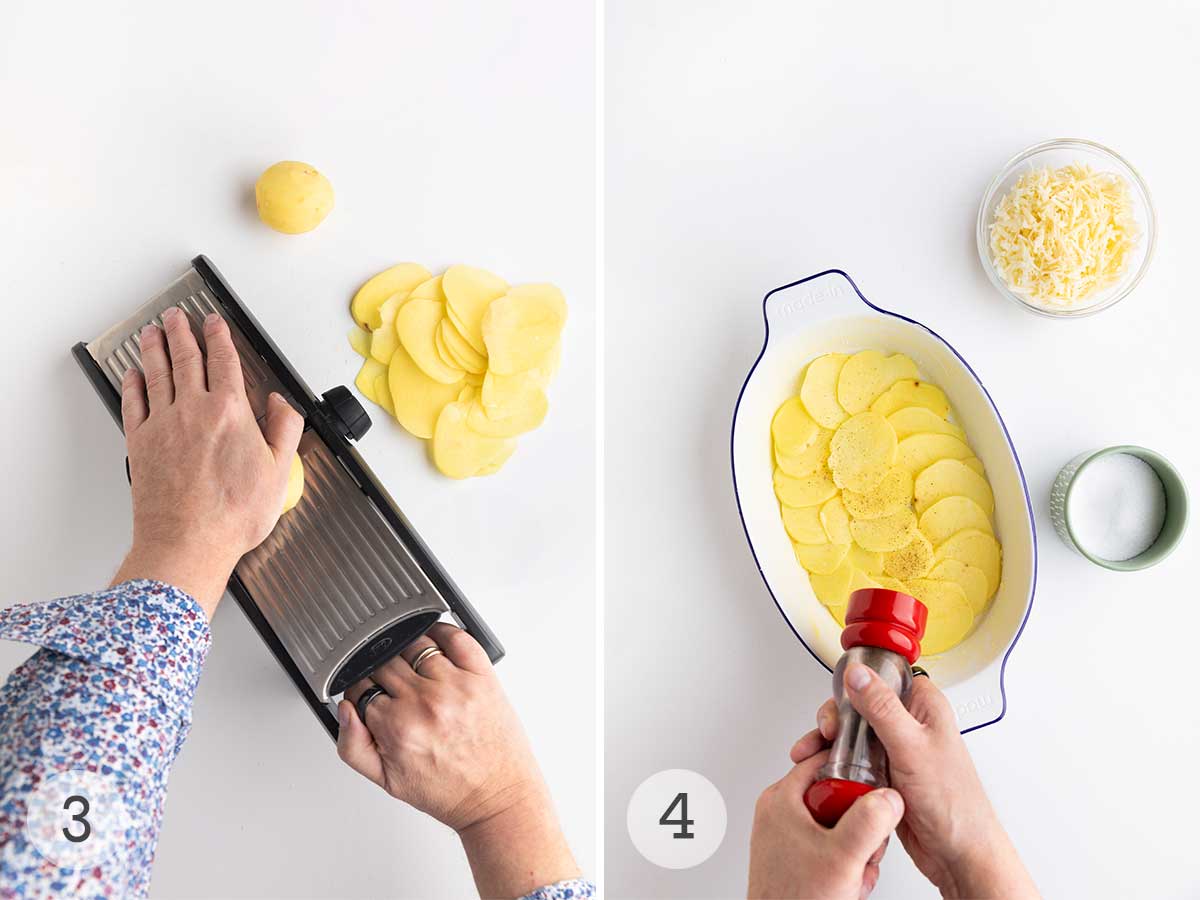
- Thinly slice the potatoes on a mandoline. (Use the finger guard! I don’t call our mandoline the “French finger guillotine” for nothing.)
- Arrange the potato slices in a casserole dish and season with salt and pepper. Continue layering and seasoning the potatoes until all of the potatoes are used.
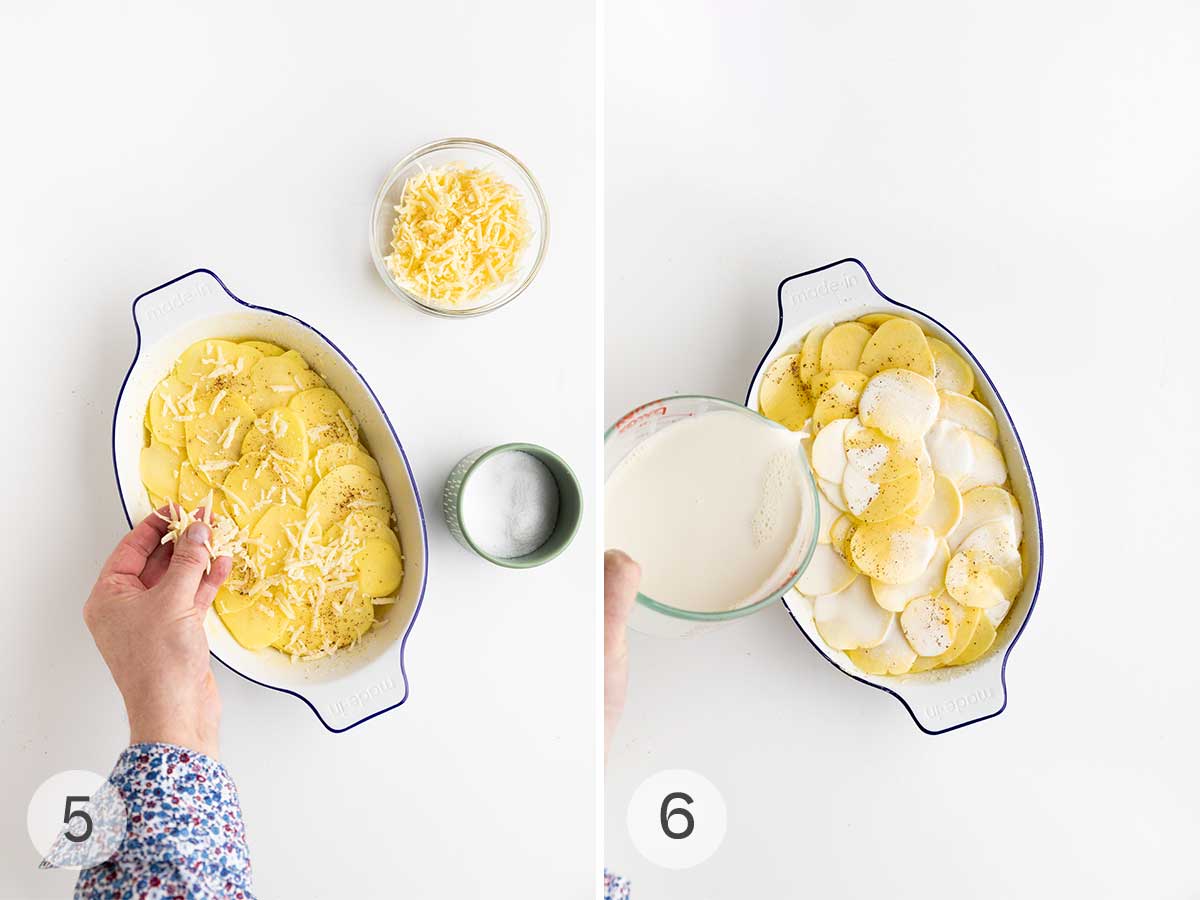
- Sprinkle the top with cheese.
- Pour the cream mixture over the potatoes and cheese. Cover and bake until tender, then uncover and continue to bake until the cheese is melted and golden. Let the potatoes rest for at least 15 minutes before serving.
What’s the difference between scalloped potatoes, potatoes gratin, and potatoes dauphinoise?
Reader Alexander Hay-Whitton rightfully called me out on my loosey-goosey potato-dish nomenclature. It’s been decades since cooking school, and I had to dig into my old textbooks. So thanks for the push, Alexander.
Scalloped potatoes are traditionally made with potatoes; milk, cream, or Béchamel sauce; and no garlic.
Potatoes gratin is also made with potatoes, cream or Béchamel sauce, garlic, and cheese. The type of cheese varies by region and can include Cheddar, Gruyère, Swiss, or Parmesan.
Classic potatoes Dauphinoise are made with just potatoes, heavy cream, butter, and garlic.
Modern potatoes Dauphinoise are where things get gooey, er, sticky. Contemporary recipes allow for cheese, specifically French Gruyère. It’s distinct from Swiss Gruyère by its small pea-sized holes, sweeter taste, and softer texture.
To confuse matters further, there are potatoes Dauphine. These are marvelous deep-fried puffs made with smooth mashed potatoes and choux pastry (the same pastry used for éclairs and cream puffs).
| Feature | Scalloped Potatoes | Potatoes Gratin | Potatoes Dauphinoise |
| Cheese | Traditionally, no | Yes (layered) | Traditional: no/Modern: yes |
| Liquid | Milk/cream/béchamel | Cream/béchamel | Heavy cream |
| Garlic | Optional | Often | Yes (essential) |
| Top | Creamy/lightly browned | Golden crust | Golden crust |
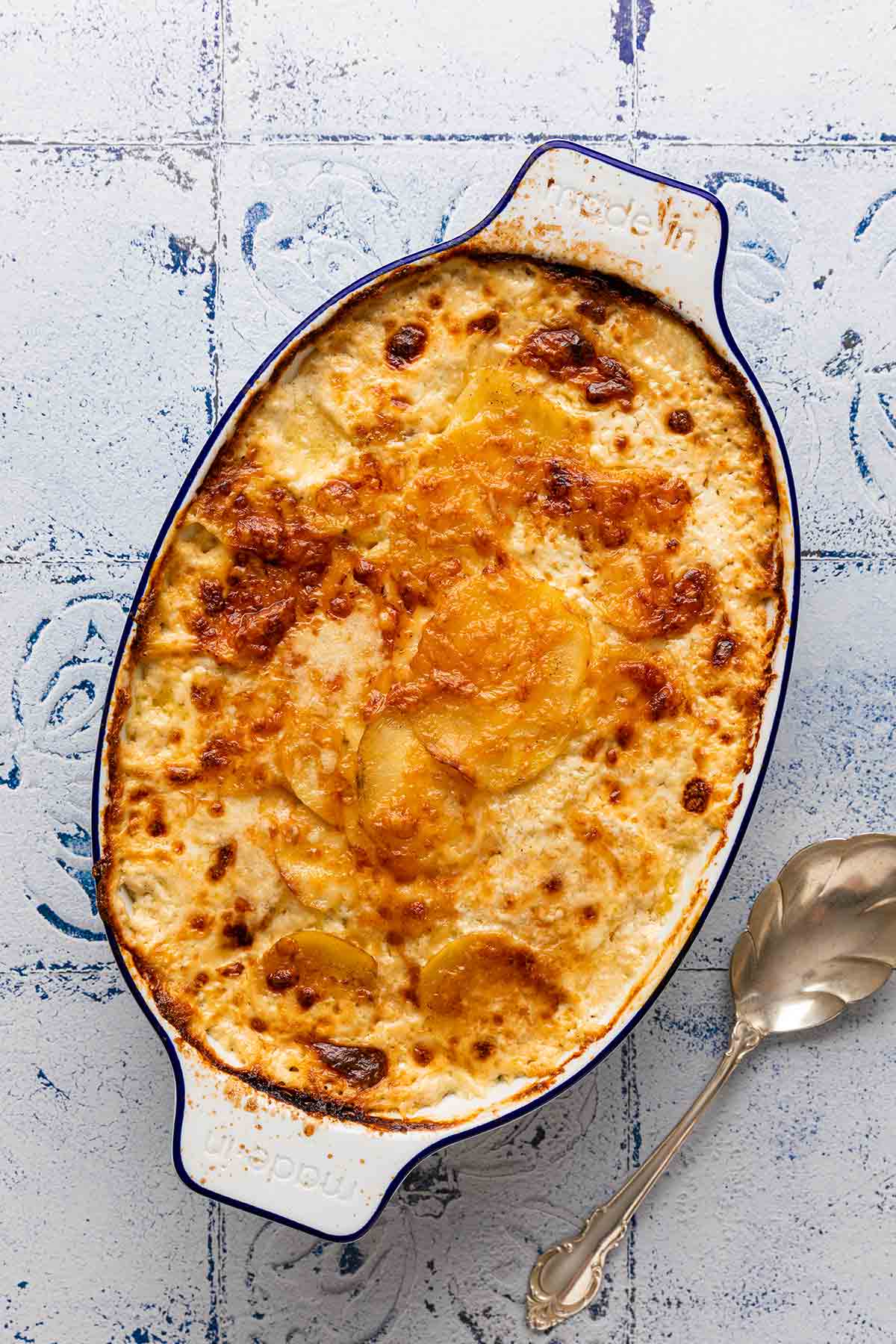
Your Dauphinoise potato questions, answered
This cheesy potato dish reheats beautifully, so you can prepare and bake it a day before serving, then cover and stash it in the fridge. When ready to serve, pop it into the oven and warm until heated through.
In our house, Dauphinoise potatoes are a lovely classic Thanksgiving or Christmas side dish, but my readers have found them equally welcome alongside grilled lamb chops and sweet and spicy roasted carrots.
Want to save this?
Pro tips & troubleshooting
- Be sure to let your potatoes rest for at least 15 minutes after removing the dish from the oven. It gives the sauce a chance to thicken up and cool down.
- If your baking dish is very full, place it on a foil-lined baking sheet to catch any drips that’ll inevitably bubble over.
- A mandoline is the best tool for even, thinly sliced potatoes. BUT USE THE FINGER GUARD!
- Leftovers can be stored in a sealed container in the fridge for up to 4 days.
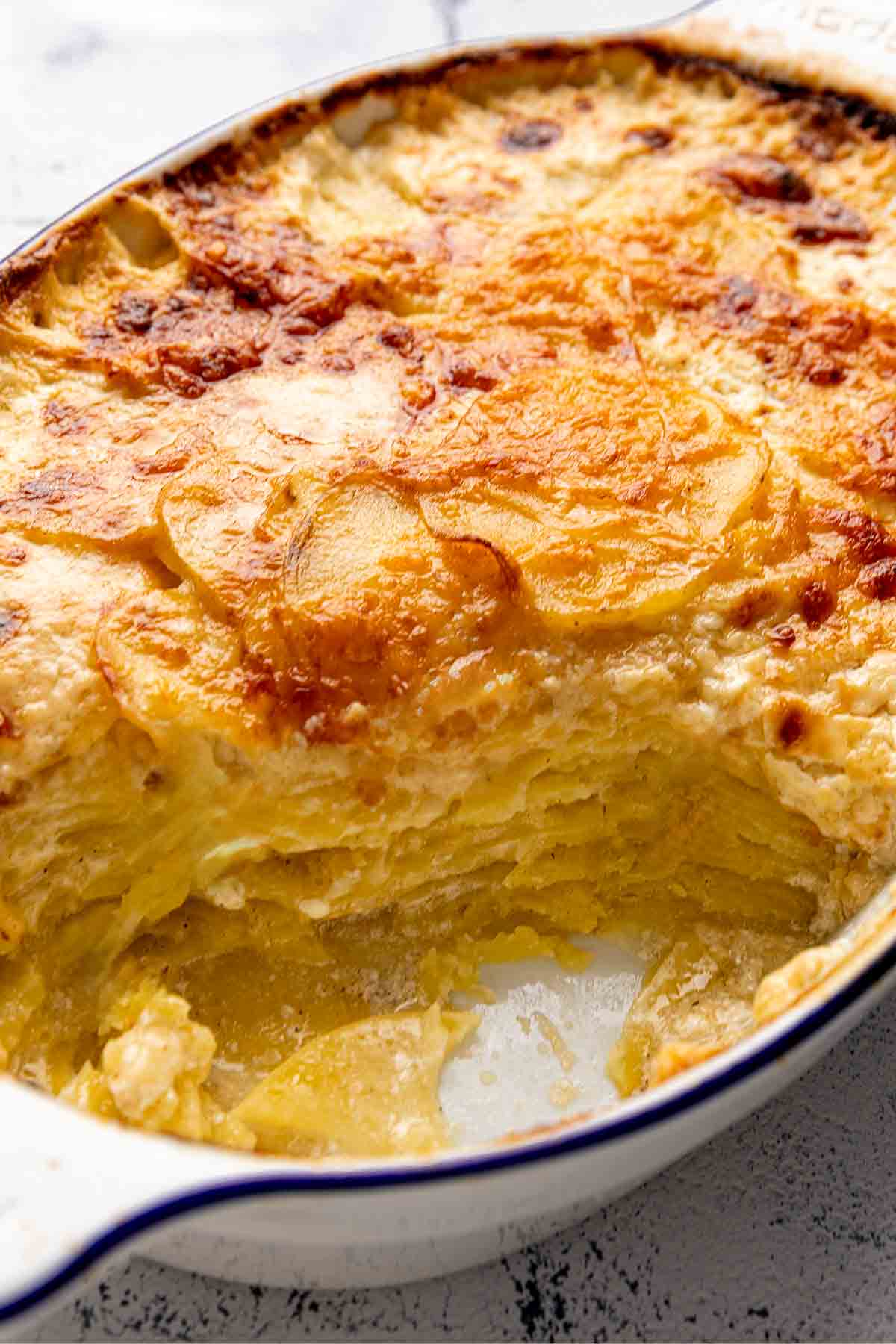
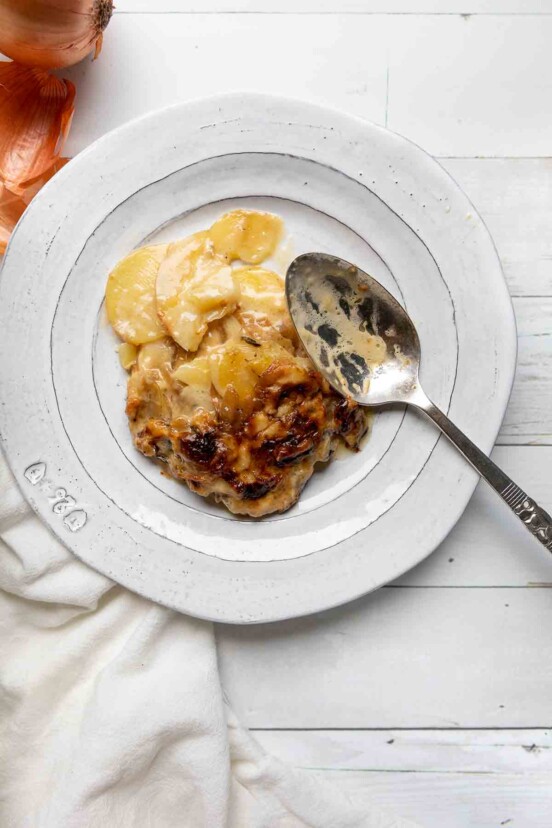
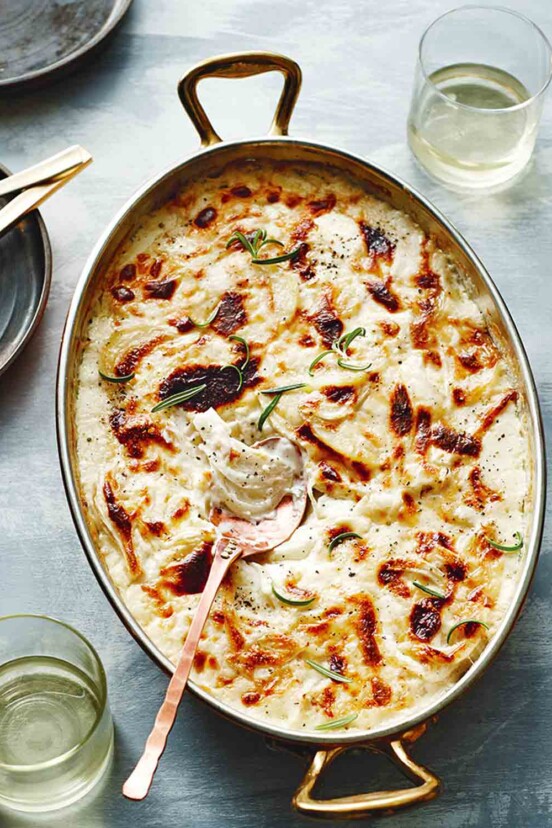
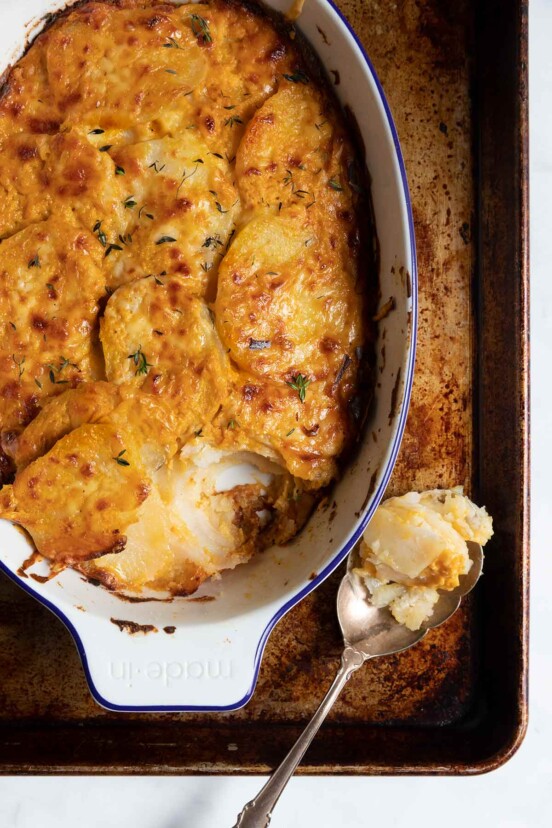
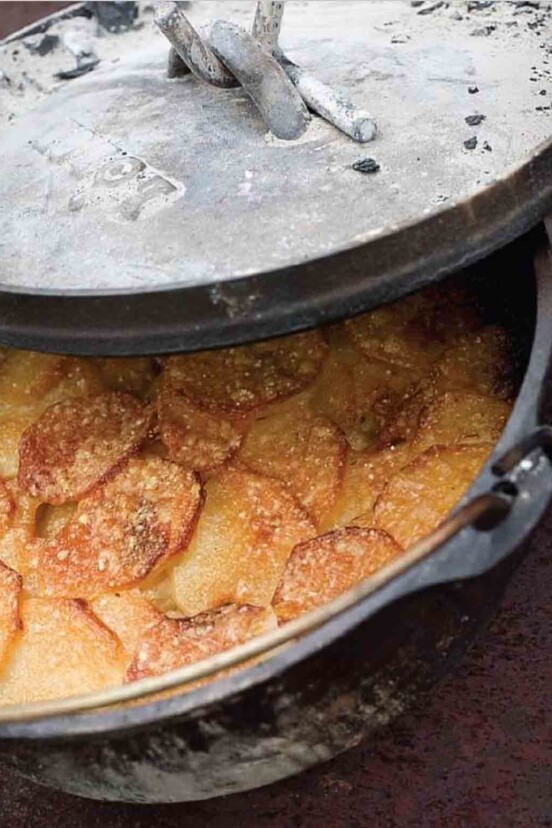
More creamy potato gratin recipes
Write a review
If you make these potatoes Dauphinoise, or any potato dish on LC, consider leaving a review, a star rating, and your best photo in the comments below. I love hearing from you.–David
Featured Review
For me, simple is always the best way to go! David’s recipe for Dauphinoise potatoes is incredibly easy, and the result is Ambrosia of the Gods! The recipe was perfectly written, a cinch to execute, and the resulting potato dish was practically inhaled by our guests! Rich, creamy, cheesy, a little garlicky, and absolutely delicious—I used Gruyere and Parmesan cheese. Gonna make this again next Thursday! Served with green beans and prime New York Strip steaks. OMG!
Fred Miller
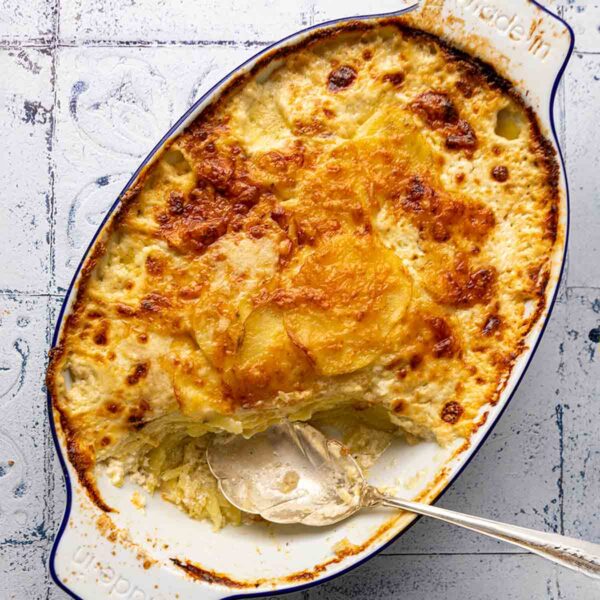
Potatoes Dauphinoise
Equipment
- Mandoline (optional) but best for thin, even slices
Ingredients
- 1 garlic clove, smashed with the side of a knife blade
- butter, for greasing the dish
- 3 cups heavy cream, (or 2 cups cream and 1 cup whole milk)
- 5 sprigs fresh thyme
- freshly ground nutmeg
- salt, plus more to taste
- 3 pounds Yukon Gold potatoes, peeled and thinly sliced (about 1/8 inch thick)
- freshly ground black pepper
- 1 1/2 cups grated Gruyère cheese, or Jarlsberg, Comté, Emmental, or Fontina
Instructions
- Crank the oven to 350°F (175°C).
- Rub the crushed 1 garlic clove all over the inside of a 2 1/2-quart casserole or a 9-by-13-inch baking dish, then butter it thoroughly.
- Pour the 3 cups heavy cream (or cream and milk) into a saucepan. Add the garlic clove, 5 sprigs fresh thyme, freshly ground nutmeg, and a large pinch of salt.
- Warm the cream over low heat and gently simmer for 10 minutes. Remove the pan from the heat and fish out the garlic and thyme.
- Lay a single layer of sliced 3 pounds Yukon Gold potatoes in the baking dish, overlapping the slices like playing cards. Sprinkle with a small pinch of salt and freshly ground black pepper.
- Continue layering and seasoning the potatoes until all of the potatoes are used.
- Pour the seasoned cream over the potatoes and sprinkle the top with the 1 1/2 cups grated Gruyère cheese.
- Cover the dish with aluminum foil and bake for 1 1/2 hours.
- Remove the foil and continue baking until the top is bubbling and spotted with brown, and a fork easily pierces the potatoes, 25 to 35 minutes, depending on the size and depth of your dish.
- Let the dish sit for 15 minutes before serving.
Notes
- Make in advance—Assemble and bake up to 1 day before serving. When ready to serve, reheat in a 350°F oven until warmed through.
- Storage—Leftovers will keep in a covered container in the fridge for up to 4 days.
- Avoid oven spills—If your baking pan is very full, place it on a foil-lined baking sheet to catch any drips that bubble over.
- Traditional recipe—if you want to go totally old-school, omit the cheese. It’ll still be frickin’ delicious.

An LC Original
View More Original RecipesExplore More with AI
Nutrition
Nutrition information is automatically calculated, so should only be used as an approximation.
Recipe Testers’ Reviews
Did you know only 68% of the recipes we test make it onto the site? This recipe survived our rigorous blind testing process by multiple home cooks. It earned the Leite’s Culinaria stamp of approval—and the testers’ reviews below prove it.

This Dauphinoise potatoes recipe is delicious and easy to make. I love the flavor that the garlic-infused cream imparts to the potatoes during the long cooking time. I used Gruyère, but I think it would be equally good with any of the suggested cheeses.
While the cooking time is long, it’s almost all hands-off, so you can let the potatoes bubble away in the oven while you turn your attention to the other components of your meal. This dish can be made ahead of time as it reheats beautifully.

This classic potatoes Dauphinoise recipe is time-consuming yet simple to prepare. From prep to table is about 2 1/2 hours, and it’s worth every minute of it. The actual hands-on time is only about 25 minutes; the rest of the time is spent in the oven.
I simply washed and sliced my russets, without peeling. The heavy cream, nutmeg, and, thyme give this a hearty yet elegant flavor and texture that is certain to impress even the harshest critic.

This classic potatoes Dauphinoise recipe was definitely a crowd-pleaser. The dish made 8 ample servings at our house.
We loved the traditional garlic, thyme, and nutmeg flavors in the cream and the crusty cheese topping. I’ll try sweet potatoes or butternut squash next time. My tasters will be ready!

This potatoes Dauphinoise recipe was a hit with everyone. The potatoes are fork-tender and dripping in a creamy sauce that contains a hint of garlic and thyme. The greatness of this recipe is the ease with which it can be prepared.
Some sauce bubbled over onto the oven floor while baking. I’d check the potatoes for doneness after 1 hour if baked in a 9-by-13-inch baking dish.

Don’t confuse this potatoes Dauphinoise with potatoes au gratin, where the cheese is incorporated into the cream mixture or layered into the potatoes. This is much better and all the flavors are subtle and layered throughout the dish.
Also make sure your dish is deep enough so it doesn’t boil over and make a huge mess of your oven floor. You should let this dish rest, just like meat. If you dig into it too early, the cream will fill the empty space, and by the end, you will have potatoes with no creamy goodness. If this happens, just make sure you’re first in line…










You’re confusing three different recipes. Do your homework.
Alexander, thanks for calling me out on that. It gave me the perfect excuse to dive back into original sources, specifically Escoffier’s 1903 Le Guide Culinaire and his 1934 Ma Cuisine. You were right—I’d let a bit of ‘Dauphine’ (those lovely fried puffs) slip into my Dauphinoise gratin talk. I’ve updated the post to tighten up those distinctions and added some nerdy details about how even Escoffier bucked tradition and added cheese, especially Gruyère. I really appreciate the push to keep things precise.
Also, I actually added a comparison table based on your feedback. I’d love to know if you think it covers the bases correctly! I
For me, simple is always the best way to go! David’s recipe for Dauphinoise potatoes is incredibly easy, and the result is Ambrosia of the Gods! The recipe was perfectly written, a cinch to execute, and the resulting potato dish was practically inhaled by our guests! Rich, creamy, cheesy, a little garlicky, and absolutely delicious—I used Gruyere and Parmesan cheese. Gonna make this again next Thursday! Served with green beans and prime New York Strip steaks. OMG!
Fred, way to go! I’m delighted you and your guests enjoyed this. It’s such a simple dish that packs a wallop of flavor and impresses the hell out of guests!
My first attempt. Everyone loved it!! So simple to mske. We had it with filet mignon.
Cyndi, I’m so glad you all enjoyed this. It’s one of my favorite holiday recipes!