


TL;DR (Quick-Answer Box)
- What it is: A silky-smooth, pourable cheddar cheese sauce made with a classic roux, whole milk, and a pinch of cayenne for subtle heat.
- Why you’ll love it: It is incredibly creamy, versatile for burgers or fries, and uses sodium citrate for a foolproof, silky-smooth restaurant-quality texture that won’t break.
- How to make it: Melt butter and flour to form a roux, whisk in warm milk, then stir in grated cheddar until perfectly melted and glossy.

Jump To
- TL;DR (Quick-Answer Box)
- Why our testers loved this
- Notes on ingredients
- What’s sodium citrate and how does it work in cheese sauces?
- How to make cheddar cheese sauce: Visual Guide
- Your cheese sauce questions, answered
- Pro tips & troubleshooting
- More great sauce recipes
- Write a review
- Cheddar Cheese Sauce Recipe
- Recipe Testers’ Reviews
This cheddar cheese sauce creates a spectacular topping so stupendously rich, gooey, and versatile that you’ll want to drizzle it onto everything by the ladleful.
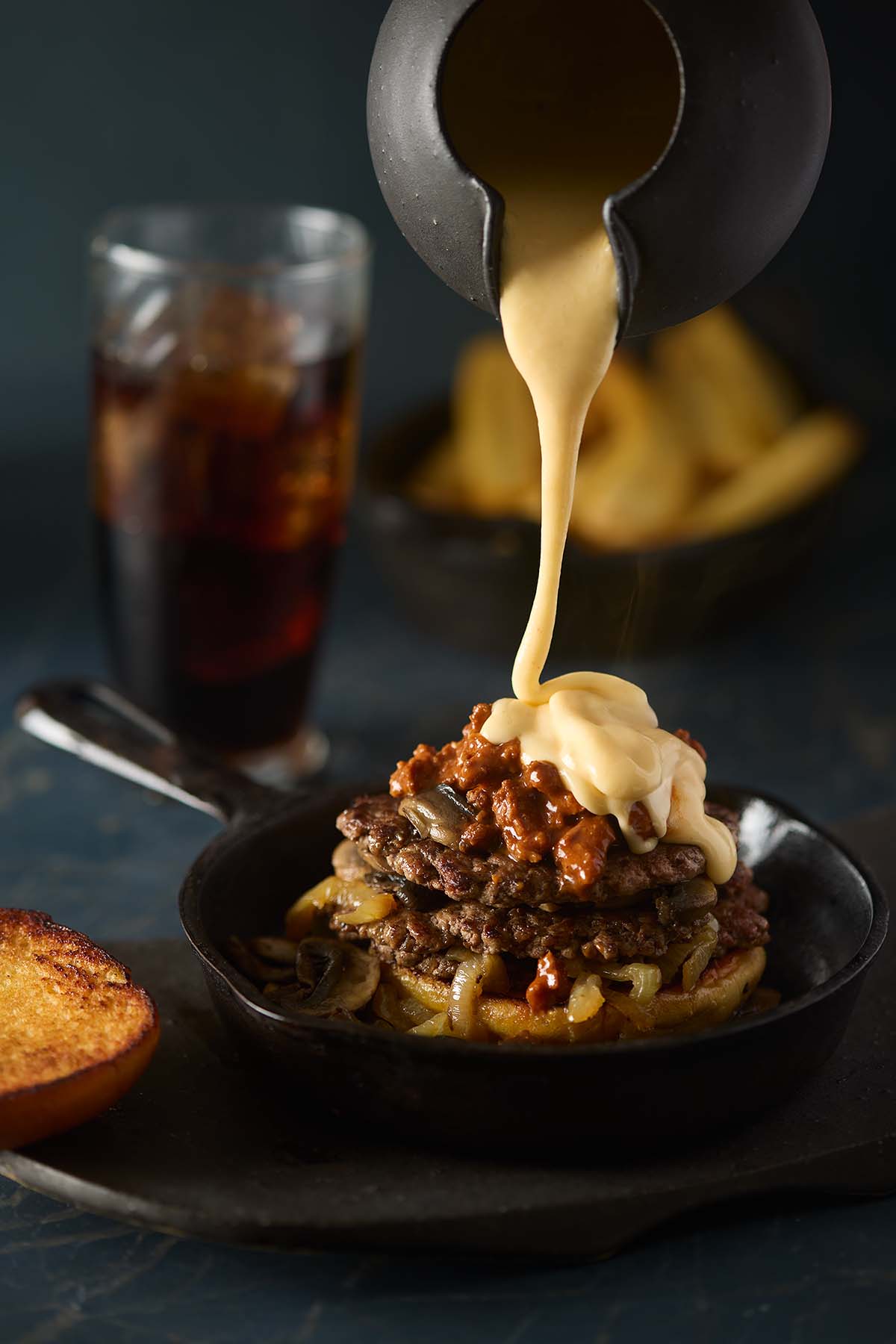
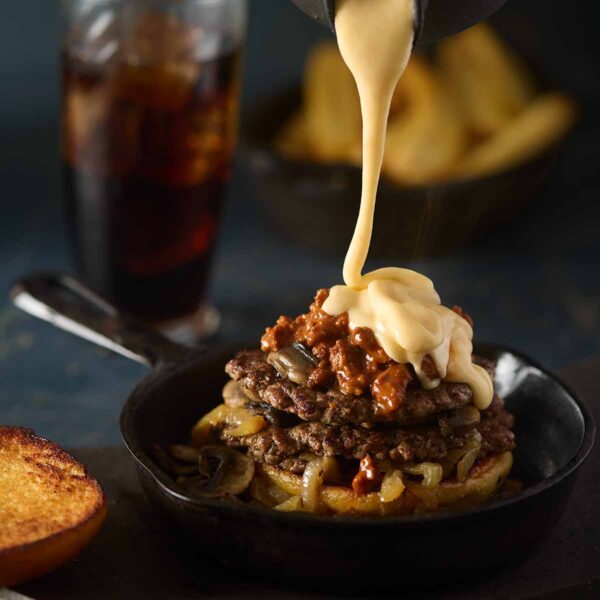
And when I say everything, I mean everything, including one of my favorites: the ridiculously indulgent Uncle D’s Chili and Cheddar Burger. Or chili. Or a baked potato. Or a roasted sweet potato. Or fries. Or broccoli. Or macaroni. Or nachos. Or cauliflower. Or homemade tater tots. Or, well, use your imagination.
Any which way, this homemade cheese sauce recipe is a keeper. Warm, oozing cheese is never a bad idea. Amen to that.
Chow,

Featured Review
I’ve made cheese sauces before, but this one is foolproof! I didn’t have to baby the roux much at all!
Melissa

Why our testers loved this
The testers loved the versatility of this easy cheese sauce that has so many uses. They loved how quickly and easily it came together, and that it reheated well. Kristin K. is calling it a “miraculous sauce.”
Notes on ingredients
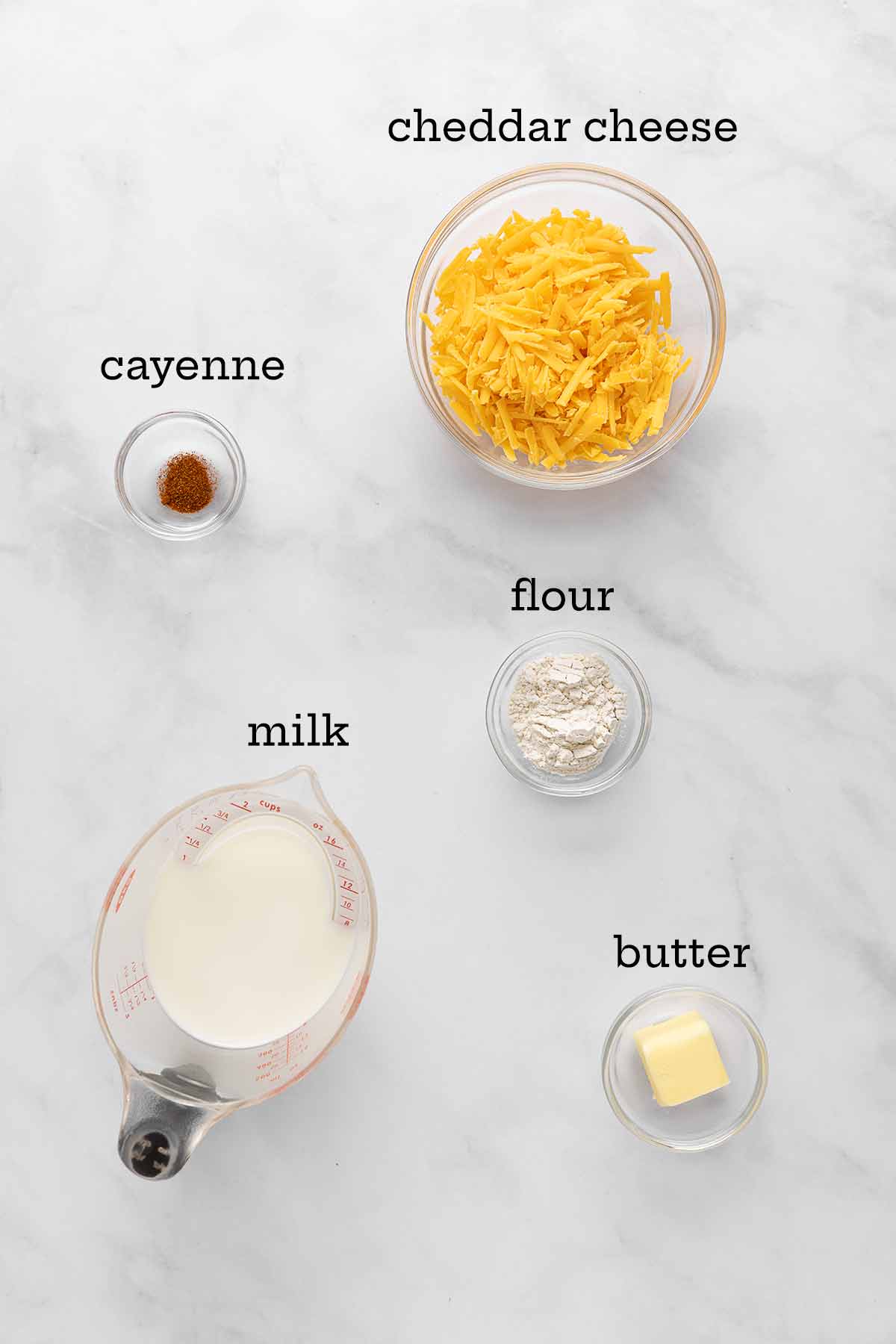
- Whole milk—I love the richness and creamy texture whole milk gives this cheese sauce, but you can substitute reduced-fat milk. (But…why?)
- Cheddar cheese—For the smoothest and creamiest cheese sauce, use full-fat cheese and grate it yourself. For this classic cheese recipe, I pass on pre-shredded cheese, as it doesn’t melt well. Feel free to get creative with the type (and age) of Cheddar that you use.
- Cayenne pepper—Adding a little cayenne or hot sauce provides a major flavor boost. If you’re averse to spice, you can reduce the amount of cayenne or hot sauce.
- Sodium citrate—(Optional, but worth it.) This is the magic salt that acts as an emulsifier, ensuring your sauce stays perfectly smooth and glossy without breaking or turning grainy. Honestly, it’s a game-changer.
What’s sodium citrate and how does it work in cheese sauces?
I’d been hearing rumblings about this miracle ingredient, sodium citrate, for years, and how it transforms cheese sauces. I’d never learned about it in cooking school, so I figured it was just a bunch of social-media hooey.
Boy, was I wrong! Sodium citrate is a go-to ingredient in the modernist kitchen—and it’s why your favorite restaurant’s mac & cheese is waaay silkier than what you make at home. Technically speaking, it’s the sodium salt of citric acid, often used as a food additive to emulsify and stabilize fats.
While a classic roux (butter and flour) works (and I call for it here as extra insurance), it can sometimes separate or turn grainy if the heat gets too high or the cheese is too aged. Sodium citrate sidesteps all that by lowering the acidity of the cheese and allowing the proteins to become more soluble.
What does all that mean? You can melt almost any cheese—even cantankerous, aged cheddars—into a perfectly smooth, liquid gold sauce that won’t separate or get oily. I’m never going back to just a roux again.
How much sodium citrate to use? Anywhere between 1% to 2% of the total weight of the cheese and liquid. For this recipe, that’s 3/4 teaspoon.
How to make cheddar cheese sauce: Visual Guide
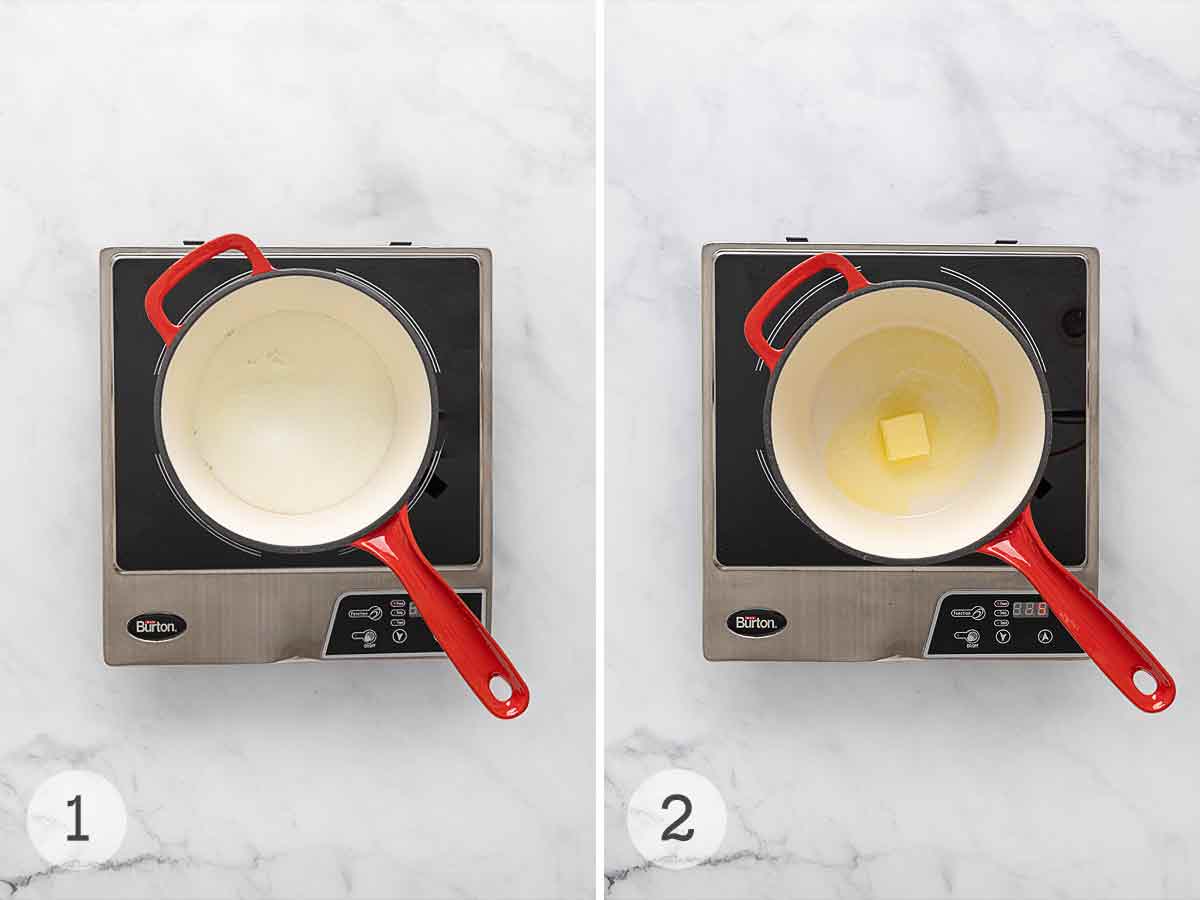
- Heat the milk over medium heat until bubbles form around the edges of the pot. Sprinkle in the sodium citrate and stir until dissolved.
- Melt the butter in a separate saucepan.
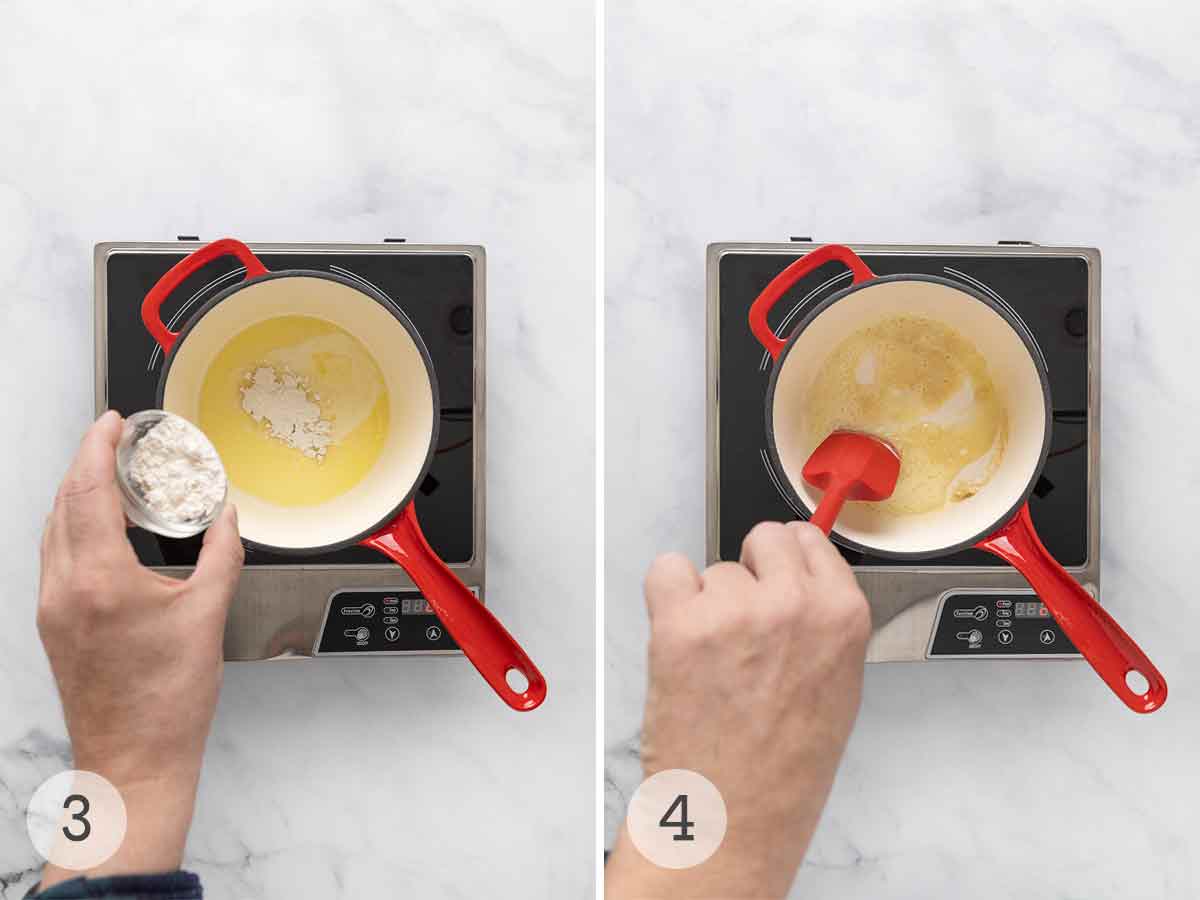
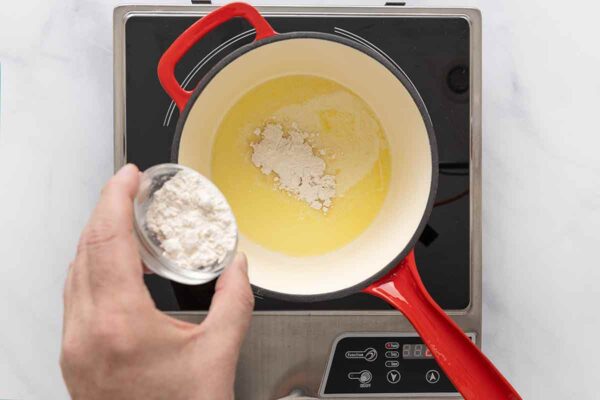
- Sprinkle the flour over the butter.
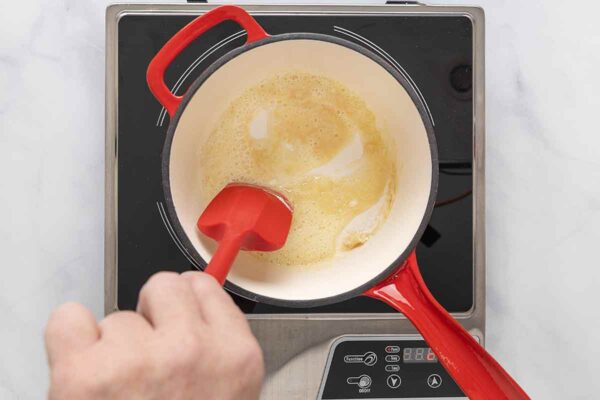
- Stir constantly until it becomes thick and paste-like. This is called a roux.
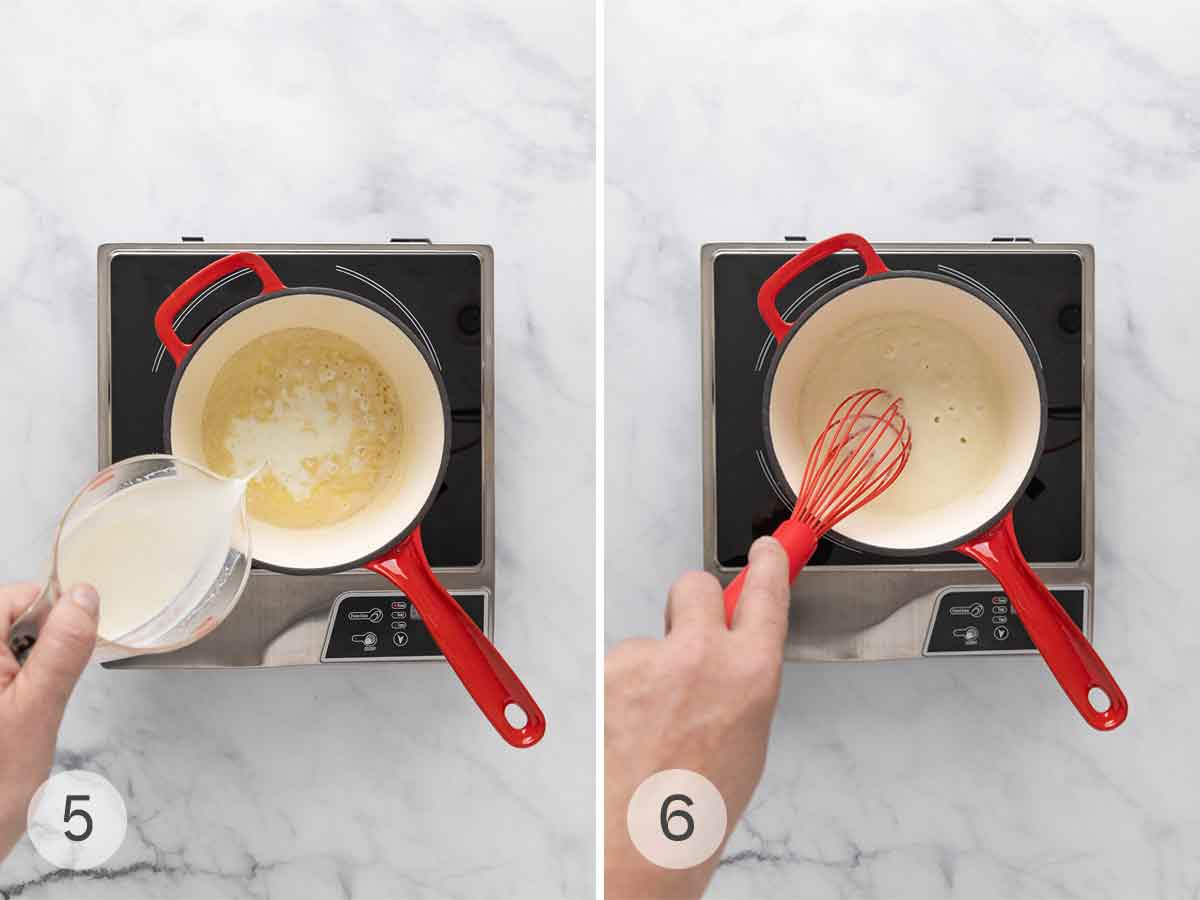
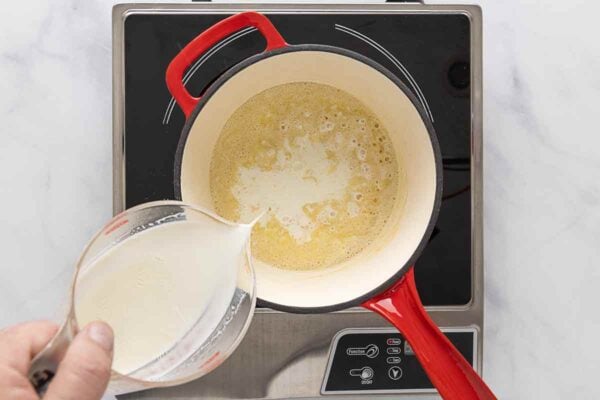
- Slowly whisk the warm milk into the flour-and-butter roux.
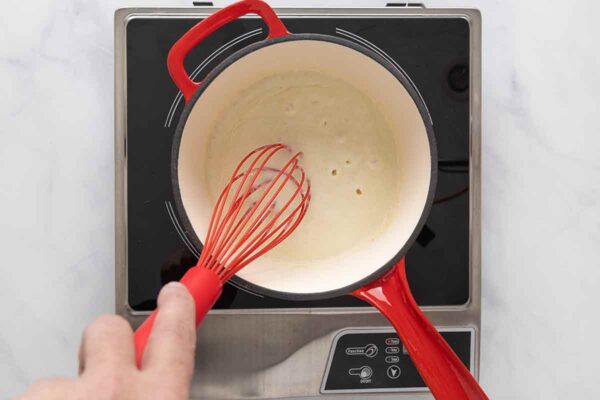
- Cook until the mixture is thickened. This can happen quickly, so watch closely!
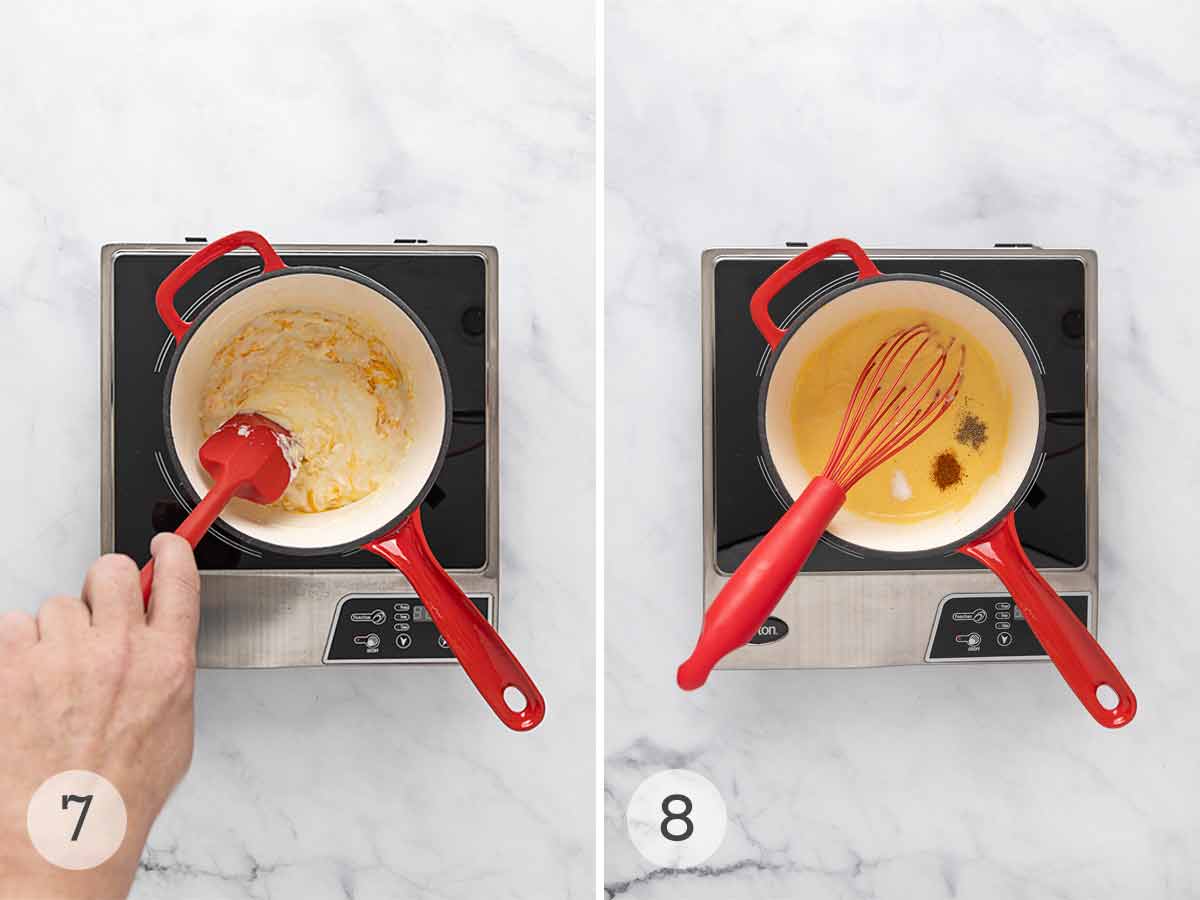
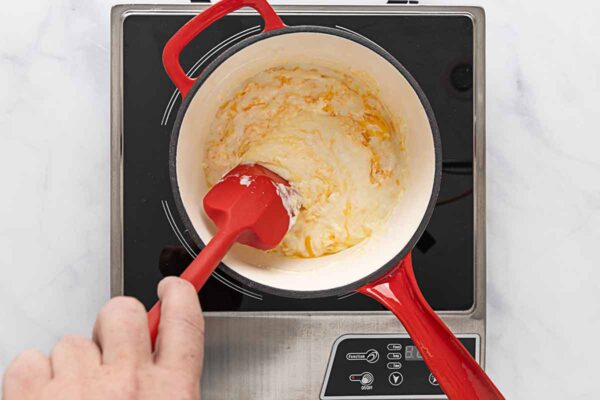
- Stir in the cheese.
- Season with cayenne, salt, and pepper.
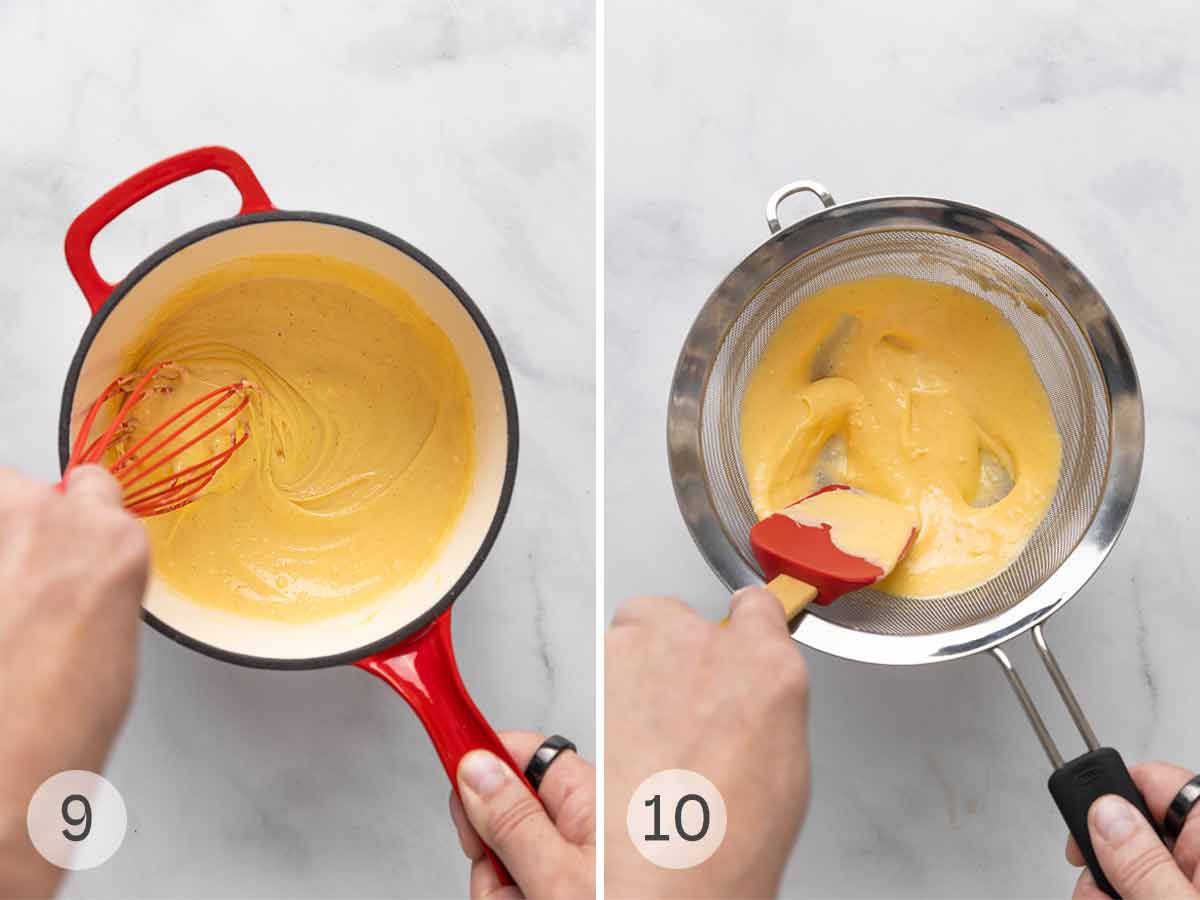
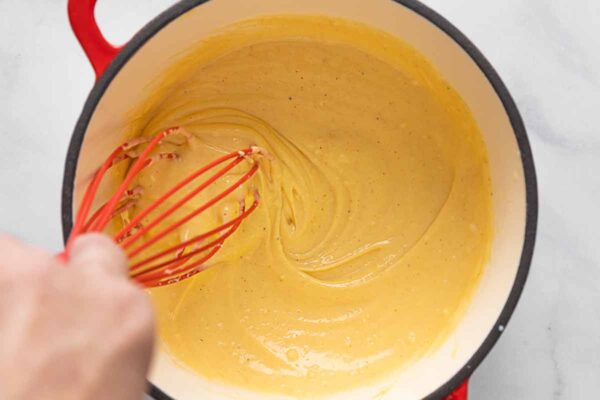
- Whisk until the sauce is smooth.
- Strain the sauce through a sieve to remove any lumps. (No need to do this if using sodium citrate.)
Your cheese sauce questions, answered
The temperature of your sauce and the cheese are two of the biggest culprits behind grainy cheese sauce. When adding your cheese, make sure your sauce is over very low heat. You can even pull it off the heat while stirring the cheese.
Also, low-fat or pre-shredded cheese can cause the texture to become grainy. Stick with full-fat hand-shredded cheddar here.
Reheating cheese sauce can seem daunting—that mass of seemingly immovable solidified dairy. But fear not! It can be done. The best way to do it is not in the microwave but on the stovetop. Slowly reheating over low heat, adding as much milk as you need to loosen it up, and stirring frequently is the best way to ensure a smooth sauce on the second day.
Some of my readers have successfully swapped in almond flour for all-purpose flour to make a gluten-free cheese sauce.
Pro tips & troubleshooting
- When heating the milk, avoid boiling it, which can cause it to curdle. Likewise, never let the cheese sauce boil after the cheese is added.
- If your sauce isn’t smooth, strain it through a fine mesh sieve before serving.
- Cheese sauce can be stored in a sealed container in the fridge for up to 3 days.
More great sauce recipes
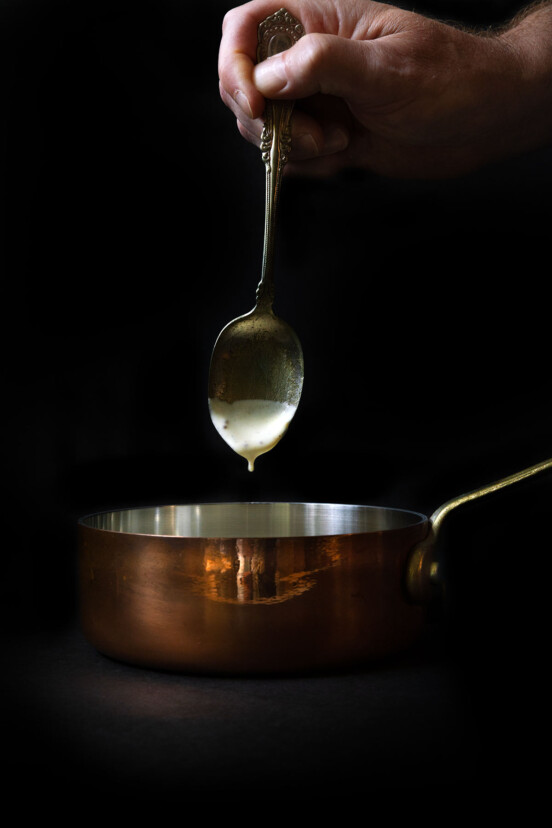
Mustard Cream Sauce
15 mins
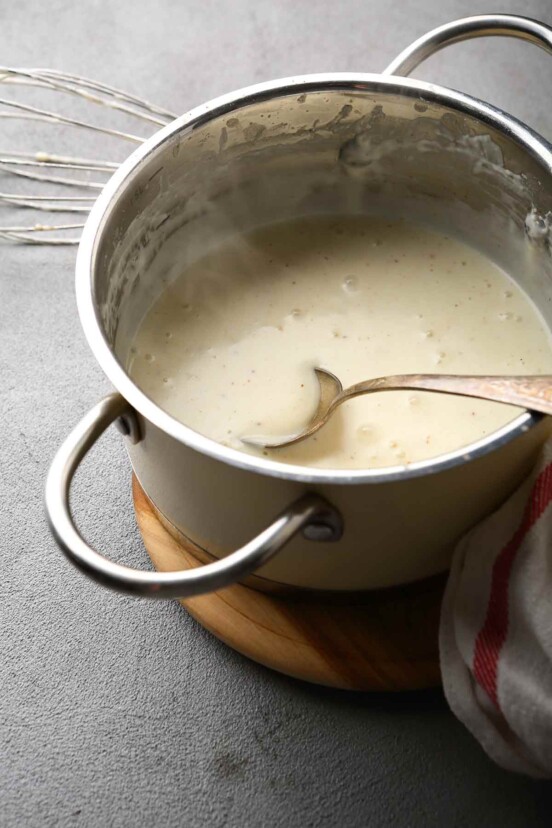
Easy Béchamel Sauce
25 mins
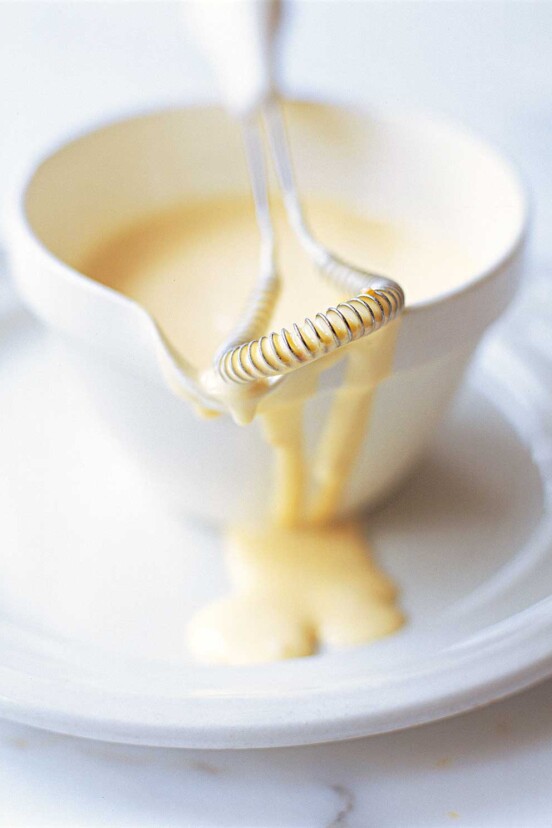
Classic Hollandaise Sauce
20 mins
Romesco Sauce
20 mins
Write a review
If you make this cheddar cheese sauce, or any of the tons of sauces, rubs, and marinades on LC, consider leaving a review, a star rating, and your best photo in the comments below. I love hearing from you.–David
Featured Review
I cheat a little in mine and add some sodium citrate to the milk, which also works well in queso dip. Evaporated milk also has emulsifiers to help keep things smooth when working with Cheddar.
Lowandslow
Cheddar Cheese Sauce
Ingredients
- 1 cup whole milk, more, if needed
- 3/4 teaspoon sodium citrate, (optional, but highly recommended)
- 2 tablespoons (1 oz) unsalted butter
- 2 tablespoons all-purpose flour
- 1 cup grated cheddar cheese
- 3/4 teaspoon ground cayenne , or store-bought or homemade hot sauce, to taste
- sea salt and freshly ground black pepper
Instructions
- Heat the 1 cup whole milk in a large saucepan over medium heat until small bubbles ring the edge of the pan. Stir in the 3/4 teaspoon sodium citrate until dissolved.
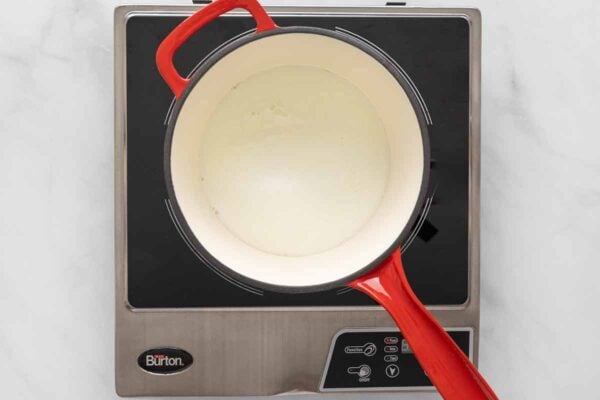
- Meanwhile, melt the 2 tablespoons (1 oz) unsalted butter in another saucepan over medium heat. Sprinkle the 2 tablespoons all-purpose flour over the bubbling butter.
- Stir constantly until a thick paste, or roux, forms. It may become quite thick and almost paste-like. This is okay. And if it doesn’t become crazy thick, that’s okay, too. About 1 to 2 minutes.
- Constantly whisking, slowly pour the warm milk into the flour and butter mixture in a steady stream.
- Continue cooking and whisking until the mixture thickens, 3 to 5 minutes. It should be thick but still spreadable and pourable.
- Stir in the 1 cup grated cheddar cheese and whisk until completely melted.
- Season with the 3/4 teaspoon ground cayenne or hot sauce and sea salt and freshly ground black pepper to taste. Whisk until the sauce is smooth.
Notes
- Avoid boiling—When heating the milk, avoid boiling, as this can cause it to curdle. Likewise, don’t let the cheese sauce boil after the cheese is added, or your sauce may be grainy.
- Storage—Cheese sauce can be stored in a sealed container in the fridge for up to 3 days.
- Reheating—Warm the sauce in a small saucepan over low heat until warmed through. Chances are you’ll need to add more milk to loosen it up.
Nutrition
Nutrition information is automatically calculated, so should only be used as an approximation.
Recipe Testers’ Reviews
Did you know only 68% of the recipes we test make it onto the site? This recipe survived our rigorous blind testing process by multiple home cooks. It earned the Leite’s Culinaria stamp of approval—and the testers’ reviews below prove it.

This cheddar sauce is easy to make and very flavourful. I thought the amount of cayenne would overpower it, but it didn’t. It had a nice kick.
I made this to serve over steamed broccolini, a classic combo, and it was perfect! My boyfriend preferred to dip Ruffles BBQ potato chips, but he loved it, too.
As per the instructions on the site, I did reheat it the next day, and it turned out perfectly! I actually thought the flavour was better the next day.

The cheese sauce’s flavour is lovely, and its thickness is perfect. I just don’t like having to wash more pans than necessary. When I make cheese sauce or any sauce that starts with a roux, I don’t heat the milk (or other liquid) and have never had any lumps. It may take a minute more to thicken the sauce, but I’d rather stir for another minute than wash another pot.
I used two-year-old sharp cheddar and half the amount of cayenne. This gave me a nice sharpness and just enough heat.

I usually mix shredded cheese into warmed cream/butter to make an oobleck-y sauce, so I was curious if this recipe would elevate my game. I cooked the roux for a bit longer than stated (4 to 5 minutes) until it smelled nutty, turned off the heat (I have electric), then added Tillamook shredded cheddar cheese and stirred until it was melted.
I suggest using a small silicone spatula instead of a whisk—I’ve tried whisks and ended up with what looks like a cheese-coated weapon. If you’re a zealous stirrer like me, make sure you’re scraping down the sides of the saucepan as you go (which is also easier with a small spatula).
This sauce was delicious and, it stored for a few days in the fridge without separating. I poured some over roasted broccoli to hide its identity, and my 11-year-old squatter ate it. So, in summary, it’s kind of a miraculous sauce. It’s… Cheesus?

Whether you are a fancy project cook or a harried weeknight warrior, having the basic proportions for a sauce in your toolkit will pay you back over and over. Not only can you make a wicked spiced pasta dish with this recipe, but you can also drizzle it over homemade nachos or steamed veggies all in fewer than 20 minutes.
Keep an eagle eye on the butter and then the roux, and drop the temp if it seems to be cooking too fast. (Save those deeply caramelized roux for gumbo). This one doesn’t need long to bubble up and thicken, and then it will likely thin a bit before you drizzle in the milk. The recipe timing is spot on, and the suggested spicing made a perfect topping for steamed cauliflower.
Add some mustard, and it nods towards a rarebit. Swap Gruyere for the cheddar, and you have another perfect pasta pairing. And if you use a combination of chicken or vegetable stock plus milk, you can deepen the savoury note for a gratin or croque monsieur.

What I love most about this recipe is that it makes me feel like the culinary queen I’m not. Why? Because its simplicity makes it easy to execute and has made it so I’m the kind of person who can “whip up a cheese sauce” at the drop of a hat.
There’s something sophisticated and satisfying about whisking milk, butter, and flour to make a roux, and adding cheese and hot sauce makes the experience feel decadent.
This tasty, versatile, and reheatable sauce can top tater tot nachos, veggies, burgers, chicken wings, and anything else you deem worthy of being slathered in cheese. (Or, if you’re like my kid, you’ll want to eat the “cheese soup” on its own with a spoon.)










Where do I buy sodium citrate?
Janet! I’m so glad you got to try this! You’ll never turn back. I linked to it in several places in the post. But here it is again.
What a great share here, along with all the added recipe ideas. Thank you, David, Aryn, and Terri.
Thank YOU, Karen, for popping over!