
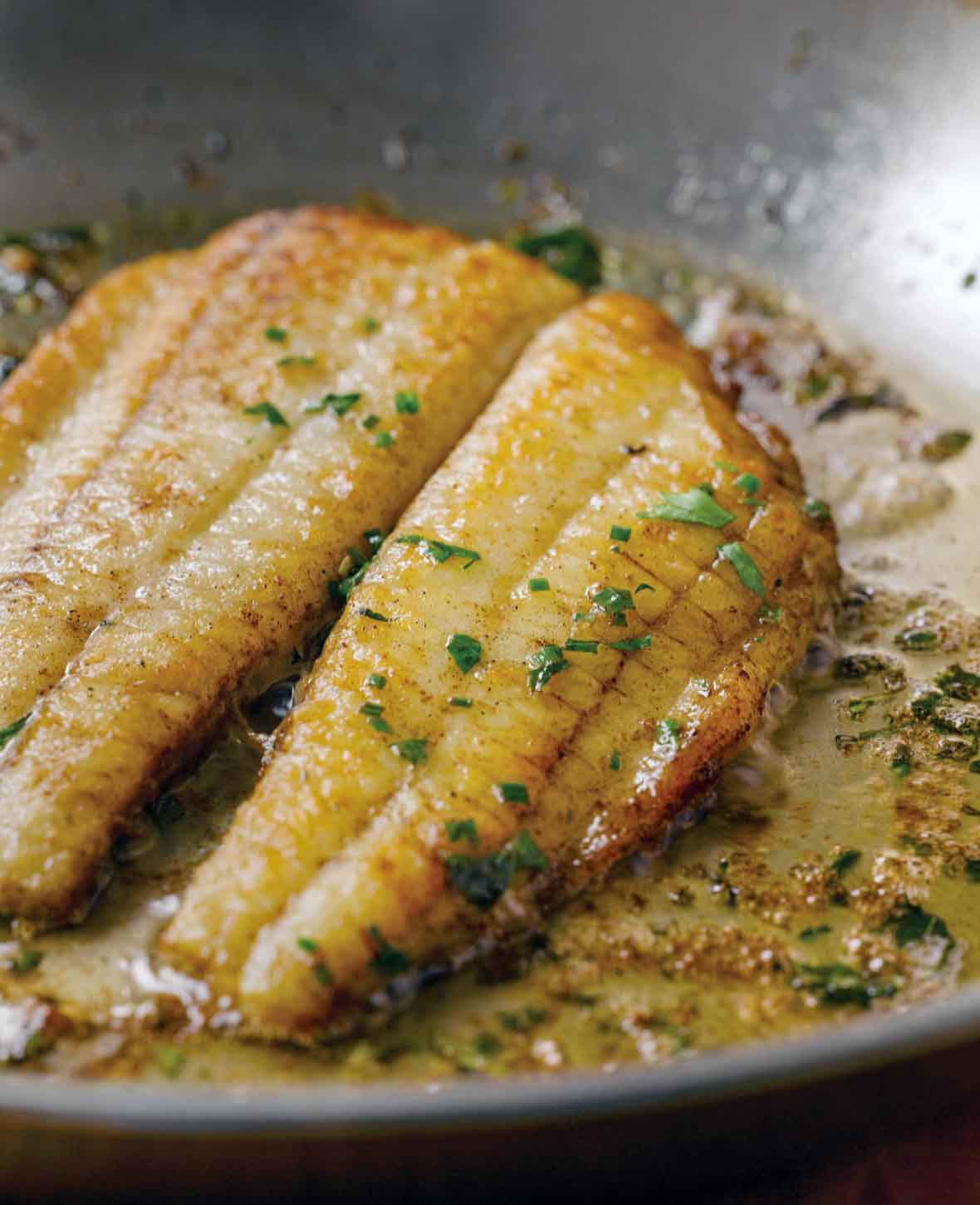
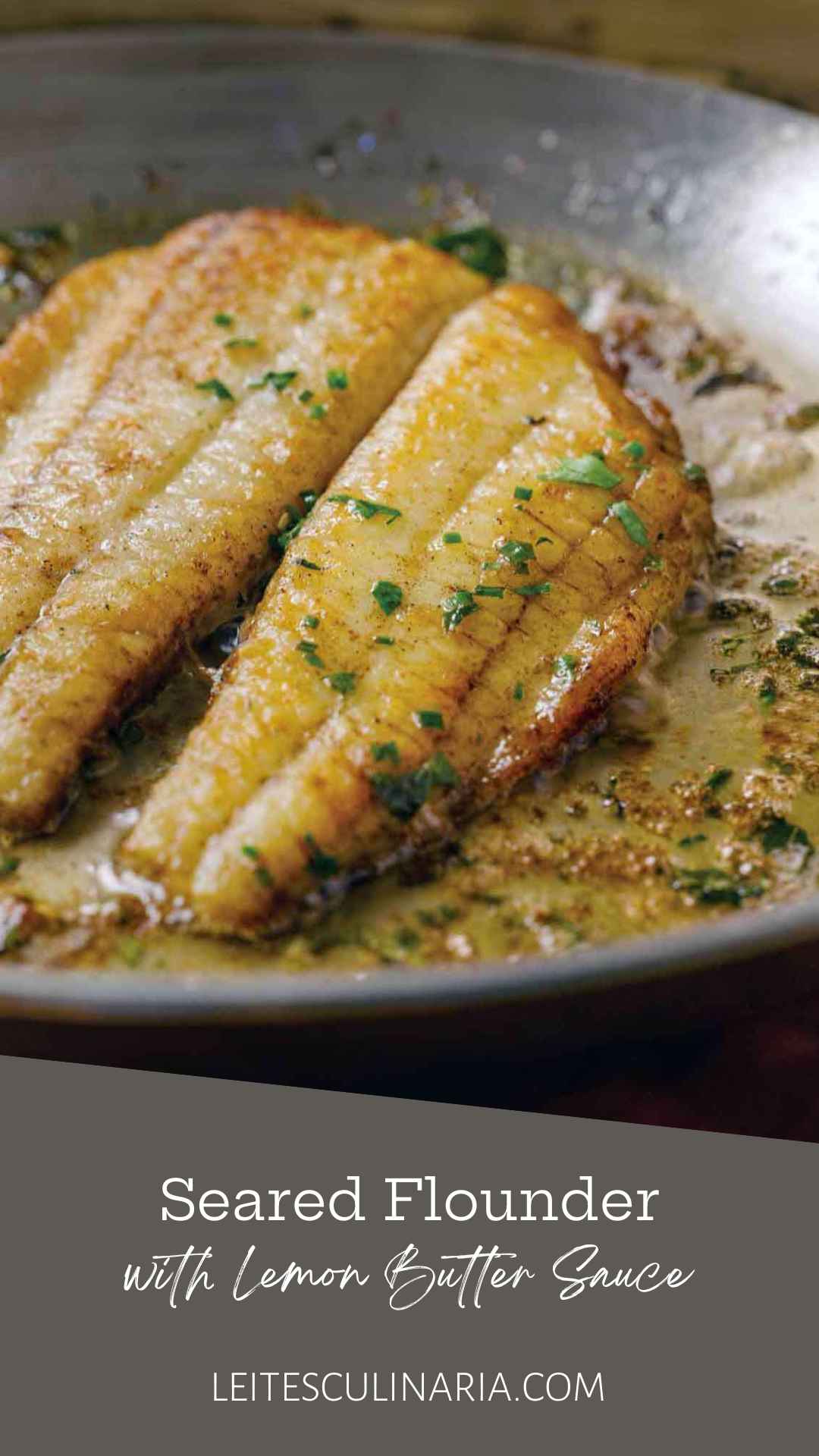
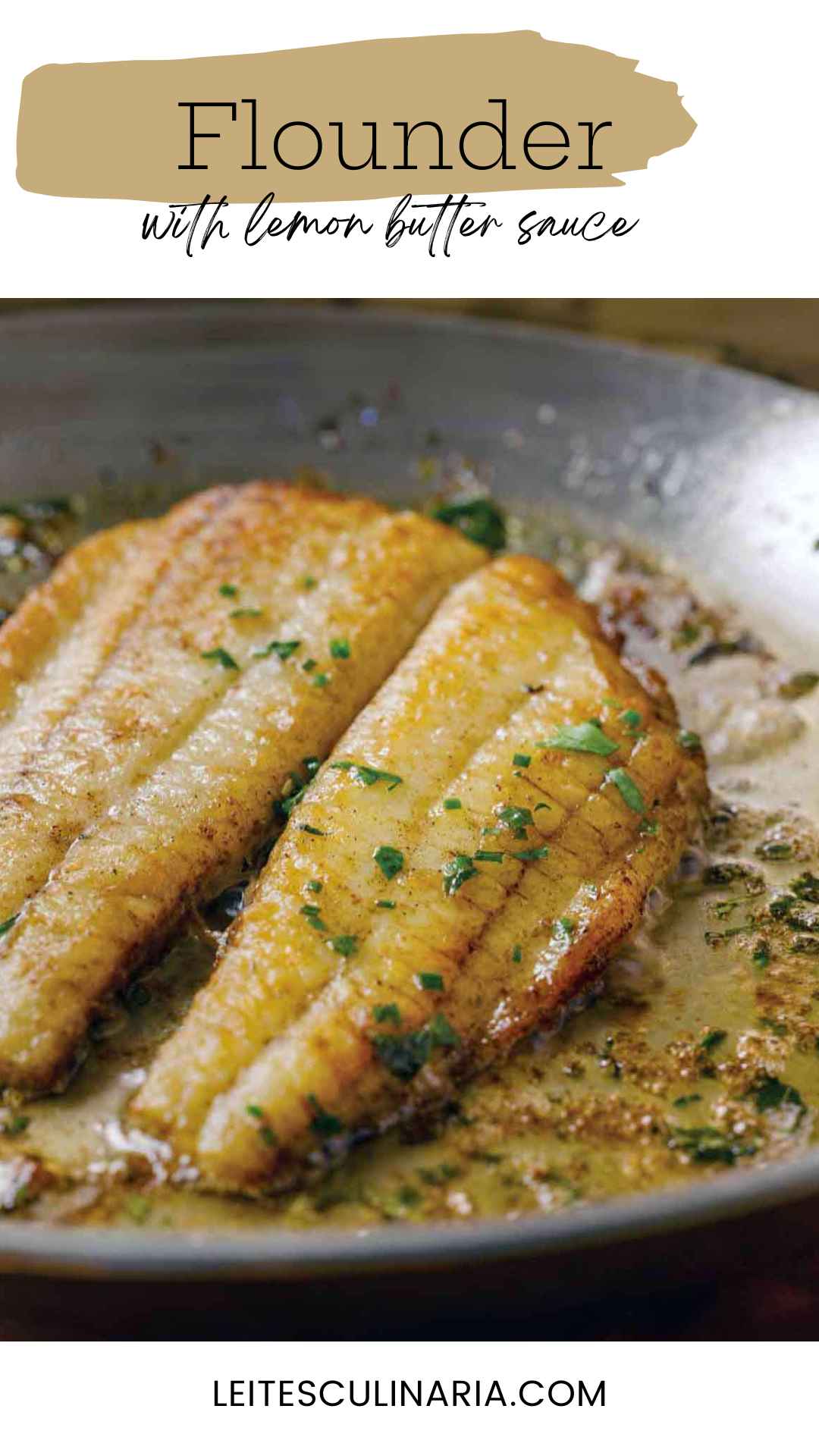
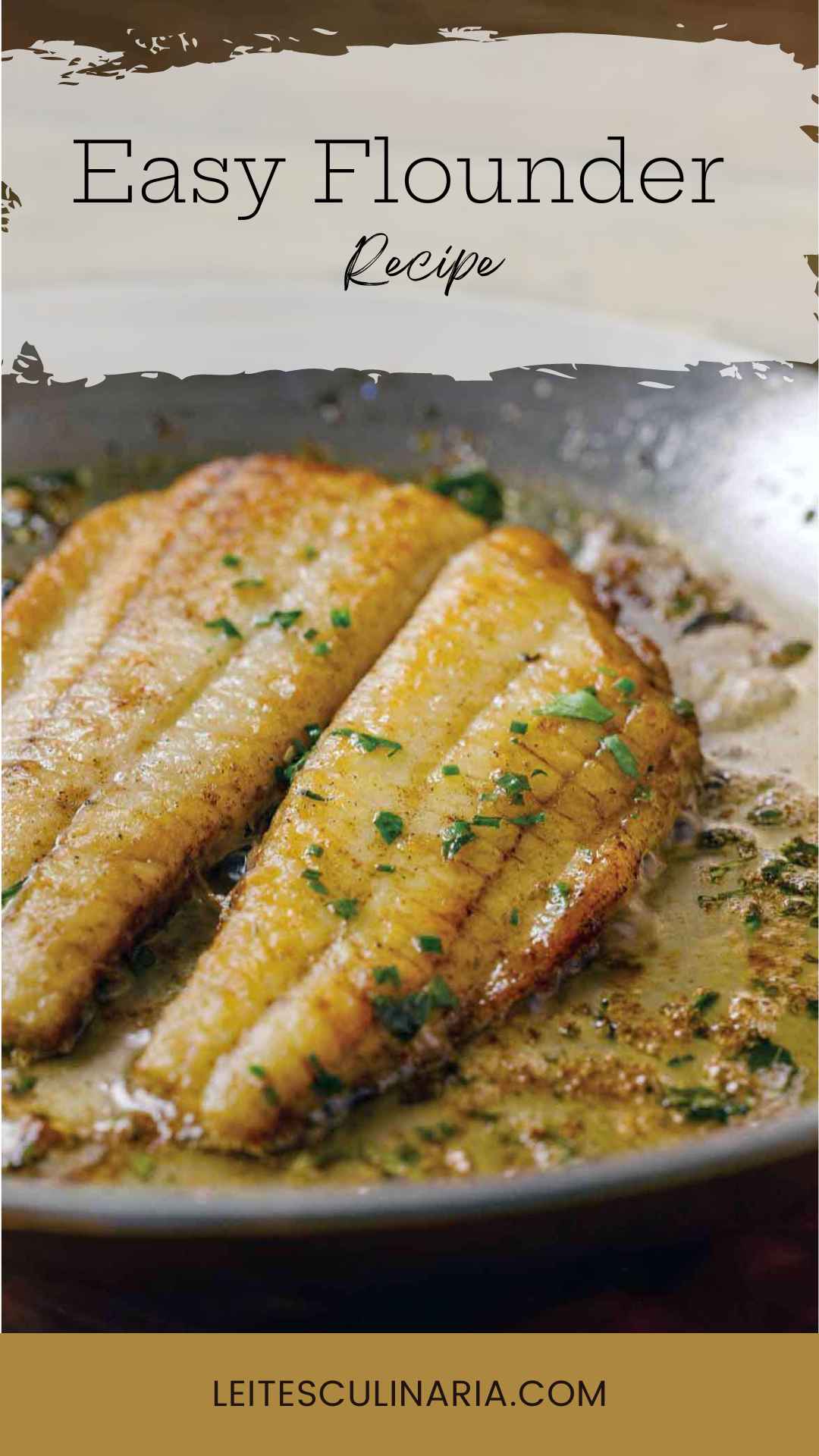
Elegant and easy, this flounder recipe with lemon butter sauce is, in the words of its creator, an easy weeknight meal to pull together with nary a hassle. We can vouch for that. So can the literally hundreds of readers who click on this recipe weekday afternoons.
Although cooking fish is commonly perceived as tricky, this recipe nails it, almost effortlessly creating a crisp browned crust on the exterior and a tender, flaky interior. Any white fish fillet works in this recipe, so opt for whatever looks fresh and is priced within your means.–David Leite
Pan-Fried Flounder FAQs
Though it may be tempting, don’t substitute frozen fish for fresh in this impressive weeknight-friendly recipe. Frozen fish, no matter how thoroughly you thaw it or pat it dry, will exude quite a lot of moisture during cooking, effectively making it impossible to attain that lovely crisp crust that otherwise forms on fish tossed into a hot skillet. So you end up with soggy steamed fish rather than those crisp edges that give way to tender fish in a way that makes your heart skip a beat. Trust us when we say it’s worth a few extra hard-earned dollars for fresh rather than freezer-case fish.
Although a dusting of flour does make for a swell crust on these pan-seared fish fillets, it’s not necessary. If you’re accustomed to the thin coating imparted by flour but are gluten-free, then you can use rice flour in place of all-purpose flour, and it will work just dandy.
Flounder with Lemon Butter Sauce
Ingredients
- Four (4- to 6-ounce) 1/2-inch-thick (12-mm) fresh (not frozen) flounder fillets, (or substitute sole, snapper, catfish, tilapia, or any thin white fish)
- 1/2 teaspoon kosher salt
- 1/4 teaspoon ground black pepper
- 1 teaspoon or so all-purpose flour*, (optional)
- 2 tablespoons mild vegetable oil
- 3 tablespoons (1 1/2 oz) unsalted butter, cut into 4 slices
- Juice of 1 lemon, (about 1/4 cup)
- 2 tablespoons finely chopped fresh herbs, such as basil, chives, or flat-leaf parsley
Instructions
- Pat the fish dry with paper towels and season with salt and pepper. Pat the fillets dry a second time just to be sure to remove all the moisture. If desired, sprinkle a little flour over both sides of the fillets and use your fingers to evenly coat both sides.
☞ TESTER TIP: The key to crisp perfection is to make sure the fillets are extra dry by patting them with paper towels and dusting them with just a tiny bit of flour.
- Heat the oil in a large skillet (preferably cast-iron or stainless steel rather than nonstick) over medium-high heat until the oil shimmers but isn’t smoking, 1 1/2 to 2 minutes. Add the fillets to the skillet and cook, without moving, for 2 minutes. Slide a thin metal spatula underneath the fillets (making sure to use a little pressure to scrape up any of the golden crust that may be sticking to the bottom) and carefully flip the fish. If it seems impossible to slip the spatula beneath the fillet and the skillet, wait 30 to 60 seconds or so and try again. The fish will release when it’s ready–and only when it’s ready.
☞ TESTER TIP: You may be tempted to pull out your nonstick skillet, but to get that coveted crisp crust, you’re better off with a heavy-bottomed stainless steel pan.
- Place a slice of butter on top of each fish fillet and stand idly by as the butter melts and infuses the fish with flavor. Cook the fish until it springs back from light pressure, about 2 minutes. Use a spatula to transfer the fish to a platter or to 4 plates.
- Carefully squeeze the lemon juice into the skillet and, with the skillet still over medium-high heat, use a wooden spoon to scrape up any browned bits stuck to the bottom of the skillet. Stir in the fresh herbs and spoon the sauce over the fish.

Nutrition
Nutrition information is automatically calculated, so should only be used as an approximation.
Recipe Testers’ Reviews

There’s nothing better than simple for dinner. This pan fried flounder recipe with lemon butter sauce is easy to prepare and delicious to eat. The preparation allows the fish to shine as the main ingredient.
I chose not to use the flour and just used a good stainless steel pan that I’d lightly oiled. This produced a light crust without overcooking the fish. The juice of 1 large lemon was enough to make a light pan sauce and I chose fresh tarragon and parsley for the herbs. Since basa was on sale, I used that.
A simple dish that made for a great meal. I’d certainly make this again.

This pan-seared flounder recipe makes a nice, light, quick meal. Wonderful on a hot summer day. The crust was indeed crisp and brown and the fish tender and moist.
I used snapper instead of flounder and lightly dredged the fish with flour instead of dusting it. The pat of butter on top was a unique twist to the way I usually make fish and it added a richness not only to the finished sauce but also to the fish itself. I liked the tangy lemony sauce on its own and left out the herbs.

This flounder with lemon butter sauce was an easy recipe. I loved the flavors. The lemon butter sauce had the most amazing lemony, nutty, buttery taste. Poured over the the flounder, it was just the right balance for such a delicate fish.
I used 4 flounder fillets and sprinkled just a wee bit of flour on them. An easy weeknight recipe that takes under 30 minutes to put together.
This technique for how to cook flounder is so simple that it’s barely a recipe. But it’s a lovely way to prepare any firm white fish fillet, and it comes together in just a few minutes. I used sole and parsley, although it would be really nice with tarragon, too.
This pan fried flounder recipe is a nice, easy, and quick recipe! The lemon butter sauce makes the dish as the fish is so mild. I used swai fillets, as my grocery store didn’t have flounder.
I opted to flour the fish, and unfortunately, my fish did stick a bit. I find that this type of fish tends to be more fragile once cooked. I didn’t let the sticking fish deter me from finishing off the sauce, though. I went ahead and cooked the fish on the other side, removed it, and just scraped up everything, added the fresh herbs (I used parsley and chives) and lemon juice, and poured all the little crumbles and sauce over the fish. It was still very good!
I’m a huge fan of simple, quick, and versatile recipes, and this flounder recipe checks off all of those boxes. I was in the mood to cook a new-to-me fish—rockfish— and I searched on the LC site for a recipe. The lemon butter sauce sounded delicious and it was. My family loved the preparation and my husband kept asking me how I made it.
I seared my fillets in a cast-iron skillet and, since they were so delicate, they broke in half. I truly believe this is all about practicing and mastering the technique, and in my case, I probably didn’t use enough oil. I will try a stainless steel skillet for comparison next time, but the lemon, butter, salt, and pepper made the fish really delicious. Hats off to another LC weeknight dinner recipe that made me a star at home!
Today’s lunch was a delightful fish feast! Rather than flounder, which I cannot get where I live, I used sole, which is a great substitute. Sometimes fish does not crisp as you would like, but this recipe provides a great solution.
The key is patting the fish dry twice and using a tiny bit of flour. I used rice flour, as it does a great job of crisping things. It was subtly buttery with a hit of fresh lemon, which goes extraordinarily well with white fish.
I really enjoyed the chives as well. Capers would be fabulous with this fish.
If you have fish fillets and about 10 minutes, you can create this wonderful dish. I loved it! As the recipe says, don’t be tempted to use a nonstick pan. It won’t work nearly as well.

We made this flounder recipe using Pacific Dover sole. Flounder is not something really found here on the West Coast. The sole fillets weighed between 2 and 3 ounces each, but that didn’t seem to make a difference in the cooking time. It turned out to be a very nice alternative to Sole à La Meunière or other dishes where you make brown butter for the fish. Letting the butter melt into the fish after turning it for the first time made the dish very easy and quick to make.

This flounder recipe with lemon butter sauce is one of those recipes that you probably already have all of the ingredients for in your pantry—except for the fish.
I couldn’t find flounder in my grocery store, so I used tilapia instead. Since tilapia is thicker than flounder, I adjusted the cooking time accordingly. (I cooked the tilapia for 3 minutes per side.) I wouldn’t omit the flour-coating step in this recipe. I think that’s what gives the fish the nice brown coating that goes oh-so-well with a lemony sauce.
We had some nice chives in our herb garden, so that is the herb I chose to use here. Some fresh dill would also work well, I think. I recommend using more than 1 lemon for the sauce; we used 2 for 2 tilapia filets, and it was just enough sauce in my opinion.
Overall, this is a great technique for cooking a thin white-fleshed fish. Adding some capers to the sauce before serving would work well, too.










My fish stuck to the cast iron skillet. What might I have done wrong? Heat, oil? I used flour. This recipe was delicious, so I’ll be happy to try again. And my husband is happy to taste test again.
Mary Ellen, the biggest culprit in the situation is usually not letting the fish cook long enough. Fish needs time to develop a crust that will naturally release from the skillet. If you try to flip your fillet too soon, it’ll most likely stick. Let is sizzle away until it naturally releases from the skillet. Another possibility is the pan wasn’t fully heated. Depending upon the size, a cast-iron skillet can take a bit of time to come up to temperature.